

Sustainable Nautical Tourism for Operators: Measure Before You Invest

Sustainable tourism in the nautical sector means running boat and marine experiences that protect ecosystems, respect local communities and stay profitable over the long term. The fastest route is to measure first, using frameworks like the SF-MST, then act every day: pump-out, slow speeds, trained crews. At Lisbonbyboat, we operate on the Tagus.
TL;DR:
Track passenger counts, routes, fuel per trip, and waste landed ashore for a season before choosing upgrades; these measures reveal where pressure is greatest.
Use sewage pump stations, biodegradable cleaners, and written crew checklists; slow down in sensitive areas and brief guests on wildlife, anchoring, and waste rules.
Count boats at sensitive sites by time of day, then rotate anchorages, separate wildlife and swimming zones, and stagger departures to avoid peak congestion.
Near wildlife, keep distance, slow down, limit viewing time, and never feed or chase animals; shared codes and crew training support consistent practice.
Sail more and slow down first, then consider hybrid engines, solar panels, or shore power when fuel tracking identifies a need.
Table of Contents
Operator-level measures: daily operations, crew training and product design
Destination management and carrying capacity for nautical sites
Impact on marine wildlife around Lisbon and how to reduce it
Waste management and pollution control on small and private sailing vessels
Community involvement and supporting local businesses in Lisbon
Renewable energy and fuel alternatives for sailing yachts and speedboats
Practitioner perspective: start small, prove results, then invest
What sustainable nautical tourism is and why it matters
UN Tourism describes sustainable tourism as tourism that accounts for current and future economic, social and environmental impacts. For boats, that rests on environmental protection, socio-cultural authenticity and long-term economic viability. A sailing tour that leaves the water clean, treats local crews and neighbors fairly, and keeps customers coming back ticks all three.
The stakes are practical. The UNCTAD Trade and Environment Review maps marine and coastal tourism as a large ocean-economy sector that supports jobs and foreign exchange, yet is vulnerable to shocks and environmental pressure. The UN World Ocean Assessment goes further: sustainable marine tourism is fundamental to the sector’s survival, and preserving natural resources is a long-term investment, not a cost center.
Unsustainable habits are easy to spot:
Anchoring on reefs or seagrass beds, which damages the habitat visitors came to see
Crowding wildlife with repeated close approaches, which changes how animals feed and rest
Discharging waste or cleaning products overboard, which degrades water quality
Running too many departures at the same site, which wears down the experience and local goodwill
Each of these erodes the asset the business sells, so the damage comes back as lower returns.
How the sector measures sustainability
The Statistical Framework for Measuring the Sustainability of Tourism, known as the SF-MST, organizes data across economic, environmental and social dimensions. It supports integrated measurement from local to national scales, so a single operator and a national ministry can speak the same language.
For nautical tourism, the indicator categories that matter most are:
Natural capital stocks: the condition of reefs, seagrass, coastline and species you depend on
Flows: greenhouse gas emissions, fuel use, waste and water discharge
Visitor flows: passengers per trip, departures per day, time spent at sensitive sites
Local economic benefits: local staff, local suppliers and spending that stays in the community
Measuring across all three dimensions matters because a single metric can mislead. Cutting fuel use while crowding one cove, or boosting revenue while pushing out local crews, only moves the problem around.
Start small. In an initial season, track passenger counts, routes, fuel consumed per trip and waste landed ashore. That is enough to show where the biggest pressure sits before you spend on anything else.

Operator-level measures: daily operations, crew training and product design
Practical guidance from Turismo de Portugal’s good practices guide for nautical tourism points the same way: small daily changes plus staff training often deliver faster environmental gains than expensive retrofits. Here is a prioritized checklist:
Use pump-out stations for any onboard waste, with no overboard discharge of any kind.
Switch to biodegradable cleaners for decks, galleys and heads.
Slow down in sensitive areas. Reduced speed cuts fuel burn, noise and collision risk.
Brief every guest before departure on wildlife distances, anchoring rules and waste handling.
Train the crew with a written checklist so protocols do not depend on who is on shift.
Cap group size and spread departures across the day and across routes to avoid loading one spot.
Time trips to avoid sensitive periods such as breeding or feeding windows.
Offer modular products (short tours, sunset tours, private charters) so demand spreads instead of piling onto one slot.
Capital upgrades come after monitoring shows a need. The European good practices study on cruise tourism highlights onshore power supply, waste reduction programs and voyage optimization as effective responses, and recommends clear goals, circular principles and energy efficiency as no-regrets measures. For a small fleet, that translates into fuel-flexible engines, hybrid options and shore power hook-ups once your data justifies them.
Pro Tip: Laminate a one-page checklist at the helm and in the galley, and have the skipper sign it at the end of every trip. Habits stick when they are visible.
Destination management and carrying capacity for nautical sites
Carrying capacity is the level of use a site can absorb before the environment or the visitor experience suffers. For a bay, anchorage or wildlife area, it depends on water depth, habitat sensitivity, boat traffic and the time of year. The Plan Bleu guidelines recommend data-backed scenario tools to model peak-season congestion and avoid pressure points, protecting both nature and the guest experience.
You do not need a research budget to start. Count boats at a site at different hours, note when wildlife or locals complain, and compare. Scenarios (“what if three more operators run sunset trips here?”) reveal limits before they are crossed.
Operators and managers can coordinate with simple, low-cost tools:
Data sharing: operators report daily visitor counts and incidents to a common register
Site rotation: alternate sensitive anchorages so none is used every day
Zoning: keep fast boats, wildlife areas and swimming zones apart
Time windows and just-in-time scheduling: stagger departures so boats do not arrive together
Visitor education: consistent messages across operators, so guests hear the same rules everywhere
None of these require new vessels. They require agreement and honest numbers.
Policy and industry frameworks to track
Regulation shapes which investments make sense, so keep these on your radar:
IMO GHG Strategy 2023: the 2023 IMO Strategy sets ambitions to cut carbon intensity by at least 40% by 2030, to increase uptake of zero or near-zero technologies and fuels, and to aim for net-zero around 2050. Small operators are not the main target, but supply chains, ports and financiers will follow it.
FuelEU Maritime: the European Commission’s FuelEU Maritime page describes decreasing targets for the greenhouse gas intensity of energy used by ships, plus timelines for zero-emission-at-berth obligations in EU ports.
Voluntary frameworks: the Glasgow Declaration and related UN Tourism initiatives position tourism as a lever for climate action, as outlined in UN Tourism’s contribution to Sustainable Development Goal 14. The Ocean Tourism Pact and similar alliances aim to mobilize tourism leaders around shared commitments to protect coastal and marine ecosystems.
Aligning early helps with port access, partnerships and finance, because funders increasingly ask which standards you follow.
The business case and finance
Sustainability can support revenue through several mechanisms. Guests who care about the sea are often willing to pay for a well-run, small-group experience. A cleaner site keeps its appeal season after season. And visible care for the coast earns goodwill from ports, neighbors and regulators.
Funding routes worth checking:
Public grants and incentives for marine and coastal projects
Blended finance that combines public and private money
Voluntary funds and partnerships with conservation groups
The logic is the same everywhere: pilot first, measure, then scale. Run one improvement on one route for a season, record the effect on fuel, waste and guest feedback, and use those numbers to justify the next step. A short, evidence-based pitch beats a large untested plan.
Impact on marine wildlife around Lisbon and how to reduce it
The Tagus estuary and the coast beyond it host seabirds, fish and dolphins, and every boat that shares that water affects them. The main pressures are noise, repeated close approaches, wake and fuel or waste pollution. Animals that are disturbed while feeding or resting spend energy fleeing, and repeated disturbance can push them to use the area less.
Mitigation is mostly about behavior, and it costs little:
Keep a respectful distance and let animals approach the boat, never the other way around
Reduce speed and avoid sudden changes of course near wildlife
Limit time near any group of animals and avoid surrounding them with several boats
Never feed wildlife and never chase it for a better photo
Brief guests so that nobody shouts, leans over the rail or throws anything
Our own dolphin watching trips run on this principle: we treat the animals as the main attraction. You can read more about how we frame these trips in our post on eco-friendly dolphin tours in Lisbon. Wildlife codes work only when every skipper follows them, so crew training and a shared code across operators matter more than any single piece of equipment.
Waste management and pollution control on small and private sailing vessels
A small yacht or catamaran generates less waste than a ship, but it generates it in the places that are most sensitive: close to shore, in bays and near anchorages. The basic rule is simple. Whatever comes aboard that cannot be recycled or composted goes ashore, and nothing goes over the side.
Practical measures for small vessels:
Sewage: use pump-out stations rather than discharging, even where local rules might allow it
Cleaning products: choose biodegradable cleaners and use them sparingly
Packaging: decant drinks and snacks into reusable containers before departure so single-use packaging stays on land
Food waste: plan quantities carefully, and take leftovers back to shore for proper disposal
Fuel and oil: use absorbent pads when refueling and store oily waste for shore disposal
Sorting: keep separate, labeled bins for plastic, glass and general waste
Onboard catering is a good place to cut waste at the source. This 2026 operator guide on sustainability in food services covers food-waste reduction and supply-chain choices that translate well to boat provisioning. Owners of private boats can apply the same checklist on a smaller scale: a pump-out habit, a waste plan before leaving the dock, and a briefing for every guest.
Community involvement and supporting local businesses in Lisbon
Boat tourism affects a lot of people on shore: dock workers, restaurants, shops, guides, mechanics and neighbors who live near the marina. When the sector supports these people, it earns their goodwill. When it ignores them, friction follows. We look at the human side of this in our post on how boat tours shape life and livelihoods in Lisbon.
Ways to make nautical tourism work for the neighborhood:
Hire and train locally, so jobs and skills stay in the community
Buy provisions from local suppliers, from bakeries to wine producers
Point guests to nearby shops, restaurants and sights after the trip
Keep noise and traffic down around the dock, especially early and late
Listen to residents and local authorities, and adjust timetables when there is a problem
Partnerships with other responsible local experience providers work too. This guide to responsible travel from Rban Tours shows how locally hosted experiences and community partnerships can be designed from the start. Keeping a larger share of visitor spending in the community is also one of the economic indicators you can track under the SF-MST.
Renewable energy and fuel alternatives for sailing yachts and speedboats
The simplest low-emission boat is a sailing boat that actually sails. Wind propulsion costs nothing and emits nothing, so route and schedule planning that lets a yacht sail more and motor less is the first and cheapest step. Guests often tell us the silence under sail is the best part of a trip.
Beyond that, the options depend on the vessel:
Efficient engine use: moderate speeds, regular maintenance and clean hulls reduce fuel burn on every trip
Solar panels: useful for lighting, refrigeration and electronics on sailing yachts and catamarans
Electric or hybrid propulsion: worth studying for short, predictable routes, and especially for harbor maneuvering
Lower-carbon fuels: the direction regulation is moving, as the FuelEU Maritime framework shows by promoting renewable and low-carbon fuels
Shore power: hooking up at berth avoids running generators, and EU ports are working toward zero-emission-at-berth timelines
Speedboats are the hardest case, because fuel burn rises sharply with speed. Lower cruising speeds, smaller groups per trip and fewer unnecessary legs make a real difference before any new technology arrives. As with every other measure, track fuel per trip first, then decide which upgrade is worth the investment.
Sustainable practices for short sailing tours
A two-hour tour has a small footprint per trip, but a busy operator may run several every day, so the habits matter. Short trips also give you less time to spread guest attention, so the plan must be built into the schedule.
What works on a 120-minute tour:
A tight route. Pick a loop that shows the best sights without long motoring legs, and sail wherever the wind allows.
A standard departure routine. Check fuel, confirm the waste plan and brief guests at the dock, not mid-trip.
No anchoring in sensitive spots. On short tours there is rarely a need to anchor at all.
Reusable serving ware. Use refillable water dispensers and reusable cups so the bin stays almost empty.
Sensible group sizes. Smaller groups mean less wake, less noise and better storytelling.
Staggered start times. Spread departures so boats do not arrive together at the same landmark.
Our guided Lisbon tours include live commentary from the guide. Our post on sustainable practices on sailing tours goes deeper on the checklist. The short format is an advantage: every protocol can be repeated exactly, which is what makes measurement reliable.
Education and engagement strategies for guides
A guide has an unusual opportunity to hold guests’ attention in a beautiful setting, with no phones competing once the coastline appears. Used well, that time shifts how people behave long after the trip.
Strategies that work:
Open with the rules, framed as a welcome. A brief explanation at departure of distances from wildlife and waste handling, in a friendly tone, sets expectations.
Tie sustainability to what guests see. Point out the estuary, the birds and the working port, and explain why each matters.
Invite participation. Ask guests to spot wildlife quietly, or to help sort waste at the end.
Show, don’t lecture. Let guests see the pump-out routine or the reusable cups in use.
Offer one simple takeaway. A single action guests can repeat at home, such as refusing single-use plastic at the next beach café, is remembered better than a list.
Ask for feedback. Guests’ questions reveal which messages land, and the answers feed your SF-MST indicators.
Guides need support to do this well. Short training sessions, a shared script with room for personality and regular refreshers keep the message consistent without sounding scripted.
Practitioner perspective: start small, prove results, then invest
Operators tend to ask which technology to buy first, and I think that is the wrong question. A trained crew following the same protocols every day will beat an expensive retrofit run by an unprepared team. Consistent pump-out use alone cuts pollution at the source and removes a common source of friction with the community, at almost no cost. Measure for a season, let the numbers point to the real problem, and only then spend on hardware.
— Lisbon
Book a guided tour with Lisbonbyboat
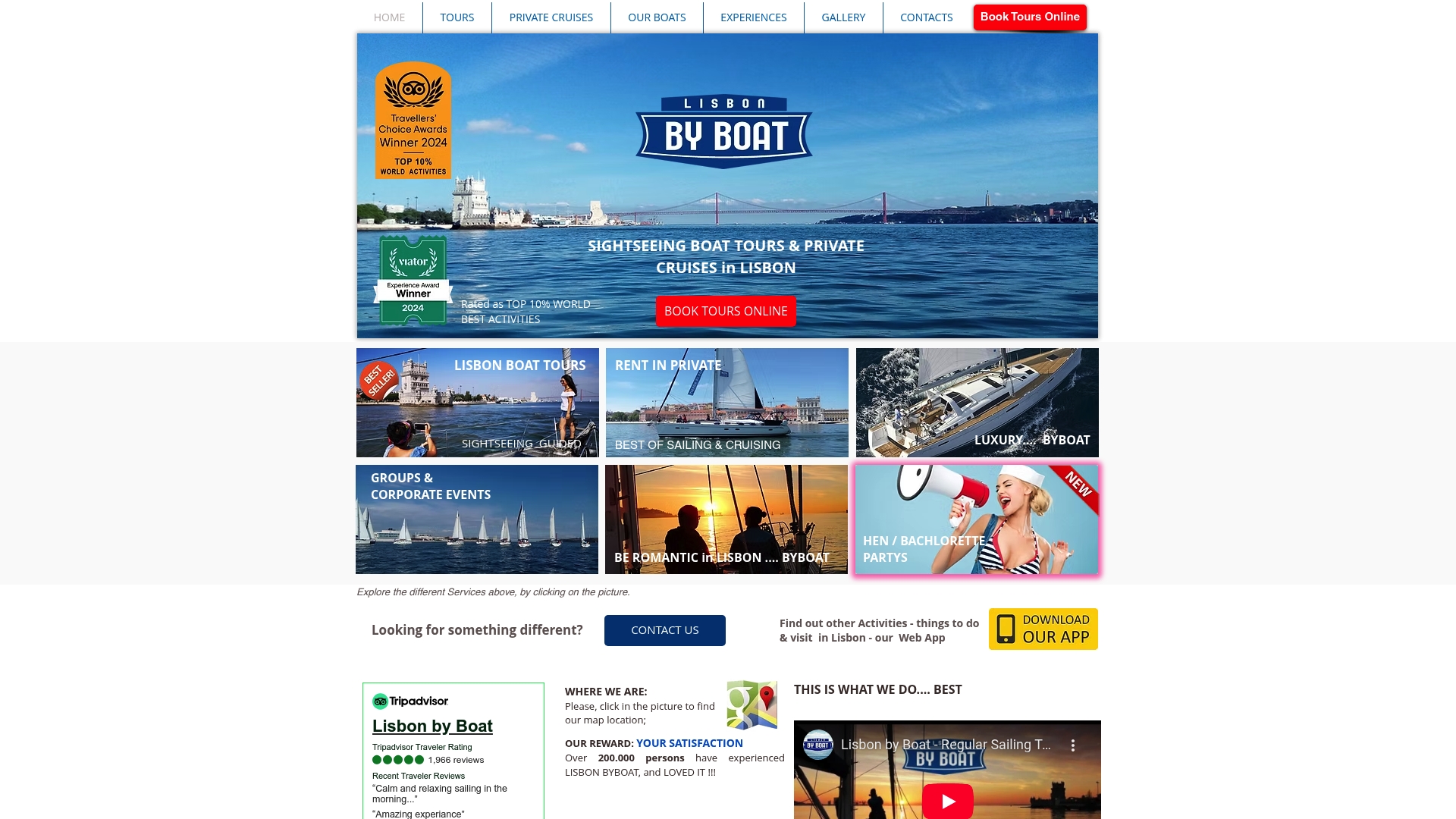
If you want to see these ideas in practice, we run guided sailing tours, sunset cruises and private charters on the Tagus, with live commentary from our guides. You can compare options and book on our tours page.
When you choose any operator, ask four things:
How do they handle waste and sewage, and do they use pump-out stations?
Do guests get a briefing on wildlife and anchoring rules?
How large are the groups?
Are crews trained against a written checklist?
Good operators answer these quickly and specifically.
FAQ
What is nautical tourism?
Nautical tourism covers leisure activities on the water that involve boats, such as sailing tours, yacht charters, cruises and wildlife watching. It also includes the harbors, marinas and services that support them. Because it depends on clean water and healthy coasts, it is closely tied to environmental protection.
What are the three pillars of sustainable tourism?
UN Tourism describes three pillars: environmental sustainability, socio-cultural authenticity and long-term economic viability. A responsible boat operator protects the water, respects local culture and people, and builds a business that can last. Neglecting any pillar weakens the other two.
What is the first step toward sustainable boating tourism?
Start by measuring: passenger counts, routes, fuel per trip and waste landed ashore. Frameworks such as the SF-MST help organize that data across economic, environmental and social dimensions. Once you see where the pressure is, daily actions like pump-out and slower speeds become easy to prioritize.
Do operators need expensive technology to be sustainable?
No. Practical guidance such as the Turismo de Portugal nautical tourism guide shows that small daily changes and crew training often deliver faster benefits than costly retrofits. Capital investments make sense once monitoring shows a clear need.
Why does carrying capacity matter for boat tours?
Carrying capacity sets the level of use a site can handle without harm to the environment or the visitor experience. Scenario tools help operators and managers spot peak-season pressure points, as the Plan Bleu guidelines recommend. Rotating sites and staggering departures are simple ways to stay within it.
Sources
Recommended
Comments