

Sustainable Practices on Sailing Tours: 2026 Guide
TL;DR:
Sustainable sailing tours prioritize wind power, zero waste, and responsible anchoring to protect marine environments. They implement strict policies on plastic reduction, local sourcing, and wildlife conservation, minimizing ecological impact. Choosing eco-conscious operators enhances both environmental health and local community support.
Sustainable practices on sailing tours are defined as the policies and behaviors that minimize a vessel’s environmental footprint through energy efficiency, waste reduction, wildlife protection, and local economic support. These are not optional extras for eco-conscious travelers. They are the operational standard that separates responsible sailing from tourism that quietly degrades the very coastlines it sells. This guide covers the core practices in detail, from solar-electric power and zero-plastic policies to anchoring techniques and conservation funding, so you can choose tours that genuinely protect the ocean.
What are the key sustainable practices on sailing tours?
Wind is the most sustainable energy source available to any sailing vessel. A well-rigged sailing yacht traveling at 6–9 knots under sail produces near-zero direct emissions. That is the foundational advantage sailing holds over every other form of marine tourism.
Modern operators build on that advantage with additional technology:
Solar-electric systems: Some yachts have upgraded to 100% solar-electric power, eliminating diesel generator use during daylight hours entirely. That means zero fuel consumption for onboard lighting, refrigeration, and navigation electronics while the sun is up.
Scheduled generator use: Professional sustainable yachts schedule generator runtime during designated midday hours, avoiding early dawn and late evening to preserve natural soundscapes and reduce disturbance to marine life.
Minimized engine runtime: Operators train crews to use engines only for docking, emergencies, or dead-calm conditions. Every hour under sail instead of motor directly cuts fuel burn and acoustic pollution.
Route optimization: Sustainable sailing hinges on minute-to-minute awareness and route planning more than on expensive technology upgrades. Choosing departure times that align with prevailing winds reduces the need for engine assistance throughout the trip.
Pro Tip: Before booking, ask your operator what percentage of each tour is completed under sail versus motor. A genuine eco-friendly sailing trip should target 70% or more under wind power.
How do sustainable sailing tours manage waste and plastic?
Waste management is where many tours fail publicly. A single plastic bottle overboard in a calm bay is visible to every snorkeler for weeks. Responsible operators treat this as a non-negotiable operational standard, not a marketing claim.
The industry benchmark is clear. Zero single-use plastic policies have been mandatory across leading sailing fleets since 2020, with yachts using biodegradable cleaning products and grey water treatment systems to reduce pollution. Grey water treatment is standard on yachts built after 2018. These are not aspirational goals. They are minimum requirements for operators serious about responsible boating practices.
Here is how the best operators execute waste management onboard:
Eliminate single-use plastics at source. Guests receive reusable water bottles, stainless steel straws, and cloth bags before boarding. Nothing disposable enters the vessel.
Use certified biodegradable products. Dish soap, hull cleaners, and personal care products must be biodegradable and phosphate-free to prevent chemical runoff into the water.
Separate waste onboard. Professional environmental policies require separating recyclables, organic waste, and general waste onboard, with shore-based proper disposal. Nothing is discharged into the ocean.
Secure all trash. Loose waste on deck is a liability in wind. Nets, sealed bins, and bag clips prevent accidental littering even in rough conditions.
Require reef-safe sunscreen. Products labeled “reef-safe” often still contain harmful chemicals. True reef-safe products avoid oxybenzone and octinoxate, the two compounds most toxic to coral. Operators should provide certified alternatives or require guests to bring verified products.
Pro Tip: Pack a reusable 32-ounce water bottle and a small dry bag for personal trash before any sailing tour. You reduce the operator’s waste load and set a visible example for other guests.
What responsible behaviors protect marine wildlife during tours?
Marine wildlife protection comes down to two things: where you put the anchor and how fast you move the boat. Both are controllable, and both are frequently ignored by operators prioritizing convenience over ecology.
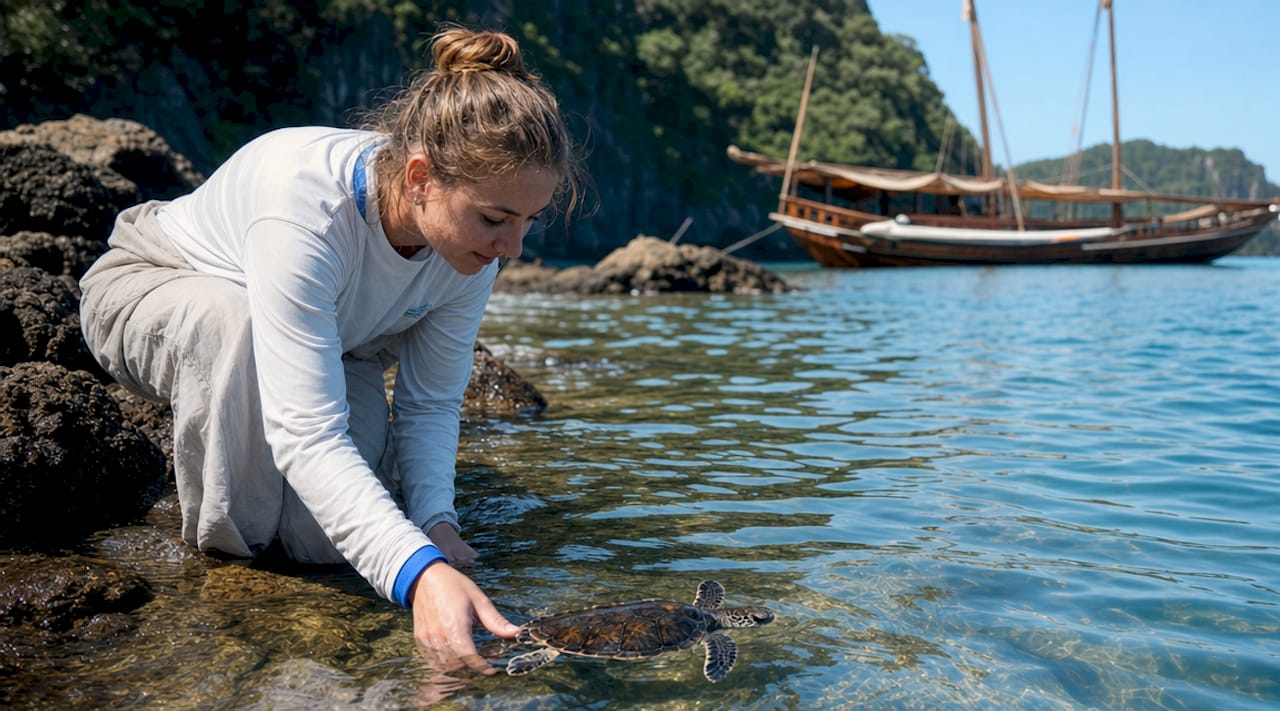
Experienced sailors anchor in sand or mud rather than seagrass to protect carbon-sequestering meadows. Seagrass beds store carbon at rates comparable to terrestrial forests, and a single anchor dragged across a meadow can destroy decades of growth. Operators should use polarized sunglasses to identify safe anchoring zones from the surface before dropping the hook.
Key responsible behaviors that protect habitats include:
Use mooring buoys when available. Mooring buoys eliminate anchor contact with the seabed entirely. Any operator visiting a protected bay or reef should use them without exception.
Follow no-wake zones strictly. Intentional route planning to avoid shallow habitats and no-wake zones protects shoreline erosion and wildlife. Wake damage to reed beds and shallow shorelines accumulates over a season.
Brief guests before arrival. Guest briefings on reef-safe behavior, wildlife distances, and no-touch rules for marine animals are standard practice among certified operators. Uninformed guests cause most incidental damage.
Manage bilge water carefully. The U.S. EPA’s Clean Boating Act requires recreational boaters to manage incidental discharges like bilge water with absorbents and no chemical runoff, even where local laws are not explicit. Responsible operators apply this standard globally, not just in U.S. waters.
The quieter the vessel, the less stress it places on marine animals. Choosing wind-powered vessels embodies a slow travel philosophy that inherently reduces fuel use and marine acoustic pollution. Fish, dolphins, and seabirds all respond measurably better to sail-powered vessels than to motor yachts running at full throttle.
How do sailing tours support local communities ethically?
Sustainability is not only an environmental question. A tour that protects coral reefs but flies in all its food from a distant city still carries a significant carbon and economic cost. The most credible operators treat local sourcing and community investment as core parts of their green practices.
Practice | Standard | Environmental and Social Benefit |
Local food sourcing | Up to 95% local supply | Cuts transport emissions; supports regional farmers and fishers |
Sustainable seafood menus | Aligned with local ecosystem balance | Reduces pressure on overfished species |
Conservation surcharges | $50 per guest funds reef restoration | Directly finances habitat protection projects |
Community partnerships | Local guides, crew, and suppliers | Keeps tourism revenue in the destination economy |
Guest education programs | Marine biology briefings onboard | Builds long-term conservation awareness among travelers |
Leading luxury sailing charters target carbon-neutral operations by 2027 with 95% local sourcing to reduce transport emissions. That benchmark shows what is achievable when operators treat sustainability as a business model, not a branding exercise. For eco-conscious travelers, asking an operator where their food comes from is one of the fastest ways to assess their actual commitment to sustainable tourism in Lisbon and beyond.
Sailing yachts vs. motor yachts: which is more sustainable?
The answer is clear. Sailing yachts are more sustainable than motor yachts in nearly every measurable category.
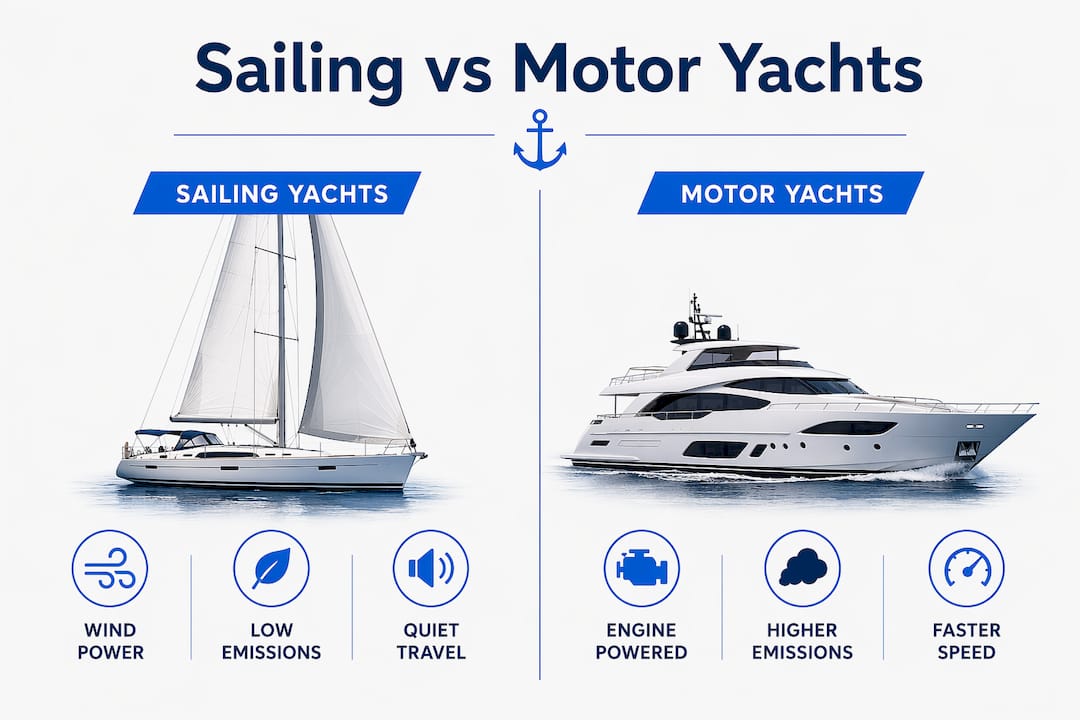
Factor | Sailing Yacht | Motor Yacht |
Primary propulsion | Wind power | Diesel or gasoline engine |
Typical speed | 6–9 knots | 12–20 knots |
Fuel consumption | Minimal (engine for docking only) | Continuous at cruising speed |
Acoustic impact | Low under sail | High at all speeds |
Carbon emissions | Near zero under sail | Significant per nautical mile |
Guest experience | Quiet, immersive, natural | Faster, louder, more vibration |
Sailing yachts minimize engine runtime, reducing noise and emissions compared to motor yachts. The quieter acoustic environment also lessens stress on marine wildlife, which is a measurable ecological benefit beyond just fuel savings. Solar-powered catamarans push this further, combining wind propulsion with solar electricity to cover all onboard power needs without a generator.
The trade-off is speed. Motor yachts cover more distance in less time. For travelers prioritizing sustainability, that trade-off is straightforward. Slower travel means less fuel burned, less noise generated, and more time spent actually experiencing the environment rather than passing through it.
Pro Tip: When comparing sailing tour options, check whether the vessel uses a catamaran or monohull design. Catamarans offer more deck space for solar panels and greater stability, making them the preferred platform for solar-electric upgrades.
For a detailed look at Lisbon sailing routes that favor wind-powered navigation, Lisbonbyboat publishes route guides built around the Tagus estuary’s prevailing winds.
Key takeaways
Sustainable sailing tours require combining wind power, zero-waste policies, careful anchoring, and local sourcing to genuinely protect marine environments rather than just market the idea.
Point | Details |
Wind power is the foundation | Sailing yachts traveling under wind produce near-zero direct emissions per nautical mile. |
Zero plastic is the baseline | Leading fleets have mandated zero single-use plastics since 2020 as a minimum operational standard. |
Anchoring technique matters | Always anchor in sand or mud, never seagrass, to protect carbon-sequestering marine meadows. |
Local sourcing reduces total impact | Operators sourcing up to 95% of supplies locally cut transport emissions and support destination economies. |
Vessel choice drives outcomes | Sailing yachts produce less noise, less fuel burn, and less marine disruption than motor yachts at every speed. |
What i’ve learned running sustainable sailing tours in lisbon
The part of sustainable sailing that most operators underestimate is guest behavior. You can install solar panels, ban plastic, and anchor perfectly in sand, but if a guest jumps off the bow into a seagrass bed or applies a sunscreen full of oxybenzone before snorkeling, the ecological damage happens anyway. The briefing before departure is not a formality. It is the most important sustainability tool on the boat.
What I have found at Lisbonbyboat is that guests respond well when you explain the why behind each rule. Telling someone “don’t touch the seagrass” lands differently than explaining that a single square meter of seagrass meadow sequesters carbon at the same rate as a mature tree. People who understand the stakes become active participants rather than passive passengers.
The other reality is that sailing sustainably along Lisbon’s coastline is not a sacrifice. The Tagus estuary offers consistent Atlantic winds that make motor use genuinely unnecessary for most of our routes. Guests who book expecting a loud, diesel-scented experience are consistently surprised by how quiet and immersive a proper sailing tour feels. That silence is the product. Protecting it is both an ecological and a commercial priority.
The technology is improving fast. Solar-electric catamarans that were experimental five years ago are now commercially available. Regulations in European waters are tightening around emissions and waste discharge. Operators who built sustainable systems early are ahead. Those who treated it as optional are now scrambling to catch up.
— Lisbon
Discover sustainable sailing in lisbon with Lisbonbyboat
Lisbonbyboat operates daily sailing tours along Lisbon’s historic coastline with a commitment to environmentally conscious sailing built into every departure.
Our luxury yachts in Lisbon are selected for wind efficiency, solar capability, and minimal environmental footprint. Tours run from 2 hours to full-day private charters on sailing yachts and catamarans, with local guides who explain both the monuments and the marine environment you are sailing through. Every tour follows zero single-use plastic standards, reef-safe product requirements, and responsible anchoring practices. If you want to experience Lisbon from the water without leaving a mark on it, Lisbonbyboat is the right starting point. Check availability and book your tour directly on our site.
FAQ
What are the most important sustainable practices on sailing tours?
The most critical practices are using wind power as primary propulsion, enforcing zero single-use plastic policies, anchoring only in sand or mud to protect seagrass, and sourcing food locally to reduce transport emissions.
Are sailing yachts more eco-friendly than motor yachts?
Yes. Sailing yachts travel at 6–9 knots under wind with near-zero direct emissions, while motor yachts run on continuous fuel consumption at 12–20 knots and generate significantly more acoustic and chemical pollution.
What does reef-safe sunscreen actually mean?
True reef-safe sunscreen contains no oxybenzone or octinoxate, the two chemicals most toxic to coral. Products labeled “natural” or “biodegradable” may still contain these compounds, so checking the ingredient list is necessary.
How do sailing tours support local communities sustainably?
Leading operators source up to 95% of supplies from local producers, hire local crew and guides, and direct conservation surcharges of around $50 per guest toward reef restoration and marine protection programs.
How can i verify that a sailing tour is genuinely sustainable?
Ask the operator what percentage of the tour runs under sail, where their food is sourced, what their waste disposal policy is, and whether they use certified reef-safe products. Operators with real programs answer these questions without hesitation.
Recommended
Comments