

How boat tours shape life and livelihoods in Lisbon
TL;DR:
Boat tourism significantly boosts Lisbon’s economy by creating jobs and supporting local businesses. However, it also raises living costs, causes congestion, and impacts residents’ quality of life. Responsible tourism and active local participation are essential for balancing economic benefits with community well-being.
Lisbon’s waterfront has always been a stage where history meets daily life. But lately, the Tagus river carries more than ferries and fishing boats. It carries a booming tourism economy with real consequences for the people who live here year-round. Cruise tourism generated €940 million in economic impact across Portugal in 2024 and 2025, with Lisbon as the main port. The question locals are asking is simple: does any of that actually reach us?
Table of Contents
Key Takeaways
Point | Details |
Economic boost for Lisbon | Boat tours add jobs and millions in GDP, supporting many local families. |
Opportunities and tradeoffs | Locals gain work and business chances, but face higher rents and crowding. |
Quality of life matters | Noise and tourism pressures require new regulations and resident input. |
Locals can lead solutions | By advocating for fair policies and responsible tourism, residents shape a balanced future. |
Lisbon’s boat tourism boom: Big numbers, real impact
Having established why boat tourism matters, let’s dig into the hard numbers shaping Lisbon’s local reality.
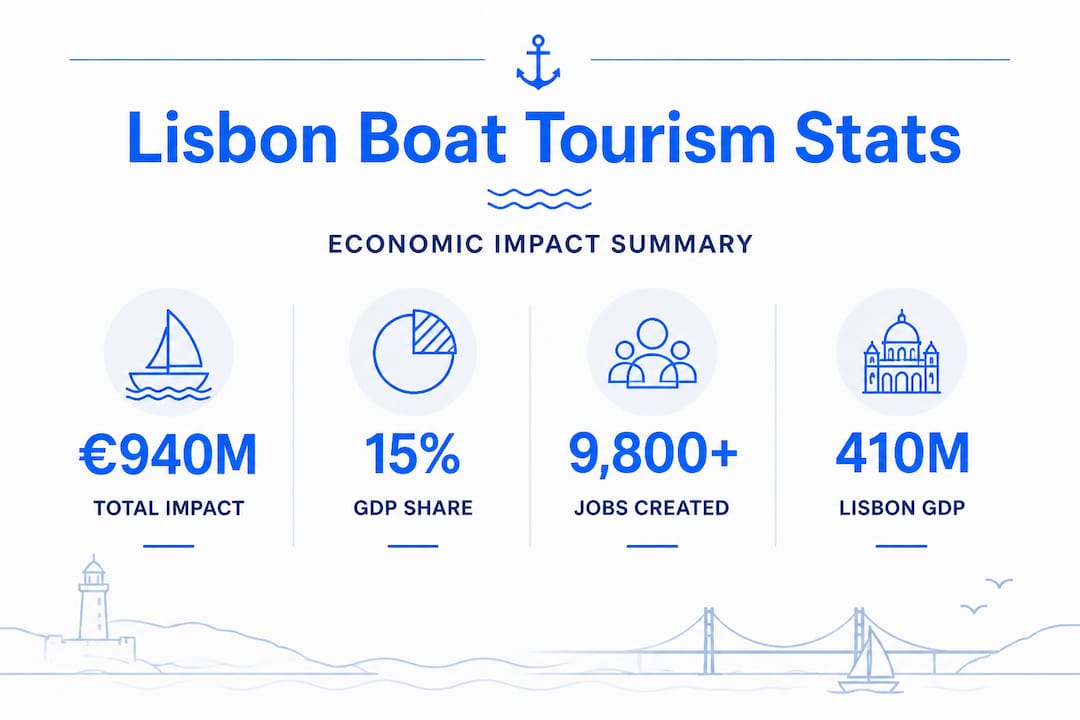
The figures are striking. Portugal’s cruise and boat tourism sector generated a €940 million economic impact nationally, contributing €410 million directly to GDP and supporting 9,800 jobs nationwide. Lisbon sits at the center of all of it as the country’s primary port of call. That is not background noise. That is a fundamental shift in how the city’s economy operates.
Tourism overall now represents 15% of Portugal’s GDP, a figure that puts the sector on par with construction and manufacturing combined. For Lisbon specifically, that concentration of economic activity means the river is no longer just scenic. It is an engine.
Economic metric | National figure |
Total economic impact | €940 million |
Contribution to GDP | €410 million |
Jobs supported nationwide | 9,800 |
Tourism as % of Portugal GDP | 15% |
Lisbon’s role | Primary port |
What does this mean in practice? When a sailing tour leaves from Belém or a catamaran departs from Cais do Sodré, the money spent by passengers ripples outward. It reaches restaurants near the docks, parking operators, souvenir vendors, and the crew themselves. Understanding how Lisbon works by boat helps frame just how central maritime tourism has become to the city’s economic identity.
The growth has not been gradual either. Lisbon recorded consecutive record-breaking years in cruise arrivals, and the private sailing and catamaran market expanded significantly alongside it. Weekends along the Tagus now see dozens of vessels of all types carrying visitors who want to see the city from the water, which is genuinely the best angle from which to understand Lisbon’s geography, its fortresses, its bridges, and its story.
How boat tours create opportunities for locals
But what do those big numbers actually mean for people living in Lisbon day-to-day?
The economic participation created by boat tourism takes many forms. Some are formal and salaried. Others are informal, entrepreneurial, and highly adaptable. Locals have found ways to position themselves inside a growing market in ways that match their skills and circumstances.
Here is how residents typically engage:
Boat crew and deckhands: Experienced sailors and maritime workers find steady roles on tour vessels, particularly those with nautical certifications.
Tour guides: Locals with strong historical knowledge and foreign language skills command premium rates, especially on private yacht and catamaran tours.
Hospitality staff: Catering, bar service, and event coordination roles on larger vessels create consistent seasonal employment.
Independent vendors: Near departure points, locals sell food, crafts, and services to both tourists and local day-trippers.
Transportation and logistics: Drivers, transfer operators, and dock workers all benefit from increased maritime traffic.
Photography and content services: A growing number of locals offer boat photography services or run social media accounts covering the tours.
“The tourism boom, including boat activities, drives economic participation for locals. Former workers from other industries are now offering services to visitors, adapting their skills to meet new demand.” Tourist influx drives prices
The shift in workforce participation is notable. Former retail and manufacturing workers have retrained for tourism-facing roles. Lisbon’s maritime heritage means many older residents already carry nautical knowledge, traditional history, or craft skills that are genuinely valuable to curious visitors. The rise of local boat tour guides as a recognized profession reflects this trend clearly.
Pro Tip: If you speak English, French, or German fluently and know Lisbon’s history well, guiding on private boat tours is one of the highest-paying casual roles in the city’s tourism sector. Private yacht clients typically pay significantly more per tour than group visitors, and guides with deep local knowledge are consistently in demand.
The cultural dimension matters here too. When locals guide visitors through Lisbon’s monuments and waterfront history from the deck of a sailboat, they are not just earning income. They are actively shaping how the world understands this city. That is a form of cultural ownership that has real value beyond the paycheck.
Challenges: Rising costs and quality-of-life concerns
Of course, not every effect of boat tourism is positive. Lisbon locals face real tradeoffs too.
The same economic momentum that creates jobs also drives up the cost of living in ways that directly affect residents. Tourism raises rents 18% and pushes everyday prices higher in neighborhoods closest to tourist corridors, including the riverfront areas most associated with boat tours.
Here are the key quality-of-life pressures locals report:
Housing costs: Riverside neighborhoods like Alfama, Belém, and Cais do Sodré have seen some of the steepest rent increases in the city.
Grocery and restaurant prices: As venues pivot to serving tourists, everyday prices for locals rise even in neighborhood shops.
Crowding on public infrastructure: Trams, ferries, and waterfront walkways become congested during peak season, reducing quality of life for daily commuters.
Loss of traditional businesses: Local bakeries, hardware stores, and family restaurants get replaced by souvenir shops and brunch spots catering to visitors.
Seasonal income instability: Cruise-related jobs pay €400-700/month for just 3 to 4 months per year, which falls well below an annualized minimum wage.
Environmental concerns: Ships in port emit 2.44 times more sulfur oxides than road vehicles, raising air quality worries for waterfront residents.
Impact category | Positive effect | Negative effect |
Employment | 9,800+ jobs nationally | Seasonal, low pay for many roles |
Housing | Investment in infrastructure | 18% rent increases near tourist areas |
Local businesses | More foot traffic | Traditional shops displaced |
Environment | Sustainable sailing growth | Ship emissions, noise pollution |
Culture | Local pride and storytelling | Commodification of heritage |
Understanding boat safety for locals is just one dimension of navigating this environment responsibly. The broader picture requires residents, operators, and regulators to weigh both sides honestly.
The seasonal nature of boat tourism employment is a particular concern. A job that exists for three months with irregular pay does not replace a stable year-round livelihood. Many locals find themselves patching together multiple seasonal roles, which creates income uncertainty that the headline economic figures do not fully capture.
Community voices: Noise, policing, and finding balance
One of the hottest debate points comes from the social impacts locals feel on the waterfront.
The party boat problem has become something of a flashpoint. Vessels known locally as “floating discos” operate along the Tagus well into the evening and early morning, generating noise complaints from riverside residents across multiple neighborhoods. The Maritime Police have conducted 62 inspections since 2023 in response to escalating pressure from residents and community organizations.
The main concerns locals consistently raise include:
Amplified music after midnight disrupting sleep in apartment buildings along the waterfront
Vessel congestion near popular swimming and recreation spots
Alcohol-fueled behavior from some tour groups spilling onto docks and public spaces
Lighting pollution from large illuminated vessels disrupting the atmosphere of historic quays
Lack of clear accountability when complaints are filed against specific operators
“The Maritime Police have conducted 62 inspections since 2023 in response to complaints about noise from party boats operating on the Tagus. Residents in riverside neighborhoods are calling for formal noise regulations with enforceable limits.” Complaints about Lisbon floating discos
Regulation is genuinely improving. The city has begun coordinating between maritime authorities, tourism licensing bodies, and neighborhood associations to create clearer operating standards. Hours-based noise restrictions are under active consideration, and several operators have voluntarily adopted quieter practices in response to resident feedback.
The distinction matters between the irresponsible end of boat tourism and operators who run culturally thoughtful, considerate tours. Understanding and following boat safety guidelines is the minimum standard, but responsible operators go further by respecting residential areas, managing group behavior, and operating within reasonable hours.
What locals want, and what they deserve, is a tourism model that treats the city as a home rather than a backdrop.
A Lisbon local’s perspective: What responsible tourism could look like
So, what does it really mean for Lisbon’s future to have locals at the heart of its boat tourism?
We have been operating on the Tagus long enough to understand that the economic benefits of boat tourism are real, but they are not automatic. The numbers paint a compelling picture at the national level. The experience on the ground is more complicated. What we see consistently is that when locals are genuinely involved in shaping tourism rather than simply absorbing its side effects, the outcomes are measurably better for everyone.
The residents who benefit most from Lisbon’s maritime tourism are not passive. They are actively engaged. They work as guides, they launch small businesses, they advocate in neighborhood meetings, and they take pride in showing visitors what makes this city genuinely remarkable. That kind of participation does not happen by accident. It requires operators who hire locally, regulators who enforce fairly, and residents who feel empowered to speak up when things go wrong.
The uncomfortable reality is that balancing tourism with resident quality of life requires ongoing, uncomfortable conversations about priorities. Who gets to live near the river? Who profits from the views? When noise regulations are proposed, who sits at the table?
The answer should include residents, and we mean all of them, not just those who already work in hospitality. Sustainable tourism on the Tagus depends on the city remaining a place where Lisbon’s own people want to live. When locals are priced out of their neighborhoods, the authentic culture that visitors come to experience begins to disappear with them.
Navigating Lisbon by boat can and should be an experience that reflects genuine local knowledge, genuine pride, and genuine commitment to the communities that make this waterfront worth visiting. The alternative, a riverfront stripped of its residents and filled only with transactional tourism, is not a destination anyone should want to create.
Our practical advice for locals: attend neighborhood association meetings where tourism regulations are discussed, support operators who hire Lisbon residents and follow responsible practices, and do not hesitate to make formal complaints about noise or safety violations. Your voice shapes the rules that govern this space.
Explore local-focused boat tours in Lisbon
If you are ready to enjoy Lisbon from the water while supporting your neighbors, here is how to get started.
Choosing the right tour makes a real difference. Tours that employ local guides, operate within responsible hours, and invest in the communities they serve create the kind of tourism that benefits the entire city rather than extracting from it.
We offer daily sailing tours across Lisbon’s coast with local guides who bring the city’s history to life from the water, covering monuments, fortresses, and the stories behind them. For a more personalized experience, our private yacht and catamaran tours range from two-hour trips to full-day excursions, all staffed by Lisbon-based crew who genuinely love this city. When you choose a locally operated tour, you are putting your money directly into the neighborhoods you are visiting.
Frequently asked questions
What types of jobs do boat tours create for Lisbon locals?
Lisbon locals work as boat crew, tour guides, hospitality staff, and often run small businesses serving visitors near departure points. The sector supports 9,800 jobs nationally, with Lisbon as the primary employment hub.
How do boat tours impact the cost of living in Lisbon?
Rising tourism demand has contributed to 18% rent increases in neighborhoods near tourist corridors, along with higher prices for everyday goods and services.
Are there regulations for party boats on Lisbon’s rivers?
Maritime Police have conducted 62 inspections since 2023 in response to noise complaints, and formal noise regulations with enforceable limits are currently under review.
Is working in boat tourism a stable job for locals?
Many roles are seasonal, with pay ranging €400-700/month for only 3 to 4 months, which makes year-round financial stability difficult without supplementary income.
Recommended
Comments