

Sailing Tour Group Dynamics: What Every Planner Needs
TL;DR:
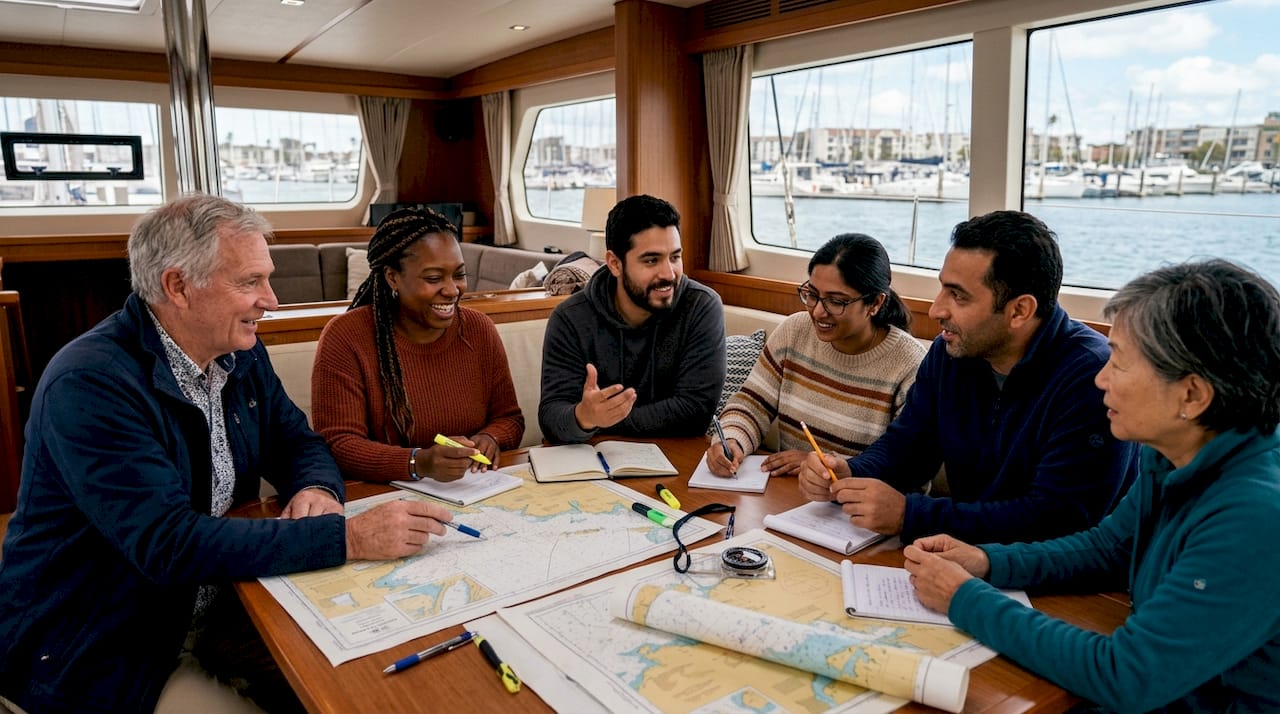
Group size and deliberate social design are crucial to foster connection during sailing tours. Keeping groups below 12 and assigning roles based on temperament enhance cohesion and safety. Pre-departure alignment and structured facilitation turn water experiences into effective team-building opportunities.
Sailing tour group dynamics are the patterns of interaction, communication, and teamwork that determine whether a shared sailing experience succeeds or falls apart. Research from Ocean Nomads confirms that successful sailing expeditions are intentionally designed with deliberate attention to social dynamics to avoid group fragmentation. The industry term for this practice is “crew social design,” and it applies equally to tourists booking a two-hour catamaran tour and corporate event planners organizing a full-day charter. Lisbonbyboat builds this principle into every sailing experience along the Lisbon coastline, from shared daily tours to private yacht charters.
How does group size affect sailing tour group dynamics?
Group size is the single most controllable variable in shaping how people connect onboard. Most boutique sailing catamarans cap occupancy at 10–11 guests to maintain an intimate group dynamic, allowing everyone to connect within a couple of days. That ceiling exists for a reason. When a group exceeds 12 people on a single vessel, communication fragments naturally into sub-clusters, and the shared experience loses its cohesion.
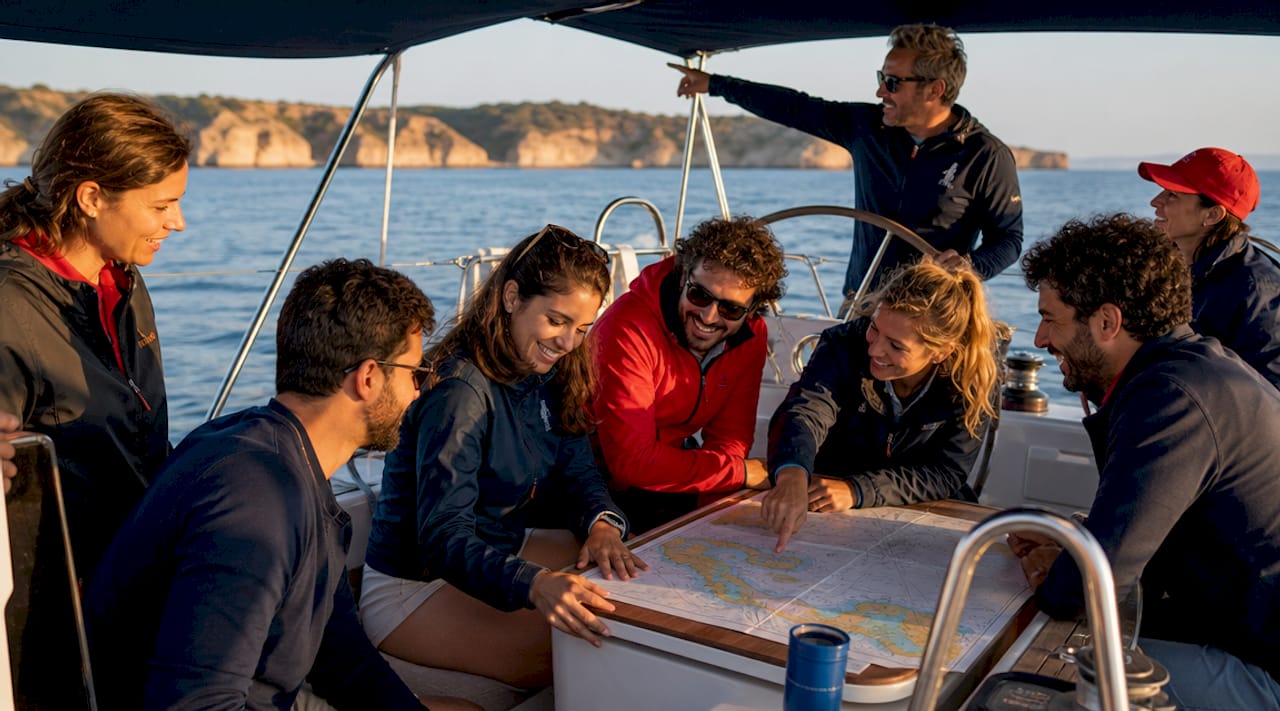
The booking model also shapes social atmosphere. A shared cabin booking places strangers together, which can generate organic connection or awkward tension depending on facilitation. A full private charter gives the group complete social control, letting planners design the atmosphere from the start. For tourists, the difference between public and private cruises comes down to how much control you want over who is in the room with you.
For groups larger than 12, the flotilla model solves the size problem without sacrificing intimacy. Groups larger than 10–12 guests often use a flotilla setup where multiple private yachts sail the same route and coordinate social activities. Each yacht maintains its own tight social unit while the full group reunites at anchorages for shared meals or activities. This approach lets corporate planners scale a team event to 30 or 40 people without forcing everyone onto one crowded deck.
Vessel type | Typical capacity | Social arrangement | Group cohesion impact |
Day sailing catamaran | 6–12 guests | Shared open deck | High intimacy, fast bonding |
Private yacht charter | 4–8 guests | Fully private | Maximum social control |
Flotilla (multiple yachts) | 12–40+ guests | Small boats, shared events | Preserves intimacy at scale |
Large charter vessel | 20–50 guests | Mixed, sub-grouped | Lower cohesion without facilitation |
Pro Tip: Keep your group at or below 12 people on a single vessel if your primary goal is team bonding. Every person added beyond that threshold reduces the average number of meaningful one-on-one conversations each guest will have during the trip.
What leadership and role assignment strategies improve collaboration onboard?
Leadership on a sailing tour is not a title. UK Sailmakers research defines leadership as a series of continuous small decisions rather than a single act of authority. That reframe matters because it shifts responsibility away from the skipper alone and distributes it across the group. Every person who makes a small call, adjusts a line, or flags a concern is practicing leadership.
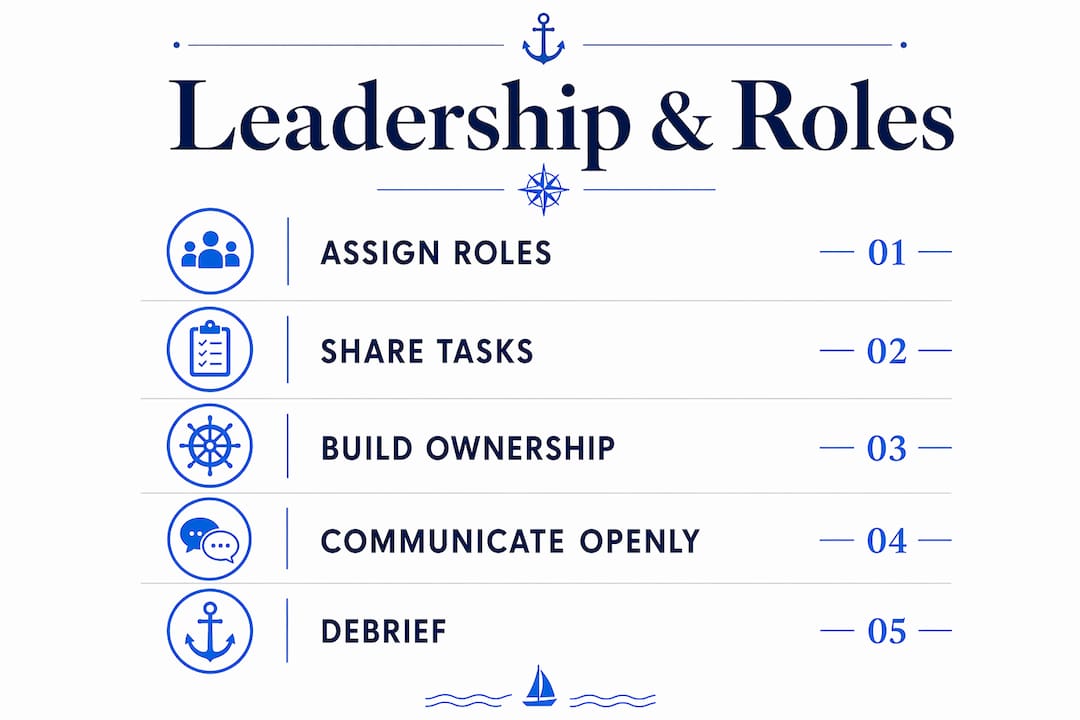
Role assignment based on temperament, not seniority, is the clearest differentiator between cohesive and fractured crews. Assigning roles by temperament means placing the calmest person at the helm during rough conditions, not the most experienced one. A calm presence under pressure steadies the whole group. An anxious expert can do the opposite.
Common pitfalls skippers encounter include:
Defaulting to seniority. The most experienced sailor is not always the best communicator or the steadiest under stress.
Ignoring quiet members. Introverts often have the clearest situational awareness but will not speak unless directly invited.
Concentrating all decisions in one person. This creates a bottleneck and leaves the rest of the group feeling like passengers.
Skipping the pre-departure briefing. Groups that start without clear role expectations spend the first hour resolving confusion instead of enjoying the water.
Role sharing for maintenance and provisioning tasks distributes responsibility and creates genuine ownership. Sign-up sheets and task rotations prevent the same two people from doing all the work while others disengage. Shared labor builds shared investment in the trip’s success.
Pro Tip: Before departure, ask each person to name one thing they are confident doing and one thing they want to try. That two-minute exercise surfaces hidden skills and signals to quieter group members that their contribution matters.
How can social facilitation tools build cohesion during sailing tours?
Intentional facilitation is what separates a group that gels from one that splinters. Ocean Nomads identifies pre-departure alignment on actual priorities as the most effective prevention tool. When everyone states what they genuinely want from the trip, whether that is relaxation, adventure, or learning, the group can plan around real preferences instead of assumed ones. This single step prevents one dominant personality from setting the agenda for everyone else.
Psychological safety is the foundation that makes all other facilitation work. Teams with open communication outperform those with rigid hierarchies or forced harmony. Psychological safety means every person feels safe to raise a concern, admit confusion, or disagree without fear of embarrassment. On a boat, that quality is not just a performance factor. It is a safety factor.
Effective facilitation tools for sailing groups include:
Pre-departure priority check-in. Each person shares one expectation for the trip. This surfaces conflicts before they become resentments.
Rotating decision roles. Assign one person per day to make low-stakes calls like anchorage choice or meal timing. This distributes authority and keeps everyone engaged.
Off-water trust builders. Team trust and cohesion grow through activities like cooking or hiking together before setting sail. These shared experiences create a relational foundation that holds under pressure.
Structured debrief. A short end-of-day conversation about what went well and what to adjust keeps small frustrations from compounding.
Inclusive strategy meetings. Excluding working crew from planning discussions creates a passenger mindset. Including everyone in key decisions builds a crew mindset.
Constructive conflict built on a shared commitment to goals outperforms team dynamics focused on superficial harmony. The goal is not a group where no one disagrees. The goal is a group where disagreement leads to better decisions instead of lasting resentment.
What practical steps can tourists and corporate planners take to build strong sailing team dynamics?
The steps differ slightly depending on whether you are joining a tour as a tourist or designing one as a corporate planner, but the underlying logic is the same. You are building conditions for people to connect, contribute, and enjoy the experience together.
For tourists joining a group sailing experience, follow these steps:
State your expectations before boarding. Tell the guide or skipper what you hope to get from the trip. This takes 30 seconds and prevents mismatched assumptions.
Volunteer for a task early. Pulling a line, helping with a fender, or handing out drinks signals that you are a participant, not just a passenger. Groups warm up faster when everyone contributes something.
Introduce yourself to one person you do not know. On a 10-person boat, one genuine conversation in the first 20 minutes changes the social temperature for the whole group.
Follow the guide’s lead on pacing. Experienced guides read group energy and adjust the itinerary accordingly. Trusting that process reduces friction and improves the experience for everyone.
For corporate event planners, the steps require more advance work:
Choose the right vessel size for your goal. A team-building event for 8 people on a private yacht creates a fundamentally different experience than the same group on a 40-person charter. Read the advantages of closed group cruises before booking.
Brief participants before the day. Send a short note explaining the format, what roles exist, and what the group will decide together. Prepared participants engage faster.
Design one shared challenge. Navigating to a specific point, preparing a meal together, or completing a simple sailing task gives the group a common goal. Shared goals accelerate trust faster than icebreaker games.
Plan the logistics around the experience. Smooth arrivals and departures reduce stress before the group even boards. A ferry port transfer guide can help participants coordinate arrival logistics without confusion.
Debrief after the tour. A 15-minute conversation about what the group learned about working together converts a fun day into a lasting team insight.
For planners who want to understand the full case for water-based events, the planner’s guide to boat events covers the structural advantages that make sailing tours particularly effective for team development.
Key Takeaways
Strong sailing tour group dynamics depend on intentional design: the right group size, role assignment by temperament, psychological safety, and pre-departure alignment all determine whether a group connects or fragments.
Point | Details |
Group size sets the ceiling | Keep groups at or below 12 on a single vessel to maintain meaningful connection. |
Temperament beats seniority | Assign roles based on how people respond under pressure, not how long they have sailed. |
Psychological safety drives performance | Open communication outperforms rigid hierarchy on every measurable crew metric. |
Pre-departure alignment prevents conflict | A short priority check-in before boarding stops one person from dominating the group agenda. |
Flotillas solve the scale problem | Multiple synchronized yachts let large groups preserve small-group intimacy at scale. |
What I have learned watching groups on the water
After years of watching groups board boats in Lisbon, the pattern is consistent. The trips that work are not the ones with the most experienced sailors. They are the ones where someone took five minutes before departure to ask what everyone actually wanted from the day.
The groups that struggle share a common trait. They assume that putting people on a beautiful boat is enough. The Tagus River, the 25 de Abril Bridge, the light off the Alfama, those things are real and they matter. But they do not automatically create connection. A group of eight colleagues who have never spoken honestly to each other will spend two hours on a stunning catamaran and still feel like strangers at the end.
What I have found is that psychological safety is not a soft concept. It is the difference between a group that adjusts when the wind picks up and one that freezes. The best groups I have seen are the ones where someone felt safe enough to say “I don’t know what I’m doing here” and the rest of the group responded by helping instead of judging.
Corporate planners often focus on the logistics: the catering, the route, the photography. Those details matter. But the human design of the experience, who talks to whom, who makes which decision, how disagreement gets handled, that is what people remember six months later. Get the human side right, and the logistics become secondary.
— Lisbon
Sailing with Lisbonbyboat: group experiences built for real connection
Lisbonbyboat designs every tour around the principles that make groups work. Small group sizes, clear roles, and experienced guides who read group energy and adjust in real time.
Whether you are planning a private corporate event or joining a shared daily tour, Lisbonbyboat’s fleet of luxury yachts in Lisbon gives you the right vessel for the right group size. Private charters on yachts and catamarans run from two hours to a full day, with itineraries that can be shaped around your group’s actual priorities. The curated sailing tours are built for guests who want more than scenery. They are built for groups who want to leave the water feeling like a team.
FAQ
What is the ideal group size for a sailing tour?
The ideal size is 6–12 people on a single vessel. Groups at this scale maintain enough intimacy for everyone to connect without the communication fragmentation that larger numbers create.
How does psychological safety affect sailing team dynamics?
Teams with open communication consistently outperform those with rigid hierarchies. Psychological safety lets crew members raise concerns and admit uncertainty, which improves both performance and onboard safety.
What is a flotilla and when should planners use it?
A flotilla is a coordinated group of multiple yachts sailing the same route. Planners use it when a group exceeds 12 people and they want to preserve small-group intimacy while still sharing collective activities at anchorages.
How can a corporate planner improve group cohesion on a sailing tour?
Brief participants before the day, assign shared tasks, and debrief after the tour. These three steps convert a recreational outing into a genuine team-building experience with lasting impact.
What is the difference between a shared tour and a private charter for group dynamics?
A shared tour places your group alongside other guests, which limits social control. A private charter gives your group the full vessel, letting you design the social atmosphere, assign roles, and set the pace without outside interference.
Recommended
Comments