

From €45 Two Hour Sails to 5,500 Guest Halls: Unique Venues in Lisbon

The quickest route to a memorable Lisbon event is to pick one of several distinctive venue types: a heritage palace, a riverside museum, a rooftop terrace, an industrial loft, a leafy quinta, or a boat on the Tagus. If you want a setting that pairs consistent views with flexible logistics, a private nautical charter is worth prioritizing over a fixed address.
TL;DR:
Lisbon’s venues vary widely in capacity, from small boutique bars suitable for under 40 guests to large spaces like Convento do Beato that host up to 5,500 attendees.
Heritage venues impose strict restrictions such as no open flames, fireworks, or certain decor options, and often require permits booked six to nine months in advance.
Waterfront and maritime spaces need at least five working days’ notice for permits, with additional fees for late requests or special setups.
Nautical event options range from small private yachts for intimate gatherings to large ships for multi-stop celebrations, with prices starting around 45€ per person for tours.
Checking venue accessibility beforehand, including load-in routes, sound limits, and permit procedures, is critical to prevent last-minute issues or hidden costs.
Table of Contents
1. Curated spotlight on Lisbon’s most distinctive venue types
Lisbon’s best event spaces fall into a handful of categories, and each one solves a different planning problem. Matching the venue type to your guest count and mood saves time before you ever book a site visit.
Heritage palaces and grand hotels suit ceremonies and formal receptions during which guests expect grandeur. The Ajuda National Palace is a classified national monument with historically preserved rooms available for private hire, though conservation rules shape what you can install and how. These spaces work best for guest counts in the low hundreds rather than mass gatherings, since room sizes and protected surfaces set a natural ceiling.
Museums and cultural centers give you architecture as the backdrop instead of rented decor. MAAT offers several distinct spaces: the Generator Room fits around 160 seated or 250 standing, Coal Square holds roughly 450 standing, and the rooftop accommodates up to about 500 standing, though some of these areas require after-hours booking arrangements. The Macau Scientific and Cultural Centre (CCCM) adds an auditorium, a multipurpose room, and a terrace and garden beside the Tagus, which makes it a strong fit for conferences or receptions that want river views without the logistics of a floating venue.
Converted industrial spaces solve the scale problem that palaces and museums cannot. Convento do Beato can host events for up to 5,500 guests across multiple adaptable rooms following its refurbishment, making it one of the few Lisbon venues genuinely suited to large galas, product launches, or trade-show-style formats that need open floor space and heavy production.

Rooftops and riverside terraces trade scale for atmosphere. The Vasco da Gama Tower offers panoramic height and suits boutique private events with small to midsize guest lists, though exposed outdoor terraces always need a weather contingency plan given Lisbon’s shifting river winds.
Speakeasies and boutique bars like Badassery bring intimacy and personality for smaller parties, often across multiple floors or hidden rooms that reward guests who enjoy a bit of discovery. These venues typically cap out at more modest numbers and reward groups who want a lounge feel over a ballroom.
Gardens and quintas outside the city center offer greenery and seasonal charm, best booked in spring or early fall when outdoor ceremonies are most comfortable; many come with preferred-vendor lists that limit outside caterers or florists.
Boats and nautical venues round out the list with a category none of the others can match: a moving backdrop. Options range from small private sailing yachts and catamarans to larger vessels:
Private yachts and catamarans suit intimate groups and sunset receptions with full control over the guest list.
Tall ships and motor ships handle larger parties, team-building events, or multi-stop celebrations that combine sightseeing with the event itself.
Speedboats and RIBs fit quick, high-energy formats like bachelor or bachelorette outings.
What sets a boat apart is the shifting view: the skyline, the bridges, and the river itself change throughout the event without anyone lifting a finger.
2. Practical Lisbon logistics and permits every planner must check
Booking a striking venue is only half the job. Lisbon has specific regulatory steps that catch out-of-town planners off guard, and missing one can delay or derail an otherwise confirmed date.
Public artistic performances require a mere prior notification to Lisbon’s City Council before the show takes place. Promoters submit the show program along with venue and participant details through the city’s official portal, so this step needs to happen well ahead of the event date rather than as an afterthought.
Waterfront and maritime terminal spaces fall under separate rules entirely. The Port of Lisbon’s regulation for events and advertising requires prior approval for use of port spaces, sets a minimum lead time of five working days for certain requests, and lists daily fees for specific terminal halls and tent installations, with surcharges applied when requests come in late.
Permits to the Port of Lisbon require advance notice to avoid potential surcharges on top of standard terminal and tent fees, according to the Port of Lisbon’s 2024 regulation. Building that lead time into your planning calendar avoids an unwelcome last-minute invoice.
Heritage venues carry their own set of constraints. Castelo de São Jorge and similar listed monuments typically limit decor and certain activities to protect the building fabric, which in practice means:
No open flames, fireworks, or adhesive tape on historic surfaces.
Electrical work often requires a certified contractor approved by the venue.
Strict curfews that cut evening events shorter than a standard hotel ballroom would allow.
Popular venues, especially for weddings, often book out six to nine months ahead or more, so shortlisting early matters as much as the permit paperwork itself.
3. How to choose the right unique venue: checklist and red flags
A venue that photographs beautifully can still fail logistically. Work through this order of priorities before signing anything:
Confirm the venue’s maximum guest count matches your list, with room to spare for staff and vendors.
Check supplier access and load-in: service elevators, loading docks, and step-free routes for heavy equipment.
Ask exactly which activities are permitted: amplified music, open flame, confetti, and fireworks are common sticking points.
Review catering rules, since many heritage sites and gardens require an approved vendor list.
Ask about sound limits and curfew times, particularly for outdoor or heritage locations.
Map transport and parking for guests, including how far vehicles can approach the entrance.
Confirm a weather back-up plan for any outdoor or semi-outdoor space.
Watch for a few warning signs during site visits: vague answers about insurance coverage, a loading entrance that requires carrying gear up several flights of stairs, a mandatory vendor list with no exceptions, or a quote that grows once you ask about power, cleaning, or security add-ons. A good guide to event transportation logistics can help you sanity-check load-in and guest-transport plans before you commit.
On your first call, ask who handles permits, whether the venue has hosted an event of your size before, what the cancellation and weather policy looks like, and what time the music must stop.
Pro Tip: Ask every venue for a recent floor plan with marked power outlets before your first walk-through: it saves a second visit and flags load-in problems early.
4. Lisbon ByBoat: how private charters work for events
A nautical venue solves problems that fixed addresses cannot: no competing event in the next room, no curfew tied to a residential neighborhood, and a view that changes every few minutes. Sunset receptions, photo-driven celebrations, multi-stop cruises, and team-building regattas all suit the water particularly well, and a related guide on corporate nautical events in Lisbon walks through how that format plays out for company outings.
Vessel choice depends mostly on headcount. Small private yachts suit intimate groups of roughly 10 to 40 guests, catamarans and medium yachts handle parties from about 40 up to 120, and larger tall ships or motor ships scale into the 130 to 340 range for bigger celebrations. Durations run from a standard two-hour tour to a full-day private charter, depending on how much time you want on the water.

Planning a nautical event means coordinating a few specifics ahead of time: a fixed boarding point and time window, a brief safety briefing before departure, and catering coordination so food and drinks are ready when guests step aboard. Our crews help planners work through these details in advance so embarkation runs smoothly and the event itself stays the focus.
5. Events that fit each venue type best
The right match between event and venue usually comes down to mood and movement. A formal engagement party suits a heritage palace room, where ornate architecture does most of the visual work without extra decor. A product launch or large milestone gala fits Convento do Beato’s scale, since its multiple adaptable rooms handle staging, lighting rigs, and large guest counts that a historic room could never accommodate.
A design-forward brand event or art-adjacent celebration pairs naturally with MAAT’s Generator Room or Coal Square, where the architecture itself photographs as a feature. A bachelorette weekend or small milestone birthday often suits a speakeasy like Badassery, where the multi-floor layout keeps the night moving from one room to the next.
A sunset wedding reception or a corporate team-building outing tends to work best on the water, where a two-hour sailing window gives guests a defined, photogenic experience that does not depend on a single fixed backdrop. Our own account of a sunset sailing experience shows how that format plays out in practice, from boarding to the final approach back to the marina.
6. Planner perspective: choosing a venue guests will remember
The venues that stay with guests are rarely the biggest rooms. They are the ones where a detail lands: a terrace that catches the sunset at exactly the right angle, a room where the acoustics let conversation carry without shouting, an arrival that feels like the event already started. Local knowledge of a venue’s quirks, from curfews to hidden fees, is what keeps a beautiful setting from becoming a logistical headache.
— Lisbon
Why Lisbon ByBoat fits your event search
If the venues above have you leaning toward something on the water, we offer daily sailing tours and private charters along Lisbon’s historic coastline, with live commentary on major monuments. Our fleet includes various types of boats, making options available for both small receptions and larger corporate outings.
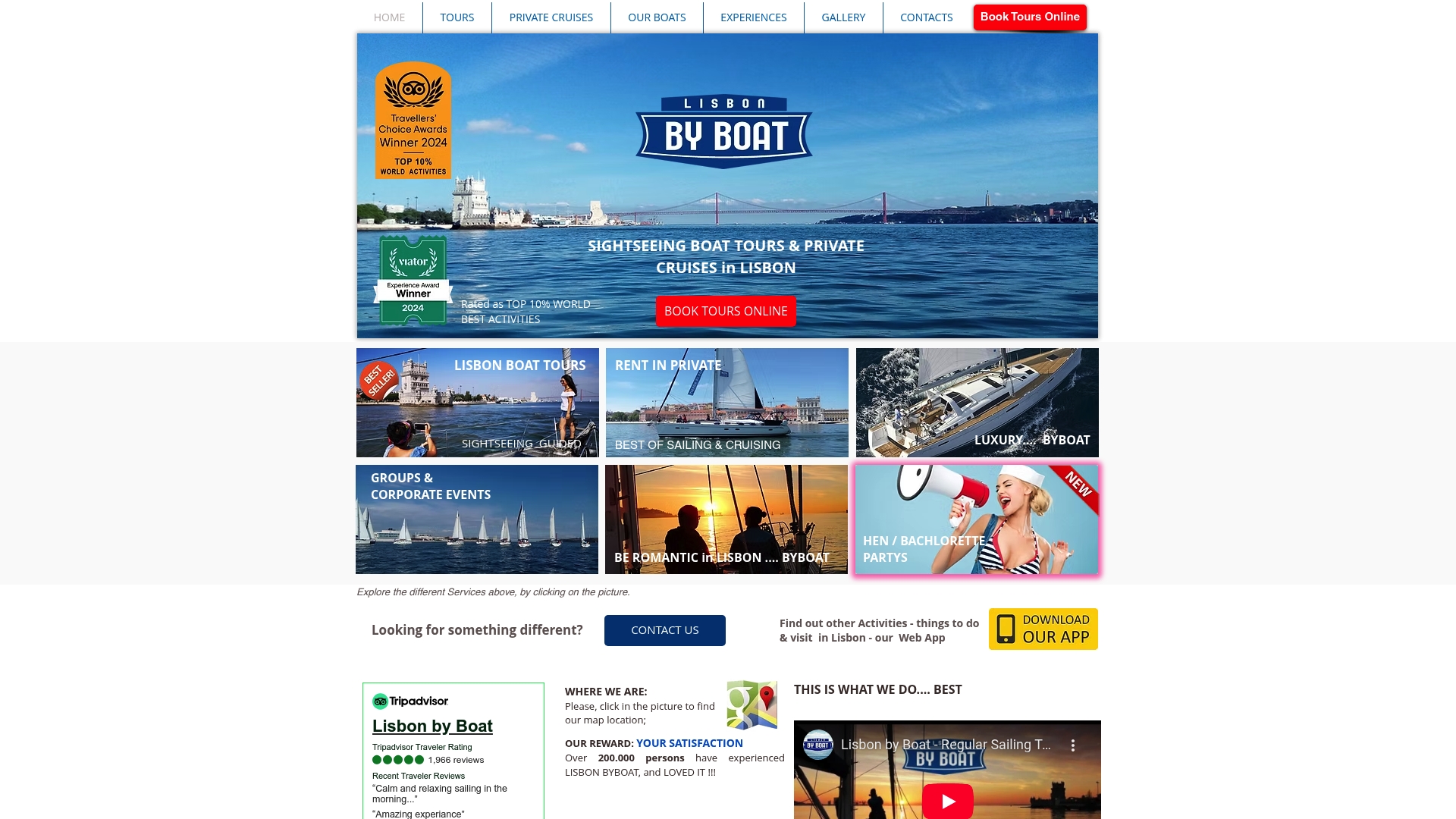
For a standard two-hour outing, our Lisbon Sailing Tour runs 45€ per person, and our Sunset Sailing Tour starts from 60€ per person. Planners who want a private, flexible booking can look at our private sailing and cruising programs, including a Romantic Sunset Sailing charter from 390€ per yacht, or check our group charter options for larger parties. If you are ready to see what a Tagus River setting could look like for your date, reach out through our booking page to check availability.
FAQ
What makes a venue count as “unique” in Lisbon?
A unique venue is typically one with a distinctive architectural history, an unconventional setting, or a feature no standard ballroom offers, such as a converted industrial building, a museum space, or a boat on the Tagus. Heritage palaces, riverside terraces, and nautical charters all qualify because each gives guests an experience tied to the setting itself rather than generic event decor.
How far in advance should I book a unique venue for a wedding?
Popular Lisbon venues, especially heritage sites and well-known museums, often book out six to nine months ahead or more, so starting your search early protects your date. Permit timelines add another layer, since waterfront events need at least five working days’ notice to the Port of Lisbon and public artistic shows require advance notification to the city.
Do historic venues in Lisbon allow open flames or fireworks?
Most heritage-listed venues restrict open flames, fireworks, and adhesive materials on historic surfaces to protect the building, and electrical work often needs a certified contractor. These limits apply at monuments like Castelo de São Jorge, so confirm specific restrictions with the venue before planning any pyrotechnics or candlelit decor.
How much does it cost to book a nautical venue for an event in Lisbon?
Pricing depends heavily on vessel size and duration: a standard two-hour sailing tour starts at 45€ per person, while a private sunset charter for a full yacht starts from 390€. Larger group charters and full-day private programs are quoted individually based on vessel type and guest count.
What size events can Lisbon’s unique venues handle?
Capacity varies widely by venue type: boutique bars and small yacht charters suit groups under 40, museum spaces like MAAT’s Generator Room handle up to around 250 standing, and large-format venues like Convento do Beato can accommodate as many as 5,500 guests. Matching your guest count to the venue’s published limits early prevents a last-minute scramble for a bigger space.
Sources
Recommended
Comments