

How to plan corporate nautical events in Lisbon

TL;DR:
Lisbon offers versatile, scenic locations ideal for corporate regattas accessible year-round.
Structured regattas promote team communication, leadership, and real-time decision-making skills.
Proper pre- and post-event reflection, customization, and goal alignment enhance long-term benefits.
Corporate team-building doesn’t have to mean another rented conference room and a trust-fall exercise. Lisbon offers something genuinely different: a working harbor, reliable Atlantic winds, and a coastline packed with iconic landmarks that make every outing memorable. A corporate regatta here isn’t just a fun day out. It’s a structured experience that builds real communication skills, surfaces natural leaders, and gives people a story they’ll still be telling six months later. This guide walks you through everything you need to organize a standout nautical event in Lisbon, from choosing your format to measuring ROI afterward.
Table of Contents
Key Takeaways
Point | Details |
Lisbon offers ideal nautical conditions | Protected Tagus waters and accessible ports make Lisbon perfect for professional sailing and corporate events year-round. |
Regattas drive real team results | Corporate regattas are proven to build communication, leadership, and lasting bonds among participants. |
Customization maximizes impact | Events can be tailored with branding, catering, and formats for company needs, regardless of sailing experience. |
Wellness and ROI matter | Nautical events foster wellness and measurable ROI, including reduced absenteeism and higher engagement. |
Expert guidance ensures success | Professional supervision, thoughtful scheduling, and structured debriefs are essential for impactful team-building. |
Why Lisbon is the ideal destination for corporate nautical events
Lisbon’s geography does a lot of the heavy lifting for event planners. The Tagus River offers a wide, protected stretch of water ideal for larger groups getting their first taste of sailing, while Cascais, just 30 kilometers west along the coast, delivers more open-water conditions perfect for competitive corporate regattas. You don’t have to choose one or the other. Many planners combine both locations across a two-day event to give participants a range of nautical experiences.
The city is genuinely accessible year-round for corporate events. That said, Lisbon is suitable year-round, with Cascais optimal March through November, and events may need rescheduling for weather. This is a manageable constraint when you plan with weather contingencies built in from the start.
From a logistics perspective, Lisbon scores high on several fronts:
Airport access: Lisbon’s Humberto Delgado Airport connects to most major European and international hubs, making it easy for multinational teams to gather.
Hotel proximity: Waterfront hotels in Belém, Cascais, and central Lisbon mean participants can walk or take a short ride to departure docks.
Group capacity: Regattas here scale from 10 participants up to 200 or more, with professional fleets ready to accommodate.
Iconic scenery: Racing past the Belém Tower, the 25 de Abril Bridge, and the Jerónimos Monastery creates a backdrop that no ballroom can replicate.
For planners new to the city, reviewing business travel tips for Lisbon before finalizing logistics saves significant time. And if you want a structured overview of what the sailing scene actually looks like, the Lisbon sailing event guide is a solid starting point.
| Feature | Tagus River | Cascais | |—|—|—| | Water conditions | Protected, calmer | Open, more challenging | | Best for | Beginners, large groups | Experienced teams, competitive races | | Optimal season | Year-round | March to November | | Landmark views | Belém Tower, 25 de Abril Bridge | Atlantic coastline, Cascais Bay |
Pro Tip: Schedule morning regattas whenever possible. Atlantic winds along the Lisbon coast tend to build through the afternoon, making morning slots more predictable and comfortable for participants who have never sailed before.
Regatta mechanics and team-building impact
A corporate regatta is more structured than most planners expect. It isn’t a case of putting employees on a boat and hoping for the best. The event follows a clear arc designed to maximize both safety and team impact.
Here’s how a typical corporate regatta unfolds:
Safety briefing: Every participant receives a thorough introduction to on-water safety rules, life jacket use, and emergency procedures. This is non-negotiable and sets a professional tone from the start.
Sailing training: Professional skippers walk teams through the basics: how to steer, how to trim sails, and who handles which role on deck. Roles like helmsman, trimmer, and tactician are assigned deliberately to mix seniority levels.
The race: Teams compete along a landmark-rich route. Corporate regattas in Lisbon involve teams racing along routes past landmarks like the 25 de Abril Bridge and Belém Tower, supervised by professional skippers.
Post-race debrief: Crews gather ashore to review performance, share what worked, and reflect on team dynamics observed during the race.
Awards and catering: Prizes, recognition, and a shared meal or drinks close the event on a high note.
One of the most underrated aspects of a regatta is what it reveals about your team under mild pressure. Sailing requires constant real-time decisions: when to tack, how to respond to a wind shift, when to defer to someone else’s read of the situation. Regattas foster communication, leadership, and real challenge; formats can be playful or competitive depending on your corporate goals.
“Regattas promote team spirit, communication, and leadership through real challenges that can’t be faked in a classroom setting.”
The playful format works best for mixed groups where some participants are cautious about physical activity. The competitive format suits sales teams, leadership cohorts, or groups where a bit of healthy rivalry drives engagement. For planners exploring Lisbon coastal sailing events, there’s a spectrum of formats available. Teams focused on sustainability goals may find Lisbon eco team-building formats a compelling alternative or complement.
Customizing regattas for corporate goals and group sizes
One of the biggest misconceptions about corporate regattas is that they’re a one-size-fits-all product. They’re not. The format, pacing, and experience can be tailored significantly to match your company’s specific objectives.
Here’s what customization typically includes:
Company branding: Flags, banners, branded life jackets, and customized race bibs make the event feel like your event, not a generic boat trip.
Photography and video: A dedicated photographer or drone operator captures moments that double as internal communications content or social media assets.
Catering options: From light snacks on deck to a full post-race lunch at a waterfront venue, catering is built around your group’s preferences and dietary needs.
Leadership challenges: Specific on-water tasks can be designed to mirror leadership scenarios relevant to your industry.
Evening extensions: Combine the regatta with a sunset cruise or a private dinner at a Lisbon waterfront restaurant.
Regattas are customizable with branding, catering, and photography; no experience is required, and typical duration is 3 to 4 hours for groups up to 200 or more. This makes the format accessible across a wide range of corporate profiles.
The numbers back this up. A tech company brought 120 participants to Cascais for an engagement-focused regatta, while a financial firm ran an offshore event for 200 participants that became a recurring annual fixture.
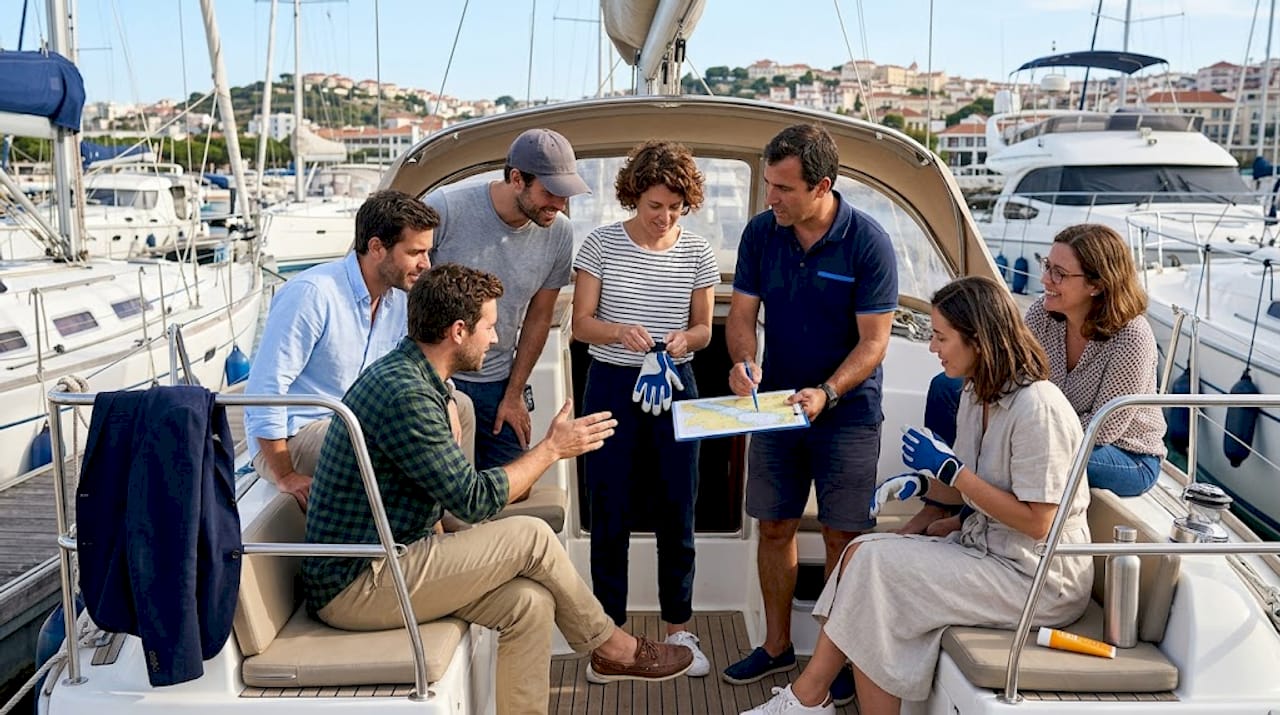
Group structure typically works as follows: 6 to 10 participants per yacht, with the total fleet size scaling to match your headcount. This ratio ensures that every person has a meaningful role during the race rather than just sitting as a passenger.
If you’re in the early stages of planning, understanding how to charter a yacht in Lisbon gives you a clear picture of fleet options. For inspiration on what keeps participants genuinely engaged, the keeping teams motivated resource is worth reading alongside a luxury yachts guide if you’re considering a premium setup.
Pro Tip: Match your regatta format to a specific team outcome before you book. If your goal is improving cross-department communication, design roles that deliberately mix teams. If you want to identify emerging leaders, use the competitive format and observe who steps up naturally.
Wellness, ROI, and practical considerations for a successful event
Corporate event budgets face scrutiny now more than ever. Planners who can demonstrate measurable outcomes justify investment more easily and secure repeat approvals. Nautical events make this case well when you know what to track.
The wellness case is strong. Physical activity, stress reduction, and social bonding in nautical events offer measurable ROI through reduced absenteeism. A half-day on the water delivers cardiovascular activity, fresh air, and social connection in a single package. These aren’t soft benefits. They translate into reduced sick days and improved morale over time.
Key metrics worth tracking before and after your event:
Employee engagement scores: Survey participants two weeks before and two weeks after the event.
Absenteeism rates: Compare the quarter following the event to the same period in the previous year.
Repeat booking rate: If teams ask to do it again, that’s a strong ROI signal.
Cross-department collaboration: Track whether new working relationships formed during the regatta lead to collaborative projects afterward.
Metric | Before event | 3 months after event |
Engagement score | Baseline | Target: 10-15% increase |
Absenteeism rate | Baseline | Target: measurable reduction |
Team collaboration index | Baseline | Track new cross-team projects |
Repeat booking intent | N/A | High = strong ROI signal |
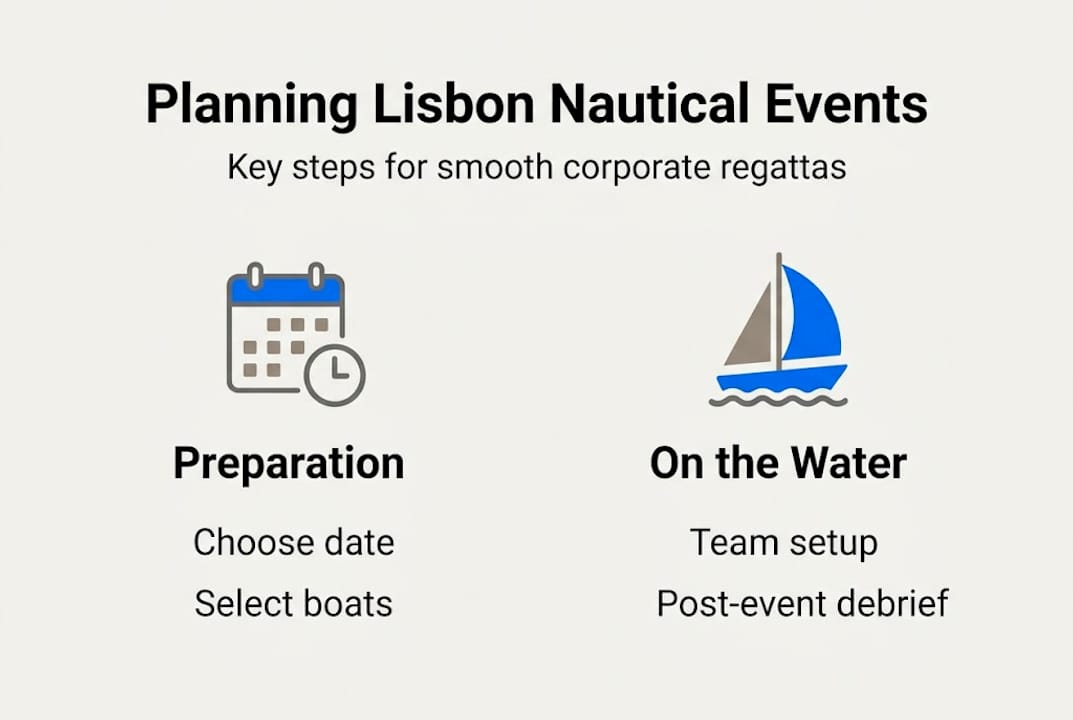
On the logistics side, events may be rescheduled for weather; year-round suitability and tidal and daylight planning are crucial. Build at least one backup date into your contract, and confirm your provider’s rescheduling policy in writing before signing.
If your group includes participants with mobility limitations, confirm accessibility at the dock and on the vessels. For a more relaxed wellness-focused experience, a Lisbon sunset sailing format complements a regatta nicely as an optional add-on. More detailed guidance on structuring the wellness component lives in the team wellness Lisbon resource.
Pro Tip: Never skip the post-event debrief. This is where team learning gets locked in. A structured 20-minute reflection session, facilitated by one of your skippers or an internal leader, turns a fun memory into a practical lesson that participants carry back to the office.
What most planners miss when organizing Lisbon nautical events
After working with corporate groups on the water in Lisbon, the pattern is clear: the event itself is rarely the problem. What planners consistently undervalue is everything that happens before and after the boat leaves the dock.
The post-event debrief is the most skipped and most valuable part of the entire experience. Teams that sail together and then reflect together come away with shared language and shared references. That’s what transfers to the workplace. Without it, you get a great memory. With it, you get a team that actually changes how it works.
The choice between playful and competitive formats matters more than most planners realize. Choosing competitive for a team that includes several conflict-averse personalities can backfire. Choosing playful for a high-performing sales team can feel patronizing. The format needs to match the team’s personality, not just the planner’s preference.
Tracking corporate wellness benefits isn’t just a reporting exercise. It’s the mechanism that turns a one-off event into an annual program. Companies that measure outcomes are the ones that come back year after year, and those recurring events build genuine team culture over time rather than a single spike in morale.
Nautical events in Lisbon work. But they work best when planners treat them as the beginning of something, not a standalone reward.
Bring your next corporate event to life on Lisbon’s waters
If this guide has sparked ideas for your next team event, the next step is connecting with providers who specialize in exactly this kind of experience.
At Lisbon By Boat, we offer luxury yacht charters and team-building tours in Lisbon designed to handle groups of all sizes, from intimate leadership retreats to full-company regattas. Our sailing yachts and catamarans cover the Tagus River and the Cascais coastline, with expert guides who know how to make every participant feel confident on the water. Explore everything we offer at Lisbon By Boat and start planning an event your team will actually talk about long after it’s over.
Frequently asked questions
How many people can participate in a Lisbon corporate regatta?
Lisbon regattas accommodate groups from 10 to over 200 participants, with teams of 6 to 10 people assigned per yacht to ensure everyone has an active role.
Is sailing experience required for corporate nautical events?
No experience is needed at all. Professional skippers supervise and train all participants from the moment they board, making the activity genuinely inclusive for first-timers.
What happens if the weather is bad on event day?
Adverse weather may reschedule events, so planners should confirm rescheduling policies with providers upfront and factor tides and daylight into backup date options.
How are regatta events customized for company needs?
Regattas can be branded with company logos, paired with catering and professional photography, and structured with competitive or playful formats depending on your team’s specific goals.
What measurable benefits do nautical team-building events provide?
Physical activity and bonding from nautical events deliver improved team communication, stress reduction, stronger interpersonal connections, and measurable reductions in employee absenteeism over time.
Recommended
Comments