

Lisbon historical sightseeing: top maritime landmarks by boat
TL;DR:
Lisbon’s water-based sightseeing offers a unique perspective on its maritime history and iconic landmarks.
Small, live-guided boat tours provide authentic, immersive experiences that surpass land-based views.
Booking early for sunset or private tours ensures maximum engagement and memorable encounters.
Lisbon’s most iconic monuments are not hiding inside museums. They line the banks of the Tagus River, best seen from the water, where the context of centuries of seafaring culture actually makes sense. Historical sightseeing means traveling to experience places, artifacts, and stories that represent the past. In Lisbon, that past is deeply tied to the ocean. This article walks you through what historical sightseeing really means, which landmarks reward a river perspective, and how a sailing tour transforms a city visit into something you’ll genuinely remember.
Table of Contents
Key Takeaways
Point | Details |
True historical sightseeing | In Lisbon, history comes alive through authentic experiences that connect past and present on the water. |
Landmarks from the river | Seeing Lisbon’s most iconic sites by boat offers fresh perspectives and richer narratives. |
Experience matters | Small-group, guided tours on historic vessels foster meaningful engagement and authentic atmosphere. |
Insider planning tips | Booking early and choosing historic boats maximize both learning and enjoyment during your tour. |
What is historical sightseeing?
At its core, historical sightseeing means seeking out authentic places and experiences that tell a destination’s real story. It goes well beyond taking photos in front of old buildings. You’re looking to understand how people lived, what shaped a city, and why certain events still matter today.
As a form of travel, heritage tourism focuses on authenticity. You’re not looking for a reproduction or a theme park version of the past. You want the real thing: original architecture, surviving traditions, and stories rooted in fact. Similarly, heritage tourism is defined as cultural tourism focused on experiencing destinations as they genuinely were and still are.
In Lisbon, this takes on a strong maritime flavor. The city sent explorers across unknown oceans in the 15th and 16th centuries, mapping coastlines and establishing trade routes that changed the world. That history is not abstract here. It is carved into stone towers, woven into monastery walls, and visible from the riverbank.
Why do travelers seek historical sightseeing experiences? A few key reasons stand out:
Connection to something larger than the present moment. Understanding pivotal events makes your visit feel meaningful.
Sensory engagement. You’re not reading about history, you’re standing in it, smelling salt air, hearing water against a hull.
Context for modern life. Seeing where Lisbon began helps explain why the city looks and feels the way it does today.
Memorable stories. Facts fade. Experiences don’t.
“The best historical sightseeing isn’t about ticking off monuments. It’s about understanding why they were built and what they cost the people who built them.”
When you discover Lisbon ByBoat, you’re doing exactly that. You’re approaching the city the way its explorers once left it: from the water. The river gives you the physical and emotional distance to see the whole picture at once. Research on Lisbon sightseeing satisfaction consistently shows that water-based tours outperform bus tours in terms of engagement and lasting impressions.
Lisbon’s must-see landmarks from the water
The Tagus River offers a front-row view of Lisbon’s most significant historical sites. Some of these you can visit on land, but the perspective from the water is completely different. You see how they relate to each other, how they faced the sea, and why they were positioned exactly where they are.
Here’s a quick overview of the key landmarks and why they matter:
Landmark | Era | Why it’s significant |
Belém Tower | 16th century | UNESCO World Heritage Site, symbol of the Age of Discoveries |
Jerónimos Monastery | 16th century | Portuguese late Gothic masterpiece, heart of maritime history |
Monument to the Discoveries | 20th century | Visual tribute to Portugal’s global explorers |
25 de Abril Bridge | 1966 | Iconic suspension bridge, visible reminder of modern Lisbon |
Praça do Comércio | 18th century | Historic royal square opening directly onto the river |
São Jorge Castle | Moorish/Medieval | Ancient fortification overlooking the entire city |
Cristo Rei | 1959 | Iconic statue visible across the estuary |
Sailing tours on the Tagus feature all of these sites in sequence, creating a visual timeline from medieval Lisbon to the present day. The effect is surprisingly powerful.
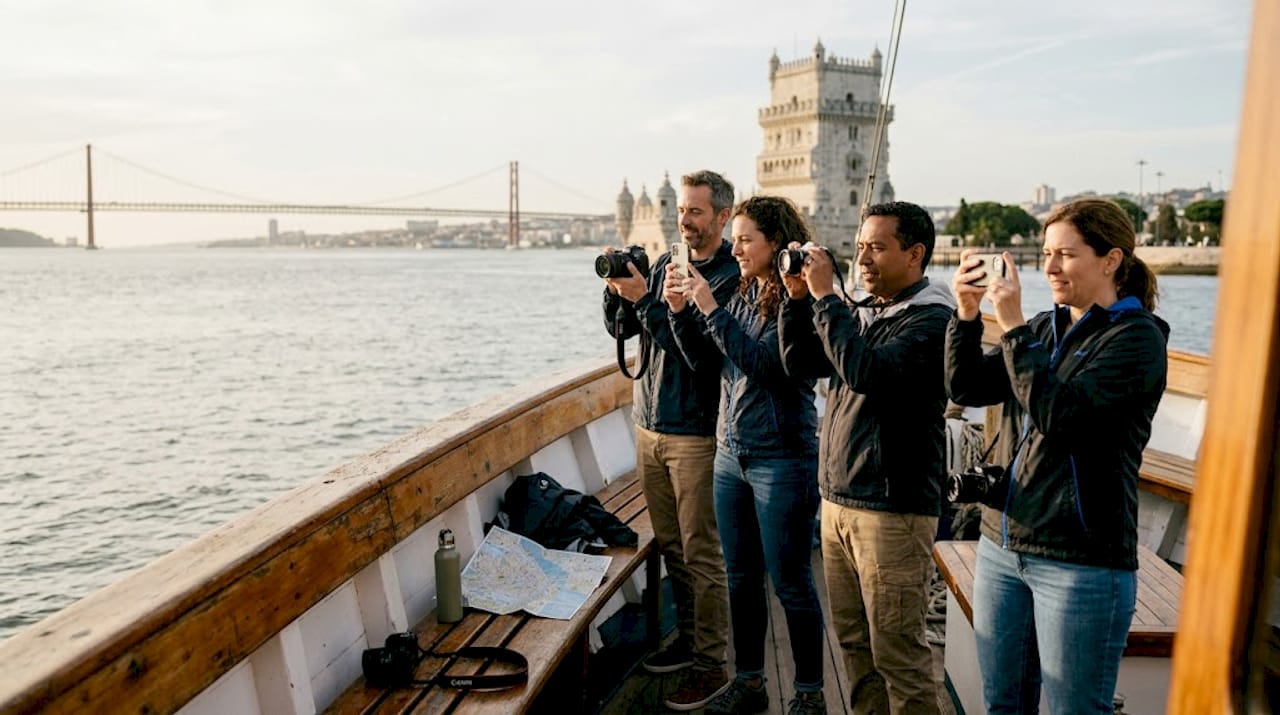
The Belém Tower deserves special attention. Built in the early 1500s, it served as a fortress, a lighthouse, and a ceremonial gateway for ships leaving to explore the world. Seeing it from the water, rising directly out of the river, is dramatically different from standing beside it on land. The Lisbon Boat Tour Gallery captures many of these river views, and even photos don’t fully do it justice.
Bullet highlights for each landmark:
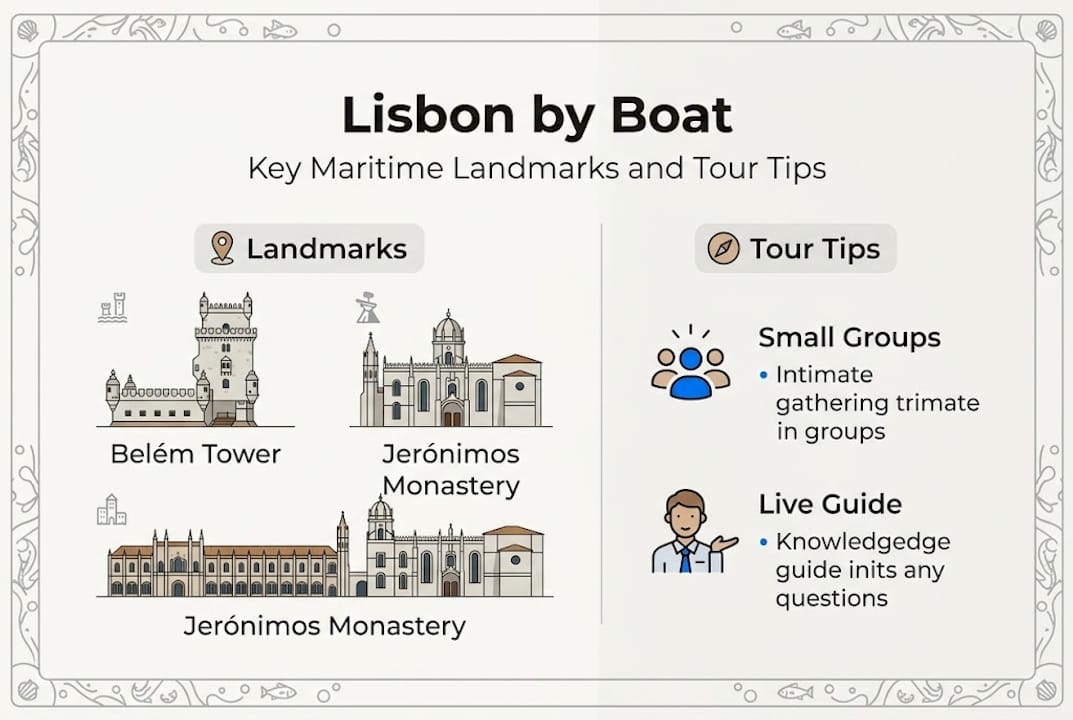
Belém Tower: Best viewed from mid-river; the full structure and its defensive position only make sense from the water.
Jerónimos Monastery: The sheer scale becomes obvious when you see it framed against the waterfront.
Monument to the Discoveries: The stone figures lean forward as if still ready to sail. From the river, you see who they were pointing toward.
Pro Tip: Position yourself on the port side (left side facing forward) of the boat as you head upstream toward Belém. That’s where all the major monuments appear in sequence, making it easier to follow the Lisbon sightseeing tour guide narrative without turning around.
How sailing tours bring history to life
Knowing which landmarks to look for is the starting point. What actually transforms a boat ride into a genuinely educational experience is how the tour is structured and who is telling the stories.
The difference between a sailing tour and a standard land tour is more significant than most people expect. Here’s a direct comparison:
Feature | Sailing tour | Land tour | Large cruise ship |
Group size | Small (10 to 50) | Variable | Often 100+ |
Narration style | Live, personal | Recorded or scripted | Broadcast over speaker |
Vessel authenticity | Historic boats | Bus or van | Modern ship |
Landmark proximity | Water level, close | Street level | Distant |
Overall engagement | High | Moderate | Low |
Traditional boats with live multilingual guides highlight the Age of Discovery in a way that feels immediate and personal. The guide stands a few feet away. You can ask questions. The story adapts to your group.
Here’s how a typical sailing tour unfolds:
Boarding at the dock. You meet your guide, receive a safety briefing, and get oriented to the boat and its history.
Departure from central Lisbon. The city skyline opens up immediately. Your guide begins setting the historical scene.
Passing Praça do Comércio. The guide explains its role as the royal gateway to the Atlantic world.
Approaching Belém. Stories of Vasco da Gama and the explorers who launched from this exact stretch of river.
Viewing Jerónimos and the Monument. Cultural and political context fills in what you’re seeing.
Return journey. Time for questions, reflection, and photos with the city skyline behind you.
One detail that surprises most guests: some tours use traditional boats in Lisbon built in 1947. Only seven of these original cargo boats still exist. Sailing on one is not a gimmick. It is a direct material connection to Lisbon’s working waterfront history.
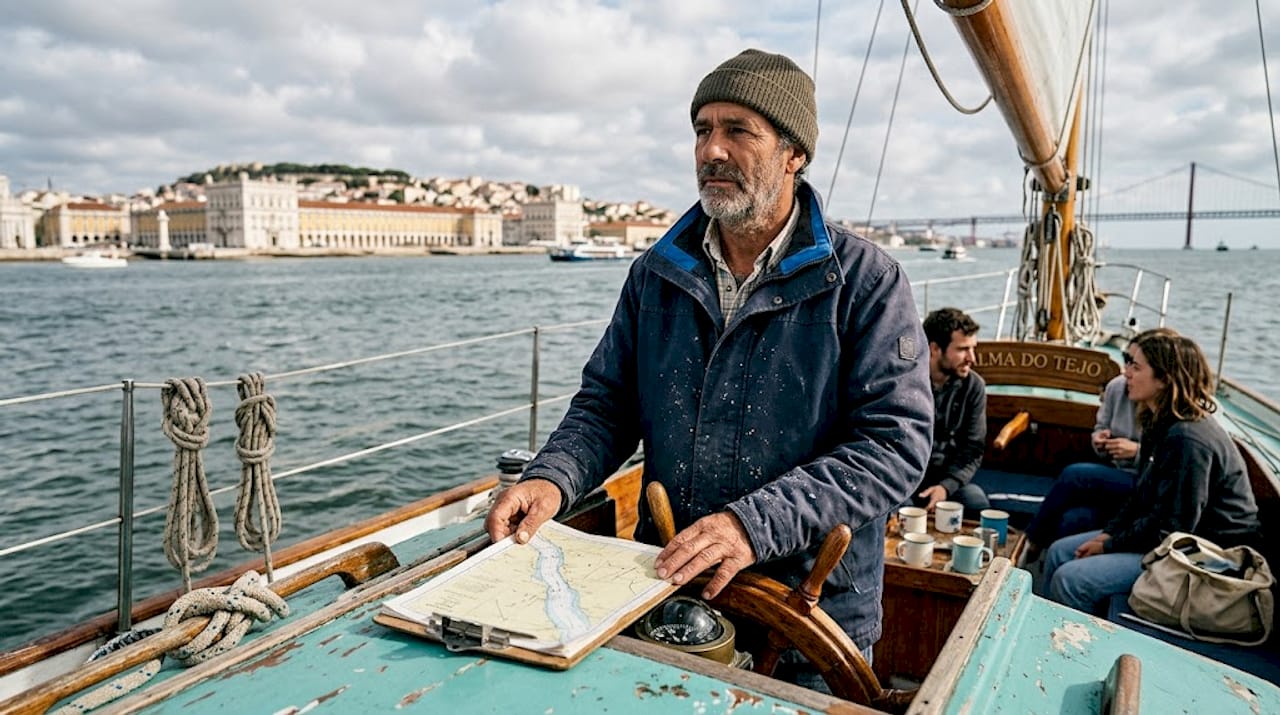
Pro Tip: When booking, look specifically for tours that advertise live multilingual commentary and historic vessels. That combination, as described in detail on private coastline tour options, consistently delivers the most engaging experience for curious travelers.
Practical tips and what most tourists miss
The difference between a good boat tour and a great one often comes down to a few decisions made before you even step on board. Most visitors don’t think about these until it’s too late.
Weather awareness matters more than people expect. Lisbon can be breezy on the Tagus, even when the streets feel warm. Bring a light layer regardless of the season. Many tours offer blankets, which sounds minor until you’re grateful for one at sunset.
Group size shapes everything. Small groups of 10 to 50 people create space for genuine interaction with the guide. You hear the stories clearly, you can ask follow-up questions, and the energy stays focused. Large party boats, though cheaper, tend to reduce historical commentary to background noise.
For practical guidance on what to expect, what to know about boat tours covers the essentials most first-timers overlook.
Here’s what most visitors miss:
Sunset timing. Lisbon sunset sailing tours are extraordinary, with the golden light hitting the Belém Tower and the bridge at the same moment. They also sell out fast. Book at least 48 hours ahead.
Historic vessel availability. Tours on the 1947 cargo boats are limited by the number of boats. They book faster than standard tours.
Mobility planning. Boarding a historic boat involves stepping over the hull edge, sometimes with a slight lean. If you or someone in your group has mobility limitations, confirm the boarding process before booking.
Early or late slots. Midday tours are fine, but the light is flat and the river can be busy. The first morning departure or the last evening slot offer the most dramatic views and quieter water.
“Small groups consistently outrank large boats in satisfaction scores, especially when historical learning is the goal.”
As boat tours in Lisbon research shows, small groups offer more educational value, and sunset cruises book fast with historic vessels adding measurable authenticity to the overall experience.
Pro Tip: For the best combination of learning and ambiance, choose the earliest morning tour or the last slot before sunset. Both offer calmer conditions, better light, and guides who are fully engaged rather than rushing through a midday schedule.
Why Lisbon’s history is best discovered by boat: Our take
After years of taking guests out on the Tagus, we’ve come to a firm conclusion: the river is not just a setting for Lisbon’s history. It is the reason Lisbon’s history happened at all.
Every landmark you see from the water was built in relationship to that water. The Belém Tower wasn’t built to impress pedestrians on a promenade. It was built to guard ships. Praça do Comércio wasn’t just a public square. It was the mouth of an empire opening toward the Atlantic.
Land tours give you access to these places. Boat tours give you their meaning. That distinction matters more than it might sound. Modern tourism often reduces history to a list of facts read off a screen or a plaque. What we’ve seen, over thousands of tours, is that the stories people remember years later were told while the wind was moving the sails and the monuments were passing at eye level.
Lisbon’s boat-building tradition is itself part of that history. Sailing on a vessel built with traditional methods, guided by someone who understands what you’re seeing and why it mattered, is how historical sightseeing becomes something more than tourism. It becomes a real encounter with the past.
Plan your ultimate historical sightseeing tour in Lisbon
If Lisbon’s maritime history has captured your curiosity, the next step is getting out on the water to see it for yourself.
ByBoat Tours offers daily sailing tours that run two hours, designed specifically to bring Lisbon’s historical coastline to life through expert onboard narration. For a more exclusive experience, Luxury Yachts in Lisbon are available for private full-day charters with personalized routes and guides. Sunset slots and small-group classic tours fill up quickly, especially in spring and summer. Booking early, particularly for sunset or private cruises, ensures you get the time slot and vessel type that makes the experience truly memorable.
Frequently asked questions
What makes historical sightseeing by boat different from land tours in Lisbon?
Boat tours place you directly on the river that shaped Lisbon’s history, offering unique sightlines and live storytelling tied specifically to Portugal’s maritime exploration. Land tours give access; water tours give perspective.
Which landmarks are typically included in a Lisbon historical sightseeing boat tour?
Key landmarks on most sailing tours include Belém Tower, Jerónimos Monastery, Monument to the Discoveries, 25 de Abril Bridge, Praça do Comércio, São Jorge Castle, and Cristo Rei, all visible from the Tagus.
Are historical sightseeing boat tours suitable for all visitors?
Most visitors enjoy sailing tours, but those with mobility limitations should confirm boarding procedures in advance, as stepping onto historic vessels may require some physical agility.
How far in advance should I book a sunset historical sightseeing cruise in Lisbon?
Sunset cruises book at least 48 hours ahead due to high demand, and in peak season, even earlier booking is strongly recommended to secure your preferred time slot.
What amenities are usually included on these tours?
Most tours provide live commentary, small group settings, historic vessels, and practical comforts. As noted by Lisbon tour providers, amenities like welcome drinks and blankets are commonly included for weather changes.
Recommended
Comments