

Lisbon for Photographers: 10 Spots, One Day Route & Boat Views

Lisbon’s best images come from pairing the right light with the right elevation: miradouros at golden and blue hour, Alfama’s narrow lanes in morning sidelight for tiles and trams, and the Belém waterfront at low tide for long exposures. Arrive early, carry a light tripod for blue hour, and frame by the quality of light rather than chasing landmark names one by one.
TL;DR:
The best light for Lisbon photography occurs during golden and blue hours, especially at miradouros, waterfronts, and narrow streets, with timing depending on direction faced.
Early visits are essential at popular spots like Santa Luzia and Portas do Sol to avoid crowds and capture intimate scenes with the best illumination.
Using a versatile kit with a mirrorless camera, zoom lenses from 24-200mm, and a tripod will cover most landscapes, street, and night shots effectively.
Low tide in Belém and boat tours offer unique unobstructed views of the bridge, tower, and waterfront, especially during sunset or blue hour.
Personal photography generally requires no permit, but commercial shoots and drone operations need prior authorization from local authorities.
Table of Contents
1. Top Photo Spots and When to Shoot Them
Lisbon rewards photographers who plan by neighborhood and light rather than by a checklist of monuments. These ten spots cover the city’s signature compositions, from hilltop panoramas to tile-covered alleys.
Miradouro da Senhora do Monte: the widest panorama in the city, taking in São Jorge Castle, the rooftops of Alfama, and the 25 de Abril Bridge in one frame. Arrive before sunset to claim a spot along the low wall, and bring a small towel if you want a low foreground angle. A 24-70mm or a 35mm prime handles the panorama well, and this framing advice comes from local spot mapping for Lisbon.
Miradouro de Santa Luzia and Portas do Sol: these twin terraces catch morning sidelight on azulejo panels and bougainvillea vines, producing intimate frames rather than wide vistas. A 35-50mm lens suits the tighter compositions, and tour groups start arriving after 9am, so an early visit pays off.
Tram 28 at the Sé approach and Calçada de São Vicente: shoot from the street, never from inside the tram, using a moderate telephoto around 85mm equivalent to compress the yellow carriage against the church facade or cobbled incline. Bump your ISO to freeze motion if the tram is moving through the frame; the Sé approach and Calçada de São Vicente are the two positions locals recommend for morning and late-afternoon light respectively.
Santa Justa Lift and Carmo Convent at blue hour: this pairing works 20 to 40 minutes after sunset, when the lift’s ironwork glows against a darkening sky and the convent’s arches catch ambient light. Bring a small tripod and a 24-70mm, and consider walking up through the Terraços do Carmo to skip the queue at the lift’s base.
Belém cluster: Belém Tower, Jerónimos Monastery, Padrão dos Descobrimentos, and MAAT form a loose chain along the river that rewards low tide and golden hour. An ND filter lets you stretch exposures for smooth water around the tower, while a wide-angle lens suits the curved roofline of MAAT.
Cais do Sodré and the 25 de Abril Bridge: sunset silhouettes and blue-hour reflections off the Tagus make this stretch worth the walk. A 70-200mm isolates individual bridge spans against the sky, which reads cleaner than trying to fit the whole structure into one frame.
LX Factory and Pink Street: by day this is industrial texture and street art; by night, neon signage and wet cobblestones make for striking long exposures. A tripod helps after dark, and any shoot involving models, crews, or commercial intent falls under permit rules covered later in this guide.
Praça do Comércio and Arco da Rua Augusta: the arch frames the square’s symmetry well, and arriving before blue hour gives a clean, people-free foreground before the plaza fills with evening visitors.
Miradouro de Santa Catarina and Miradouro da Graça: both lean toward sunset portraits, with Santa Catarina’s open terrace often hosting street musicians whose silhouettes add a human element against the colored sky.
Carmo Convent’s roofless nave and the Jerónimos cloister: these interiors favor overcast days or soft morning light, since diffuse conditions reveal carved limestone detail that direct sun tends to flatten into harsh contrast. Some interiors restrict tripods, so check posted rules before setting up.
Pack a microfiber cloth and spare battery for any viewpoint session longer than an hour.
Group Alfama’s miradouros together in one outing since they sit within a short walk of each other.
Pro Tip: Treat Lisbon’s hills as part of the composition, not just a way to reach a view, since the elevation changes themselves create depth and layered frames.
2. When to Shoot: Light, Seasons, and Timing
Lisbon’s light shifts by neighborhood as much as by hour. Eastern-facing terraces like Santa Luzia and Portas do Sol catch the cleanest light at dawn, while western perches such as Senhora do Monte, Graça, and Santa Catarina come alive at sunset. Plan your day around which direction a viewpoint faces rather than a fixed clock time.
Arrive 20 to 30 minutes before golden or blue hour to secure a position before crowds settle in.
Shoot east-facing terraces at dawn and west-facing ones at sunset for the strongest color.
Avoid 10am to 4pm in summer, when harsh Tagus glare flattens texture and contrast across most outdoor scenes.
Use that midday window for sheltered interiors like Carmo Convent or for an unhurried Belém visit instead.
October and late April stand out as the two strongest windows for Lisbon photography. October brings warmer, lower-angle light with thinner crowds than peak summer, and late April often coincides with jacaranda bloom around the city, adding purple foliage to street scenes. Spring generally delivers reliable, soft light without the Tagus glare that defines Lisbon’s summer afternoons.
3. Gear and Settings for Viewpoints, Trams, and Night Shots
A manageable kit covers almost every situation in this guide. A mirrorless body paired with a 24-70mm and a 70-200mm handles most viewpoints and tram compressions, and a 16-24mm wide-angle earns its place for tight interiors like the Carmo Convent nave. A lightweight tripod and a circular polarizer round out the essentials for water and sky work.
Viewpoints: keep ISO low and stop down to f/8 or f/11 for depth, then bracket exposures at sunset to hold detail in both sky and shadowed rooftops.
Trams and street scenes: use 1/500 to 1/1000 of a second at 35-85mm to freeze a moving tram, or drop to 1/15 to 1/60 of a second with a panning motion for intentional blur.
Blue hour and long exposure: mount the camera on a tripod with a remote release, set ISO between 50 and 200, and choose a shutter speed from 2 to 30 seconds depending on water or cloud movement, adding an ND filter in brighter conditions.
Phone shooters: lock exposure manually, shoot in RAW where the camera app supports it, and carry a mini-tripod or gimbal for steadier night frames.
Pro Tip: Bracket your blue-hour shots in half-stop increments rather than relying on a single exposure, since the gap between sky brightness and lit building facades grows fast in those twenty minutes.
4. Safety, Transport, Permits, and Tide Logistics
Petty theft targets distracted photographers more than most visitors, so keep gear close and switch to a cross-body chest bag on trams and at crowded miradouros rather than a loose shoulder strap. A Navegante card covers trams and funiculars and saves time compared to buying single tickets at each stop, and grouping spots by neighborhood cuts down on repeated climbs up and down Alfama’s hills.
Personal, non-commercial photography in public places generally needs no permit in Lisbon.
Commercial shoots or any occupation of public space require a permit from the Lisboa Film Commission and Lisbon City Council, with applications submitted at least 15 working days ahead for larger occupations and shorter lead times for small sessions.
Drone flights that capture imagery over Portuguese territory require ANAC and e-AAN clearance, with tighter restrictions near the historic center and the airport.
Low tide at Belém produces reflective pools below the tower, which makes checking a tide table worthwhile before a sunset long-exposure session.
5. A Boat’s-Eye View of Lisbon’s Skyline
Shore-based viewpoints get crowded exactly when the light is best, and a boat removes that competition entirely. From the water, the 25 de Abril Bridge and the Belém waterfront line up into uninterrupted silhouettes that no miradouro can replicate, since there is no railing, no tourist beside you, and no building blocking the angle.
A boat vantage point suits low-angle reflections, long-exposure bridge silhouettes, and sunset sessions where shore access is packed. Our 2-hour guided sailing tours and private cruises include onboard commentary that helps photographers identify landmarks and track how the light moves across the skyline during the trip, which is useful when you are deciding where to point the camera next.

6. A Checklist and One-Day Route for Photographers
A tight kit and a planned route beat wandering between miradouros without a sequence. Pack spare batteries, a microfiber cloth, a circular polarizer, a mini-tripod, grippy comfortable shoes for cobblestones, a small towel for low-angle shots, and a Navegante card for transit between neighborhoods.
Morning: start at Alfama’s viewpoints and catch Tram 28 at the Sé approach while the light is still soft.
Midday: retreat to sheltered Baixa spots like Carmo Convent or the arcades near Rua Augusta, avoiding open glare.
Afternoon: head to Belém for low-tide reflections and golden-hour frames around the tower and monastery.
Sunset: climb to Senhora do Monte or Graça for the city’s widest panorama as the sky turns.
Blue hour: finish at Santa Catarina or Santa Justa for the last long exposures of the day.
Budget 20 to 40 minutes at each major viewpoint and 10 to 15 minutes at a tram-action corner, which keeps the day moving without rushing the shots that matter most.
— Lisbon
Another Angle: Shooting Lisbon’s Skyline From the Water
Shore viewpoints give you height, but a boat gives you an angle no miradouro offers: a clean, unobstructed line on the bridge, the tower, and the waterfront skyline without another tripod crowding your frame. For photographers chasing a sunset or blue-hour shot without competing for railing space, a sailing trip on the Tagus solves that problem directly.
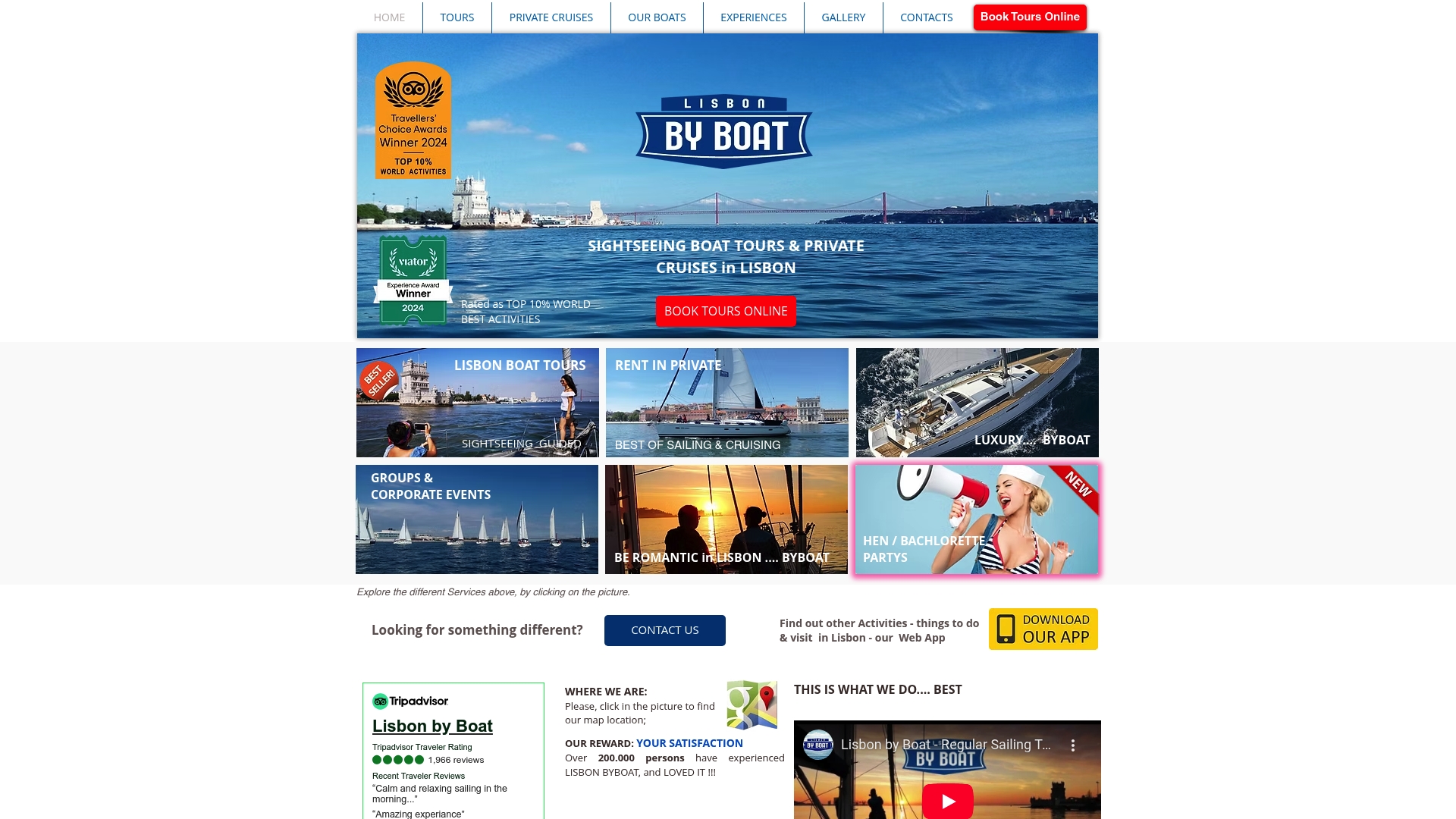
Our 2-hour sightseeing and sunset sailing tours run guided routes past Belém and the bridge with live commentary on the monuments passing by.
Photographers wanting a dedicated vessel and a flexible schedule can arrange a private sailing program through our private sailing and cruising options, timed to golden or blue hour.
A preview of what these waterfront angles look like in practice sits in our boat tour gallery.
Check availability for a sunset or private sailing slot through our tours page and plan your shoot around the window that suits your light.
FAQ
Is it safe to walk around Lisbon with a camera?
Lisbon is generally fine for carrying camera gear, but pickpocketing targets distracted tourists on crowded trams and at busy miradouros. Use a cross-body bag, keep gear zipped when not shooting, and stay aware in dense tourist spots like Alfama’s main lanes.
Where should I take photos in Lisbon?
The strongest results come from miradouros like Senhora do Monte and Santa Luzia at golden and blue hour, Alfama’s streets for tile facades and Tram 28, and the Belém waterfront for long exposures at low tide. Each of these works best at a specific time of day, so match your route to the light rather than visiting in a random order, and consider using services like the Lisbon AI Photo Enhancer to improve your property and interior photos for listing presentations.
What is the most photographed street in Lisbon?
Alfama’s lanes around the Sé Cathedral approach and Calçada de São Vicente see the heaviest photography traffic, largely because Tram 28 passes through tight, tile-covered corridors there. Morning light works best for the Sé approach, while late afternoon suits the Calçada de São Vicente angle.
Is street photography legal in Lisbon?
Personal, non-commercial photography in public spaces is generally allowed without a permit in Lisbon. Commercial shoots or anything occupying public space require a permit from the Lisbon City Council, with applications submitted well in advance for larger setups.
What camera gear works best for Lisbon’s viewpoints?
A mirrorless body with a 24-70mm lens covers most miradouro and street scenes, while a 70-200mm compresses tram shots and bridge views. A small tripod and a circular polarizer round out the kit for blue hour and reflective water scenes.
Sources
Recommended
Comments