

Event Planners: Book Lisbon Venues 6–9 Months Ahead, District by District
- lisbonbyboat
- 10 hours ago
- 14 min read
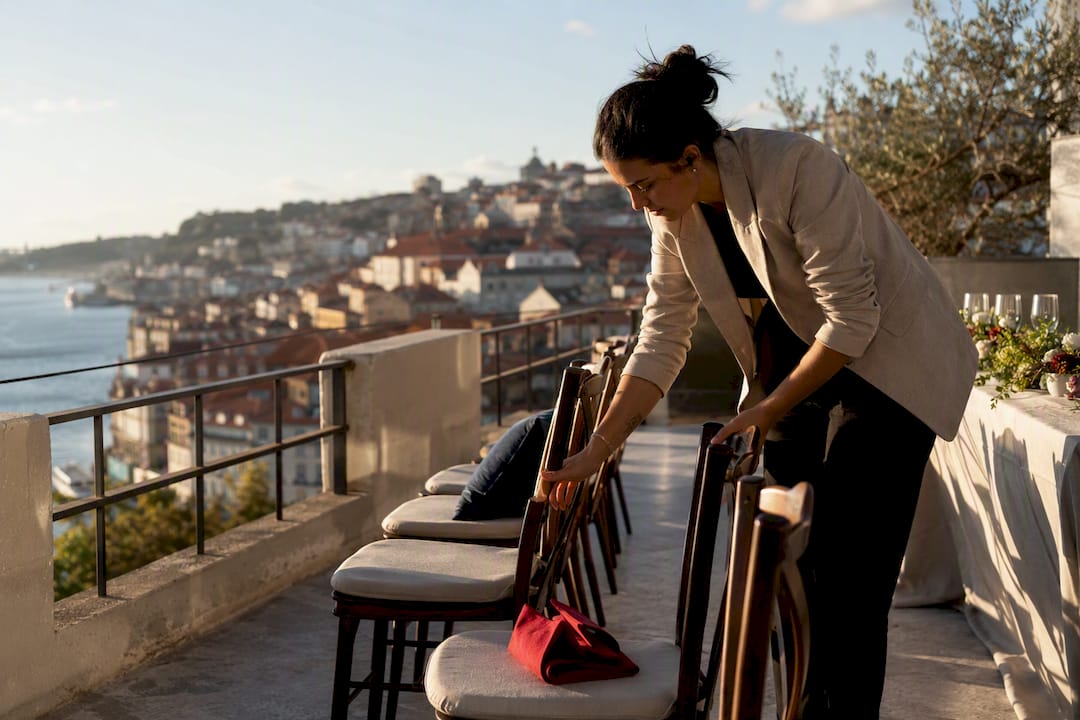
Book your venue six to nine months out if you want a peak season date, put catering at the top of your budget, and build in one Lisbon-specific experience—such as a sunset sailing cruise—that guests will actually remember. November fills up fastest among the months. Catering, not the room, will eat most of your budget.
TL;DR:
Book peak season events such as large congresses Six to nine months in advance to secure flagship venues and ensure availability.
Catering costs about €39 per guest, surpassing venue rental expenses, so budget accordingly and negotiate based on final guest counts.
November is the most competitive month for bookings, requiring early contracts and a strong contingency plan for weather and vendor delays.
Lisbon’s hills and waterfront locations demand early transportation planning and confirmation of indoor backup spaces for outdoor events.
Incorporating local experiences like sunset sailing cruises or walking food tours creates memorable moments that engage guests beyond typical event formats.
Table of Contents
Lisbon Event Planning Tips: Where to Start With Venue Selection
Every solid Lisbon event plan starts with a venue that matches your guest list, your budget, and your backup plan for bad weather. Lisbon has roughly 296 event venues listed across the city, and the district you pick shapes almost everything downstream, from transport costs to the mood of the event itself.
Santa Maria Maior and the historic center (Alfama, Baixa) gives you postcard views and cobblestone charm, but narrow streets mean limited load-in access for AV trucks and large deliveries. Príncipe Real and Avenida da Liberdade deliver elegant boutique palacetes, ideal for smaller receptions where atmosphere matters more than square footage. Belém offers riverside pavilions and museum-adjacent venues with genuine waterfront views, a strong option for anyone who wants the Tagus River as a backdrop without sacrificing formality. Marvila and Beato, the city’s converted warehouse district, host the largest floor plates in Lisbon, better suited to product launches, large parties, or anything needing an open industrial shell.
Capacity tiers roughly break down like this:
Compact venues (under 50 guests): palacetes, private dining rooms, smaller rooftop terraces.
Standard venues (50 to 200 guests): converted palaces, hotel ballrooms, mid-size riverside pavilions.
Premium and large-scale venues (200 plus): Centro de Congressos de Lisboa, FIL at Parque das Nações, and arena venues for congresses and major productions.
If you’re eyeing a terrace or waterfront setting, Lisbon’s Atlantic-facing climate means you need an indoor contingency booked and confirmed, not just discussed. Ask any venue you’re touring these questions on site: What’s the maximum guest capacity with a dance floor or stage? What’s the covered backup space if it rains? Is there loading dock or street access for vendors? What’s included versus what you’ll need to bring in separately (tables, linens, sound)?
When Should You Book Venues and Vendors in Lisbon?
Lisbon’s event calendar has a rhythm, and missing it costs you either your first-choice venue or your negotiating leverage.
Book large congresses and peak-season events 6 to 9 months ahead. This is the standard window event planners and venue experts recommend for anything requiring flagship venues or coinciding with high-demand dates.
Smaller meetings and incentive programs need only a few months. Boutique venues and mid-size spaces move faster if your group is under 100 guests.
Treat November as the tightest month on the calendar. It’s Lisbon’s peak month for event requests, pulling in roughly 15% of all bookings citywide.
September and October run a close second, riding the tail end of warm weather with slightly better availability than November.
January and February are your negotiating window. Booking during this slower stretch can unlock better rates on landmark rooms while still leaving room for mild-weather outdoor programming.
Lock contracts the moment a venue confirms availability for your date. Verbal holds in Lisbon rarely last more than a week before another planner books around you.
What Does an Event in Lisbon Actually Cost?
Most first-time planners assume the venue rental is the biggest line item. It usually isn’t.
By the numbers: Catering in Lisbon averages about €39 per guest, while venue rental averages closer to €21.70 per guest. Food and drink, not the room, is typically the larger budget driver.
Build your budget in this order: venue, catering, beverages, transport, then production (AV, decor, staffing). Once you’ve drafted those numbers, add a contingency fund of 10% to 20% on top to absorb last-minute logistics changes, currency swings on imported equipment, or a supplier price adjustment that shows up two weeks before the event.
To keep catering and transport from running over:
Lock your final guest count 10 to 14 days out, and negotiate catering pricing against that number, not your original estimate.
Ask caterers for a per-person breakdown, not a flat quote, so you can spot where the markup sits.
Bundle beverage packages with catering rather than sourcing them separately. Separate vendors often duplicate delivery and staffing fees.
Get transport quotes before you finalize a venue outside the city center. A stunning warehouse in Marvila is only a good deal if you’ve priced the shuttle bill.
Getting Guests From Point A to Point B in Lisbon
Lisbon is a city of hills, and that fact alone changes how you plan transport. A venue in Alfama might look close to a hotel on a map and still involve a steep, cobbled ten-minute walk that half your guests won’t want to attempt in dress shoes.
Budget shuttles early, especially for waterfront venues in Belém or industrial spaces in Marvila and Beato that sit outside the walkable core. Transport typically runs around €9 per guest in sample event budgets, and skipping this line item is one of the most common ways events go over.
Historic-center venues often have loading restrictions during daytime hours. Confirm your AV and decor vendors’ delivery windows with the venue directly, not just your event contact.
Warehouse venues in Marvila need a local supplier who can coordinate dock deliveries and secure noise permits in advance, since these districts sit closer to residential buildings than people expect.
Walk the route yourself if guests will move between venues on foot. Cobblestones and inclines catch people off guard, particularly anyone with mobility needs.
Assign one point person for vendor arrivals and one for guest transport. Trying to run both from a single phone on event day guarantees something gets missed.
Feeding Guests Well Without Blowing the Budget
Catering is where Lisbon events either shine or quietly overspend, so treat the menu as a design decision, not an afterthought.
Portuguese cuisine gives you a built-in talking point: bacalhau preparations, grilled sardines in season, pastéis de nata for dessert, and regional wines from the Alentejo or Douro instead of generic international pours. A menu that leans into local flavor tends to land better with international guests than a safe, forgettable buffet.
Plated service suits formal dinners under 150 guests where timing with speeches matters.
Buffet service moves faster for larger groups but needs enough stations to avoid bottlenecks.
Food stations work well for networking events where guests circulate rather than sit.
Confirm dietary requirements at least two weeks out, and time food service around your agenda, not the other way around. Nobody remembers a keynote delivered over the clatter of dessert plates. On drinks, negotiate a package rate per guest rather than an open bar tab. It gives you a fixed number to budget against instead of a surprise at settlement.
Programming Ideas That Turn Lisbon Into the Event Itself
Local experts increasingly agree the best Lisbon events treat the city as a stage rather than a backdrop, layering in experiences that create real conversation instead of standard cocktail-hour small talk.
Sunset sailing cruises (2 to 3 hours): strong for groups of 10 to 80, ideal as a closing-night event or VIP add-on.
Walking food tours (2 to 3 hours): best for groups under 20, works well as a first-day icebreaker.
Museum after-hours receptions: fits formal corporate gatherings needing a distinctive backdrop.
Rooftop receptions: flexible for 30 to 150 guests, weather-dependent so always pair with an indoor fallback.
Off-site programming adds logistics you need to plan for, not just enjoy. Confirm timing buffers between venues, check whether the activity needs a public-space permit, and lock transport before you promote the activity to attendees. A private sailing cruise can scale from an intimate VIP reception to a full team-building outing, and it consistently outperforms a standard hotel ballroom session for attendee engagement, simply because nobody forgets being on the water at golden hour.
Pro Tip: If you’re putting a presentation or toast on a boat, confirm passenger limits, safety briefings, and an AV plan with the operator before the event, not the week of. Tight coordination between arrival times and shore-side transport prevents the kind of cascading delay that throws off an entire evening.
Should You DIY Your Lisbon Event or Hire Local Help?
Run through this quickly before committing either way:
Under 30 guests, single venue, no international travel involved? DIY is realistic if you speak Portuguese or English fluently and have time to manage vendors directly.
Multiple venues, out-of-town guests, or anything over 100 people? Hire a local planner who already has supplier relationships.
Vetting any vendor or planner, ask for local venue experience specific to your district, references from a similar-scale event, a written contingency plan, and proof of insurance.
Watch for vendors who won’t put pricing in writing or who avoid questions about backup plans. That’s a red flag worth walking away from.
DIY planners should lean on shared spreadsheets, a group messaging thread with vendors, and a single master timeline document everyone can access.
Your 90 to 180 Day Countdown Checklist
90 to 180 days out: Confirm venue, lock major suppliers (catering, AV, transport).
30 to 60 days out: Finalize catering headcount, confirm transport routes and shuttle timing.
7 to 14 days out: Build the vendor arrival schedule and full event-day run sheet.
Day of: Assign roles clearly. Sample run sheet: vendor load-in, sound check, guest arrival, welcome remarks, meal service, program, closing.
The Small Things That Make a Lisbon Event Memorable
Guests remember details, not logistics. A welcome moment that reflects Lisbon, whether that’s a glass of vinho verde on arrival or a short greeting from a local host, sets the tone before anyone sits down.
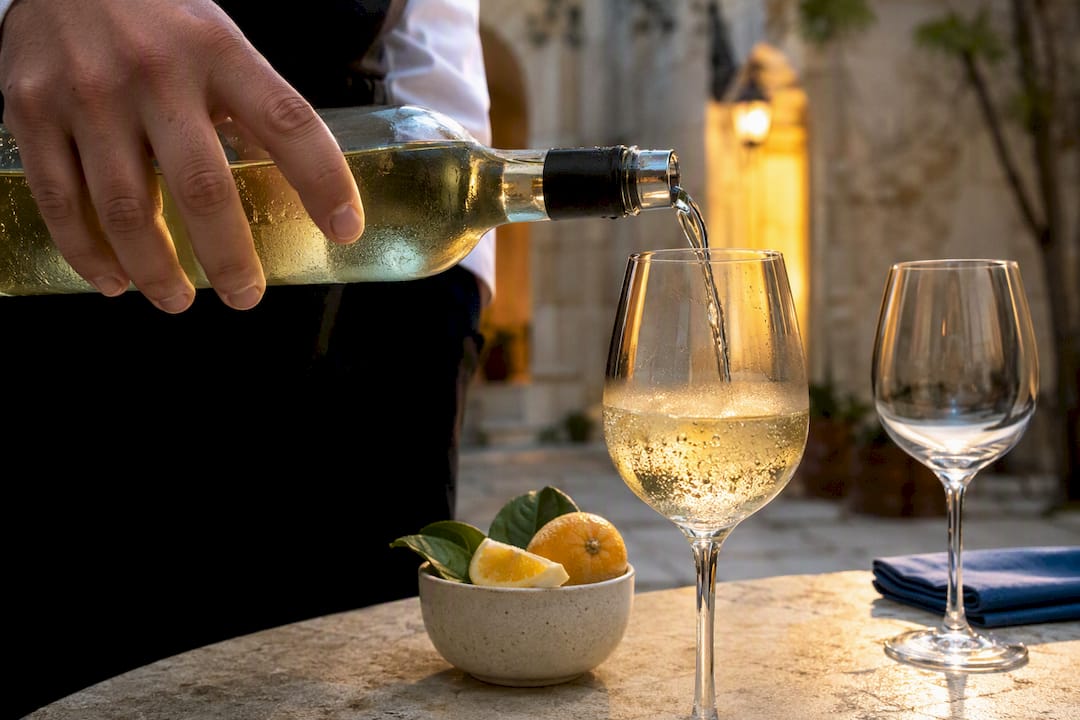
Signage in both Portuguese and English shows respect for the venue’s home city, especially at mixed-nationality events. Small design touches, like azulejo-inspired place cards or a playlist of Portuguese artists layered under a fado influence, cost little but register strongly with guests who’ve traveled to experience the city.
Engagement works best when it’s built into the structure of the evening rather than bolted on. A short, guided moment, a local expert speaking for five minutes, a brief toast tied to Lisbon history, does more for attendee memory than an open networking hour ever will. If you’re running a multi-day program, stagger the intensity: pack the first evening with structured programming, then leave the second night looser so guests can explore on their own.
Photography matters more than most planners budget for. A few smart practices around event photo capture go a long way toward turning a one-night event into content you’ll use for months afterward, particularly for corporate events where leadership wants proof of impact.
Close strong. A thank-you note sent within 48 hours, paired with two or three photos, keeps the goodwill from the event alive well past the actual date.
When Is the Best Time of Year for a Lisbon Event?
Lisbon’s climate is mild by European standards, but it’s not immune to rain, wind, or the occasional heat spike, and your event calendar should account for all three.
Spring (April to June) offers the most reliable stretch for outdoor and terrace events: warm days, low humidity, minimal rain. Summer (July to August) brings heat that can climb into the 90s Fahrenheit on peak days, which matters for anything without shade or air conditioning. Fall (September to October) rivals spring for comfort and adds slightly better venue availability since it sits just before the November crunch. Winter (November through February) brings the highest rain chance and shorter daylight hours, though temperatures rarely drop below the 40s, making it workable for indoor events with a genuine cost advantage.
Wind off the Tagus River is worth planning around specifically if you’re considering a rooftop or waterfront terrace. Afternoons tend to be breezier than mornings, which affects everything from tablecloth clips to whether a microphone setup will hold steady outdoors.
Whatever season you land on, pair any outdoor plan with a fully booked indoor alternative, not a vague verbal agreement with the venue. Lisbon’s weather can shift inside a single afternoon, and a real backup space, confirmed and ready, is the difference between a graceful pivot and a scramble.
Do You Need a Permit for an Event in Lisbon?
Public space use in Lisbon, whether that’s a plaza, a beach, or a street closure for a private function, requires a permit from the local municipal authority (câmara municipal), and processing time varies depending on the scale and location of your event.
Noise restrictions apply most strictly in residential-adjacent areas, which includes parts of Alfama, Marvila, and Beato that sit closer to apartment buildings than their industrial exterior suggests. Amplified music after certain evening hours typically needs a specific noise permit separate from your general event authorization, and enforcement in Lisbon tends to be active rather than symbolic.
Private venues (hotels, dedicated event spaces, private terraces) generally handle their own licensing for the space itself, but anything spilling into a public street, park, or waterfront promenade needs its own clearance. If your event involves a stage, tent structure, or temporary installation in a public area, build permit lead time into your planning calendar the same way you’d build in a venue booking window. This is not something to finalize the week before.
Because permit categories and timelines shift by neighborhood and event type, confirm the specific requirements for your venue and district directly with the venue operator or a local planner rather than assuming last year’s rules still apply. Regulations around public space use are one of the more frequently updated areas of Lisbon’s event landscape.
Which Local Vendors Should You Line Up First?
Lisbon has a deep bench of event suppliers, but the good ones book out fast during peak months, so sequence your vendor outreach the same way you sequence your venue search.
Florists specializing in event work understand seasonal availability of Portuguese blooms and can adjust arrangements if your date falls outside peak growing months. AV technicians familiar with Lisbon’s historic venues are worth their fee alone, since older buildings often have wiring or acoustic quirks that a generalist crew won’t anticipate. Decorators who’ve worked Alfama’s narrow spaces or Marvila’s industrial shells bring practical knowledge about what actually fits through a doorway or survives a cobblestone delivery cart.
Book your florist and decorator within the same window as your venue confirmation, ideally 60 to 90 days out for a mid-size event, since both need lead time to source materials or plan installation logistics. AV technicians should be locked in as soon as you know your venue’s technical setup, particularly for anything in a converted warehouse or historic building where standard rigging assumptions don’t apply.
Ask every vendor for a local reference from an event similar in scale to yours, not just a generic portfolio. A vendor who’s worked a rooftop reception in Príncipe Real brings different experience than one who’s only handled ballroom setups, and that distinction matters more in Lisbon’s varied venue landscape than in a city with more uniform event spaces.
Where Should Out-of-Town Guests Stay?
Lisbon’s modern airport sits roughly 15 minutes from the city center, and a dependable metro system makes delegate arrival genuinely straightforward compared to cities where the airport is an hour out.
Block hotel rooms in the same district as your venue whenever possible. A guest staying in Belém for a venue in Alfama faces a longer commute than the map distance suggests, given Lisbon’s hills and one-way street patterns. For multi-day events, negotiate a room block rate with a cutoff date, and communicate that cutoff clearly to guests since Lisbon hotels fill fast during the same peak months that strain venue availability.
Consider pairing lodging recommendations with dining suggestions for guests arriving early or staying late. Combining accommodation with a curated dining plan gives out-of-town attendees a smoother experience than a bare hotel confirmation email, particularly for guests unfamiliar with the city’s neighborhoods. Include a simple welcome packet, digital or printed, with the venue address, transport notes, and two or three restaurant recommendations near their hotel. It’s a small gesture that saves your front desk staff dozens of repeated questions on event day.
Do You Need Bilingual Staff for a Lisbon Event?
Most Lisbon hospitality professionals speak strong English, but relying on that alone at every touchpoint is a mistake, especially for events with vendors, drivers, or venue staff working behind the scenes.
Hire bilingual support staff for any role that interacts directly with logistics: a coordinator who can communicate with a Portuguese-speaking driver, caterer, or venue technician saves you from the delays that happen when instructions get lost in translation during a time-sensitive moment. This matters more at historic venues and smaller family-run suppliers, where staff may be less accustomed to English-only communication than international hotel chains.
For guest-facing roles, English coverage is usually sufficient given how common it is across Lisbon’s service industry, but a Portuguese-speaking greeter adds a genuine touch of warmth, especially for events that want to signal respect for the host city rather than treat it as interchangeable with any other European destination. If your event includes a formal welcome or toast, consider a bilingual delivery, even just a sentence or two in Portuguese, before switching to English for the bulk of the remarks.
How Do You Handle a Weather Curveball or Last-Minute Problem?
Every outdoor or terrace event in Lisbon needs a real contingency plan, not a hopeful one.
Confirm your indoor backup space in writing when you book the primary venue, not as an afterthought if the forecast turns. Build weather monitoring into your week-of checklist, checking forecasts starting five days out so you have time to notify guests of a venue change rather than scrambling the morning of.
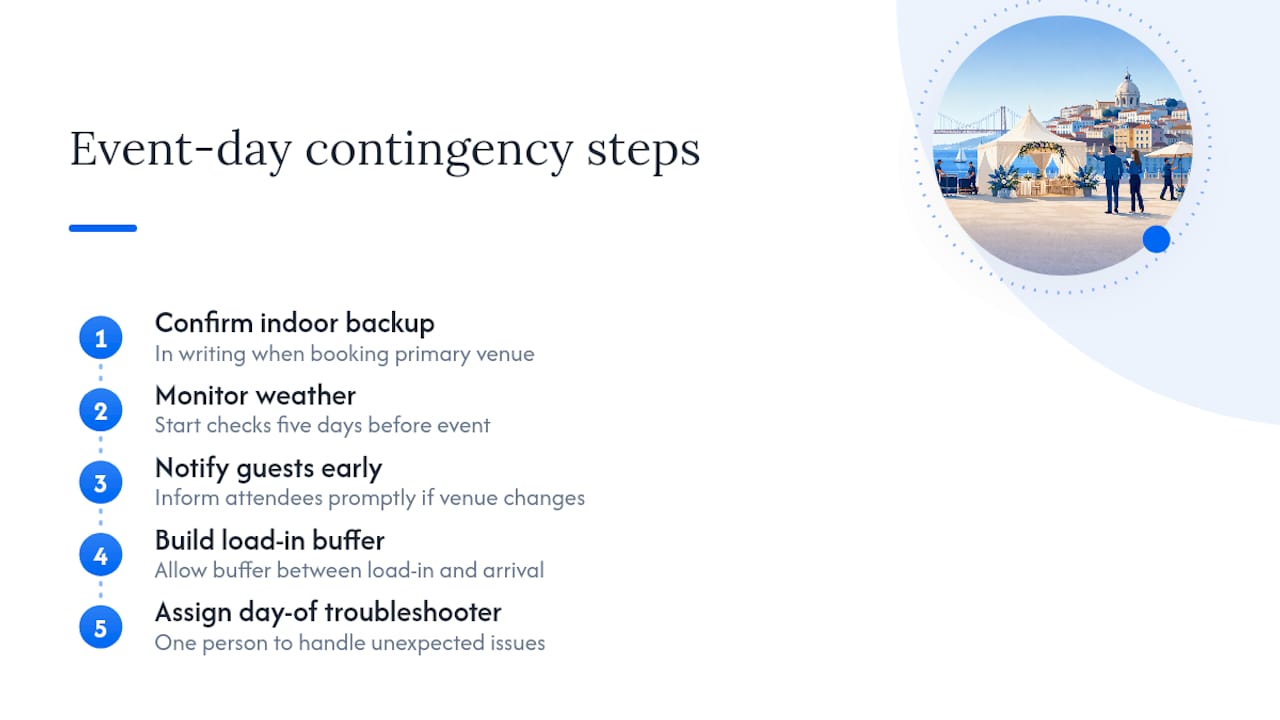
Beyond weather, build slack into your vendor schedule. A caterer running 20 minutes late shouldn’t derail your program if you’ve built a buffer between load-in and guest arrival. Keep a printed contact list of every vendor’s day-of phone number, not just their office line, since Lisbon’s smaller supplier businesses don’t always staff a call center. And designate one person, not the host and not the planner juggling five other tasks, whose sole job on event day is handling the unexpected. That person becomes the difference between a hiccup nobody notices and a visible scramble.
A Local Perspective on Planning Events in Lisbon
Most event guides treat Lisbon like any other European city with different street names. It isn’t. The hills, the tight historic streets, and the fact that some of the best venues sit on or near the water mean transport and weather contingencies deserve the same planning weight as the venue contract itself.
What consistently elevates a Lisbon event isn’t a bigger budget. It’s using the city itself as part of the program, whether that’s a sunset cruise capping off a conference or a short sailing outing breaking up a corporate agenda. Guests remember the water more than they remember the slide deck.
— Lisbon
Add a Private Cruise to Your Lisbon Event
If you’re planning a reception, team-building day, or VIP moment in Lisbon, a private cruise solves a problem most venues can’t: giving guests a shared experience instead of another room with a view. Private sailing yachts and catamarans for groups are available with flexible durations from two hours to a full day, allowing a nautical experience to be included in almost any agenda without overhauling your schedule.
Many private charters include live commentary, beverages, and snacks, which can mean less coordination and fewer vendors to manage separately from your event program. Whether you need a standalone reward outing or a closing-night highlight after a conference, private yacht charters can be built around your guest count and timeline. Check available dates now and get a quote for your group size before your preferred window fills up.
Sources
For deeper data on venue supply, pricing, and lead times, see Eventflare’s Lisbon market analysis, Protocol DMC Spain’s corporate event guide, and industry networks like ICCA for supplier standards.
Recommended
Comments