

Skip the Crowds on Tram 28, Lisbon's Best Ride, Then Sail the Tagus
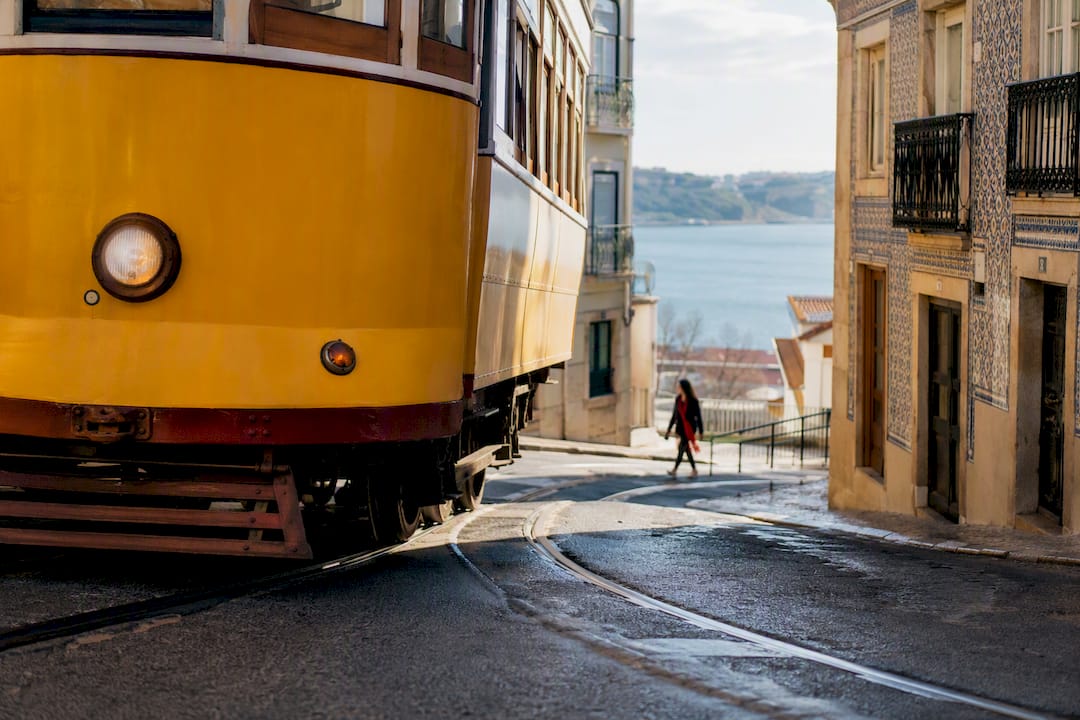
Tram 28 is the best tram ride in Lisbon for anyone chasing the postcard version of the city, but only if you time it right. Ride between 7 and 9 AM or after 7 PM, and it’s a rattling, hillside joyride through Alfama’s oldest streets. Ride at noon in August, and it’s a sweaty, shoulder-to-shoulder shuffle. Board at Martim Moniz or Campo de Ourique to improve chances of a seat, and you’ll get the experience everyone actually came for.
TL;DR:
Riding Tram 28 between 7 to 9 AM or after 7 PM significantly reduces crowds and increases chances of finding a seat for a more authentic experience.
The Alfama segment from Sé Cathedral to Largo das Portas do Sol offers the most photogenic views and can be enjoyed separately from the full route.
Boarding at either Martim Moniz or Campo de Ourique at least 15 to 20 minutes early helps secure a seat and avoids waiting in long queues.
Using a Viva Viagem card for multiple rides saves money compared to paying cash on board, with inspectors regularly checking for validated tickets.
Tram 28’s vintage cars are not accessible for travelers with mobility challenges, making modern tram options or walking alternative methods for viewing Alfama preferable.
Table of Contents
What Route Does Tram 28 Follow, and Which Stops Matter Most?
The full run of Tram 28 stretches from Martim Moniz in the east to Campo de Ourique (Prazeres) in the west, covering about 7 kilometers. The ride typically takes 45 to 60 minutes, weaving through some of the steepest, narrowest streets in the city. That’s longer than most visitors expect from what looks, from a photo, like a quick trip up a hill.
You don’t need the whole route to get the experience. The Alfama stretch, from Sé Cathedral to Largo das Portas do Sol, is the most photogenic 15 to 20 minutes on the line, and it’s genuinely worth riding on its own if you’re short on time or trying to dodge the full-route crowd.
A few stops are worth planning around:
Graça — home to a miradouro (viewpoint) with some of the widest views over the city’s rooftops.
Portas do Sol — a smaller lookout, but closer to the water, with Alfama spilling downhill in front of you.
Sé Cathedral — Lisbon’s oldest church, and the point where the tram enters the tightest, most dramatic curves of Alfama.
Chiado — the rough midpoint of the route, a good spot to hop off for coffee or shopping before continuing west.
Estrela — home to the Basilica and a large garden, quieter than the eastern stops and a nice place to end a ride.
If your goal is photos over transit, ride the Alfama segment twice rather than doing the full line once. You’ll see more, stand less, and skip the stretch through Campo de Ourique that, frankly, isn’t the reason anyone recommends this tram.
When Should You Ride to Skip the Crowds?
Timing decides whether Tram 28 feels like a highlight of your trip or a lesson in patience. The best windows are before 9 AM and after 7 or 8 PM; the worst stretch is 10 AM to 5 PM, especially from June through August, when the trams are frequently packed past comfortable standing room.
Here’s how to work the schedule in your favor:
Start at a terminus. Board at Martim Moniz or Campo de Ourique, not a mid-route stop, since boarding at the terminus is the most reliable way to get a seat.
Arrive 15 to 20 minutes early. Terminus queues build fast once the first cruise groups of the day show up.
Watch for cruise-ship surges. Arrival patterns from the port create predictable crowd spikes, so a midweek morning is usually calmer than a weekend one.
If you can only ride mid-route, expect to stand. It’s not a dealbreaker, just plan your footing on the tighter turns.
Pro Tip: Grab a spot near the driver’s window if you can. You’ll get a cleaner shot of the street ahead, and standing closer to the front puts you a step away from the crowd surges that happen near the rear doors.
What’s the Cheapest Way to Pay for the Tram?
Skip the cash fare if you’re riding more than once. A Viva Viagem card loaded with stored credit, known locally as “zapping,” costs noticeably less per ride than paying on board, where the driver charges a flat cash fare that adds up fast if you’re hopping trams throughout the day.
Here’s how the options break down:
Viva Viagem (zapping): Load credit onto a reusable card at any metro station vending machine or authorized kiosk, then tap it on the reader when you board. This is the cheapest per-ride option for most visitors.
Single cash fare: Pay the driver directly. It’s convenient for a one-off ride but costs more than zapping, and drivers don’t always carry much change.
24-hour pass or Lisboa Card: Worth buying if you’re planning several tram, metro, or bus rides in a day. A card covering unlimited rides only pays off once you’re using transit three or more times, so weigh it against your actual itinerary before buying one.
Whichever you choose, tap or validate every time you board. Inspectors do check, and an unvalidated card is treated the same as no ticket at all.
How Risky Are Pickpockets on Tram 28, and How Do You Avoid Them?
Tram 28 has a reputation, and it’s earned. Pickpockets concentrate on the crowded, scenic segments, particularly between Graça and Portas do Sol, and during the chaotic few seconds when doors open and everyone pushes to board at once.
The stretch between Graça and Portas do Sol is the single riskiest segment on the route — it’s tight, slow, and packed, which is exactly the environment pickpockets look for.
A few habits cut your risk substantially:
Wear your bag on your front, not your back or hip.
Keep pockets zipped, and skip carrying a visible wallet.
Tuck your phone away between photos instead of holding it loose.
Keep one hand on your bag strap during boarding and at crowded stops.
Move toward the driver or the center aisle rather than lingering near the doors.
If something does go missing, move toward the driver, note the stop name where it happened, and report it to local police. For broader anti-theft advice before your trip, Lisbonbyboat’s guide to staying safe in Lisbon covers precautions beyond the tram itself.
Which Other Trams Are Worth Riding Instead of 28E?
Tram 28 isn’t the only option, and depending on what you actually want out of the ride, it might not even be the best one for you.
Tram 12E runs a quieter loop through Alfama and Mouraria using the same vintage Remodelado carriages as 28E, minus most of the crowd. Choose this when Alfama is your only goal and you’d rather skip the queue entirely.
Tram 15E uses modern, articulated trams that are faster, more accessible, and built for actual transport rather than sightseeing. Choose this when you need to reach Belém and its riverside monuments on a schedule, since vintage trams get slowed down by double-parked cars and narrow streets in a way modern trams don’t.
Trams 24E and 25E, along with the city’s funiculars, cover different hillside neighborhoods with a fraction of the tourist traffic, good options if you’ve already done Alfama and want a scenic ride without the lines.
For a broader comparison of what each line offers, Lisbonbyboat’s guide to exploring Lisbon by tram breaks down the historic routes side by side.
How Can You Build a Tram Ride Into a Half-Day Plan?
A tram ride works best as one piece of a morning or afternoon, not the whole itinerary. Here are two that actually fit together.
The 30-minute photo loop: Board at Martim Moniz, ride through to Portas do Sol, and get off there. Walk up to the São Jorge Castle viewpoint, one of the best panoramas in the city, then either walk back down through Alfama or catch a later tram back.
The half-day version: Ride the early Tram 28 segment from Martim Moniz through Alfama, hop off at Chiado for coffee, then wander Bairro Alto’s streets on foot. From there, transfer to Tram 15E or the train from Cais do Sodré to reach Belém for the afternoon, where the monastery and tower are both walkable from the same stop.
Both plans keep you near metro connections the whole way, so if your feet give out, you’re never far from an easy way back.
What Should Travelers With Mobility Challenges Know?
Tram 28’s vintage carriages were not built with accessibility in mind, and that’s worth knowing before you plan around them. The cars are narrow, the entry steps are high, and there’s no ramp or low-floor boarding, which makes them difficult or impossible for wheelchair users and tough for anyone with limited mobility, balance issues, or a stroller.
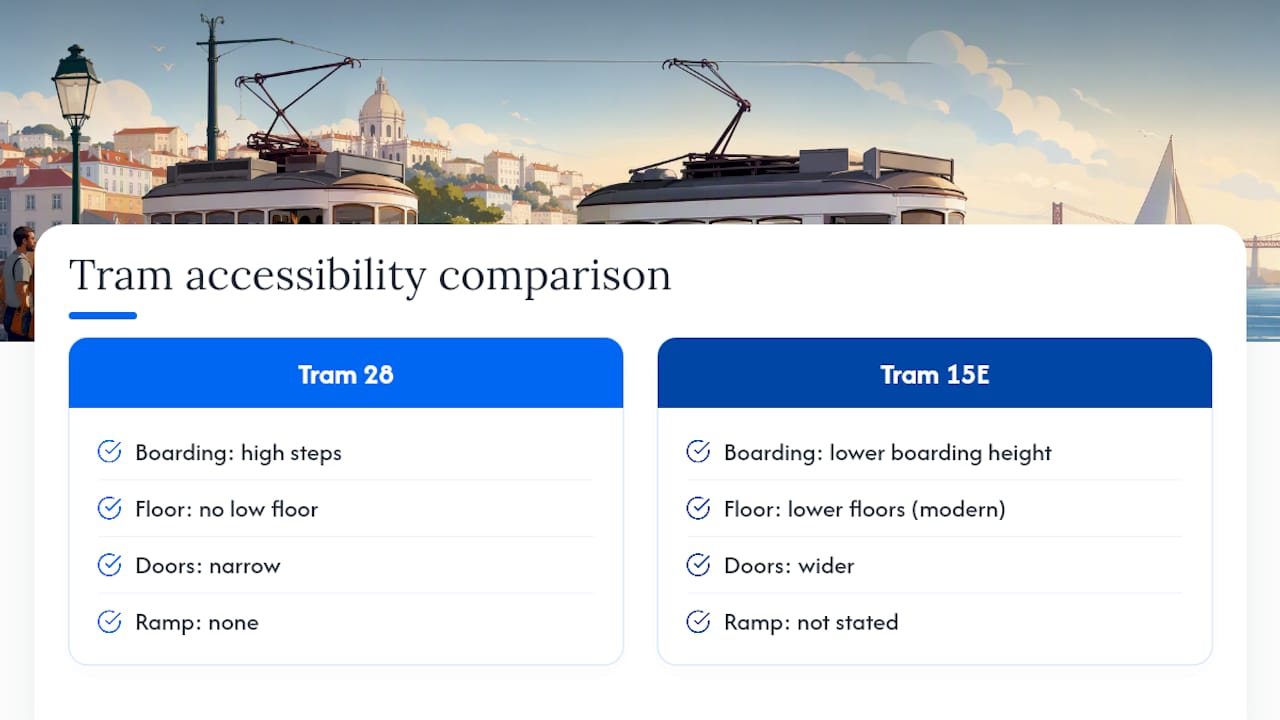
If accessibility is a priority, Tram 15E is the better option. Its modern, articulated cars have lower floors and wider doors, closer to what you’d expect from standard city transit. It won’t take you through Alfama’s hills, but it covers the Belém route reliably and comfortably.
For travelers who still want the Alfama experience without boarding the vintage tram itself, walking the route on foot (downhill from Graça toward the river) or viewing it from one of the miradouros gives you the same visual payoff without the physical demands of the tram’s steps. It’s slower, but it puts you in control of the pace, which matters more on cobblestone hills than most guides admit.
Why Do Lisbon’s Trams Look the Way They Do?
The yellow trams rattling through Alfama today are the same basic design, the Remodelado, that has run these streets since the early 20th century. Lisbon built its tram network to handle exactly the kind of terrain that makes the city so photogenic and so hard to get around: steep hills, tight medieval streets, and sharp turns that no bus could manage.
That history is part of why Tram 28 still runs the same route it always has. It wasn’t built as a tourist attraction. It’s a working public transit line that happens to pass through nearly every scenic neighborhood worth seeing, which is exactly why it became famous in the first place. Locals still use it to get to work, to the market, and home again, and treating it like the commuter line it is, not blocking doors, letting people off before you push on, makes the ride feel more authentic and avoids friction with residents who rely on it daily.
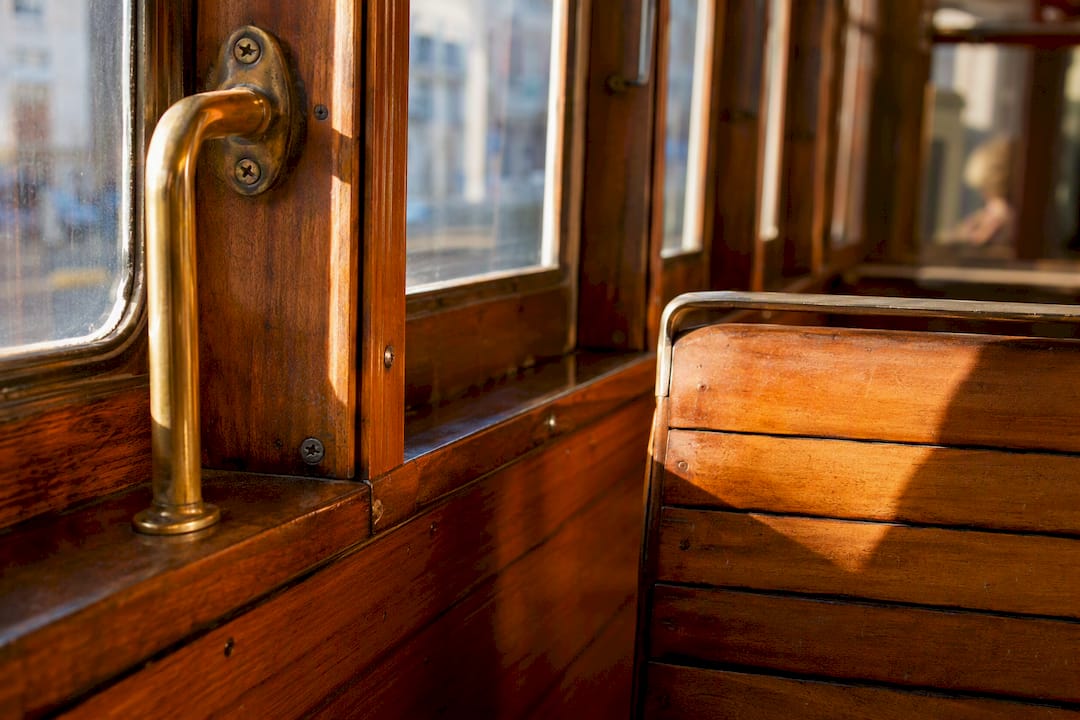
The carriages themselves are part of the appeal: wood paneling, brass fittings, and a mechanical clatter you don’t get from anything modern. It’s slow by design, and that’s the point.
Does the Season Change the Tram Experience?
Summer and winter feel like two different rides. From June through August, heat turns the closed, non-air-conditioned cars into ovens by mid-morning, and crowd levels climb along with the temperature, especially during the 10 AM to 5 PM window locals already avoid. Cruise ship arrivals compound this on specific days, pushing entire tour groups toward the same termini at once.
Winter rides are calmer and cooler, but Lisbon’s rain can turn cobblestone stops slick, and the open-window design of the vintage cars means a passing shower gets you wet even inside. Festival periods, particularly the Santo António celebrations in June, bring extra foot traffic through Alfama that spills onto the tram route itself, so expect slower boarding and fuller cars even outside the usual peak hours.
If your travel dates are flexible, spring and early fall offer the best balance: mild temperatures, shorter queues, and golden hour light after 7 PM that makes evening rides worth planning around, especially if photography is part of why you’re riding in the first place.
A Local’s Take on Pairing the Tram With the Water
The tram gets you the hills and the postcard shots. It doesn’t get you the view most visitors never think to ask for: Lisbon’s riverfront monuments seen from the Tagus itself, without the walking, the queues, or the July heat radiating off cobblestones.
That’s the gap Lisbonbyboat exists to fill. We’re not suggesting you skip the tram, ride the iconic Alfama segment early, get your photos, then spend the rest of your morning on your feet. Instead, treat the water as the second half of the same day. A short sailing tour shows you Belém Tower, the Monument to the Discoveries, and the 25 de Abril Bridge from an angle no tram route reaches, and you’re sitting down the whole time. For anyone doing Lisbon on foot in August heat, that trade-off is worth more than it sounds.
— Lisbon
See Lisbon’s Waterfront the Way the Tram Can’t Show You
A tram gets you into the hills. It can’t get you onto the water, and that’s exactly where Lisbon’s most photographed monuments, Belém Tower, the Discoveries Monument, the 25 de Abril Bridge, look their best. Lisbonbyboat runs fixed 2-hour sightseeing cruises along the historic coastline, with live commentary on the same landmarks the guidebooks send you walking miles to see on foot.

It’s a calmer way to close out a day that started with a crowded tram climb through Alfama. No queues, no standing, just a seat on the water and golden hour light hitting the monuments at the best possible angle for photos. If your trip already has a tram ride booked for the morning, check available departure times for Lisbonbyboat’s luxury yacht tours and pair it with an afternoon or sunset cruise. It’s the easiest way to see both faces of Lisbon, the hills and the harbor, in a single day.
Sources
Recommended
Comments