

20 Lisbon Facts Seen From the Water and Where to Spot Them
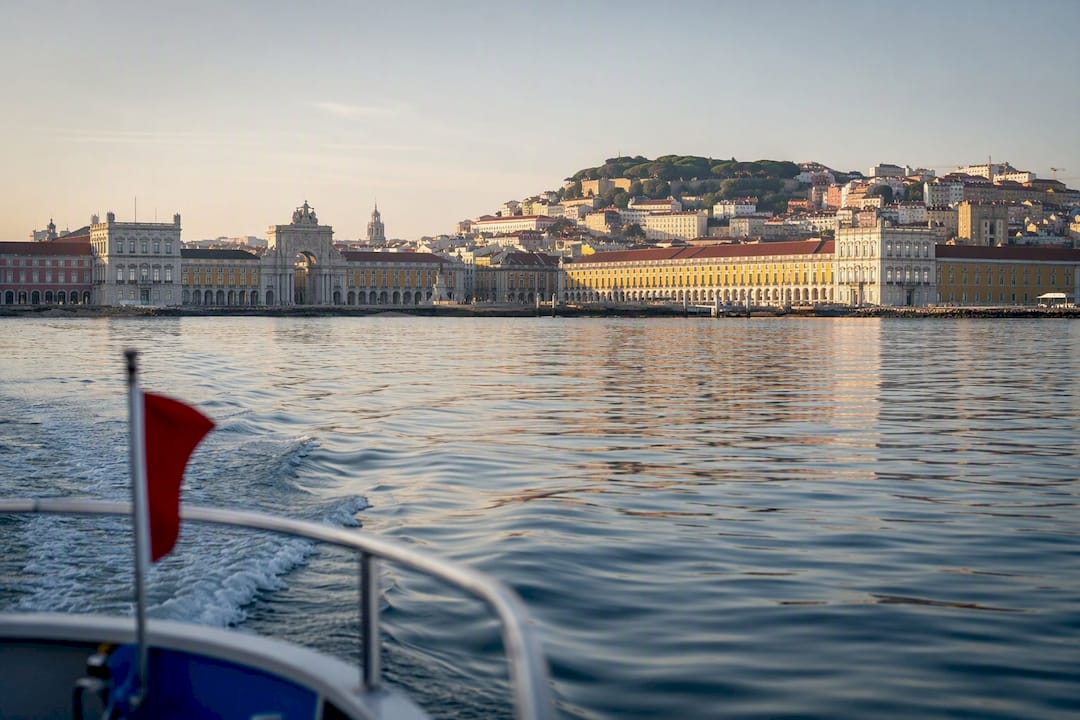
Lisbon is Portugal’s historic riverside capital, one of Europe’s oldest, built where the Tagus meets the Atlantic. It’s a city of discovery-era monuments, a devastating earthquake that reshaped its streets, and a maritime identity that still runs through everything from its cuisine to its skyline. With roughly 658,236 residents in the city proper and 3.35 million across the metro area, it remains Portugal’s undisputed center of gravity.
TL;DR:
Lisbon’s strategic location at the mouth of the Tagus makes its monuments and urban layout best appreciated from the water, not land.
The city’s reconstruction after the 1755 earthquake introduced seismic-resistant design, shaping its current grid and contrasting neighborhoods like Baixa and Alfama.
Visiting Lisbon by boat offers an immersive view of key landmarks such as Belém Tower, Praça do Comércio, and the bridges, which are designed for maritime perspective.
The original sites, including Jerónimos Monastery and Belém Tower, are deeply tied to Portugal’s Age of Discovery, evident in their proximity and historical significance.
Lisbon’s cultural icons—fado music, azulejo tiles, pastel de nata, and the Santo António festival—are best understood when experienced amid the city’s historic neighborhoods and waterside venues.
Table of Contents
Facts About Lisbon: 20 Things Most Visitors Never Learn
Some of these facts are common trivia. Others get skipped entirely, even by guidebooks that claim to cover everything. Here’s the full spread, from the ancient to the absurd.
Lisbon may predate Rome. Some historians place settlement here before 1200 BC, which would make it older than most European capitals by a long shot, though the earliest hard evidence points to Phoenician and later Roman activity.
It’s the westernmost capital on the European mainland. Lisbon sits at the mouth of the Tagus River, closer to the Atlantic than any other continental capital, a geographic quirk that shaped its entire identity as a launch point for exploration.
The city didn’t become the capital until 1255. Before that, Coimbra held the title, until King Afonso III moved the royal court south to Lisbon.
A magnitude 8.9 earthquake nearly erased the city. On November 1, 1755, the ground shook for six to seven minutes, followed by fires and a tsunami that killed tens of thousands.
Population sits at about 658,236 in the city and approximately 3.35 million across greater Lisbon. That metro figure makes it one of Southern Europe’s most significant urban centers and an alpha-level global city, on par with cities several times its physical size.
The city has two UNESCO World Heritage Sites within walking distance of each other. Jerónimos Monastery and Belém Tower both earned that status thanks to their ties to Portugal’s Age of Discovery.
Alfama is the oldest surviving neighborhood. Its tangled medieval streets survived the 1755 earthquake almost untouched, largely because of the solid bedrock beneath the hill.
Lisbon is built across seven hills, or maybe eight, or maybe more. Different historical lists name different hills, so treat the number as folklore rather than geography; what’s certain is you’ll be climbing constantly.
Castelo de São Jorge has been rebuilt more than once. Much of what visitors walk through today reflects 20th-century restoration work rather than the original Moorish fortifications.
The 25 de Abril Bridge looks a lot like the Golden Gate on purpose. Opened in 1966, its towers and cables echo San Francisco’s landmark, and its foundations reach deep enough into the Tagus riverbed to handle both road and rail traffic.
Vasco da Gama Bridge is one of Europe’s longest. Stretching over the Tagus estuary, it was built to relieve pressure on the older 25 de Abril crossing and named for the explorer who charted the sea route to India.
Fado music carries a specific kind of sadness. The genre centers on saudade, a longing that doesn’t translate cleanly into English, and Alfama’s small clubs remain the most authentic place to hear it live.
Azulejo tiles cover entire building facades. These painted ceramic tiles date back to Moorish influence and now function as an outdoor art gallery running through nearly every neighborhood.
Pastel de nata was invented by monks, not bakers. The custard tart traces back to Jerónimos Monastery, and the original recipe is still guarded at Pasteis de Belém, which has sold them since 1837.
Ginjinha is a cherry liqueur sold from tiny hole-in-the-wall bars. Locals drink it straight from a shot glass, often with a boozy cherry dropped in at the bottom.
Lisbon’s oldest bookstore has been open since 1732. Livraria Bertrand in Chiado holds the record as the world’s oldest operating bookshop, predating the United States by decades.
Santo António’s festival takes over the whole city every June 13. Grilled sardines, street parties, and paper decorations flood Alfama, even though most people assume he is the city’s patron saint. Officially, that title belongs to Saint Vincent of Saragossa.
Baixa’s grid layout was a deliberate earthquake-proofing experiment. The Marquês de Pombal rebuilt this district with wooden framing designed to flex during tremors, an early form of seismic engineering.
The Lisbon Oceanarium holds five million liters of seawater in its main tank. That makes it one of the largest indoor aquarium tanks in Europe, and it was originally built for Expo '98.
Praça do Comércio used to be a royal palace courtyard. It faced the river directly so kings could receive visiting dignitaries arriving by ship, a detail that tells you exactly how much this city has always oriented itself toward the water.
How Lisbon Went From Roman Outpost to Global Capital
Lisbon’s timeline reads like a relay race between empires, each one leaving something behind that’s still visible today.
Legendary founding: Local myth credits Ulysses with founding the city, a story with zero archaeological backing but plenty of staying power in tourist lore.
Roman period: The Romans established a municipality here called Olisipo, building roads and infrastructure that later cities built directly on top of.
Moorish rule: From the 8th century onward, Moorish control brought the castle fortifications, agricultural techniques, and the tilework tradition that evolved into azulejos.
Christian reconquest: Portuguese forces retook the city in 1147, folding it into the growing Kingdom of Portugal.
Capital status, 1255: King Afonso III relocated the royal court from Coimbra, cementing Lisbon’s role as the political center it remains today.
Age of Discovery, 15th and 16th centuries: Portuguese ships launched from the Tagus toward India, Brazil, and beyond, funding the monuments in Belém that still define the skyline.
1755 catastrophe and rebuild: The earthquake forced a near-total redesign of the city center, and the Pombaline grid that replaced it is the layout you walk through in Baixa today.
Every layer stacks on the one before it. Walk from Alfama’s Moorish alleys to Baixa’s grid streets and you’re crossing seven centuries in about fifteen minutes on foot.
What the 1755 Earthquake Left Behind
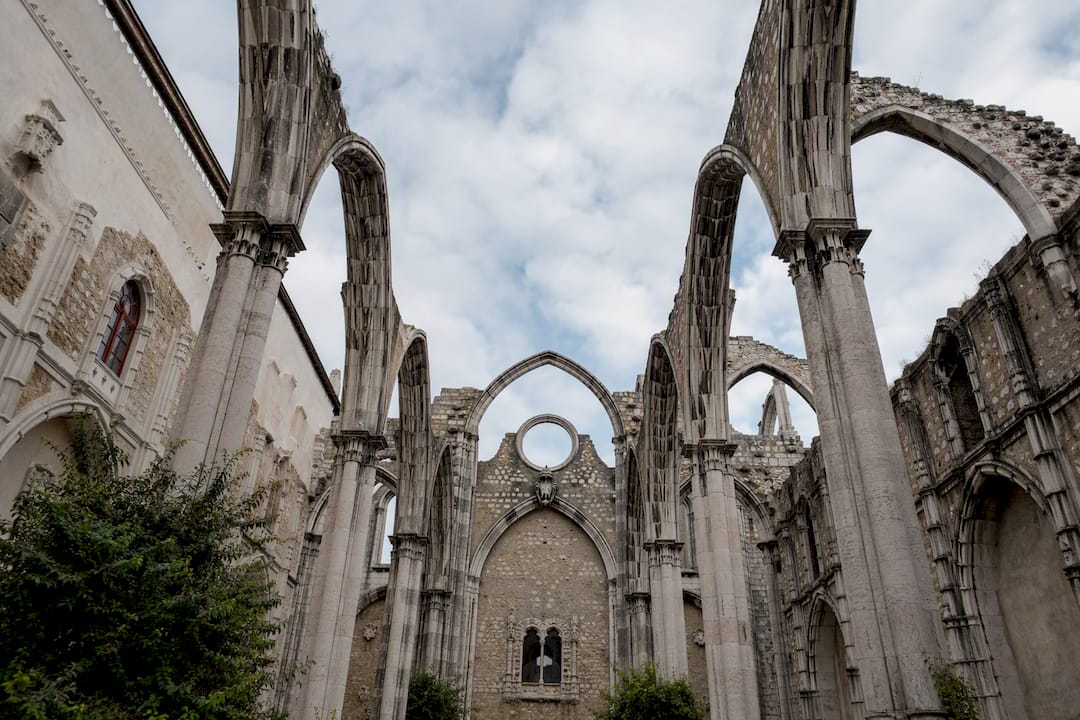
The earthquake hit on November 1, 1755, All Saints’ Day, when churches were packed with worshippers. Seismologists estimate the magnitude at around 8.9, with shaking that lasted six to seven minutes, followed by a tsunami and citywide fires that did nearly as much damage as the quake itself.
Death toll estimates vary widely across sources, but the destruction was severe enough that the king’s chief minister, the Marquês de Pombal, ordered a full rebuild rather than a patch job.
Pombal’s engineers designed the Baixa district with a strict grid and wooden anti-seismic framing built into the walls.
Building heights and street widths were standardized, an early example of urban planning driven by disaster response.
Alfama, sitting on firmer bedrock up the hill, survived largely intact, which is why its medieval street pattern still feels so different from the orderly blocks below it.
That contrast between planned Baixa and organic Alfama is one of the clearest physical records of the disaster still standing.
The Landmarks Everyone Asks About
Each of these sites answers a different question about how Lisbon built its identity, from empire to religion to modern engineering.
Jerónimos Monastery: A UNESCO-listed monument built to commemorate Vasco da Gama’s voyage to India, funded partly by the spice trade it made possible.
Belém Tower: Originally a defensive fortress guarding the Tagus entrance, now the second half of that same UNESCO World Heritage pairing.
Castelo de São Jorge: A hilltop fortress with Moorish origins, offering the best panoramic view over the city’s rooftops and river.
Praça do Comércio: A grand riverfront square built where the royal palace once stood before the earthquake destroyed it.
25 de Abril Bridge: The suspension bridge connecting Lisbon to the south bank, engineered to carry both cars and trains.
Vasco da Gama Bridge: A longer, newer crossing built to ease traffic and named after Portugal’s most famous navigator.
Lisbon Oceanarium: A modern addition from Expo '98, tying the city’s aquatic heritage to a contemporary attraction.
Fado, Tiles, Tarts, and Saints: Lisbon’s Cultural Shorthand
Culturally, Lisbon runs on a handful of signature obsessions, and once you spot them, you see them everywhere.
Fado is the emotional core, a musical style built around loss and longing that you’ll hear drifting out of small Alfama restaurants after dark. Azulejo tiles turn ordinary building facades into public art, a tradition inherited from Moorish craftsmanship and reinterpreted for centuries. Food tells its own story: pastel de nata for the sweet tooth, ginjinha for a quick, cherry-flavored kick from a doorway-sized bar.
Fado performances often happen in small, unmarked venues in Alfama, not tourist-oriented theaters.
Azulejo tiles can be seen on entire building exteriors, in the Metro system, and in the National Tile Museum.
Pastel de nata’s original recipe is still made at Pasteis de Belém, a bakery running since 1837.
Santo António’s festival floods the streets every June 13 with sardines, music, and paper lanterns.
Locals sometimes call Lisbon “a cidade das sete colinas,” the city of seven hills, even though historians can’t agree on which seven.
Pro Tip: Book a fado dinner in Alfama on a weeknight rather than a weekend. The crowds are thinner, and the performers tend to linger longer between songs.
Why the Tagus Explains Half of What Makes Lisbon, Lisbon
The river isn’t scenery here. It’s the reason the city exists where it does. Ships used the Tagus’s deep natural harbor for centuries, which is why Belém’s monuments face the water and why Praça do Comércio was built as a ceremonial gateway for arriving dignitaries.
Several of the city’s best-known sights genuinely read differently from a boat than from the sidewalk.
Belém Tower was designed to be seen from the water first. Its defensive purpose only makes sense from that angle.
Praça do Comércio’s full symmetry is nearly impossible to appreciate from land, since buildings block the sightline that ships once had.
Both bridges reveal their full scale only when you’re passing beneath them, something no street-level photo captures.
Lisbonbyboat’s own routes trace this exact logic, connecting Age of Discovery sites and riverside monuments as sailors and traders would have seen them centuries ago.
Viewing Lisbon from the Tagus often reveals the city’s maritime logic: how docks, monuments, and boulevards align for views meant to be seen from a ship’s deck, not a sidewalk.
What Seeing Lisbon by Water Taught Us About Its Own Facts
Half these facts make more sense once you’ve watched Belém Tower slide past from a boat deck instead of reading about it on a plaque. The 1755 rebuild, the bridges, the old dockyards, none of it was ever meant to be understood from land. Lisbon was designed by people looking outward from ships, toward a horizon they were trying to conquer. Approach it the same way and the city stops being a list of monuments and starts making sense as a whole.
— Lisbon
See These Facts for Yourself, From the Water
Reading about Belém Tower is one thing. Watching it appear from the deck of a sailboat, the way it was meant to be seen, is another entirely. Tours run daily along Lisbon’s historic coastline, with a guide narrating monuments as they pass by in real time.

For a more private experience, Lisbonbyboat also offers luxury yacht and catamaran charters, running anywhere from two hours to a full day, complete with drinks and snacks on board. It’s an immersive way to see riverside monuments and views you won’t catch on foot, whether you’re planning a sunset outing, a family trip, or a private group event. Check available dates and book a sightseeing sailing tour directly on the Lisbonbyboat site to see the Tagus the way explorers once did.
Sources
FAQ
What makes Lisbon one of Europe’s oldest capitals?
Some historians trace settlement here to before 1200 BC, though confirmed evidence starts with Phoenician and Roman activity, and it formally became Portugal’s capital in 1255.
How strong was the 1755 Lisbon earthquake?
Seismologists estimate the earthquake at roughly magnitude 8.9, with shaking lasting six to seven minutes, followed by fires and a tsunami.
Why is Lisbon called the westernmost capital in Europe?
Lisbon sits at the mouth of the Tagus River on Portugal’s Atlantic coast, making it the closest continental capital to the ocean’s edge.
What are Lisbon’s two UNESCO World Heritage Sites?
Jerónimos Monastery and Belém Tower both hold UNESCO status for their connection to Portugal’s Age of Discovery.
Is there a good way to see Lisbon’s landmarks without walking everywhere?
Yes. Lisbonbyboat’s guided sightseeing tours cover the historic coastline by sailboat, showing Belém Tower, the bridges, and Praça do Comércio from the water in about two hours.
Recommended
Comments