

What Is a Coastal Cruise? Your Complete Guide
- lisbonbyboat
- 19 hours ago
- 8 min read
TL;DR:
A coastal cruise uses small ships to visit shoreline towns and natural landmarks inaccessible to large vessels. It emphasizes destination exploration, calmer waters, and intimate onboard experiences over entertainment or activities. These voyages are ideal for slow travel, reducing motion sickness, and enjoying cultural sights at a relaxed pace.
A coastal cruise is defined as a voyage on a small to medium-sized ship that travels along shorelines, stopping frequently at ports, historic towns, and natural landmarks that large ocean liners cannot reach. Unlike open-water ocean cruising, coastal cruising prioritizes the destination over the journey itself. Ships typically carry between 90 and 180 guests, creating an intimate atmosphere that feels closer to a private charter than a floating resort. Popular regions include the New England coast, the Pacific Coast of North America, the Norwegian fjords, and the Adriatic Sea along Croatia and Greece.
What are the key defining features of a coastal cruise?
A coastal cruise is built around access. Smaller ships carry 90–180 guests, which means they fit into shallow inlets, historic harbors, and town-center docks that mega-ships bypass entirely. That access changes the entire character of the trip.
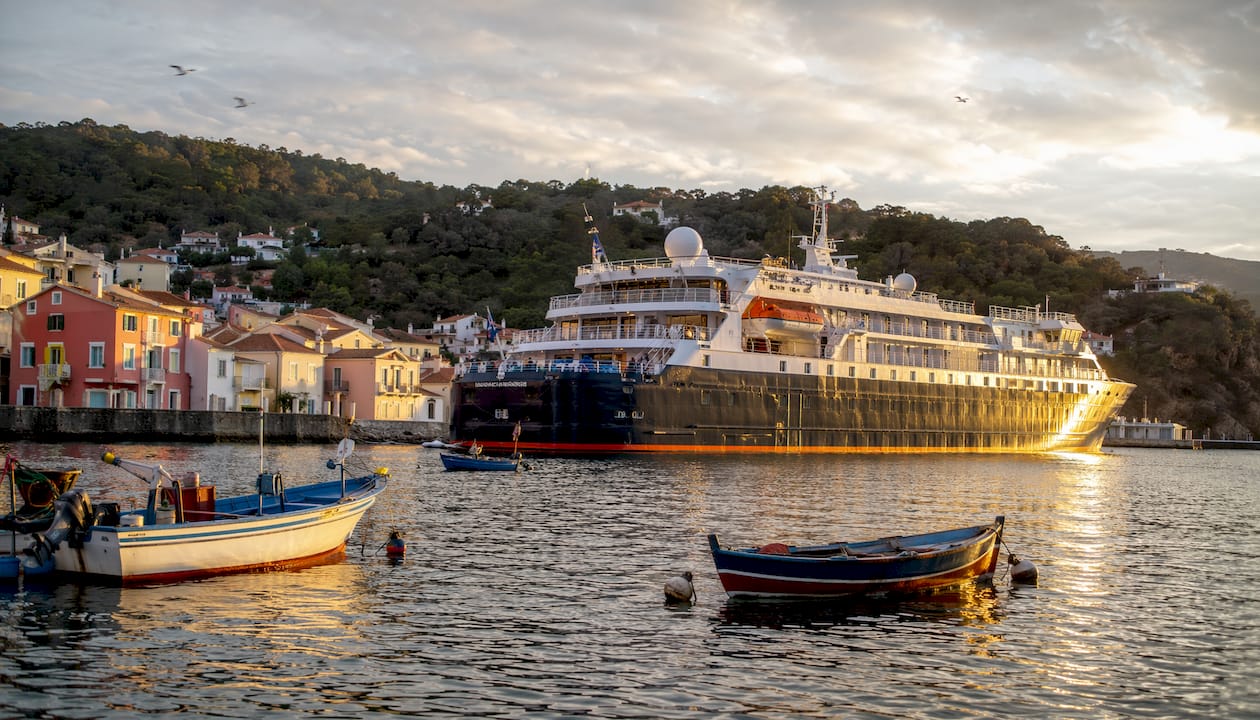
The itinerary structure reflects this philosophy. Where ocean cruises often treat ports as brief interruptions between sea days, coastal cruises treat each stop as the main event. Travelers spend more time ashore, walking through local markets, visiting historic sites, and eating at restaurants that don’t cater to tourist crowds.
Key features that define the coastal cruise experience:
Ship size: 90–180 passengers, allowing access to smaller ports and historic harbors inaccessible to large vessels
Trip length: Pacific Coast repositioning cruises typically run 3–4 days, making them ideal for first-time cruisers
Calmer waters: Proximity to shore shields ships from open-ocean swells, reducing motion significantly
Destination focus: Onboard entertainment takes a back seat to shore excursions and cultural programming
Flexible boarding: Some coastal routes operate like ferry services, letting travelers book individual segments rather than full itineraries
Pro Tip: If you’re prone to motion sickness, a coastal cruise is the most practical solution. The landmass shields the ship from deep-water swells, and the calmer conditions make a real difference over a multi-day trip.
How does the coastal cruise experience differ from ocean cruising?
The most fundamental difference is pace. Ocean cruises pack entertainment, dining venues, and activities into every hour aboard. Coastal cruising runs on a slower rhythm, where the goal is absorption rather than stimulation. That shift in pace produces measurably different outcomes for travelers.
Coastal cruising replaces daily decision-making with a structured, rhythmic environment that promotes mental relaxation and recovery. Psychologists call this Attention Restoration Theory: exposure to natural, low-demand environments replenishes the mental resources that urban life depletes. Being near water accelerates that effect. Travelers consistently report better sleep and lower stress after coastal voyages compared to land-based trips of the same length.
The social dynamic differs too. With fewer than 200 passengers aboard, you recognize the same faces at dinner. Conversations with fellow travelers go deeper. The crew knows your name by day two. That intimacy is simply not possible on a ship carrying 3,000 people.
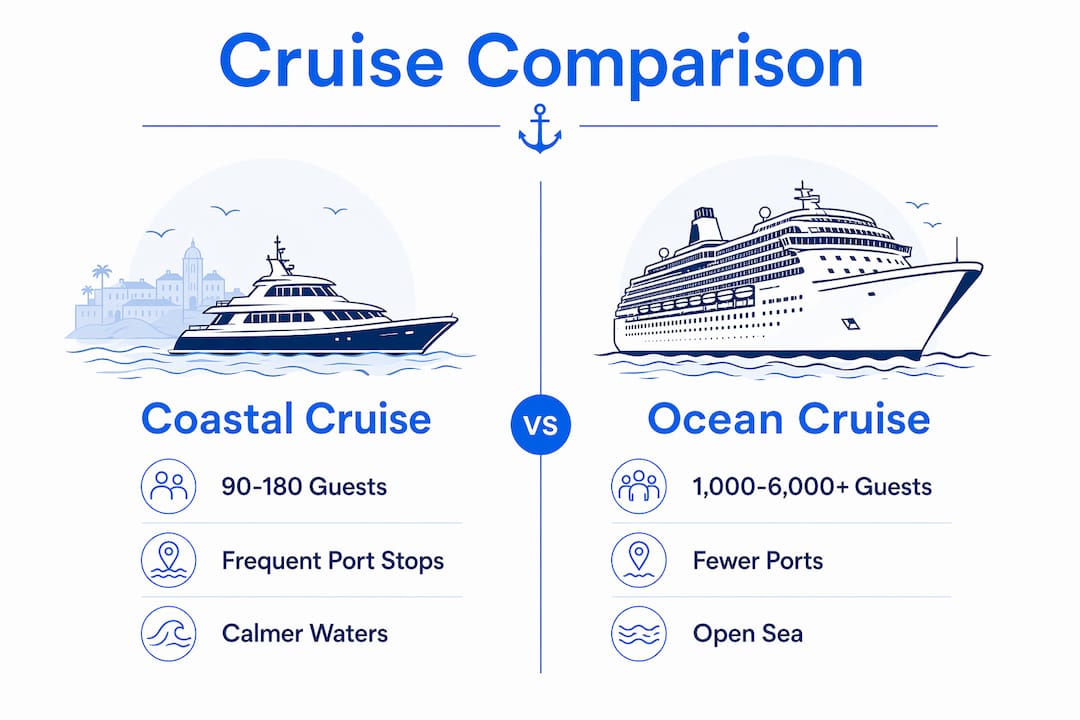
Feature | Coastal cruise | Ocean cruise |
Ship capacity | 90–180 guests | 1,000–6,000+ guests |
Pace | Relaxed, destination-focused | Fast, activity-packed |
Water conditions | Calmer, near-shore | Open ocean, more movement |
Port access | Small harbors, town centers | Large industrial ports |
Onboard community | Intimate, familiar | Anonymous, large-scale |
Wellness integration | Yoga, nutrition, blue-space benefits | Spa facilities, fitness centers |
Pro Tip: Book a coastal cruise for your first sea voyage. The shorter duration, calmer water, and smaller ship remove the three biggest concerns first-time cruisers report: seasickness, feeling lost, and overspending on extras.
Sustainable pacing on coastal cruises aligns with the broader wellness tourism movement. Light daily walking, fresh sea air, and consistent sleep schedules produce health benefits that a week at a resort rarely matches.
What are popular coastal cruise destinations?
The best coastal cruise destinations share one quality: they reward slow travel. Rushing through them by bus or train misses most of what makes them worth visiting. A ship that docks in the town center and stays overnight changes that equation entirely.
North American coastal routes
The New England coast is the classic American coastal cruise destination. Ships move between Boston, Bar Harbor, Newport, and the Canadian Maritime provinces during september and october, when autumn foliage turns the hillsides above the harbors. The Chesapeake Bay offers a quieter alternative, with stops at colonial-era towns and working oyster docks. The Gulf Coast connects New Orleans to Florida’s Panhandle, blending Creole food culture with barrier island beaches.
The Pacific Coast runs from San Diego north through San Francisco, Portland, and Seattle, with some itineraries extending into Alaska. These routes are often repositioning trips of 3–4 days that position ships for Alaskan summer seasons. Alaska itself is one of the strongest arguments for small-ship coastal cruising. Glacier Bay, Sitka, and Wrangell are accessible only to vessels that can navigate narrow fjords and shallow inlets.
European coastal highlights
Croatia: The Dalmatian Coast connects Dubrovnik, Split, Hvar, and dozens of smaller islands. Small ships dock directly in old-town harbors where cars are banned, putting travelers inside the medieval walls within minutes of arrival.
Norway: The Norwegian Coastal Express route runs from Bergen to Kirkenes, stopping at 34 ports. Some operators allow segment bookings, making it possible to join or leave the route at any point.
Greece: The Aegean islands reward the coastal cruise format perfectly. Ships anchor off Santorini, Mykonos, and lesser-known islands like Folegandros and Amorgos, where larger vessels cannot go.
Portugal: The Atlantic coast and the Tagus River estuary in Lisbon offer a concentrated mix of maritime history, Moorish architecture, and seafood culture within a compact geographic area.
Seasonal timing matters across all these regions. Wildlife migrations, harvest festivals, and shoulder-season pricing all create windows where the coastal cruise experience peaks. Autumn and spring consistently outperform summer for both weather quality and crowd levels at smaller ports.
How to plan a coastal cruise
Planning a coastal cruise well comes down to four decisions: when to go, which ship to choose, what to pack, and how to structure your time ashore.
Choose your travel window carefully. For Pacific Coast routes, may and fall offer the calmest seas and the most predictable weather. European coastal routes peak in late spring and early september before summer crowds thin out.
Match ship size to your priorities. Ships at the smaller end of the coastal range (under 100 passengers) reach the most remote ports but offer fewer onboard amenities. Mid-range ships (100–180 passengers) balance access with comfort, typically including guided excursion programs and wellness facilities.
Pack for movement, not formality. Coastal cruises involve daily walking on uneven cobblestones, boat tenders to shore, and variable weather. Comfortable walking shoes, a waterproof layer, and a small daypack cover most situations. Formal dining nights are rare on small ships.
Pre-book shore excursions that match your pace. Guided walking tours, wildlife viewing, and culinary tastings fill up quickly on small ships. Book before departure rather than waiting for onboard sign-ups.
Get travel insurance that covers weather delays. Coastal routes in shoulder seasons can face port closures due to wind or fog. A policy that covers missed ports and itinerary changes protects the investment without adding stress.
Consider health and accessibility needs. Calmer coastal waters benefit travelers with back pain, motion sensitivity, or balance concerns. Many small ships also offer single-level boarding and accessible cabin configurations that larger ships do not.
For travelers interested in cultural insights aboard guided cruises, researching the specific ports on your itinerary before departure transforms each stop from a sightseeing checklist into a genuine encounter with local life.
Key Takeaways
A coastal cruise delivers its greatest value through small-ship access, calmer waters, and destination-focused itineraries that ocean cruising cannot replicate.
Point | Details |
Ship size defines the experience | Ships carrying 90–180 guests reach ports and harbors that large vessels bypass entirely. |
Calmer waters benefit most travelers | Near-shore routes reduce motion sickness and physical strain compared to open-ocean voyages. |
Pace is the core difference | Coastal cruises prioritize slow, meaningful stops over onboard entertainment and packed schedules. |
Timing shapes the trip | May and fall are the optimal booking windows for Pacific Coast routes; spring and early fall suit European itineraries. |
Wellness benefits are real | Rhythmic coastal environments reduce mental fatigue and improve sleep quality over multi-day voyages. |
Why coastal cruising changed how I think about travel
Most travel advice tells you to see more. Coastal cruising taught me the opposite lesson. The trips that stayed with me longest were the ones where I spent three hours in a single harbor town, ate lunch at a place with no English menu, and watched fishing boats come in before the ship moved on. That kind of encounter doesn’t happen when you’re rushing between 12 ports in 7 days.
The wellness angle surprised me too. I expected to enjoy the scenery. I didn’t expect to sleep better, feel less anxious, and return home genuinely rested. The psychological benefits of blue space are well documented, but experiencing them over several consecutive days produces an effect that a single afternoon on the water doesn’t. The rhythm of the ship, the sound of water, and the absence of traffic noise compound over time.
The trend toward small-ship, sustainable sailing practices reflects something real in how travelers are reassessing what a good trip looks like. Fewer people are measuring a vacation by how many countries they visited. More are measuring it by how they felt when they got home. Coastal cruising scores well on that metric.
My honest recommendation: if you’ve only ever cruised on a large ship, or never cruised at all, a short coastal voyage is the most efficient way to understand what sea travel can actually be. Three or four days is enough to feel the difference.
— Lisbon
Coastal cruising in Lisbon with Lisbonbyboat
Lisbon sits at the mouth of the Tagus River, where the Atlantic meets one of Europe’s most storied waterfronts. The city’s coastline holds centuries of maritime history, from the Tower of Belém to the Monument to the Discoveries, and the best way to read that history is from the water.
Lisbonbyboat offers daily sailing tours lasting two hours along Lisbon’s historic coastline, with guides explaining the major monuments and landmarks as you pass them. For travelers who want more time on the water, private luxury yacht charters are available from two hours to a full day, on sailing yachts and catamarans. The ByBoat tours combine flexible scheduling with culturally immersive routes that capture exactly what makes coastal cruising worth doing. Lisbon’s waterfront is the starting point. The rest unfolds from there.
FAQ
What is a coastal cruise in simple terms?
A coastal cruise is a sea voyage on a small ship (typically 90–180 passengers) that travels along shorelines, stopping frequently at ports, historic towns, and natural sites that larger ships cannot access.
How long does a typical coastal cruise last?
Most coastal cruises run between 3 and 10 days. Pacific Coast repositioning trips are often 3–4 days, while European coastal routes like the Norwegian Coastal Express can run two weeks or more.
Is a coastal cruise good for people with motion sickness?
Yes. Coastal routes stay close to shore, where landmasses shield the ship from open-ocean swells. The calmer water conditions make coastal cruising significantly more comfortable for motion-sensitive travelers.
What is the best time of year to book a coastal cruise?
May and fall are the recommended booking windows for Pacific Coast routes, offering calmer seas and cooler temperatures. European coastal itineraries are best in late spring and early september before peak summer crowds arrive.
How is a coastal cruise different from a river cruise?
A coastal cruise travels along open coastlines and enters coastal ports, while a river cruise operates entirely on inland waterways. Both use small ships and emphasize destinations over onboard entertainment, but coastal cruises offer sea conditions and maritime scenery that river routes do not.
Recommended