

The Role of Tour Guides in Team Building
TL;DR:
Tour guides act as behavioral architects who influence team trust, communication, and interaction during shared experiences. They manage group dynamics, safety, and storytelling to foster genuine trust and collaboration among team members. Proper preparation and briefing enhance the guide’s ability to facilitate lasting team development rather than just providing entertainment.
Tour guides are defined as the behavioral architects of group experiences, shaping not just what teams see but how they interact, trust, and perform together. Corporate team leaders increasingly recognize that guided experiential learning, the formal term for structured group experiences designed to build skills through doing, delivers outcomes that conference rooms cannot replicate. The role of tour guides in team building extends far beyond narration. Skilled guides manage group dynamics, reduce logistical stress, and create the conditions where real communication and trust develop. When HR professionals understand this, they stop treating guided tours as perks and start treating them as development tools.
How do tour guides enhance team dynamics during guided experiences?
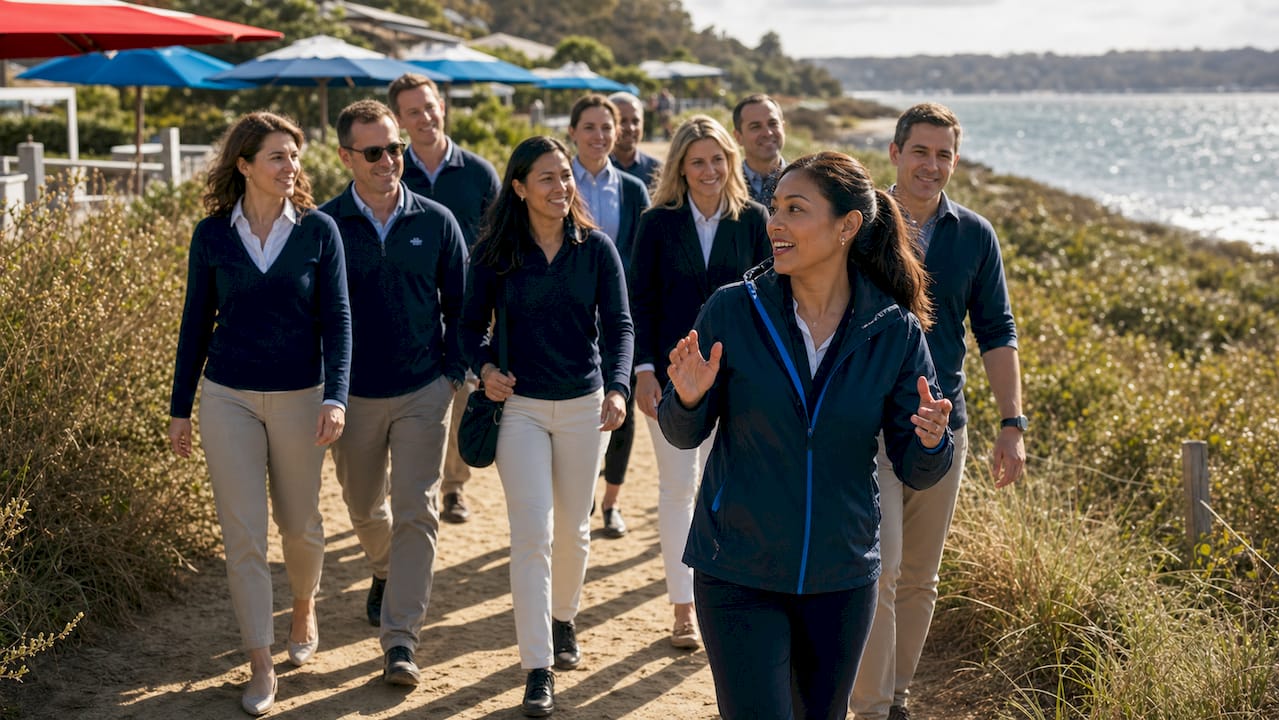
Expert guides actively manage group positioning and pacing to ensure all participants feel included, using natural pauses to connect physical activity with professional development themes like trust and adaptability. This is not accidental. A skilled guide reads the room constantly, noticing who falls to the back, who dominates conversation, and who disengages. Those observations drive real-time adjustments to pace, grouping, and topic.
Storytelling is the guide’s most powerful facilitation tool. A well-placed story about a historical figure who overcame adversity at a specific location can reframe a team’s thinking about their own challenges. The emotional resonance of place, combined with a guide’s narrative, creates shared reference points that teams carry back to the office. These shared references become shorthand for values and behaviors the group wants to reinforce.
Research confirms that guide charisma and professionalism strongly impact participant trust and emotional solidarity. Trust is the foundation of high-performing teams, and guides who project confidence and warmth accelerate its formation among strangers or colleagues who have never worked closely together. This effect is measurable in how quickly teams begin collaborating rather than competing during group activities.
Group positioning: Guides place quieter team members near the front and near themselves, naturally drawing them into conversation.
Pacing breaks: Scheduled pauses at scenic or meaningful points give teams time to talk without agenda pressure.
Thematic linking: Guides connect physical milestones, reaching a summit or crossing a river, to workplace concepts like resilience and shared goals.
Storytelling: Narrative arcs built around the location create emotional peaks that bond groups faster than icebreaker games.
Pro Tip: Brief your guide on which team members tend to withdraw in group settings. A skilled guide can draw them out naturally through direct questions or positioning, without making the moment feel forced.
What logistical and safety responsibilities do tour guides hold in corporate team building?
Tour guides serve as temporary guardians of team wellbeing, managing unpredictable variables so participants can focus on each other rather than external stressors. This function is underappreciated by most HR professionals who focus only on the experiential content of a trip. When a guide handles weather changes, route adjustments, dietary needs, and emergency protocols invisibly, the team experiences a smooth, confidence-building day. When those things go wrong without a guide, the day becomes a crisis management exercise that damages morale.
The safety dimension is non-negotiable for corporate groups. Guides trained in first aid, local emergency contacts, and risk assessment carry legal and ethical weight that team leaders cannot absorb themselves. A guide who knows the terrain, the tides, or the altitude removes the cognitive load of uncertainty from every participant. That removal of anxiety is itself a team-building mechanism. Teams that feel safe take more interpersonal risks, share more openly, and engage more fully.
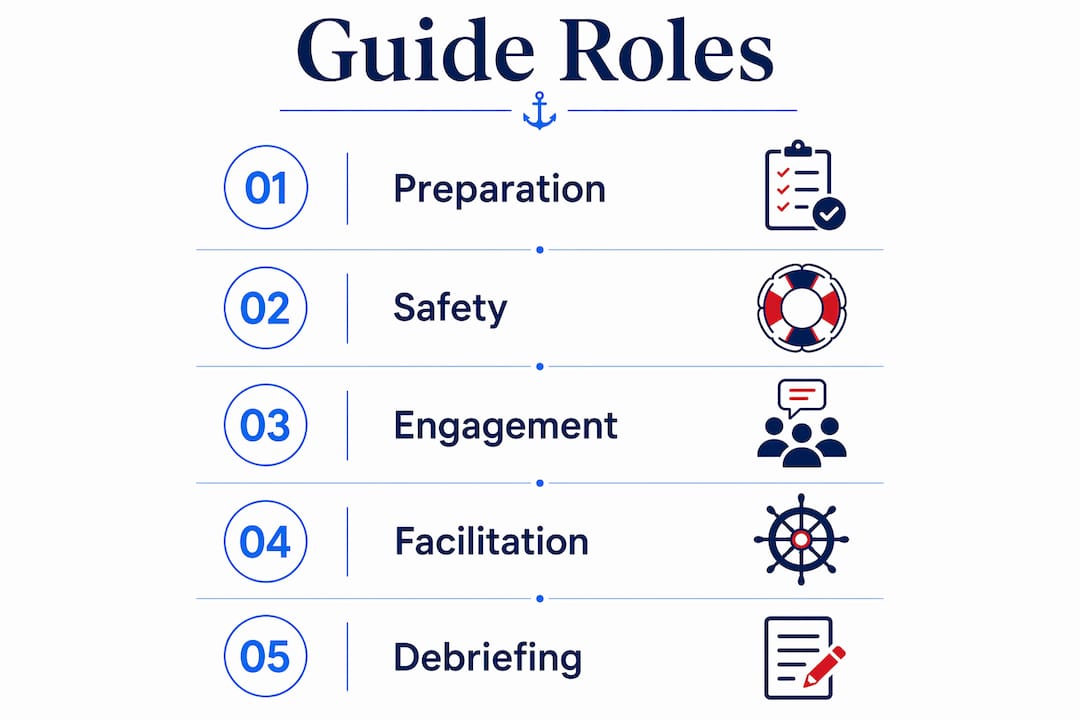
Effective logistical management by a guide follows a clear sequence:
Pre-trip risk assessment: The guide evaluates the route, weather forecast, and group fitness levels before the day begins.
Equipment checks: All gear, whether life jackets, hiking poles, or safety harnesses, is verified before departure.
Emergency protocol briefing: The guide communicates emergency procedures to the group at the start, building confidence rather than anxiety.
Dynamic route management: If conditions change, the guide adjusts the plan without disrupting the group’s experience or momentum.
Post-activity debrief: The guide closes the experience with a structured reflection that converts the day’s events into professional takeaways.
Pro Tip: Ask guides directly about their emergency training and local certifications before booking. A guide who cannot answer that question clearly is not the right choice for a corporate group.
In what ways do tour guides act as behavioral architects to manage group dynamics?
Briefing guides on specific team tensions and interpersonal dynamics turns them into behavioral architects rather than narrators. This is the single most underused strategy in corporate experiential learning. Most HR professionals book a guide, share a headcount, and show up. The guides who produce transformational outcomes receive a pre-trip briefing that includes information about dominant personalities, existing conflicts, and the team’s current communication challenges.
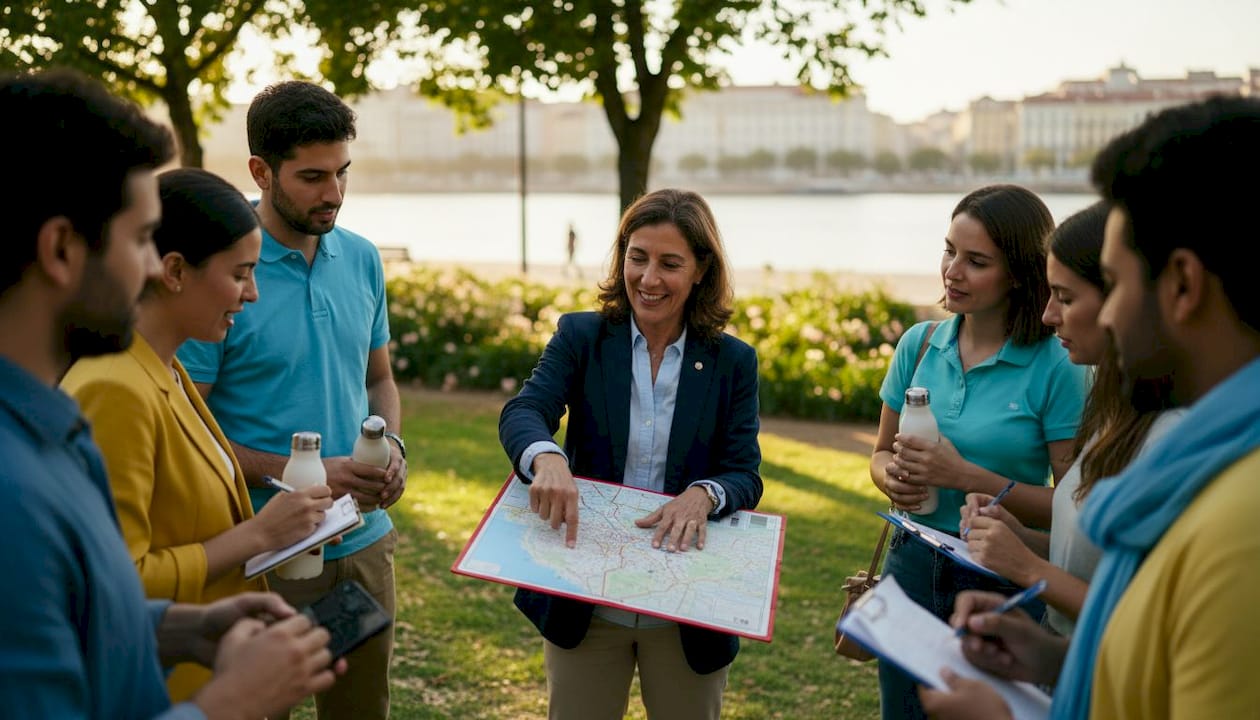
A guide who knows that two senior managers have a competitive dynamic can structure activities to place them in cooperative roles. A guide aware that a team has a trust deficit after a restructuring can build the day’s narrative around themes of shared risk and mutual reliance. This is not manipulation. It is skilled facilitation applied to a real group with real history.
The distinction between a guide who narrates and one who facilitates is significant. The table below illustrates the difference in approach and outcome.
Guide approach | Primary focus | Team outcome |
Narrator | Information delivery | Knowledge of location |
Facilitator | Group engagement | Improved communication |
Behavioral architect | Interpersonal dynamics | Trust and conflict reduction |
Adventure-based contexts make this role especially visible. When a team navigates a physical challenge together, the guide controls the difficulty level, the framing, and the debrief. A guide who frames a difficult river crossing as a test of collective problem-solving produces a different team conversation than one who frames it as a personal achievement. The framing is everything, and the guide owns it.
Understanding guide responsibilities in depth helps HR professionals ask better questions during the booking process and set clearer expectations for what a skilled guide can deliver.
How does the structure of a guided tour support experiential learning?
Adventure-based team building creates swift trust through genuine shared challenges rather than simulated activities, accelerating communication and collaboration in ways that classroom exercises cannot. The structure of a well-designed guided tour mirrors the arc of a professional project: orientation, challenge, problem-solving, and shared reward. Teams that complete this arc together carry the memory of success into their next collaborative project.
The progression matters because each phase serves a distinct psychological function. Orientation lowers anxiety and establishes group norms. The challenge phase surfaces individual strengths and exposes gaps in communication. Problem-solving requires real negotiation and listening. The shared reward, whether a summit view, a harbor arrival, or a waterfall, creates a collective emotional peak that research links to lasting group identity.
Guided tours also accommodate mixed-ability groups in ways that most traditional team-building activities cannot. A skilled guide adjusts pace, offers alternative routes, and reframes physical limitations as opportunities for peer support. That accommodation models inclusive behavior for the entire team. When a senior executive helps a colleague navigate a difficult section, the hierarchy flattens in a way that a workshop exercise rarely achieves.
Structured reflection during natural pauses links physical experience to professional themes, converting memorable moments into developmental gains. The guide who asks “What did we just do together, and where do you see that showing up at work?” at the right moment turns a scenic stop into a coaching session. That question costs nothing and produces insights that a $10,000 offsite workshop might not.
Guided tours also outperform many traditional team-building formats on the dimension of authenticity. Escape rooms and trust falls are recognized as artificial by most participants. A real physical environment with real stakes produces real behavior. Teams reveal themselves under genuine conditions, and guides who observe that behavior can reflect it back in ways that create genuine self-awareness.
For teams planning their next offsite, Lisbon sailing tours demonstrate how a structured nautical experience, with professional guides managing both the vessel and the group dynamic, produces the kind of shared challenge that builds lasting cohesion.
What practical steps maximize the impact of tour guides in corporate programs?
Pre-trip communication strategies that frame the experience as a strategic investment, not leisure, increase team engagement before the trip begins. The framing starts with the invitation. An email that explains the purpose of the experience, the skills it targets, and the outcomes expected signals to participants that this is a professional development event. That signal changes behavior on the day.
Booking specialized local guides well in advance is standard best practice, particularly during peak seasons when availability is limited and customization requires lead time. Local guides bring contextual knowledge that large agency operators cannot replicate. They know the terrain, the community, and the stories that resonate with specific types of groups. That specificity produces richer experiences.
Book early: Secure specialized guides at least 8–12 weeks before the event to allow for customization and availability confirmation.
Share team context: Provide the guide with a written briefing covering team size, current dynamics, communication challenges, and desired outcomes.
Set clear objectives: Define two or three specific behaviors you want the experience to reinforce, such as active listening or cross-functional collaboration.
Plan structured reflection: Schedule a 20-minute debrief immediately after the tour while the experience is fresh, either led by the guide or an internal facilitator.
Follow up at work: Reference specific moments from the tour in team meetings during the following weeks to anchor the experience in daily behavior.
Pro Tip: Share team conflict information with your guide in writing before the trip. Guides who know about existing tensions can design the day’s activities to address them indirectly, which is far more effective than a direct confrontation in a meeting room.
The guest experience principles that hospitality professionals apply to individual travelers translate directly to corporate groups. The same attention to anticipation, comfort, and emotional arc that makes a hotel stay memorable makes a guided team experience transformational.
What I’ve learned about guides that most corporate programs miss
The most consistent mistake I see corporate teams make is treating the guide as a service provider rather than a co-facilitator. They book the guide, show up, and expect the magic to happen. The teams that get the most out of guided experiences treat the guide as a partner from the planning stage forward.
The second mistake is undervaluing the debrief. The experience itself is the raw material. The debrief is where it becomes development. Guides who are skilled at facilitated reflection can extract insights from a two-hour sailing tour that a full-day workshop might not surface. That skill is worth asking about explicitly during the booking process.
What surprises most HR professionals is how much a guide’s personality affects the team’s behavior. A guide who is warm, curious, and genuinely interested in the group creates a social permission structure where team members feel safe being open. A guide who is transactional produces a transactional group experience. The importance of service quality in hospitality contexts applies directly here. The guide’s interpersonal approach is not a soft factor. It is the mechanism through which team development happens.
Guided experiential learning is not a retreat activity. It is a development methodology. Teams that treat it that way, with preparation, clear objectives, and structured follow-through, see it show up in how they work together for months afterward.
— Lisbon
Lisbonbyboat’s guided tours for corporate teams
Corporate groups looking for a guided experience that combines professional facilitation with a genuinely memorable setting will find Lisbonbyboat’s nautical tours in Lisbon purpose-built for that need.
Lisbonbyboat’s professional guides lead daily sailing tours along Lisbon’s historical coastline, covering major monuments and landmarks while managing the group’s pace, engagement, and safety throughout. Private cruises on luxury yachts and catamarans are available from two hours to a full day, giving HR professionals the flexibility to match the experience to their team’s schedule and objectives. For corporate groups, the nautical setting removes the team from familiar office dynamics and places them in a shared environment where cooperation is not optional. Lisbonbyboat’s guided boat tours are bookable directly, with options for customized itineraries suited to specific team-building goals.
Key takeaways
Tour guides are the most underutilized asset in corporate team building because their role as behavioral architects, not just narrators, directly determines whether a guided experience produces lasting team development or just a pleasant day out.
Point | Details |
Guides shape group dynamics | Expert guides manage positioning, pacing, and storytelling to build trust and inclusion among team members. |
Safety enables development | Guides who handle logistics and risk allow teams to focus on interpersonal connection rather than external stress. |
Briefing guides is critical | Sharing team tensions and dynamics with guides in advance turns them into active facilitators of conflict resolution. |
Tour structure mirrors project cycles | The orientation-challenge-reward arc of a guided tour accelerates communication and collective problem-solving. |
Reflection converts experience to growth | Structured debrief moments during and after tours link physical events to professional development outcomes. |
FAQ
What is the role of tour guides in team building?
Tour guides act as behavioral architects who manage group dynamics, safety, and engagement during shared experiences. Their role extends beyond information delivery to actively shaping how team members interact, trust, and communicate.
How do tour guides enhance teamwork during corporate outings?
Guides use group positioning, pacing, storytelling, and facilitated reflection to create conditions where trust and collaboration develop naturally. Research confirms that guide charisma and professionalism directly impact participant trust and emotional solidarity.
Why are guided tours more effective than traditional team-building activities?
Guided tours create genuine shared challenges rather than simulated scenarios, which produces authentic behavior and faster trust formation. Real environments with real stakes reveal how teams actually communicate and solve problems together.
What should HR professionals tell a guide before a corporate tour?
HR professionals should share the team’s size, current dynamics, communication challenges, existing conflicts, and the specific outcomes they want the experience to reinforce. That briefing allows the guide to design the day’s activities around the team’s actual development needs.
How far in advance should corporate groups book specialized guides?
Booking 8–12 weeks in advance is standard best practice for corporate groups, particularly during peak seasons when specialized local guides have limited availability and customization requires lead time.
Recommended
Bài viết này gọn gàng, nói đúng ý nên mình đọc cái là nắm được ngay, cảm ơn bạn đã chia sẻ. Mình cũng có thói quen xem thống kê XSMB mỗi ngày, nhưng hồi trước phải mở nhiều nơi để đối chiếu nên hơi mất công. Về sau mình tự gom lại cho dễ theo dõi, kiểu lưu thành ghi chú trên một trang ở soicau247.com để lúc cần chỉ mở ra xem nhanh. Mục đích của mình chỉ là có số liệu cập nhật theo ngày để so sánh cho tiện, chứ không làm gì phức tạp hay cầu kỳ. Nếu ai cũng hay xem rồi muốn lưu lại cho đỡ rối, thì mình để đường dẫn mình…