

Tour Guide Responsibilities Explained for Aspiring Guides
- lisbonbyboat
- May 31
- 8 min read
TL;DR:
Effective tour guides handle logistics, safety, compliance, and guest engagement beyond storytelling, ensuring exceptional experiences.
They proactively manage risks, adapt narratives to audiences, and continuously improve through feedback, professional development, and documentation.
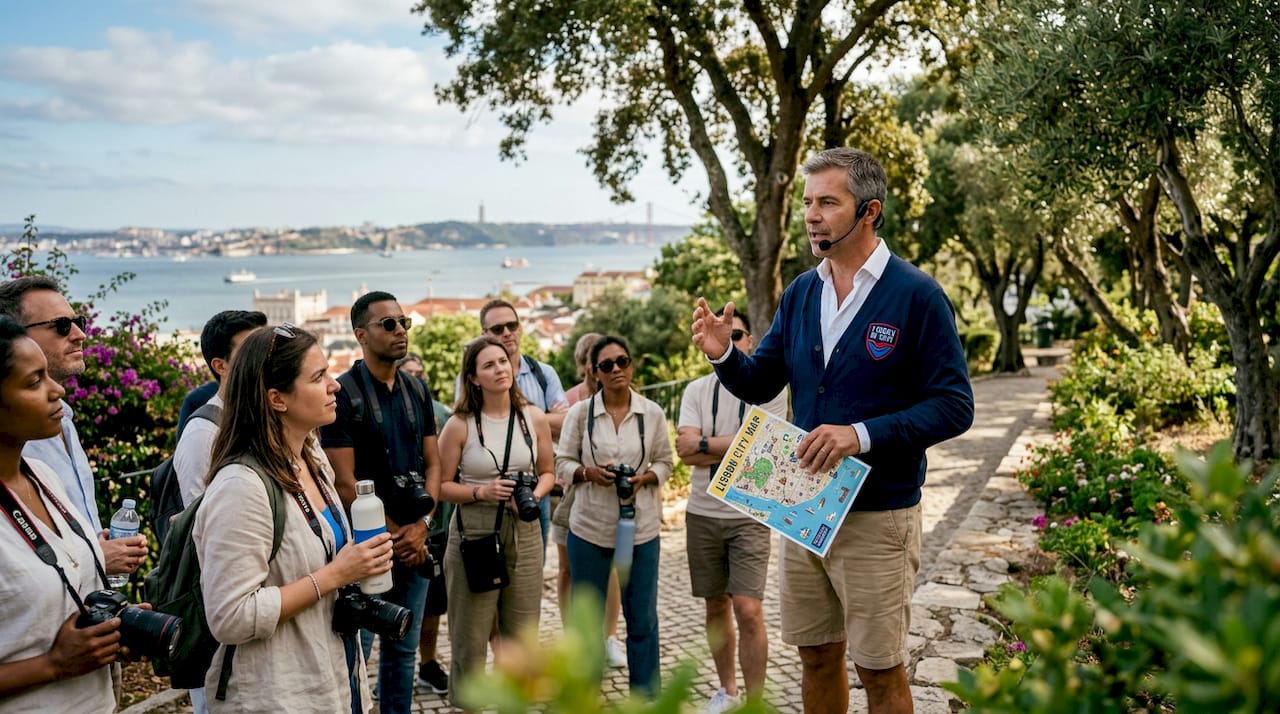
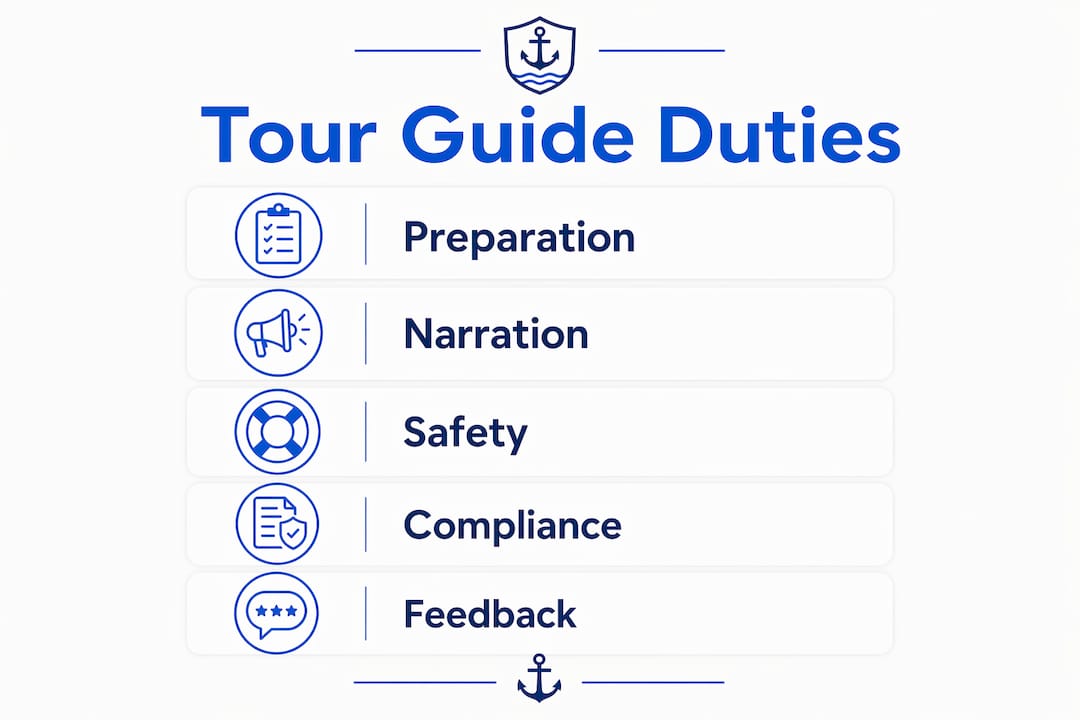
Most people assume a tour guide’s job is simply showing up, pointing at landmarks, and repeating memorized facts. That picture misses about 80% of what the role actually demands. Tour guide responsibilities explained properly reveal a profession that spans logistics coordination, live storytelling, emergency management, regulatory compliance, and continuous professional development. The industry term for the full scope of the role is “tour leadership,” and whether you’re just starting out or looking to sharpen your practice, understanding what the job truly requires is the difference between being forgettable and being exceptional.
Key Takeaways
Point | Details |
Role goes beyond narration | Tour guides handle logistics, safety, compliance, and guest engagement simultaneously. |
Safety is proactive, not reactive | Effective guides anticipate risks and manage group pacing before problems develop. |
Compliance protects everyone | Carrying valid credentials and meeting local regulations shields both guide and guest. |
Storytelling must be adaptive | Adjusting your communication style to different audience types is a core professional skill. |
Feedback drives improvement | Collecting and acting on guest feedback is how professional guides refine their tours over time. |
Tour guide responsibilities explained: the operational foundation
Before a single guest boards your vessel or steps onto a cobblestone street, you’ve already been working for hours. The operational side of the duties of a tour guide is the least visible and most underestimated part of the job. It includes everything from pre-tour itinerary preparation to coordinating with venue staff, transport providers, and entry managers on the day.
Here’s what the operational workflow of a professional guide actually looks like:
Itinerary preparation. Write detailed route notes and scripts in advance, accounting for timing, crowd levels at each stop, and any seasonal access restrictions. A well-prepared guide is never caught off guard by a closed entrance or a relocated exhibit.
Supplier and venue coordination. Confirm arrangements with transport operators, site staff, and accommodation providers before departure. Arranging logistics and transport following planned itineraries is a recognized core duty, not an optional extra.
Group intake and access management. Meet and greet guests, verify headcounts, and control access to each stop in sequence. Managing visitor flow and enforcing site rules protects venues and significantly improves the visitor experience.
Pacing and cohesion throughout the tour. Keep the group moving together without rushing or losing stragglers. Real-time pacing adjustments are one of the most practical skills a guide develops through experience.
On-site flexibility. When a stop changes without warning, you need backup routes and regrouping points already mapped. Flexible real-time re-planning with contingency options is what separates professional guides from amateur ones.
Exhibit and setup support. Depending on the context, guides may assist with exhibit installation and dismantling at venues, which adds another layer of physical and organizational responsibility.
Pro Tip: Build a short “buffer window” into every itinerary at a natural midpoint, such as a scenic overlook or a quiet square. If you’re running behind, you absorb the delay there without guests noticing the adjustment.
Connecting with your audience through storytelling
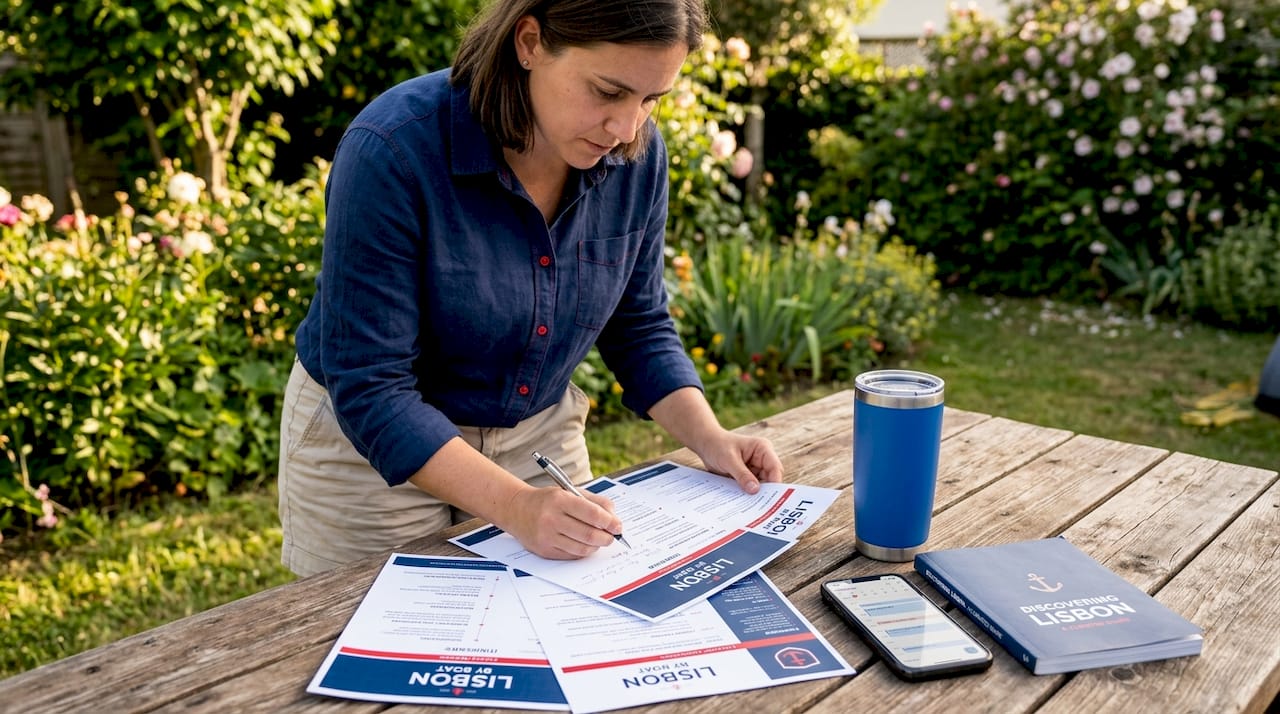
Facts inform. Stories persuade. The most technically accurate guide in the world will lose a group if the delivery is dry and the content never shifts based on who’s listening. Engaging commentary and audience customization are now listed as primary requirements in tour guide job descriptions, not soft skills that are nice to have.
What this looks like in practice:
Read the room immediately. Families with young children need shorter explanations with visual hooks. Seniors often appreciate more historical depth and a slightly slower pace. International visitors may need you to avoid idioms and speak more deliberately.
Use narrative, not recitation. Instead of stating that a monument was built in 1755, place it in a story. Who ordered it? What crisis prompted it? What did locals think? Stories create emotional anchors that guests remember long after the facts fade.
Ask and listen actively. A question from a guest is not an interruption. It’s a signal about what they actually care about. Honest, direct answers, including “I don’t know, but I’ll find out,” build more credibility than a polished non-answer.
Adapt in real time. If your group is quiet and disengaged at a particular stop, shorten it and pick up energy at the next. If they’re deeply curious, let a section breathe longer than your script planned.
Build personal connections. Remembering a guest’s name or referring back to something they mentioned earlier transforms a group experience into something that feels individual.
On nautical tours, this becomes especially clear. How guides enrich visitor experiences through narration and interpretation is what makes the difference between a pleasant boat ride and a genuinely memorable journey.
Pro Tip: Prepare two versions of your key stops: one for a curious, engaged group and one for a quieter audience. Having both ready means you never have to improvise under pressure.
Safety and group management duties
Safety is where the responsibilities of tour leaders get serious. The guide is the primary safety contact for every person in the group, and that status carries real weight. Effective safety management is about leading the group proactively and anticipating issues before they arise, not only about emergency response.
The core safety duties a guide must master include:
Proactive group monitoring. Continuously scan the group for signs of fatigue, distress, or separation. On water-based tours especially, knowing where every guest is at all times is non-negotiable.
Pacing as a safety tool. Moving too fast causes guests to rush in unsafe conditions. Too slow, and attention lapses create their own risks. Deliberate pacing is a safety decision, not just a comfort one.
Emergency response readiness. Handling emergencies such as lost, sick, or injured guests by following established protocols is a core competency. Every guide should know first aid basics at minimum, and ideally hold a current certification.
Weather and environmental awareness. Conditions change, particularly on marine and outdoor tours. Knowing when to modify a route or cut a stop short because of shifting weather is a judgment call that experienced guides make confidently.
Communication under pressure. When something goes wrong, your guests take their emotional cue from you. A calm, clear explanation of what is happening and what you’re doing about it is itself a safety tool.
For guides working in Lisbon and similar coastal environments, the safety protocols for tourists on water tours add another dimension of responsibility around life safety equipment and maritime procedures.
Regulatory compliance and professional standards
The legal and credentialing side of tour guiding is the part many aspiring guides overlook until it causes a problem. Countries and municipalities regulate the profession to protect tourists and preserve cultural sites, and the standards are more specific than most people expect.
Requirement | What it means in practice |
Valid tour guide ID badge | Must be carried and worn visibly during all assignments |
Assignment documentation | Written authorization for each specific tour, updated per engagement |
Badge renewal | Requires periodic refresher training to maintain active certification |
Content compliance | Commentary must align with authorized historical and cultural information |
Agency verification | Tour operators verify guide credentials via official databases before assignments |
Vietnam’s Khanh Hoa province offers a well-documented example. Local authorities require that guides carry ID badges and assignment documents at all times, with badge renewal tied to mandatory refresher courses. Noncompliance risks tour interruptions or fines for both the guide and the operating agency. The principle holds globally: credentials are not paperwork formalities. They are the legal foundation of your professional practice.
Understanding local guide standards and expectations before you start working in any jurisdiction protects you from gaps that could interrupt or end an assignment entirely.
Continuous improvement through feedback and collaboration
The best guides treat every tour as data. What landed well? Where did guests lose interest? Which stop sparked the best questions? Collecting guest feedback and using it to refine routes and content is how professional guides separate themselves from people who run the same tour the same way indefinitely.
Practical habits that distinguish improving guides from stagnant ones:
Debrief after every tour. Even a five-minute mental review of what worked and what didn’t compounds significantly over dozens of tours.
Use formal feedback channels. Post-tour surveys and online reviews are not just reputation management tools. They’re a window into what guests actually experienced versus what you thought you delivered.
Collaborate with your operations team. Coordinating with operations and support staff surfaces logistical friction you may not notice yourself, such as a stop that regularly runs long or a supplier who needs a stronger briefing.
Invest in ongoing certification. The tour industry evolves. New historical discoveries, updated safety standards, and shifting guest demographics all create reasons to keep learning.
Adapt based on group type. If families consistently disengage at one stop but corporate groups love it, that’s a segmentation insight. Build separate versions of that section rather than running a generic middle ground.
Designing feedback loops and maintaining operational coordination are what differentiate professional guides who master both story and process from those who rely on charisma alone.
My perspective on what truly separates great guides
I’ve observed that new guides almost always focus on what they’ll say, while the guides who consistently get five-star reviews focus equally on what they’ll do before guests even arrive. The operational preparation, the safety scanning, the compliance checks. Those are the invisible foundations that allow storytelling to actually land.
What I’ve found is that the skills needed for tour guides that no job description quite captures are empathy and situational awareness working together. Reading a group of strangers within the first ten minutes and accurately predicting what they need from the next two hours is a learned art. It takes repetition, deliberate reflection, and the humility to accept that some tours simply go differently than you planned.
The regulatory side is where I’ve seen guides take shortcuts they eventually regret. Carrying the right documentation and maintaining current credentials is not bureaucratic overhead. It’s professional self-protection, and it signals to guests and operators that you take the role seriously.
For aspiring guides: the storytelling will come. Focus first on the systems, the safety habits, and the compliance groundwork. That foundation is what lets the creative work flourish.
— Lisbon
Experience Lisbon’s coastline with expert-led boat tours
At Lisbonbyboat, our guides do exactly what this article describes, from meticulous pre-tour logistics to live narration of Lisbon’s stunning riverfront monuments. Every detail of the guest experience is managed by trained professionals who understand that great touring is equal parts preparation and performance.
Whether you’re interested in our two-hour daily sailing tours along the Tagus River or a full-day private voyage, the caliber of guide leadership is what makes each experience genuinely different. For guests seeking something more personal, our luxury yacht charters offer private cruises on sailing yachts and catamarans where the guide-to-guest ratio means every question gets answered and every story gets told properly. If you’re ready to see Lisbon the right way, explore our full tour options and find the experience that fits.
FAQ
What does a tour guide do beyond narrating facts?
Tour guides manage group logistics, coordinate with suppliers, monitor guest safety, handle emergencies, and collect feedback to improve future tours. The role is closer to an event coordinator and safety officer combined with a storyteller than a simple narrator.
What skills are most important for a tour guide?
The core skills needed for tour guides include communication, audience adaptation, situational awareness, first-aid readiness, and logistical planning. Empathy and the ability to read a group quickly are equally critical but harder to teach.
Do tour guides need official credentials and documentation?
Yes. In most jurisdictions, guides must carry a valid ID badge and assignment documentation, and many countries require periodic badge renewal through refresher training. Operating without current credentials can result in tour interruptions or fines for both the guide and their agency.
How do tour guides handle emergencies during a tour?
Guides follow established safety protocols for emergencies such as medical incidents, lost guests, or sudden weather changes. The key is proactive group management that prevents many emergencies before they develop, combined with calm, clear communication when a situation does arise.
What is the difference between a tour guide and a tour leader?
A tour guide typically focuses on a specific site or route, providing interpretative commentary and managing group flow at that location. A tour leader, or tour manager, oversees the entire trip itinerary including transportation, accommodation, and multi-day logistics, often working across multiple guides and destinations.
Recommended
Comments