

Family Trip to Lisbon: 3–5 Day Itinerary for Parents
- lisbonbyboat
- 8 hours ago
- 15 min read

For most families, a 3–5 day Lisbon trip built around one anchor activity per day works best. Start with the Oceanário de Lisboa and Parque das Nações (flat, weatherproof, endlessly kid-friendly), add a Belém riverfront morning, slot in a Sintra day trip for school-age kids, and finish with a short family sailing cruise on the Tagus as a legs-up reset. That structure covers the city’s highlights without the hill-induced meltdowns that catch first-time visitors off guard.
Quick logistics before you book:
Best timing: April through early June and September through October bring pleasant temperatures of 20–26°C and lighter crowds. July and August bring warmer temperatures with heavy cruise-ship traffic around Belém and Alfama.
Transport: Pick up a Viva Viagem card or a Lisboa Card if you plan to hit two or more paid attractions in a day.
Where to base yourself: Stay near the river. Parque das Nações and Belém are the city’s flat zones — far easier to navigate with a stroller than Alfama or Mouraria.
Age-specific swaps: Toddlers do best with riverside play, Parque das Nações playgrounds, and short tram rides. School-age kids can handle Castelo de São Jorge’s ramparts and the uphill trails at Sintra. For under-3s, use a carrier on steep streets and save the stroller for flat days.
Table of Contents
What does a family trip to Lisbon look like day by day?
Three days is the sweet spot for most families. Four or five days lets you breathe, add Sintra, and squeeze in a beach reset without feeling rushed.
The 3-day plan
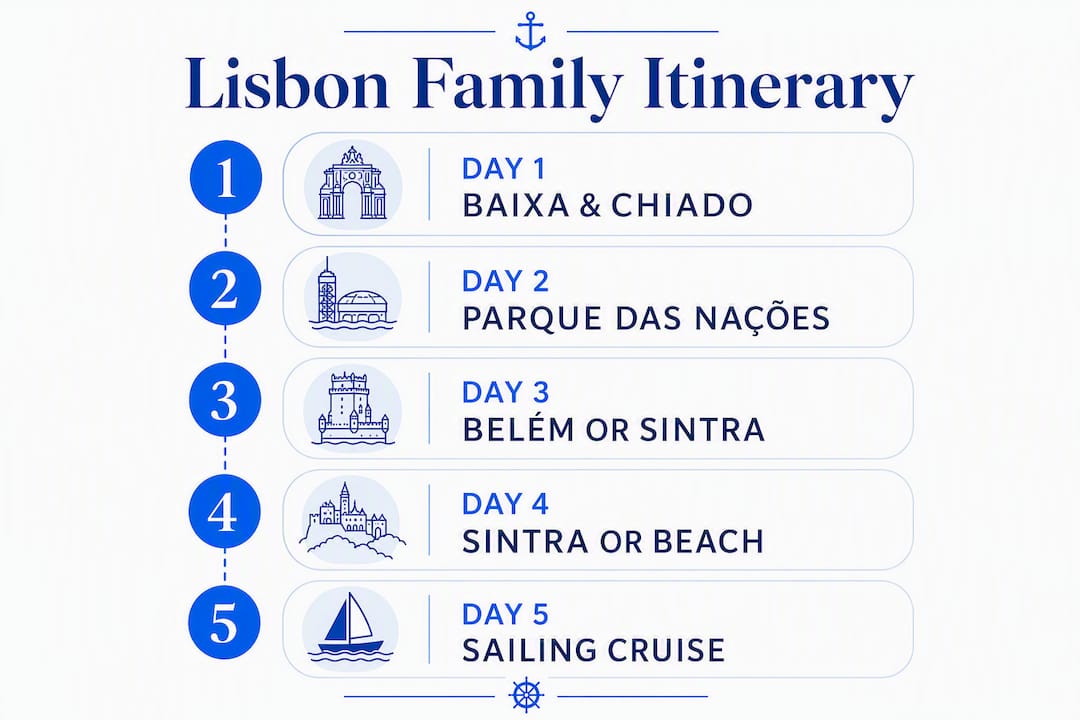
Day 1 — Baixa, Chiado, and the riverfront (flat and central)
Morning: Walk the Praça do Comércio waterfront, let kids run in the open square, and grab a pastel de nata at a nearby café. The Santa Justa Lift is a short detour that kids find genuinely exciting — the iron structure feels like something out of a Jules Verne story.

Afternoon: Wander Chiado’s pedestrian streets. The Elevador da Glória funicular is a two-minute ride that earns outsized enthusiasm from children. Skip the steep Alfama streets today — save your legs.
Evening: Dinner early (aim for 7:00 PM, which is early by Lisbon standards) in Baixa. Many restaurants offer meia dose (half-portion) options at reduced cost — ask for them rather than ordering full adult plates for picky eaters.
Day 2 — Parque das Nações and the Oceanário
This is your anchor day. The Oceanário de Lisboa is consistently the top family pick — a 5,000 m³ central tank surrounded by four ocean habitat exhibits. Plan 2–3 hours inside. After lunch, ride the Telecabine Lisboa (Lisbon Cable Car) along the waterfront — it runs above the Tagus and gives kids a bird’s-eye view of the river. The promenades here are flat and stroller-friendly, so this is also the day to let toddlers walk freely.

Day 3 — Belém or Sintra (choose by age)
With toddlers: Take the tram or train to Belém. The riverfront open space in front of the Belém Tower is one of the best spots in the city for small children to run around. The Jerónimos Monastery exterior is worth a look even if you skip the interior. Grab pastéis de Belém at the original bakery on Rua de Belém.
With school-age kids: Head to Sintra. The train from Rossio station takes a mid-length journey. Pena Palace is the visual highlight — vivid colors, castle ramparts, and enough space to explore. Plan a full day and wear comfortable shoes; the uphill walk to the palace is real.
The 4-day plan
Add a dedicated Sintra day (if you did Belém on day 3) or a Cascais beach reset. Cascais is a train ride of moderate length from Cais do Sodré and offers calmer, shallower beaches that work well for toddlers. The pace is noticeably slower than central Lisbon, which is exactly the point.
The 5-day plan
Day | Morning | Afternoon | Evening |
1 | Baixa/Chiado riverfront | Santa Justa Lift + Chiado | Early dinner, Baixa |
2 | Parque das Nações + Oceanário | Telecabine Lisboa cable car | Riverside walk |
3 | Belém Tower + Jerónimos | Pastéis de Belém + playground | Return to base |
4 | Sintra (Pena Palace) | Quinta da Regaleira or town | Rest evening |
5 | Family sailing cruise (Tagus) | Beach or market | Farewell dinner |
The fifth day is deliberately slow. A morning boat cruise on the Tagus gives tired legs a rest and lets kids experience Lisbon from the water — a completely different perspective than two days of walking. Build in a midday nap window on days 3 and 4 if you’re traveling with children under 5.
Age-focused swaps:
Toddlers: Replace Sintra with a second Parque das Nações day or a Cascais beach morning. Skip interior museum rooms and prioritize open outdoor spaces.
School-age kids (6–12): Add Castelo de São Jorge — the ramparts and peacocks are a genuine hit. The interactive exhibits at Pavilhão do Conhecimento (science museum in Parque das Nações) hold attention for 90 minutes easily.
Teens: Tram 28 through Alfama is worth the queue for the experience. Sintra’s Quinta da Regaleira, with its spiral initiation well, tends to land well with older kids.
Which family-friendly attractions are worth your time in Lisbon?
Oceanário de Lisboa
Why kids love it: The central ocean tank is enormous — fish, sharks, and rays circling at eye level. The surrounding habitat exhibits (Antarctic, tropical, temperate) keep different ages engaged at different speeds. It’s also fully weatherproof, which matters in shoulder season.
Visit length: 2–3 hours. Stroller access: Excellent — elevators throughout. Cost: Tickets are priced per person; check the official site for current family rates and book online to skip the queue. Pro tip: Arrive at opening time (10:00 AM) to beat school groups, which typically arrive mid-morning.
Tram 28
The most photographed tram in Lisbon threads through Alfama’s narrowest streets. For kids, the novelty lasts about 15 minutes — which is roughly how long the most scenic stretch takes. The tram is often crowded, so consider riding it as a short scenic segment rather than a full route. Fold the stroller before boarding; there is no space for an open buggy.
Parque das Nações
The 1998 World Expo site is now Lisbon’s most family-friendly district. Wide, flat promenades run along the Tagus. The Telecabine Lisboa cable car runs the length of the waterfront and takes about 10 minutes end to end. The Pavilhão do Conhecimento science museum has hands-on exhibits that work for ages 4 and up. This is the one neighborhood where an umbrella stroller actually works without frustration.
Castelo de São Jorge
The hilltop castle offers sweeping views and enough open space for kids to run. The ramparts are wide enough to walk safely. Getting there requires a taxi or a steep uphill walk — plan accordingly. Visit length: 1.5–2 hours.
Belém riverfront
The combination of the Belém Tower, Jerónimos Monastery, and the Monument to the Discoveries gives you a half-day of sightseeing with a wide riverside esplanade in between. There’s a playground near the Cultural Center of Belém. The original Pastéis de Belém bakery is a five-minute walk from the tower.
Accessibility note: Portugal’s priority law grants families with young children queue priority at many public attractions and services. Look for the stroller icon at ticket windows and ask staff directly — it’s a legal right, not just a courtesy, and most venues honor it without hesitation.
Pro Tip: At busy attractions in summer, look for the stroller-icon priority lane rather than joining the general queue. At the Oceanário and Pena Palace, this can save 20–30 minutes on peak days.
The Elevador da Glória funicular connects Restauradores square to the Bairro Alto neighborhood in about two minutes. It’s a practical shortcut and a fun ride. Note that full-size strollers won’t fit comfortably — fold or carry.
Where should families stay in Lisbon?
The neighborhood you choose shapes the entire trip. Lisbon’s hills are beautiful and genuinely exhausting with young children, so proximity to flat ground and river access matters more than proximity to famous landmarks.
Baixa/Chiado is the most central option. Flat streets around Praça do Comércio, easy metro access, and a short walk to the riverfront make it practical for families who want flexibility. The trade-off is noise and tourist density.
Parque das Nações is the top pick for families with toddlers. The whole district is flat, modern, and designed for pedestrians. You’re a five-minute walk from the Oceanário and the cable car. Grocery stores and playgrounds are integrated into the neighborhood.
Belém suits families who want a quieter base with riverfront access. It’s a 20–25 minute tram or train ride from central Lisbon, which adds commute time but removes the chaos. The riverside esplanade is genuinely pleasant for early morning walks.
Avenida da Liberdade offers convenience and upscale accommodation. The avenue itself is flat and tree-lined, and the metro connection is fast. Less character than the older districts, but stress-free logistics.
Pro Tip: Whatever neighborhood you choose, prioritize elevator access and a kitchenette. Being able to store snacks, heat milk, and prepare a simple breakfast saves money and sanity on a multi-day trip with young children.
Many Lisbon playgrounds include attached cafés where parents can sit with a coffee while keeping children in direct sight. This is a genuinely useful local feature — factor it into your neighborhood research when choosing where to base yourself.
Quick recommendation matrix:
Family profile | Best neighborhood |
Toddlers (0–3) | Parque das Nações |
School-age kids | Baixa/Chiado |
Beach-focused trip | Cascais (day-trip base) |
Convenience-first | Avenida da Liberdade |
How do you get around Lisbon with kids?
Lisbon’s public transport is genuinely good. The challenge is that the city’s topography means some routes involve stairs, steep streets, or cobblestones that no transport card can fix.
Metro: The cleanest, fastest option for longer distances. Many central stations have elevators, but not all — check the Carris/Metro map before planning a route with a stroller. The metro runs frequently and is air-conditioned, which matters in summer.
Trams: Scenic and slow. Tram 28 is the famous one, but it’s often packed. Use trams for short, scenic segments rather than efficient transit. Fold the stroller before boarding — there is no dedicated buggy space.
Funiculars (Glória, Bica, Lavra): Each ride takes 2–3 minutes and covers a steep hill that would otherwise require a 10-minute climb. Kids enjoy them. Fold strollers; the cars are narrow.
Santa Justa Lift: An iron elevator connecting Baixa to the Carmo neighborhood. More of an attraction than a transport tool, but genuinely useful if you’re heading uphill with tired legs.
Taxis and ride-hail (Uber, Bolt): The most practical option for door-to-door travel with young children, especially after a long day. Fares are reasonable by US standards. Use them freely when the metro route involves stairs or the tram is too crowded.
Ticketing: The Viva Viagem card costs €0.50 for the card itself, with a 24-hour unlimited adult pass priced around €6.80. The Lisboa Card bundles transport with attraction discounts and pays back if you visit two or more paid sights in a day. Children under a certain age travel free — confirm current age thresholds on the Carris/Metro official site before you go.
Stroller reality: Umbrella strollers often fail on Lisbon’s cobblestones. Experienced parents recommend a soft-structured carrier for steep lanes and a sturdier lightweight buggy with air tires for flat-zone days. Map your route each morning and identify where stairs or cobbled alleys appear — a two-minute check saves a 20-minute detour.
For a practical breakdown of navigating Lisbon’s hills with a buggy, the Lisbon stroller guide from Lisbonbyboat covers the specific streets and transport options worth knowing.
Which day trips work best for families?
Sintra
Best for school-age kids and teens. The train from Rossio station takes about 45 minutes and runs frequently. Pena Palace is the main draw — the colorful Romanticist architecture reads as genuinely magical to children, and the surrounding park has enough trails to keep older kids moving. Quinta da Regaleira, with its spiral initiation well descending underground, is a strong second stop for ages 8 and up.
Plan a full day. The uphill walk from Sintra town to Pena Palace is steep; a shuttle bus runs from the town center for families who prefer to skip it. Book Pena Palace tickets in advance — the site sells out on peak summer days. With toddlers, consider skipping Sintra entirely and replacing it with a second Parque das Nações day or a Cascais beach morning.
Cascais and Estoril
A 30–40 minute train ride from Cais do Sodré station. Cascais offers calmer, shallower beaches than the Atlantic-facing coast, which makes it genuinely suitable for young children. The town itself is walkable and less crowded than central Lisbon. This is a natural reset day after two or three days of city sightseeing. For families interested in adding a surf lesson or beach activity, the family surfing tips guide from Ripar Surf School covers safety basics for kids near the water.
Belém
Technically within Lisbon, but worth treating as a half-day trip from the city center. The tram or train gets you there in a short ride. The riverfront esplanade between the Belém Tower and the Monument to the Discoveries is wide, flat, and perfect for children to move freely. Pair it with a playground stop near the Cultural Center of Belém and the obligatory pastéis de Belém. Feasible as either a morning or an afternoon.
When is the best time to visit Lisbon with kids?
April through early June and September through October are the best months for a family trip with pleasant temperatures, manageable crowds, and full attraction hours. School-holiday timing in the US aligns reasonably well with late June, but that’s when Lisbon starts getting busy.
July and August bring warmer temperatures and significant cruise-ship crowds around Belém and Alfama. If you travel in summer, build your itinerary around indoor anchors in the hottest part of the day. The Oceanário and Pavilhão do Conhecimento are both air-conditioned and can provide relief during midday heat. Book major attraction tickets well in advance for summer visits — Pena Palace and the Oceanário both sell out.
Winter (November through February) is mild by European standards, rarely dropping below 10°C, and significantly cheaper. Rain is more likely, but the city is far less crowded. The Oceanário and indoor museums become even more valuable as weather anchors. December has the added appeal of Christmas markets around Praça do Comércio.
Practical tips every parent needs before landing
What to pack:
Lightweight soft-structured carrier (non-negotiable for steep streets)
Sturdy lightweight buggy with air tires for flat-zone days
High-SPF sunscreen (UV is strong even in spring)
Refillable water bottles — public fountains are common
Basic first-aid kit and any child-specific medication
EU plug adapter (Type F)
Snacks for tram and metro rides
Stroller strategy: Fold the buggy before boarding trams and funiculars. Many older funicular cars will not accept a full-size stroller at all. The practical move is to fold at the stop, step off with the children, and re-open on the flat stretch at the top. For the steepest Alfama streets, a carrier is simply faster and less stressful than wrestling a stroller over uneven stone.
Eating with kids: Aim for dinner at 7:00 PM — early by local standards, but most restaurants are open and uncrowded at that hour. Ask for meia dose (half-portion) options for children rather than ordering full adult plates. Food market halls like Time Out Market in Cais do Sodré are excellent for picky eaters — multiple vendors, multiple cuisines, and a relaxed atmosphere where no one minds a child who changes their mind three times.
Pro Tip: Lisbon’s playgrounds often have an attached café or kiosk. Build one into your afternoon itinerary as a planned rest stop rather than an afterthought — 45 minutes at a playground café resets both kids and parents before the evening.
Portugal’s priority-for-families policy is worth knowing and using. The stroller icon at ticket windows and public services indicates a priority lane. Ask staff directly rather than assuming it’s only available when offered — it’s a legal right, and most venues apply it without issue.
How long to stay and what will it cost?
Three days covers Lisbon’s highlights comfortably. A fourth day allows a proper Sintra visit without rushing. A fifth day is for families who want a beach reset, a slow morning, or a boat cruise without sacrificing anything else.
Sample family daily budget (excluding accommodation):
Category | Estimated daily cost (family of 4) |
Transport (cards + taxis) | €20–€40 |
Incidentals | €20–€40 |
Many sources estimate a family daily spend of approximately €200–€350 depending on dining choices and attraction selection. Accommodation in Parque das Nações or Baixa for a family room or apartment typically adds €150–€250 per night depending on season.
Booking advice:
Pena Palace and the Oceanário sell out on summer peak days — book at least 2 weeks ahead in July and August.
The Lisboa Card pays back if you visit two or more paid attractions in a day. Run the math against your specific itinerary before buying.
The Viva Viagem card is the right choice for transport-only days or when your attraction list is short.
Pro Tip: Buy Oceanário tickets online the night before your visit. The ticket office queue on a summer morning can run 30–40 minutes; the online lane is typically under 5 minutes.
Why a family sailing cruise belongs in your Lisbon itinerary
A short boat cruise on the Tagus is one of the most underrated family activities in Lisbon, and it solves a specific problem: by day 3 or 4, everyone’s legs are tired and the city’s hills feel steeper than they did on arrival.
A 2–3 hour sailing trip provides shade, open space, and a fixed timeline — all things that make it easier to manage young children than an open-ended afternoon of walking. Kids get to see the Belém Tower, the 25 de Abril Bridge, and the Lisbon skyline from the water, which is a genuinely different experience than the land-based views. Parents get to sit down.
Private boat and yacht cruises are particularly effective as a family reset after two walking-heavy days. The fixed duration means no negotiating an exit, and the onboard space gives children room to move without the hazards of a crowded street.
What to bring on a family sailing trip:
Sun protection (hat, sunscreen, UV shirt for kids)
Light snacks and water for the duration
A light layer — the Tagus breeze is cooler than the city streets
Motion-sickness basics if any family member is prone (the Tagus is calm, but it’s worth being prepared)
Life jackets are provided onboard
Pro Tip: Book a morning slot for the boat cruise — the Tagus light is best before noon, the breeze is gentler, and children are fresher. In peak season (June through September), morning slots fill first.
The best slot in a 5-day itinerary is day 5 — a gentle coastal morning after Sintra and Belém. In a 3-day plan, use it as a midday reset on day 2 after the Oceanário. For a full overview of what to expect onboard with children, the sailing with children guide from Lisbonbyboat covers safety, packing, and what the experience looks like for different ages.
Key Takeaways
A 3-day Lisbon family itinerary built around flat zones, one anchor activity per day, and a boat cruise reset covers the city’s highlights without the hill-induced exhaustion that derails most first visits.
Point | Details |
Ideal trip length | Three days covers highlights; four or five days adds Sintra and a beach or boat reset day. |
Best travel window | April–June and September–October offer 20–26°C temperatures and manageable crowds. |
Stroller strategy | Skip umbrella strollers on cobblestones; use a carrier for steep streets and a sturdy buggy for flat zones like Parque das Nações. |
Daily budget benchmark | Budget approximately €200–€350 per day for a family of four, excluding accommodation. |
Lisbonbyboat sailing option | A 2–3 hour Tagus sailing cruise is the most effective legs-up reset in a multi-day family itinerary; book morning slots early in peak season. |
What parents actually learn after a Lisbon family trip
The conventional wisdom about Lisbon family travel focuses almost entirely on attractions — which museum, which tram, which palace. What it underestimates is the rhythm problem: Lisbon’s hills create a fatigue curve that hits around 3:00 PM on day 2, and no amount of attraction planning fixes it if you haven’t built in recovery time.
The families who enjoy Lisbon most aren’t the ones who see the most. They’re the ones who pick one anchor per day, eat early, and treat the midday rest as non-negotiable rather than optional. The boat cruise fits into this rhythm perfectly — it’s not a bonus activity, it’s a structural tool. You get two hours of effortless movement, coastal views, and a sitting-down experience that recharges everyone for the evening.
The other thing worth saying plainly: Portugal’s priority-for-families policy is real and it works. Most parents don’t use it because they feel awkward asking. Don’t. Walk to the stroller-icon window, say you have young children, and let the system do what it was designed to do. It changes the experience at the Oceanário and Pena Palace from stressful to manageable.
Lisbonbyboat’s family sailing tours fit naturally into any itinerary
Lisbonbyboat runs daily sailing tours on the Tagus that last 2 hours, with private yacht and catamaran options available from 2 hours up to a full day. The guides explain the monuments and coastline as you pass them — the Belém Tower, the 25 de Abril Bridge, the Alfama hillside — which means children are learning without sitting in a museum.
For families, the private cruise option is worth considering: you set the pace, the boat is yours, and there’s no crowd to manage. It slots naturally into a 5-day itinerary as a day-5 morning, or into a 3-day plan as a midday reset after the Oceanário. Morning slots in June through September fill quickly, so booking ahead is the practical move.
Check availability and family-configured options directly on the ByBoat Tours booking page, or browse luxury yacht options for private family charters.
Useful sources for tickets, transport and planning
Before you travel, confirm opening hours and ticket availability directly with official sources — prices and hours change, and peak-season availability moves fast. Book tickets for the Oceanário and Pena Palace at least 72 hours before your visit in summer; ideally 2 weeks ahead in July and August.
Oceanário de Lisboa official site — tickets, opening hours, and accessibility information
Pena Palace official site — Sintra palace tickets and shuttle bus details
Carris/Metro Lisbon — Viva Viagem card loading, route maps, and elevator/accessibility information
Lisboa Card — 24h, 48h, and 72h options with attraction bundle details
Lisbonbyboat blog — practical articles on seasonal planning, boat options, and family-specific Lisbon tips
Reminder: Opening hours, ticket prices, and transport fares change seasonally. Confirm all details within 72 hours of travel during high season, and always book major attraction tickets online rather than at the door.
Recommended
Comments