

48 Hours in Lisbon: Top Things to Do with a Tagus Sunset Sail
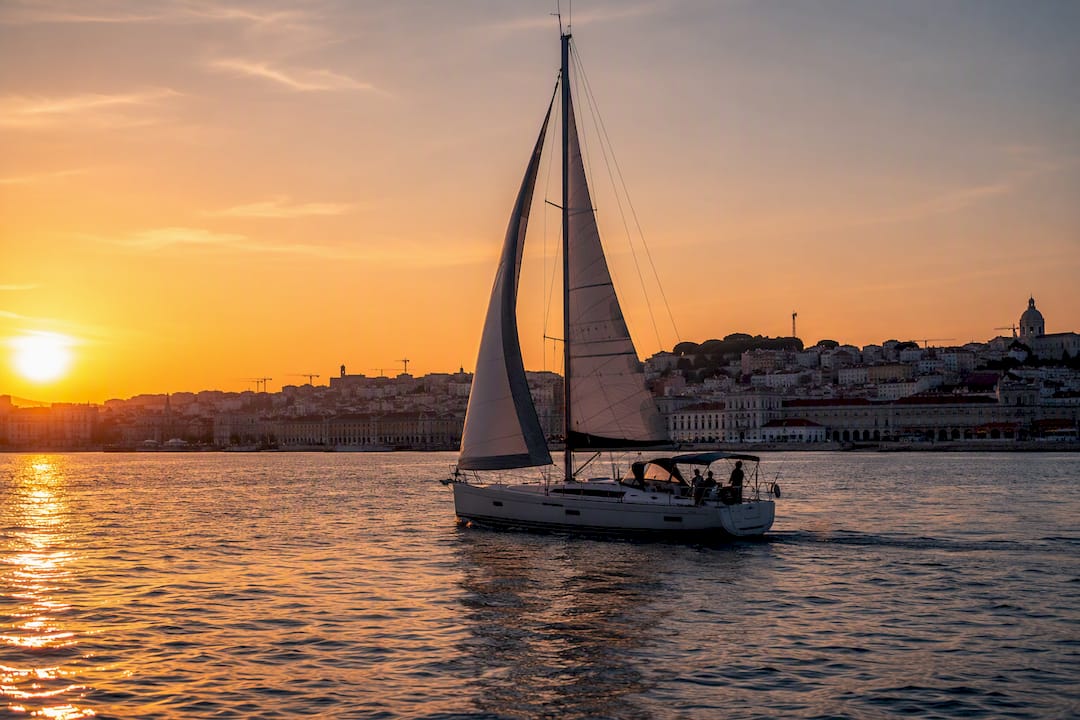
Spend Day 1 in Alfama and Baixa/Chiado, finishing at a miradouro or fado house; spend Day 2 in Belém, then LX Factory or Bairro Alto, closing with a sunset sail on the Tagus. That single river crossing gives you the fastest, most complete visual read of the city you’ll get in 48 hours. Two days is enough to feel Lisbon’s character, but only if you start early both mornings and accept you can’t do everything.
TL;DR:
Visiting São Jorge Castle early in the morning helps avoid long queues and allows ample time to enjoy the panoramic views over Lisbon.
Walking between Baixa, Chiado, and neighborhoods like Alfama and Bairro Alto is often faster and more efficient than using trams or rideshares, especially with local transportation tips.
Booking tickets online in advance for major sights like Jerónimos Monastery and Belém Tower can save up to an hour of waiting during peak times.
A short Tagus river cruise, especially at sunset, offers unique city views that are impossible to replicate from land and minimizes time spent in lines.
Staying near central neighborhoods like Baixa or Chiado provides easy access to most Day 1 highlights and quick transit options for Day 2 excursions.
Table of Contents
What Are the Top Things to Do in Lisbon in 2 Days?
The short answer: São Jorge Castle and Alfama on Day 1 morning, Baixa and Chiado for lunch and shopping, then a sunset viewpoint or fado show that night. Day 2 belongs to Belém for Jerónimos Monastery and the Belém Tower, followed by either LX Factory’s converted warehouses or a slower wander through Bairro Alto, ending with a short Tagus cruise before dark.
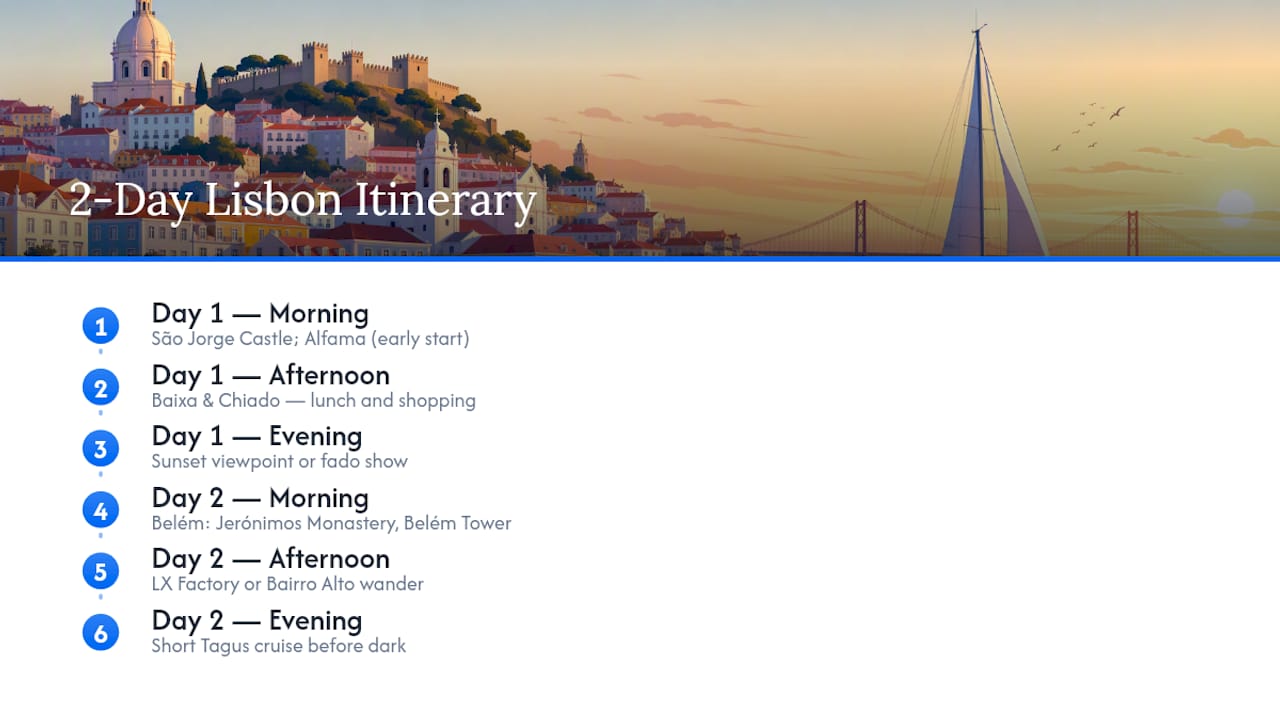
That’s the skeleton. Everything else in this guide is about making it work without wasting hours in lines or on the wrong tram. Local guidance consistently backs this approach: a steady, organized pace with early starts captures the city’s main highlights even on a tight schedule. The trick isn’t cramming in more stops. It’s sequencing the ones that matter so you’re never backtracking across the city.
Lisbon rewards travelers who treat it like a puzzle of hills and neighborhoods rather than a checklist. Get the routing right and two days feels generous. Get it wrong and you’ll spend half your trip walking back the way you came.
How Do You Get Around Lisbon Quickly?
Walking covers most of central Lisbon faster than you’d expect. Baixa, Chiado, and the Bairro Alto sit close enough together that a rideshare rarely beats your own feet, except when the hills wear you down.
Alfama’s slopes are steep and cobbled. Budget more time than the map suggests, or take a rideshare partway up.
Tram 28 is scenic but slow and packed with tourists most of the day. Ride it once for the experience, not as your main transport.
Belém sits far enough from the center that walking is impractical. A quick train, bus, or rideshare works better than the crowded tram 15.
Funiculars (Elevador da Bica, Gloria) save your legs on short, steep stretches between Bairro Alto and Baixa.
The Lisboa Card makes sense if you’re hitting three or more paid attractions and riding public transport heavily across your 48 hours. If your plan leans more toward walking and one or two paid sites, individual tickets usually cost less.
Pro Tip: Download an offline map before you land. Lisbon’s steep, winding streets confuse GPS signal in Alfama’s narrow alleys, and losing five minutes per wrong turn adds up fast.
Day 1: Castle, Alfama, and a Sunset to Remember
Morning belongs to São Jorge Castle. Arrive at opening, ideally before 9:00 AM, because queues at popular monuments commonly stretch past 45 minutes once tour groups arrive midmorning. The castle itself takes about 90 minutes if you walk the ramparts and take in the panoramic views over the Tagus and the terracotta rooftops below.
8:30 to 10:00 AM: São Jorge Castle. Book online in advance if you can. The battlements offer some of the best orientation shots you’ll get all trip, and the peacocks wandering the gardens are a nice surprise nobody mentions.
10:00 AM to 12:00 PM: Wander Alfama. Skip the urge to check off every named viewpoint. The real value here is getting slightly lost in the tangle of lanes, stopping at whichever miradouro you stumble across, and letting the neighborhood set its own pace. Miradouro das Portas do Sol and Miradouro de Santa Luzia are both worth a stop if you want a target, but the side alleys between them are where Alfama actually lives.
12:00 to 1:30 PM: Grab a pastel and keep moving toward Baixa. A quick coffee and pastry at a local café beats sitting down for a full meal here. Save the real lunch for Baixa or Chiado.
1:30 to 4:00 PM: Baixa and Chiado. Walk the grid of pedestrian streets in Baixa, browse Chiado’s boutiques, and decide whether Santa Justa Lift is worth the wait. Honestly, it usually isn’t. The line often runs 20 to 30 minutes for an elevator ride you can replicate by walking up from Rua do Carmo instead, for free.
1:00 to 2:00 PM lunch window (adjust to your pace): Time Out Market. If you want variety without committing to one restaurant, this covers it in one stop, with dishes generally fall within a moderate price range.
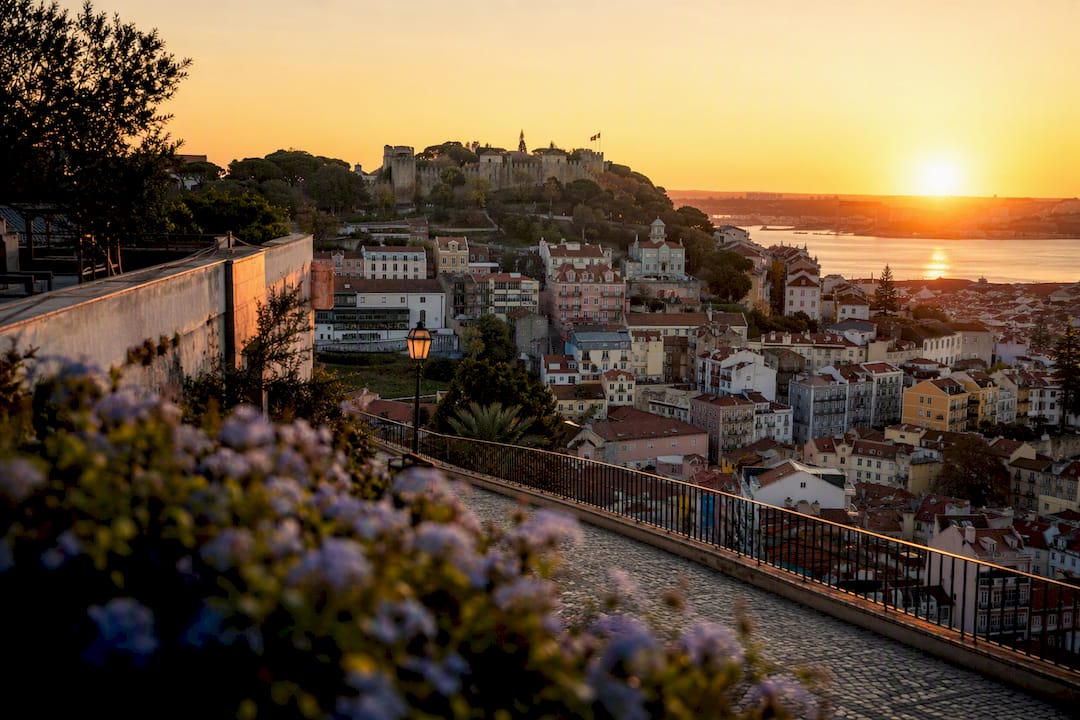
6:00 PM onward: Choose your evening. Either climb to a rooftop or miradouro for sunset, or book a fado show ahead of time if live traditional music matters more to you than the view.
The order matters because Alfama and the castle sit on the same hill, while Baixa and Chiado sit downhill and flatter. Doing the climb first, while you’re fresh, and finishing on flat ground saves your legs for the evening.
Pro Tip: If you’re torn between fado and a sunset viewpoint on Day 1, remember you get another sunset opportunity on Day 2 via the river. Use Day 1’s evening for whichever experience you can’t easily replicate later.
By early evening you’ve covered a castle, an entire historic neighborhood, and Lisbon’s commercial heart on foot. That’s a full day by any measure, and it sets up Day 2 for a completely different pace and neighborhood.
Day 2: Belém, Then Your Choice of Afternoon
Belém deserves the morning slot because its monuments cluster tightly along the riverfront, letting you knock out two major sights without much walking between them. Getting there takes more thought than getting around Alfama did, though.
8:30 AM: Head to Belém. Tram 15 gets crowded fast, and transit between central Lisbon and Belém can eat more time than the map suggests once you factor in waits and packed cars. A train from Cais do Sodré or a short rideshare often beats the tram on a tight schedule, even accounting for the fare.
9:00 to 11:00 AM: Jerónimos Monastery. Book online ahead of time. Allow 1.5 to 2 hours to see the cloisters properly, and arrive right at opening if you want to skip the worst of the crowds.
11:00 AM to 12:00 PM: Belém Tower. A shorter visit than the monastery, but the riverside setting makes it worth the walk over. Advance tickets help here too, especially in high season.
12:00 to 1:00 PM: Pastéis de Belém. The original pastel de nata recipe, dating back to 1837, still draws a line most afternoons. It moves quickly even at peak times, so don’t let the queue scare you off.
1:30 to 4:00 PM: Choose your afternoon. MAAT (Museum of Art, Architecture and Technology) and LX Factory sit a short walk or quick ride from Belém and suit travelers who want modern art, design shops, and a change of scenery from the historic monuments. If you’d rather slow down, head back toward Bairro Alto or Príncipe Real for relaxed café-hopping and boutique browsing.
6:00 to 8:00 PM: Sunset on the Tagus. A short river cruise gives you a view of the Belém monuments, Praça do Comércio, and the Cristo Rei statue across the water, all from a single vantage point that no walking tour replicates.
Prebooked early-access tickets to Jerónimos can shave 30 to 60 minutes off your visit during high season, which is often the difference between fitting in the tower and skipping it. That single decision, book ahead or don’t, shapes how much of Belém you actually see.
If boats aren’t your thing, swap the cruise for one more miradouro before dinner. But the river option covers more ground visually in less time than almost anything else on this list.

Where to Eat Without Losing Half Your Day
Pastéis de Belém is the original, and its lines move faster than you’d guess even during peak hours. If you’re staying central and don’t want to trek to Belém twice, Manteigaria in Chiado makes a nearly identical version with shorter waits most days.
Time Out Market covers lunch efficiently when you want variety under one roof, with most dishes falling in the €8 to 15 range.
Tascas in Chiado and Príncipe Real give you a more authentic sit-down lunch if you have 45 minutes to spare and want bacalhau or grilled sardines done the traditional way.
Fado dinners need advance booking. Alfama and Bairro Alto both have houses with cover charges and minimum consumption, so check pricing before you commit an entire evening to one.
Portuguese food culture leans heavily on shared plates and slow meals, which can clash with a tight schedule. A traveler’s guide to local cuisine makes the case that skipping the rushed tourist-trap meal for one real tasca lunch changes how you remember the whole trip.
Pro Tip: If a fado house requires a minimum consumption charge, ask upfront what that covers. Some include a full dinner; others just drinks, which changes your evening budget considerably.
Miradouro, Rooftop, or Boat: Which Sunset Wins?
Every option gets you a good photo. The differences show up in comfort, cost, and how much of your evening you spend getting there versus enjoying it.
Miradouro das Portas do Sol or Senhora do Monte: free, crowded near sunset, best if you’re already in Alfama.
Rooftop bars in Bairro Alto or Chiado: a drink included, but you’re paying bar prices for the view.
A short Tagus cruise: costs more than a free viewpoint, but you get moving water, changing angles, and a wraparound view no fixed spot on land can match.
Locals and repeat visitors tend to favor picking one signature sunset experience rather than chasing every miradouro on a list. If Day 1 ends near Alfama, take the free viewpoint. Save the cruise for Day 2, when you’re already down by the river in Belém or Cais do Sodré.
How Do You Avoid Wasting Time in Lines?
Queues are the single biggest threat to a 48-hour plan. Arrive at Jerónimos Monastery and São Jorge Castle right at opening, since both routinely see wait times over 45 minutes once tour buses arrive.
Buy tickets online for both sites before you land, not the morning of.
The Lisboa Card pays for itself once you’re hitting three or more paid attractions plus heavy public transport use across your stay; otherwise stick to individual tickets.
Skip tram 15 during midday rush. A rideshare to Belém often costs a few euros more but saves 20 to 30 minutes you’d otherwise spend standing on a packed platform.
Book fado reservations at least a day ahead. Walk-in spots at popular houses fill fast on weekends.
None of this is complicated. It just requires deciding the night before, not the morning of.
Why a Short Sail Beats Another Museum Stop
A 45 to 120 minute cruise on the Tagus shows you Belém Tower, Praça do Comércio, and the Cristo Rei statue from a single continuous vantage point, something no walking route replicates. Departures typically run from docks around Alcântara or Cais do Sodré, and most sails include live commentary along with drinks or light snacks.
Sunset departures give you the golden light on the castle and Alfama’s rooftops from the water, a totally different angle than any land-based miradouro.
Shorter sails (45 to 60 minutes) suit travelers squeezing the cruise into a packed afternoon.
Longer private charters work better for groups who want to linger and treat the cruise as the evening’s main event rather than a quick stop.
On a schedule this tight, one river crossing often delivers more visual payoff per hour than a third museum would. You’re not standing in another line. You’re moving, and the city rearranges itself around you the whole time.
Where Should You Stay for Easy Access?
Base yourself in Baixa, Chiado, or the edge of Alfama for the best balance of walking access and atmosphere. Both neighborhoods put you within 15 to 20 minutes on foot of most Day 1 stops, and close enough to transit hubs for an easy morning run to Belém on Day 2.
Pack comfortable, broken-in shoes. Alfama’s cobblestones are unforgiving on new sneakers.
Bring a light layer for evenings near the water, where the breeze off the Tagus cools things down fast even in summer.
Carry a reusable water bottle. Hills add up, and Lisbon’s summer heat catches a lot of visitors off guard.
Tuk-tuks or e-bikes work as a backup for travelers who struggle with steep climbs, especially around Alfama and the castle.
Keep small bills for tascas and market stalls; tipping around 5 to 10% is standard in sit-down restaurants, though not obligatory.
Learn a few basic phrases like “obrigado/obrigada” (thank you) and “por favor” (please). Locals respond well to the effort even when you switch to English right after.
Petty theft on crowded trams and near major viewpoints is the main safety concern most visitors encounter, so keep bags zipped and in front of you in tourist-heavy spots.
Should You Add Sintra or Cascais on a Third Day?
If you can stretch to three days, the choice comes down to pace. Sintra rewards early arrivals who prioritize Pena Palace and Quinta da Regaleira before tour buses clog the roads by midmorning.
Sintra suits travelers who want dramatic architecture and gardens, but expect a full day and crowds by noon.
Cascais suits travelers who want a relaxed coastal half-day with a seafood lunch and a beach walk, reachable by a quick train from Lisbon.
Sintra takes more planning and a longer commitment. Cascais fits more easily into a half-day if your third day is really just a bonus morning before a flight.
Why the View From the Water Changes Everything
There’s a moment on every sunset sail we run where the whole city stops being a list of landmarks and turns into one continuous shape: castle on the hill, Alfama’s rooftops catching the last light, the 25 de Abril Bridge glowing orange behind everything. You don’t get that from any single miradouro, because you’re always looking at Lisbon from inside it.
That’s the thing about a 48-hour trip. You’re forced to prioritize, and the river gives you a shortcut most visitors never consider: one hour on the water tells you more about how the city fits together than another two hours of walking ever could. It’s why we built our routes around exactly that idea.
— Lisbon
Book a Sail That Fits Your Two Days
Lisbonbyboat runs 2-hour guided sails along Lisbon’s historic coastline, with live commentary on the major monuments you’ll spot from São Jorge Castle to Belém Tower, plus drinks and snacks included. For travelers on a tight 48-hour plan, that’s the fastest way to see the riverfront sights in one sitting instead of walking to each one separately.

Couples tend to gravitate toward the sunset departures, small groups like the standard 2-hour sightseeing run, and families often prefer it as a low-effort way to get their bearings on Day 1 before tackling the hills on foot. If you want more privacy or a longer outing, private charters on sailing yachts or catamarans run from a couple of hours up to a full day, with luxury yacht options available for groups who want the whole boat to themselves. For the standard sightseeing and sunset sails, check available departure times and book your spot on the water before your trip fills up around the other stops on this itinerary.
Where to Verify Live Details Before You Go
Castelo de São Jorge official visitor page for opening hours and ticket updates
Jerónimos Monastery visitor guide for queue timing and booking tips
Belém Tower transit guide for current transport options
Opening hours, ticket prices, and transit schedules change without much notice, so confirm details on the official pages within a week or two of your trip.
Sources
Recommended
Comments