

Tagus River Facts: Shaping Lisbon’s Culture and Views
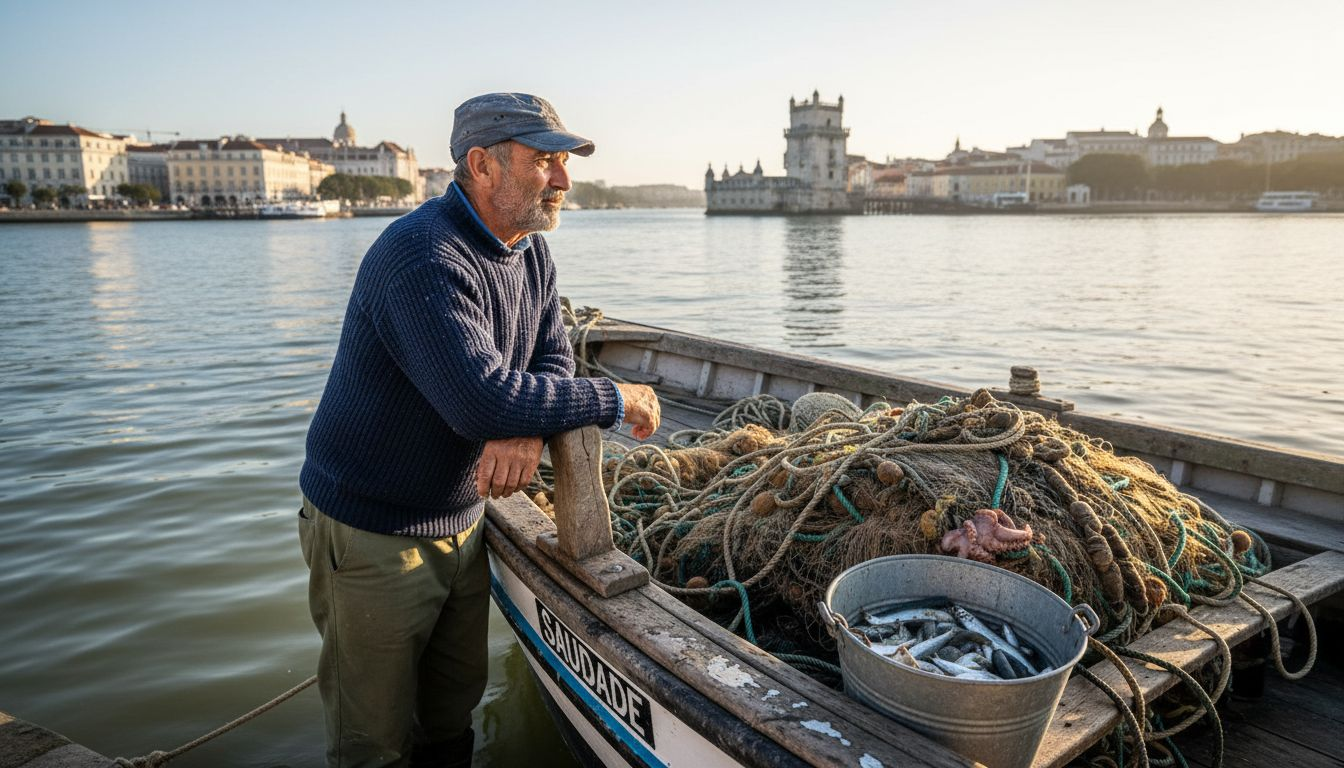
Sailing tours along the Tagus River reveal more than just beautiful cityscapes—they guide you through the heart of Iberian history in a way only Lisbon can offer. The Tagus, stretching over 1,007 kilometers from the mountains of Spain, is the longest river on the peninsula and claims the most populated basin in the region. As you glide these storied waters, you experience cultural treasures, breathtaking monuments, and the vibrant life that has thrived along Portugal’s greatest waterway for centuries.
Table of Contents
Key Takeaways
Point | Details |
Origin of the Tagus | The Tagus River is the longest in the Iberian Peninsula, originating in eastern Spain and flowing into the Atlantic at Lisbon. |
Historical Significance | The river has shaped Lisbon’s development, serving as a natural harbor that facilitated trade and maritime exploration. |
Ecological Importance | The Tagus estuary is a crucial ecosystem for migratory birds and diverse aquatic life, directly impacting local fishing economies. |
Sailing Experience | Sailing on the Tagus allows passengers to connect with the river’s history and ecology, enhancing their understanding of Lisbon’s cultural heritage. |
What Is the Tagus River and Its Origins
The Tagus River is the longest river in the Iberian Peninsula, stretching across two countries and shaping the landscape you’ll experience on any sailing tour through Lisbon. Its story begins far from the Atlantic coast, in the mountains of eastern Spain. The river originates in the Montes Universales, specifically at a place called Fuente de García in the municipality of Frías de Albarracín, sitting at an elevation of 1,593 meters above sea level. From this remote mountain spring, the Tagus flows westward for 1,007 kilometers (626 miles) across the Iberian Peninsula before reaching the Atlantic Ocean at Lisbon, where your sailing adventure begins.
What makes the Tagus remarkable is not just its length, but its scale and influence across an entire region. The drainage basin covers 80,100 square kilometers, making it the most populated river basin on the peninsula. As you sail along the estuary near Lisbon, you’re witnessing the mouth of a waterway that has supported millions of people across Spain and Portugal for centuries. The river flows through significant cities including Toledo in Spain and Lisbon in Portugal, serving as a natural corridor connecting inland regions to coastal trade. Throughout history, the Tagus has been more than just water flowing downhill. It shaped where civilizations built their settlements, powered their economies, and determined their connections to the wider world.
Understanding the Tagus’s journey matters when you’re sailing its final stretch toward Lisbon. The river doesn’t flow straight or predictably. Instead, it meanders through valleys, creates natural bends, and widens as it approaches the coast. These geographical features directly influence what you’ll see from your boat. The estuary, where freshwater meets the Atlantic, creates unique ecosystems and water conditions that sailors and naturalists have studied for generations. The river’s basin encompasses diverse landscapes, from Spanish highlands to Portuguese lowlands, and this variation shapes the monuments, fortifications, and settlements that dot the riverbanks. When you glide past the historic structures along Lisbon’s waterfront, you’re observing centuries of human adaptation to this powerful natural feature.
The Tagus also holds infrastructure that defines modern Portugal. The Vasco da Gama Bridge spans the estuary, connecting the northern and southern banks near Lisbon and representing contemporary engineering within this ancient landscape. Before modern bridges existed, the river was both a barrier and a gateway. Medieval kings, traders, and explorers all navigated these waters, making decisions about crossings and settlements based on the Tagus’s geography.
This summary highlights how distinct zones along the Tagus River influence both natural and human activity:
River Section | Main Features | Key Human Uses | Ecological Impact |
Spanish Highlands | Mountainous source, fast flow | Minimal settlements, water supply | Habitat for upland species |
Middle Course | Meandering, fertile valleys | Agriculture, historic cities | Supports riverine ecosystems |
Lisbon Estuary | Wide, tidal, brackish mix | Major port, recreation, tourism | Critical bird migration stopover |
Pro tip: Ask your sailing guide to point out the transition where the river widens into the estuary, as this marks where freshwater systems begin mixing with Atlantic tides, creating distinctly different water colors and natural habitats you won’t see elsewhere along your cruise.
The Tagus River’s Role in Lisbon History
Lisbon’s rise as one of Europe’s most significant cities traces directly back to the Tagus River. Before Columbus sailed across the Atlantic and before Portugal became a global maritime power, the river already shaped the city’s destiny. The Tagus provided something invaluable that few other Mediterranean harbors could match: a natural harbor protected from the Atlantic’s violent storms. This protection allowed ships to anchor safely, trade to flourish, and the city to grow beyond what geography alone would suggest. When you sail through Lisbon’s estuary today, you’re traveling through the same waters that connected ancient traders, medieval kings, and Renaissance explorers to distant lands. The river didn’t just feed the city’s economy. It fundamentally defined what Lisbon could become.
During Portugal’s Age of Discovery, the Tagus became the gateway through which immense wealth flowed back into Lisbon. Spices from India, gold from Brazil, and silks from the Far East arrived at the docks along the river’s banks. The natural harbor protected merchants and their valuable cargo from Atlantic storms, making Lisbon the preferred port for overseas trade. This wasn’t accidental geography. Portuguese navigators and merchants deliberately built their operations here because the river offered advantages their competitors lacked. When Vasco da Gama returned from India in 1499, his ships sailed up the Tagus into a city that was already transforming itself into a global trading center. The wealth that arrived in those ships didn’t just enrich a handful of merchants. It rebuilt the entire city, funding the construction of monasteries, palaces, and fortifications that still stand today.
What makes this history relevant to your experience on the water is that every monument you see from your sailing boat reflects this river’s economic power. The Torre de Belém, originally built as a fortress to protect against pirates and rival traders, defended the wealth flowing through the Tagus. The grand facades of buildings in Baixa Pombalina weren’t arbitrary architectural choices. They were statements of prosperity built directly from the returns of overseas colonies channeled through this river. The Jerónimos Monastery, where Portuguese explorers received blessings before their voyages, sits literally at the river’s edge because its location held spiritual and practical significance. Beyond the monuments, the Tagus shaped Lisbon’s population and culture in ways still visible today. The river created connections between Lisbon and the wider world, bringing not just goods but also people, ideas, and traditions that settled into the city’s character. Portugal’s diverse communities, its unique cultural blend, and its global perspective all trace back partly to the river’s role as a connector between continents.
The economic story didn’t end in the Renaissance. Throughout subsequent centuries, the Tagus remained central to Lisbon’s function as a capital and port city. Naval shipyards lined the river. Fish markets operated at its edge. Workers loaded and unloaded cargo that kept the city’s economy moving. Even as trade patterns shifted and maritime technology evolved, the river continued to anchor Lisbon’s prosperity. Today, that same geographic advantage persists. The river still defines how the city operates, how people move through it, and how visitors experience its historical layers.
Pro tip: Visit Belém on your sailing tour and ask your guide to explain how each riverside building once functioned in Lisbon’s trading economy, helping you see the river not as a scenic backdrop but as the actual infrastructure that built the city’s fortune.
Iconic Monuments Along the Tagus River
When you sail along the Tagus estuary, you’re not just passing water and buildings. You’re traveling through an outdoor museum where every structure tells a story of Portugal’s greatest historical moments. The monuments lining this river represent centuries of ambition, artistic achievement, and maritime courage. Unlike visiting these sites on foot, experiencing them from the water gives you a perspective that ground-based tourists simply cannot access. You see how these buildings relate to the river itself, understanding why Portuguese planners positioned them exactly where they did. The Tagus wasn’t just the stage for Portuguese history. It was the reason that history unfolded the way it did.
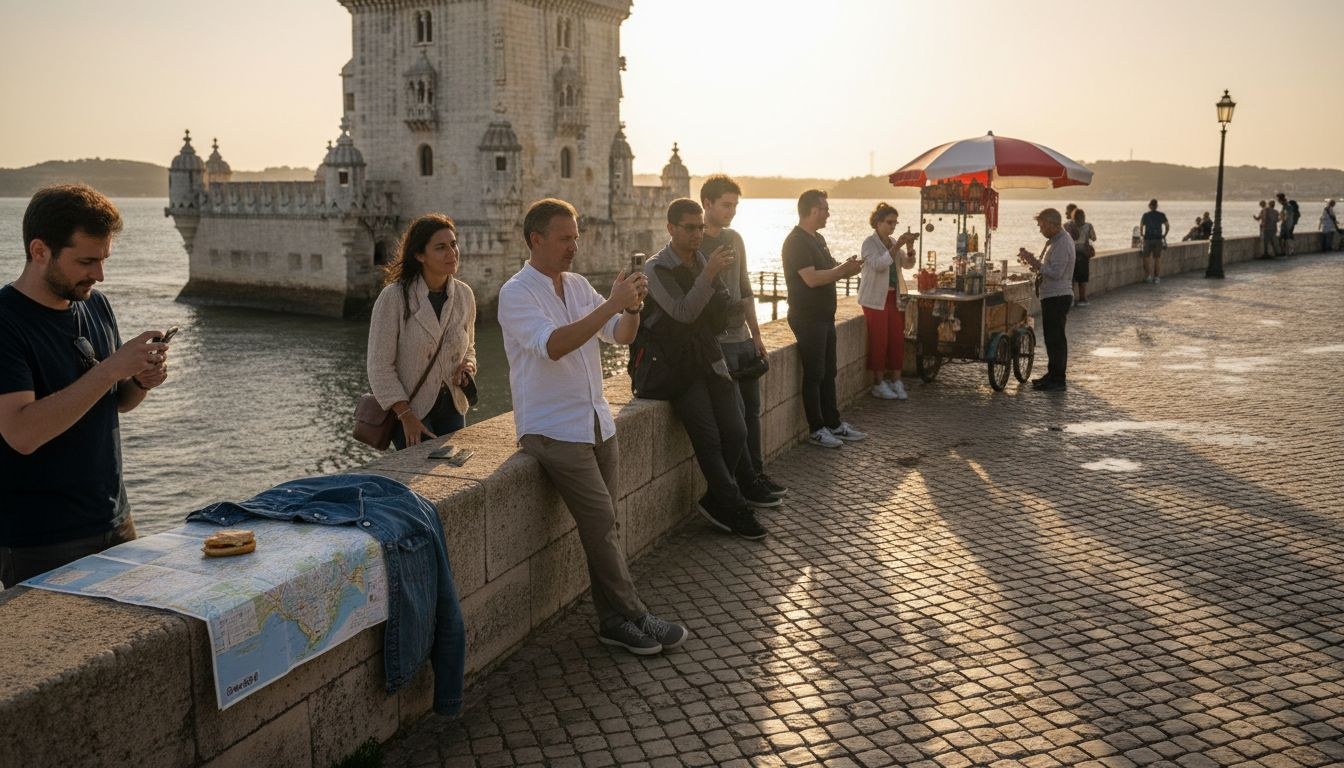
Two monuments dominate the Tagus landscape and deserve your full attention during any sailing tour. The Tower of Belém stands as one of the most recognizable structures in all of Europe, and from your boat, its scale and position become even more impressive. Built in the early 16th century, this fortress originally served as a checkpoint and defensive position protecting Lisbon’s harbor from pirates and rival traders. The Monastery of the Hieronymites represents masterpiece Manueline architecture, the distinctive Portuguese style that emerged during the Age of Discoveries. Its ornate stone carvings and soaring arches showcase wealth and artistic sophistication at their peak. Both structures sit directly on the riverbank in Belém, and when approached by water, their relationship to maritime trade becomes absolutely clear. The monastery isn’t simply a religious building. It’s a statement about Portugal’s spiritual confidence during its greatest era of exploration. Portuguese explorers received blessings within its walls before departing on voyages that would reshape global geography. The tower functioned as both a fortress and a customs point, controlling access to the wealth flowing through Lisbon. When you approach these structures from your sailing yacht, you’re seeing them exactly as Portuguese merchants, explorers, and kings saw them.
Beyond these two giants stands another monument that captures the essence of the river’s historical significance. The Monument of the Discoveries celebrates explorers and cartographers who shaped Portuguese maritime expansion during the 15th and 16th centuries. Completed in 1960, this modern monument wasn’t built in the Age of Discovery itself, but rather as a 20th century reflection on that era. Located on the northern riverbank, it features sculptural representations of key historical figures arranged as if they’re stepping forward into the future. The monument sits at a height that makes it visible from considerable distances along the river, and its white stone contrasts sharply with the darker structures nearby. What makes this monument particularly meaningful for sailors is its symbolism. It explicitly honors the river’s role as a bridge between continents, acknowledging that Portugal’s global reach began here, at this specific waterway. When you pass this monument by boat, you’re literally traveling through the geographic space it commemorates.
These three structures represent different layers of Lisbon’s relationship with the Tagus. The Tower of Belém shows practical defense and economic control. The Monastery demonstrates artistic achievement and spiritual purpose. The Monument of the Discoveries reflects how Portugal’s own people remember and celebrate their maritime heritage. Each tells a distinct story, yet they’re connected by their position on this single river. Your sailing tour makes clear what ground-based sightseeing cannot: these monuments don’t exist in isolation. They’re part of an integrated landscape shaped by water, commerce, and human ambition over five centuries.
Here’s a comparison of the key monuments along the Tagus River and their significance:
Monument | Built | Role in Lisbon’s History | Architectural Style |
Tower of Belém | Early 16th Century | Harbor defense and customs control | Manueline (Portuguese Gothic) |
Monastery of the Hieronymites | Early 16th Century | Spiritual hub for explorers | Manueline (ornate, late Gothic) |
Monument of the Discoveries | 1960 | Commemoration of maritime expansion | Modernist with historical figures |
Pro tip: Schedule your sailing tour to pass the Tower of Belém and Monastery of the Hieronymites during late afternoon when the setting sun hits these structures at a lower angle, creating dramatic shadows and golden highlights that reveal architectural details invisible in bright midday light.
Ecology and Wildlife Unique to the Tagus
The Tagus River is far more than a waterway connecting Lisbon to the Atlantic. It’s a living ecosystem that supports thousands of species adapted to the unique conditions where freshwater mixes with salt water. When you sail through the estuary on a 2-hour tour, you’re moving through one of Europe’s most biologically significant regions, though its importance isn’t always obvious from the deck of a boat. The ecosystem here operates on principles quite different from either a typical river or a typical ocean. Tides push saltwater upstream twice daily, creating zones where organisms must tolerate fluctuating salinity levels. Temperature shifts dramatically between seasons. Oxygen levels vary depending on tidal cycles and water depth. These challenging conditions have created a specialized community of species that thrive specifically because of this environmental complexity.
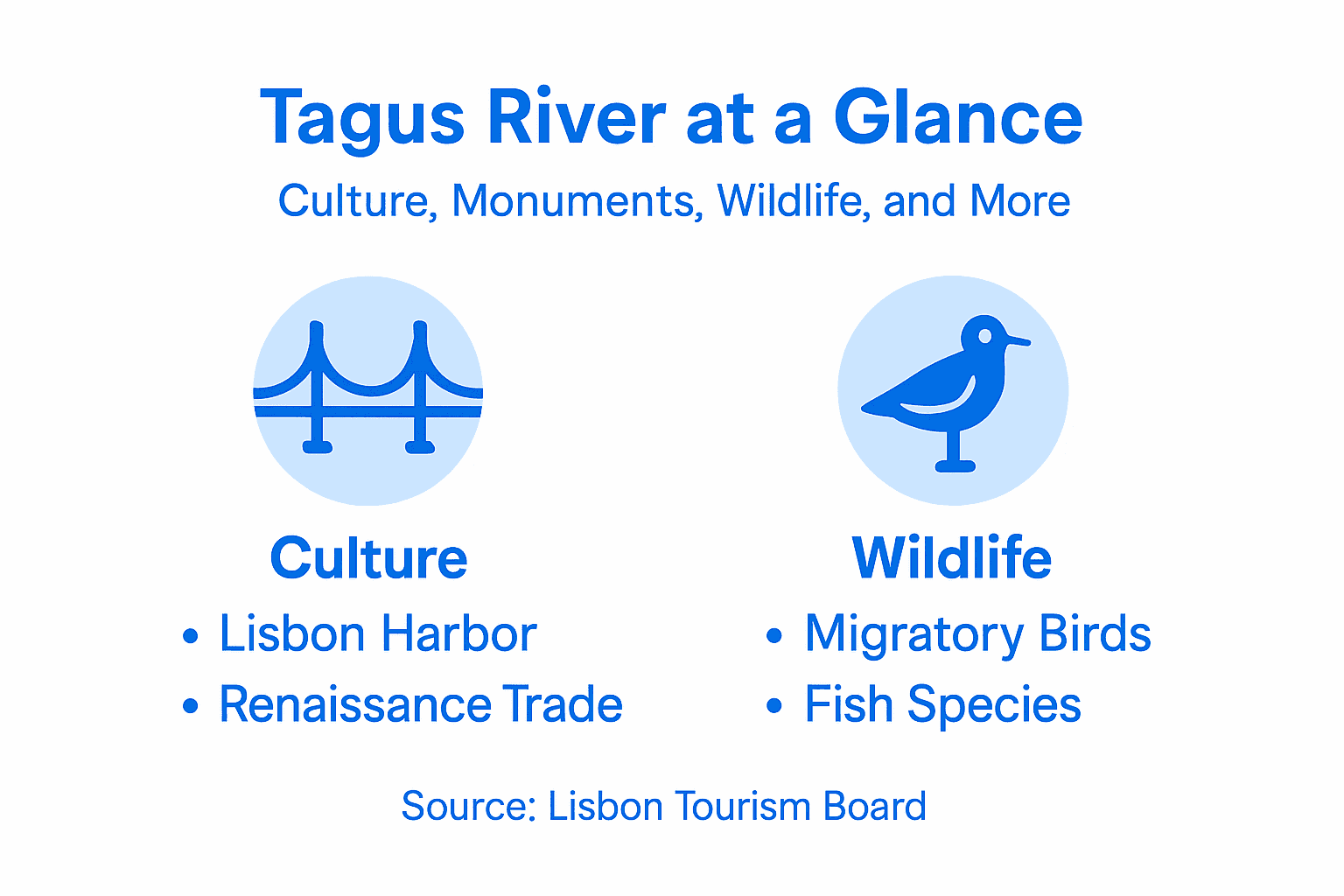
The Tagus estuary functions as a critical stopover point for migratory birds traveling between African wintering grounds and Northern European breeding territories. When spring arrives, thousands of shorebirds stage in the estuary, resting and refueling before continuing their journeys northward. Species like the common redshank and black-winged stilt arrive in considerable numbers, and if you’re sailing during migration seasons, you might observe flocks moving across the water’s surface or wading in shallow areas. These birds aren’t casual visitors. The estuary’s importance for migratory shorebirds reflects its role as a reliable feeding ground with invertebrate populations that sustain these long-distance travelers. The mud flats and shallow waters provide exactly the habitat composition these species require. Beyond the shorebirds, the estuary supports resident fish populations, crustaceans, and invertebrate communities that form the foundation of the food web. Mullet dart through shallow areas. Sole occupy the sandy bottoms. Crabs burrow in the mud. Each species occupies its own ecological niche, and together they maintain the balance that makes the entire system function.
The conservation status of the Tagus estuary reflects both its ecological value and the pressures it faces. This region supports one of Europe’s densest human populations, with millions of people living in Lisbon and surrounding areas who depend on the river for water supply, recreation, and economic activity. The estuary ecosystem provides essential services including water filtration, fish nursery habitat, and flood regulation that benefit the surrounding population. Yet these same human activities create threats. Pollution from urban runoff, industrial discharge, and shipping activities degrades water quality. Habitat loss from coastal development reduces breeding and feeding areas. Climate change alters temperature and salinity patterns. Modern conservation efforts recognize these challenges and work to maintain ecological functions while accommodating the reality of a densely populated coastline. Scientists and environmental organizations monitor water quality, restore degraded habitats where possible, and advocate for policies that balance human needs with ecosystem protection. When you sail through the estuary, you’re witnessing an environment that’s actively managed and studied to ensure it survives for future generations.
Your experience as a sailing tourist connects directly to this ecological story. The wildlife you observe, the water conditions you experience, and even the restaurant meals you enjoy afterward (often featuring locally caught fish) all trace back to the health of this ecosystem. A healthy estuary supports fish populations that support the fishing industry. A clean river provides better sailing conditions and safer water for recreation. Diverse bird populations attract birdwatchers who spend money in local communities. Conservation of the Tagus isn’t abstract environmental policy. It’s directly connected to the quality of your visit and the prosperity of Lisbon’s tourism economy. Understanding what you’re sailing through transforms the experience from simple sightseeing into genuine connection with a living, complex natural system.
Pro tip: Bring binoculars on your sailing tour and ask your guide which season offers the best bird watching opportunities, as migration timing varies seasonally and can dramatically increase the number and diversity of species you’ll observe from your yacht.
Sailing, Cruises, and Safety Essentials
Sailing the Tagus River isn’t a passive activity where you simply sit and observe. You’re boarding a vessel and becoming part of a dynamic experience on living water. Understanding how these tours operate and what safety measures protect you ensures you can relax and actually enjoy the monuments, wildlife, and historical narratives your guide shares. Professional sailing operations on the Tagus run with precision. Crews undergo training specific to estuary conditions, weather patterns, and passenger management. Boats themselves are regularly inspected and maintained to modern standards. The difference between a casual boat ride and a genuinely safe, professionally managed sailing experience comes down to preparation, equipment, and trained personnel working together. When you book a 2-hour tour or a full-day private yacht cruise, you’re not just renting a floating platform. You’re engaging with an entire safety infrastructure designed to keep you secure while maximizing your experience.
Before your boat even leaves the dock, safety protocols begin. Professional sailing tours provide life jackets and conduct briefings explaining emergency procedures, where safety equipment is located, and how to respond to different situations. This isn’t bureaucratic theater. These briefings exist because water presents genuine hazards that proper preparation mitigates. Life jackets fit properly and stay accessible. Crew members know the locations of first aid supplies. Radio communication equipment allows contact with coast guard and other vessels. Emergency procedures are practiced regularly so crew responses become automatic muscle memory rather than panicked improvisation when actual situations arise. Your guide will explain weather monitoring practices specific to the Tagus. Wind patterns shift throughout the day. Tidal currents change predictably. Storm systems develop recognizable signatures that experienced sailors read like familiar texts. Modern sailing tours combine traditional seamanship knowledge with contemporary weather forecasting technology, meaning your crew knows conditions hours before they arrive.
The actual sailing experience adapts to your comfort level and interest. Some passengers want to participate actively in sailing, helping adjust sails and learning basic navigation. Others prefer to remain purely as observers, enjoying the sensations of movement on water without hands-on involvement. Professional crews accommodate both preferences seamlessly. Your guide explains what’s happening with the boat’s systems, pointing out how wind fills sails, describing why the boat angles toward the water at particular moments, and sharing the logic behind crew positioning and movements. This educational component transforms a boat ride into genuine understanding of how sailing actually works. You’re not just passively transported. You’re learning about a skill that humans have practiced for millennia on this exact river. The typical 1 to 2-hour tour duration balances several factors. Long enough to reach significant monuments, experience how the estuary widens, and observe wildlife in their natural state. Short enough to maintain passenger comfort, minimize weather exposure, and keep attention focused on the experience rather than fatigue.
Safety extends beyond emergency protocols into ongoing comfort and environmental considerations. Professional crews monitor water temperature, checking conditions that matter for passenger wellbeing. They know which areas of the river experience stronger currents where less experienced swimmers shouldn’t enter the water. They understand how tidal changes affect visibility and water turbulence. They’ve learned which seasons bring jellyfish or other marine organisms that require awareness. This accumulated knowledge, built through seasons of operations, becomes invisible to passengers because the crew prevents problems before they develop. When you’re sailing smoothly past the Monastery of the Hieronymites without suddenly encountering unexpected rough water, that’s not luck. That’s professional crew members making decisions based on detailed local knowledge. Your comfort and safety interweave completely. When you feel secure, you actually pay attention to your surroundings. When you trust the boat and crew, you relax enough to absorb the history, appreciate the scenery, and connect meaningfully with the experience. The goal isn’t simply to get you from point A to point B without incident. The goal is to create conditions where you experience the Tagus River in ways that land-based tourism simply cannot provide.
What to Bring and Prepare
Your own preparation matters alongside professional preparation. Bring sun protection because water reflects sunlight intensely. Wear layers because ocean breezes create temperature variations different from land. Secure any loose items because wind will attempt to carry them overboard. Inform your crew about any medical conditions or concerns before departure. These simple steps work alongside professional safety measures to create optimal conditions for your sailing experience.
Pro tip: Book your sailing tour during late morning when winds typically reach moderate speeds that create genuinely enjoyable sailing conditions without excessive roughness, and ask your crew which specific tide timing offers the best water visibility for viewing underwater features like the river bottom composition.
Discover the Tagus River Like Never Before with a Sailing Tour in Lisbon
The Tagus River shapes Lisbon’s culture, history, and breathtaking views. If understanding how this mighty river influenced city life, monuments, and ecosystems sparks your curiosity, why not experience these wonders firsthand? Many travelers struggle to connect the rich stories of the river with the landscapes they see from land. Our daily sailing tours offer an unforgettable solution by taking you directly onto the water where history, nature, and modern life converge.
Join a 2-hour tour or a private yacht cruise that brings the Torre de Belém, the Monastery of the Hieronymites, and even the Monument of the Discoveries to life. Feel the river’s pulse as your expert guide explains the significance of each riverside landmark and the unique ecological gems of the estuary. Do not miss this chance to highlight your Lisbon visit with an immersive sailing adventure that connects past and present. Book your spot today at Lisbon by Boat and set sail on the Tagus River, where every wave tells a story.
Frequently Asked Questions
What is the origin of the Tagus River?
The Tagus River originates in the Montes Universales in eastern Spain, specifically at Fuente de García, at an elevation of 1,593 meters. It flows westward for 1,007 kilometers before reaching the Atlantic Ocean at Lisbon.
How has the Tagus River influenced Lisbon’s history?
The Tagus has played a crucial role in Lisbon’s development by providing a natural harbor that protected ships from Atlantic storms, facilitating trade and connecting the city with global markets, particularly during Portugal’s Age of Discovery.
What ecological significance does the Tagus River have?
The Tagus River estuary is a vital ecosystem that supports diverse wildlife, including migratory birds and various fish species. It provides essential services like water filtration and flood regulation, which benefit the surrounding communities.
What are the key monuments to see along the Tagus River?
Important monuments include the Tower of Belém, which served as a defensive fortification, the Monastery of the Hieronymites, showcasing Manueline architecture, and the Monument of the Discoveries, celebrating Portugal’s maritime heritage.
Recommended
TR88.COM cho mình một góc nhìn khá rõ về cách hệ thống phản hồi khi mình chuyển qua nhiều khu vực trong thời gian ngắn. Mình thử Thể thao rồi sang Xổ số và Slot, tập trung quan sát những thành phần thay đổi sau mỗi lựa chọn. Phần nội dung trung tâm được điều chỉnh theo từng danh mục, còn các mốc điều hướng vẫn giúp mình xác định vị trí tương đối. Khi thử quay lại Thể thao theo một đường khác, mình vẫn tìm được khu vực từ cấu trúc chung mà không cần nhớ trình tự ban đầu. Việc lặp lại theo nhiều hướng giúp mình hiểu bố cục tốt hơn và nhận ra cách các danh…
GB99 khiến mình quan tâm đến cách những trò nhỏ vẫn dễ tìm lại sau khi mình tạm chuyển sang phần tài khoản. Có lúc mình đang xem Đường mạt chược rồi sang Kho báu Aztec trước khi cần kiểm tra thông tin bảo mật. Mình rời khu nội dung, tập trung vào phần tài khoản và hoàn tất thao tác đang cần. Khi quay lại menu, mình xác định lại phạm vi thay vì cố nối từ đúng trò vừa dừng. Nếu tiếp tục nhóm cũ, những tên đã quen giúp mình tìm lại khá nhanh; nếu đổi nhu cầu, Game bài trở thành một hướng khác. Cách này giúp phần quản lý và phần trò chơi giữ…
I had a chance to look through https://8kbet.hair/ for a while and noticed that the website is fairly simple to move around. What I personally liked was the way the information is grouped into separate sections, so I could understand the layout without spending much time figuring it out. The pages were also comfortable to browse, and switching between different areas felt straightforward. After exploring a few sections, I found the overall structure easy to remember and convenient to use.
I spent some time browsing https://z8kbet.com/ and noticed a few things that made the site fairly comfortable to use. Personally, I liked the way the main sections are separated, since it makes the information easier to scan without feeling too crowded. Moving between pages was also smooth in my experience, and I did not need many clicks to reach different sections. I usually pay attention to how quickly I can understand a new website, and this layout felt quite straightforward from the beginning.
I found https://8kbet8.org/ while going through the article and decided to explore the website for a little while. One thing I noticed was how neatly the information is arranged, which makes the pages feel less crowded and easier to understand. The menu structure is simple enough to move around without getting confused, and the different sections are easy to locate. I also opened it from my phone and the layout adjusted well, with clear text and smooth scrolling that made browsing quite comfortable.