

12 Portuguese Snacks to Try Before You Leave
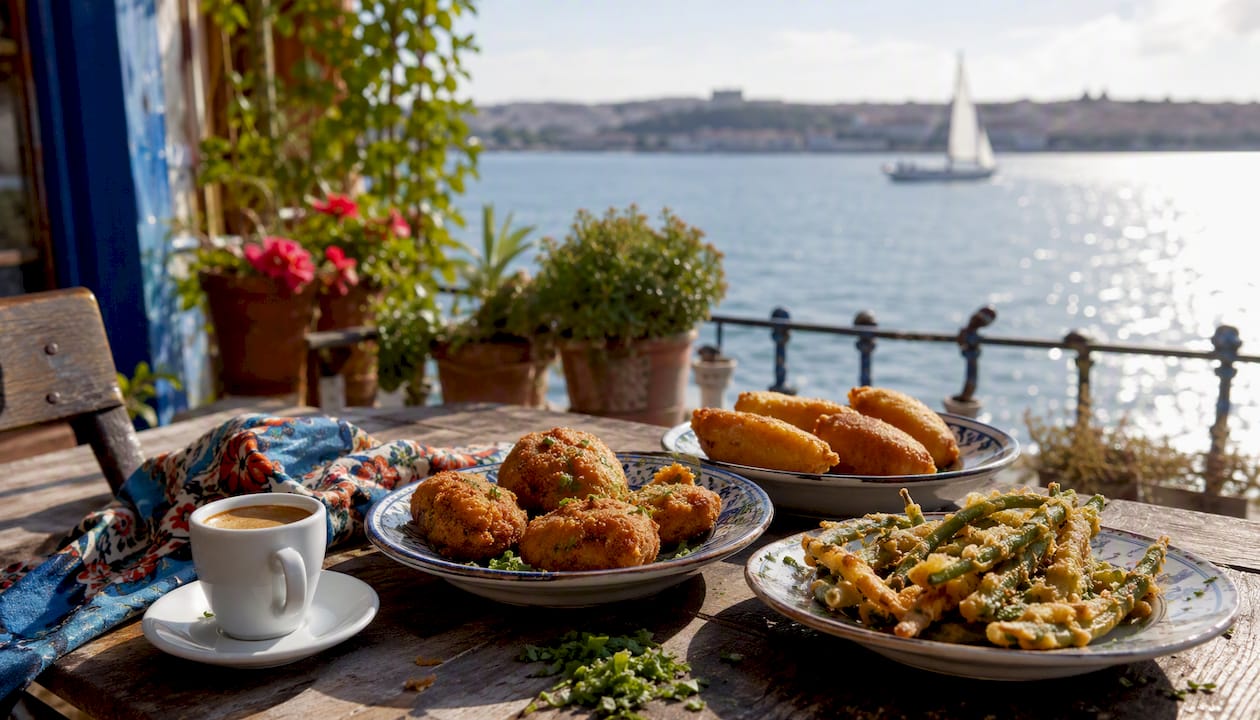
Order these twelve first: pastéis de bacalhau, pastel de nata, bolas de Berlim, bifana, prego, pão com chouriço, rissóis, croquetes, francesinha, peixinhos da horta, pica-pau, and ginjinha. That’s your shortlist for Portuguese snacks to try, and the trick to eating like a local rather than a tourist comes down to timing: salgados (the fried savory ones) taste best fresh from a morning batch, sweets belong with your afternoon coffee, and ginjinha is a late-night ritual, not a daytime sipper.
Here’s the quick rundown before we get into the detail:
Pastéis de bacalhau — codfish fritters, best mid-morning, order with “uma dose de pastéis de bacalhau.”
Pastel de nata — custard tart, anytime but ideally breakfast, just point and say “um pastel de nata, se faz favor.”
Bolas de Berlim — custard-filled fried dough, morning or afternoon, ask for “uma bola de Berlim.”
Bifana — pork sandwich, lunch or late-night, order “uma bifana” (add “com mostarda” for mustard).
Prego — steak sandwich, lunch or post-drink snack, say “um prego no pão.”
Pão com chouriço — chorizo-stuffed bread, mid-morning snack, ask for “um pão com chouriço.”
Rissóis — crescent-shaped shrimp or meat pastries, afternoon petisco, order “uma dose de rissóis.”
Croquetes — beef croquettes, afternoon or with drinks, say “croquetes de carne.”
Francesinha — layered meat sandwich in beer sauce, lunch (it’s a meal, not a nibble), found mostly in Porto.
Peixinhos da horta — battered green beans, a vegetarian petisco, order “peixinhos da horta” at any tasca.
Pica-pau — bite-sized fried beef with toothpicks, bar snack, shared over drinks.
Ginjinha — sour cherry liqueur, late-night, ask for “uma ginjinha” served in a chocolate cup if offered.
Snack | Best for | Flavor profile | Where to find | Portion/pricing | Regional origin |
Pastéis de bacalhau | Mid-morning | Savory, briny | Bakery, tasca | Snack, a few units | Nationwide |
Pastel de nata | Breakfast/anytime | Sweet, custardy | Bakery, cafe | Snack, single pastry | Lisbon (Belém) |
Bolas de Berlim | Morning/afternoon | Sweet, eggy | Bakery, beach kiosk | Snack | Nationwide |
Bifana | Lunch/late-night | Savory, garlicky | Tasca, street stall | Meal-sized snack | Nationwide |
Prego | Lunch | Savory, meaty | Tasca, cafe | Meal-sized snack | Nationwide |
Rissóis | Afternoon | Savory, creamy | Bakery, tasca | Snack, shared plate | Nationwide |
Francesinha | Lunch/dinner | Rich, spicy sauce | Tasca, restaurant | Full meal | Porto |
Ginjinha | Late-night | Sweet, tart, boozy | Kiosk, bar | Small shot | Óbidos, Lisbon |
Pro Tip: If a bakery name sounds tricky, just point at the display case. Nobody in Portugal expects perfect pronunciation, and pointing gets you the same pastry with zero embarrassment.
Key Takeaways
Eating Portuguese snacks well comes down to timing your visit to when each item is freshest, pairing correctly, and choosing tascas and bakeries over restaurants built for tour groups.
Point | Details |
Shortlist to prioritize | Pastéis de bacalhau, pastel de nata, bifana, rissóis, and ginjinha cover both sweet and savory bases. |
Timing matters | Eat salgados late morning when fresh, sweets in the afternoon, ginjinha late at night. |
Pair drinks deliberately | Vinho verde and imperial beer suit fried snacks; ginjinha suits the end of the evening. |
Check allergens upfront | Ask “tem glúten?” or request vegetarian options like peixinhos da horta. |
Choose local venues | Neighborhood tascas and market stalls beat photo-menu restaurants near landmarks. |
Table of Contents
Classic Savory Portuguese Snacks Worth Hunting Down
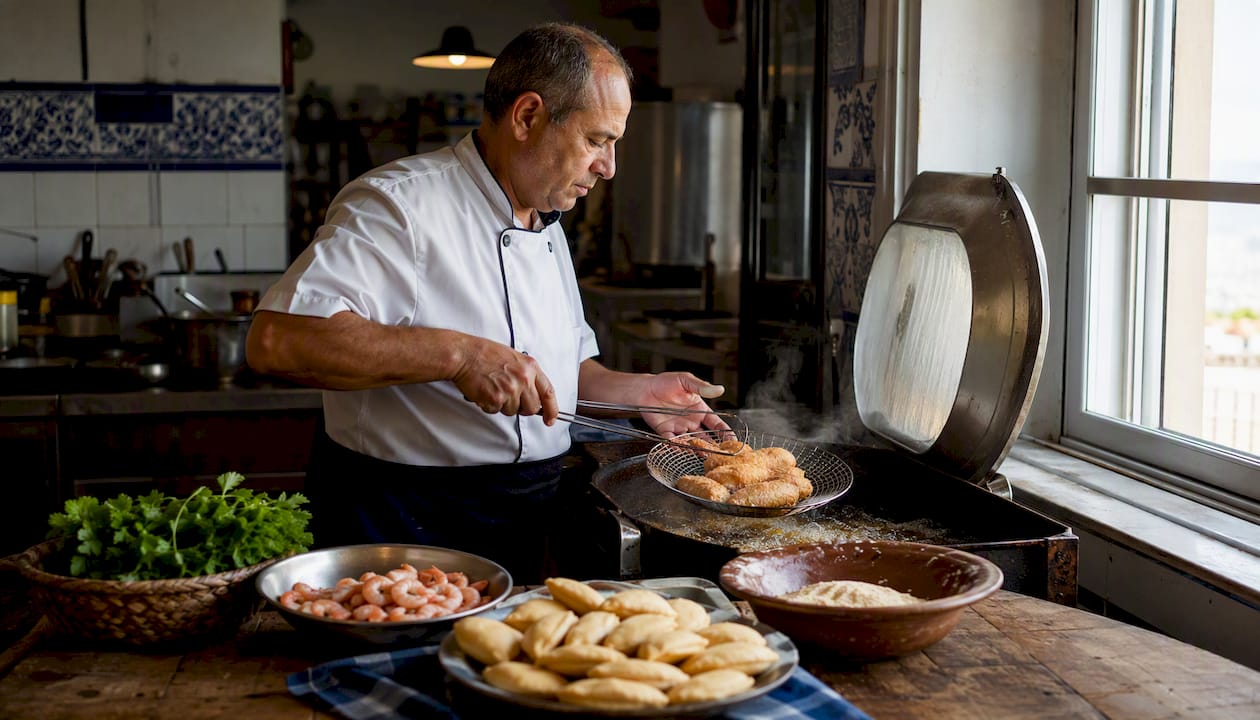
The fried stuff is where Portuguese snacking earns its reputation, and pastéis de bacalhau sit at the top of that list. These codfish fritters get their signature light texture from a mixture of shredded salt cod, potato, onion, and parsley, shaped between two spoons and fried until the outside turns golden and slightly crisp while the inside stays soft and almost creamy. Unlike breaded snacks, the bacalhau mixture goes straight into the fryer rather than getting coated first, which keeps it lighter than you’d expect from something deep-fried. Order a few and eat them warm, standing at the counter, the way most locals do.
Rissóis look similar to a fried dumpling but taste completely different once you bite in. The dough wraps around a creamy shrimp, meat, or codfish filling, gets shaped into a crescent, breaded, and fried until the shell turns brittle. The filling stays molten hot, so give it thirty seconds before you bite. Croquetes take the same fried-and-breaded approach but with a firmer, more compact interior, usually minced beef seasoned with garlic and parsley, shaped into a small cylinder. Bars serve these constantly with drinks because they hold up well and don’t need a fork.
Pão com chouriço is bread with a whole chorizo baked directly into the dough, so every slice reveals a ring of smoky sausage. Bakeries sell it warm in the late morning, and it works as a standalone snack that needs nothing else. Bifana and prego occupy a different category: thin pork or steak, quickly pan-fried with garlic and often a splash of white wine, stuffed into a crusty roll. Locals eat bifanas after a night out almost as often as they eat them for lunch, and the sandwich should be simple, meat and bread, maybe a smear of mustard.
For something meat-free, peixinhos da horta deserves a spot on every list. These are green beans dipped in a light batter and deep-fried until crisp, a genuinely vegetarian petisco with an unexpected backstory: Portuguese missionaries introduced this frying technique to Japan centuries ago, and it eventually became tempura. Vegetarian travelers should keep this one in their back pocket since so much of Portuguese snacking centers on meat and seafood. If you need more meat-free options beyond this, a guide to Lisbon’s vegan restaurants rounds out the picture.
A few allergy notes worth knowing before you order: rissóis and croquetes both contain gluten from the breading and wheat-based dough, and many savory pastries use dairy in the béchamel filling. Pastéis de bacalhau contain fish by definition, so anyone with a seafood allergy should skip straight to peixinhos da horta or a vegetable-based rissol if the bakery offers one. Ask “tem glúten?” if gluten is a concern; most bakery staff know their menu well enough to answer without hesitation.
Pro Tip: The best time to eat salgados is between breakfast and lunch, when bakeries and tascas run their morning frying batch to meet local demand. Anything sitting in a display case by mid-afternoon has likely been reheated, and you can taste the difference.
Sweet Pastries That Define Portuguese Snacking
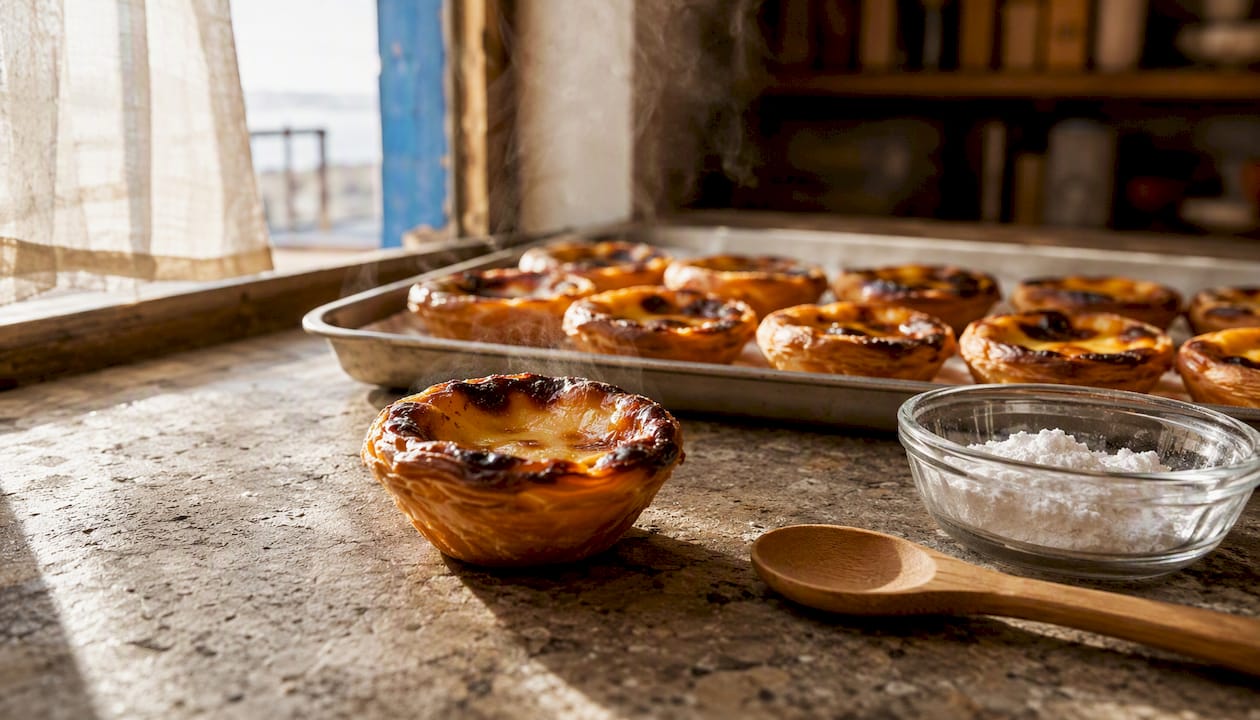
Pastel de nata needs no introduction to most travelers, but the details matter: a flaky, laminated pastry shell cradling an egg custard that’s baked until the top blisters and caramelizes in dark spots. Eat it warm, dusted with cinnamon and powdered sugar if you like, alongside a bica (espresso). It works at breakfast, mid-morning, or as a dessert, which is part of why it’s everywhere.
Bolas de Berlim take a completely different approach. These are yeasted, doughnut-style pastries filled with rich egg custard and rolled in granulated sugar, commonly sold from beach kiosks along the coast as well as inland bakeries. They’re heavier and sweeter than a pastel de nata, best treated as a morning or early-afternoon treat rather than an after-dinner nibble. Bolo de arroz, a simple rice-flour muffin with a slightly gritty crumb and mild sweetness, makes a good contrast if you want something less rich. It’s the kind of thing Portuguese kids grab for a school snack, unpretentious and satisfying.
Travesseiro, from Sintra, is a puff-pastry pillow stuffed with almond and egg cream, and it belongs in the same conversation as convent sweets. Many of Portugal’s classic pastries trace back to monasteries and convents, where nuns used surplus egg yolks (the whites went to starching habits) to invent custard-based desserts that eventually became national staples. Queijadas fall into this category too, small cheese or sweet-potato tarts with a caramelized top.
One origin story worth knowing before you land in Lisbon: the original pastel de nata recipe comes from the Jerónimos Monastery, and the bakery that now holds that specific recipe still draws long lines daily. Expect to queue, especially midday, and expect the pastry to taste noticeably different from the versions sold elsewhere in the city. For a broader rundown of what else to expect from Lisbon’s bakery scene, this pastry guide covers the full lineup.
Pair sweets with a bica in the morning, a galão (milky coffee) in the afternoon, or a small glass of ginjinha if you’re treating dessert like a nightcap. If gelato is more your speed on a hot afternoon, Lisbon’s gelato spots fill that gap nicely.
Point | Details |
Pastel de nata timing | Best fresh and warm, any time of day, ideally with a bica. |
Bolas de Berlim | Heavier and sweeter, best as a morning or early-afternoon snack. |
Convent origin | Many pastries, including travesseiro and queijadas, trace back to monastery recipes. |
Queueing expectation | Bakeries tied to the original pastel de nata recipe draw long midday lines. |
Handheld Sandwiches That Double as Snacks
Not every Portuguese sandwich is a light bite, and knowing which ones are meant as a quick snack versus a sit-down meal saves you from over-ordering. Bifana and prego both work as snack-sized options: thin pork or steak in a plain roll, no lettuce, no fuss, meant to be eaten standing at a counter in under ten minutes. Order “uma bifana” or “um prego no pão” and you’ll get exactly that, usually for a few euros.
Francesinha is the opposite. This Porto original stacks steak, cured meats, sausage, and melted cheese between bread, then drowns the whole thing in a spicy beer-and-tomato sauce, often topped with a fried egg. It’s a full meal, not a snack, and ordering it expecting a light bite will leave you stuffed for hours. Some restaurants offer a smaller “francesinha média” that splits closer to snack territory if you want a taste without committing to the whole thing.
Cachorrinho is Porto’s answer to the hot dog, a spicy sausage sandwich with melted cheese and a chili-mayo sauce, typically smaller than a francesinha and genuinely snack-sized. Pão com chouriço rounds out this category as bread rather than a true sandwich, but it functions the same way: something you eat with your hands, standing up, between other activities.
Bifana — order it plain first, then add mustard if you want; pairs well with a small draft beer.
Prego — ask for “no pão” (in bread) versus “no prato” (on a plate) depending on how hungry you are.
Cachorrinho — a Porto specialty, best paired with a cold Super Bock.
Francesinha — treat this as lunch, not a snack, and share one if you’re not starving.
Pão com chouriço — grab one from a bakery counter for an on-the-go bite between sights.
Price ranges stay modest across the board: a bifana or prego typically runs a few euros, while a full francesinha at a sit-down restaurant costs more, closer to a proper meal price. Beer is the standard pairing for these heavier sandwiches, though a house red works fine with prego if you’re eating at a tasca table rather than standing at a counter.
How Locals Actually Snack: Petiscos Culture
Petiscos are Portugal’s answer to small-plate dining, but the culture behind them runs deeper than a menu category. Locals treat petiscos as a social ritual, gathering at neighborhood tascas to share several small savory dishes across a table rather than each person ordering their own plate. The emphasis sits on conversation and pacing, not presentation, which is part of why the best petiscos spots often look unremarkable from the outside.
The pairing rules are simple once you know them. Vinho verde, a young, slightly effervescent white wine, cuts through fried snacks like rissóis and croquetes. An imperial (a small draft beer, usually Super Bock or Sagres) works with almost anything fried or grilled, and it’s the default order at any tasca. Ginjinha, the sour cherry liqueur, belongs at the end of the night rather than alongside food, often sipped from a small chocolate cup as a final sweet note.
Neighborhood tascas remain the heart of petiscos culture. Locals gravitate toward these small, unpretentious spots and pair their shared plates with a glass of local wine or a small beer, favoring genuine flavor over polished presentation.
Pro Tip: Skip anywhere with laminated photo menus near major squares. Walk two or three blocks into a residential street instead, and look for a tasca where the crowd skews local at lunchtime, that’s the reliable signal you’ve found the real thing.
Coastal regions lean toward seafood-based petiscos like grilled octopus, sardines, or garlic shrimp, while inland areas like the Alentejo favor meat and bread-based small plates, reflecting the region’s farming history. A local tapas guide breaks down more of these venue-specific patterns if you want to plan a proper petiscos crawl.
Where to Find Authentic Portuguese Snacks
Family-run bakeries, morning markets, and small tascas consistently beat restaurants aimed at tourists when it comes to authentic Portuguese snacks to try. A few cues separate the real thing from a tourist trap: menus written only in Portuguese (a good sign, not a bad one), visible ovens or fryers behind the counter, and a lunchtime crowd made up mostly of locals grabbing something fast rather than tour groups posing for photos.
Markets are underrated for snacking. Municipal markets in most Portuguese cities run food stalls selling fresh pastéis de bacalhau, grilled sardines, and seasonal fruit alongside produce vendors, often at lower prices than nearby cafes. Festival stalls pop up seasonally too, especially during summer saints’ festivals (Santo António in Lisbon, São João in Porto), when street vendors grill sardines and sell them straight off newspaper-lined trays.
Price expectations stay fairly consistent nationwide: a single salgado (fried savory snack) runs a couple of euros at a bakery counter, while a full sandwich like bifana or prego costs a bit more, and francesinha as a sit-down meal costs the most of anything on this list. If a bakery near a major tourist attraction charges noticeably more than that for a pastel de nata, you’ve probably found the markup zone.
Here’s a compact phrase list for ordering and paying like a local:
“Um imperial, por favor” — a small draft beer, please.
“Posso ver os petiscos?” — can I see the small plates menu?
“A conta, por favor” — the check, please.
“Tem opções vegetarianas?” — do you have vegetarian options?
“Tem glúten?” — does this contain gluten?
“Está fresco?” — is this fresh (useful for salgados)?
“Para levar” — to go.
“Obrigado/obrigada” — thank you (adjust for your own gender).
Dietary questions are worth asking upfront, especially at markets or festival stalls where ingredient lists aren’t posted. Staff at bakeries and tascas generally know their menu well enough to flag shellfish, gluten, or dairy without hesitation, but a market vendor selling from a cart might not have that detail memorized.
For a broader sense of how food fits into a trip beyond snacking, a guide on engaging with local cuisine while traveling covers some useful general principles, and tactical tips for enjoying food experiences apply well beyond Portugal specifically.
A Region-By-Region Guide to Snack Specialties
Chasing regional specialties instead of national staples is where Portuguese snacking gets genuinely interesting, since certain snacks only make sense to hunt down in their home region rather than settling for the version sold everywhere.
Lisbon is pastel de nata territory, with the Belém neighborhood holding the most famous version. Beyond pastries, look for ginjinha sold from tiny standing-room kiosks near Rossio Square, sipped straight from a shot glass on the street.
Porto claims francesinha and cachorrinho as signatures, both hearty, both best eaten at a local tasca rather than a restaurant catering to tour buses. Porto also does its own take on tripas (tripe dishes), though that leans more toward a full meal than a snack.
Alentejo, Portugal’s rural heartland, favors bread-based and pork-based snacks reflecting its farming economy: think migas (bread crumbs fried with garlic and pork fat) and local sausages sold at village markets. Snacking here skews heartier and simpler than the coastal cities.
Algarve and the islands (Azores/Açores) lean into seafood snacks given the coastal geography: grilled sardines, small fried fish, and in the Azores specifically, queijo fresco (fresh cheese) served alongside bread as a light, unpretentious snack.
Region | Signature snack | Best venue type | Price band |
Lisbon | Pastel de nata, ginjinha | Bakery, street kiosk | Low |
Porto | Francesinha, cachorrinho | Tasca, casual restaurant | Mid to high |
Alentejo | Migas, local sausage | Village market, tasca | Low to mid |
Algarve/Azores | Grilled sardines, queijo fresco | Beach kiosk, market | Low |
Summer festival season (June through September) is prime time for seasonal specialties, particularly grilled sardines during the saints’ festivals in Lisbon and Porto. If you’re planning a trip around food specifically, a foodie’s guide to Lisbon and Lisbon’s best lunch spots both help map out a route beyond snacking alone.
A Local Host’s Take on Snacking Around the River
Working the water most days means I end up recommending food almost as often as I point out monuments. My go-to move before a short sailing trip: swing by a bakery near the marina in the early morning, grab a warm pastel de nata and a pão com chouriço to go, and eat both on deck once we’re past the Tagus bridge with the wind picking up. There’s something about eating a still-warm pastry with Lisbon’s skyline sliding by that a restaurant table just can’t match.
If you’re planning something longer than a two-hour outing, ask your host or captain where the crew buys their own snacks, that’s usually the honest answer, not the recommendation printed in a brochure. For travelers looking to combine the two properly, private charters on Lisbon By Boat’s yachts can build in a proper tasting stop or a longer window for shopping at a coastal market before heading out on the water.
Frequently Asked Questions
What are the most important Portuguese snacks to try first? Start with pastéis de bacalhau, pastel de nata, bifana, and rissóis. These four cover the core textures and flavors, fried and creamy, sweet and custardy, meaty and simple, that define Portuguese snacking overall.
When is the best time to eat Portuguese street food? Fried savory snacks like pastéis de bacalhau and rissóis taste best late morning, right after the day’s frying batch. Sweets work anytime, though bakeries sell freshest in the morning. Ginjinha is strictly a nighttime drink.
Are Portuguese snacks generally gluten-free or allergy-friendly? No, many core snacks (rissóis, croquetes, pão com chouriço) contain gluten from breading or dough. Peixinhos da horta and grilled seafood offer safer options for some diets, but always ask “tem glúten?” before ordering.
What’s the difference between petiscos and Spanish tapas? Petiscos tend to be simpler and more homestyle, served in neighborhood tascas rather than dedicated tapas bars, and typically paired with local wine or a small beer rather than a wide cocktail menu.
Is francesinha considered a snack or a meal in Portugal? It’s a meal, not a snack. The layered sandwich with steak, cured meats, cheese, and beer sauce is filling enough to replace lunch or dinner, especially in its full-sized Porto version.
How do I order snacks politely in Portuguese? Use “por favor” and “obrigado/obrigada” liberally. A simple “uma dose de [snack name], por favor” gets you a portion of almost anything at a bakery or tasca counter.
Sources
Recommended
Comments