

Maritime Law in Tourism: What It Means on a Lisbon Boat Tour

Maritime law reaches tourists more often than most people expect. In the United States it covers recreational boating on navigable waters, and on a tour in Lisbon the rules of the coastal state, Portugal, apply to the boat, its crew and its insurance. For you as a passenger, the practical meaning is simple: the operator owes you reasonable care, a licensed operator must carry insurance, and short sightseeing trips usually sit outside the EU’s ferry and cruise passenger-rights rules. We run daily sailing tours and private charters on the Tagus, so this guide explains the law in plain terms and shows what to check before you step aboard.
TL;DR
Maritime (admiralty) law governs activities on navigable waters, and U.S. sources list recreational boating among them. Cornell’s Legal Information Institute explains the field.
On a boat in Lisbon, Portuguese and EU rules apply because the boat is in Portuguese waters, in addition to the rules of the country where the vessel is registered.
Operators of maritime-tourism activities in Portugal must hold liability and personal-accident insurance covering their activities.
EU Regulation 1177/2010 generally excludes excursions and tourist trips other than cruises, so a two-hour sightseeing sail is not a “ferry” for legal purposes.
Before booking, ask about the safety briefing, life jackets and insurance. After any incident, get medical care and a written report first.
Table of Contents
What maritime law is, in simple terms
Maritime law, also called admiralty law, is the body of rules for activities on the sea and other navigable waters. Cornell’s Legal Information Institute describes it as relating to seas and navigable bodies of water and lists recreational boating among the activities it covers. “Navigable” means water that can be used for travel or trade. The Tagus estuary in Lisbon, with its ports and shipping lanes, clearly qualifies.
It is not a relic. A maritime attorney writing in The Log notes that courts have held recreational boating affects maritime commerce, so most maritime principles also apply to leisure boats, though some questions are still decided under local law.
You may also see the phrase “four pillars of maritime law.” It refers to four international regimes: SOLAS (ship safety), MARPOL (pollution), STCW (crew training) and MLC (seafarers’ working conditions), as the German Shipowners’ Association lays out. These are written mainly for large commercial ships. For a tourist, they matter as the background that keeps professional crews trained and vessels equipped.
Which country’s law applies to your boat trip
This is the question tourists rarely ask and the one that matters most.
Two ideas work together. The first is the flag: the country where a vessel is registered. Cornell’s admiralty entry explains that the flag generally determines the source of law, so an American-flagged ship is under American admiralty law even far from home. The second is the coastal state: the country whose waters the boat is in. The Royal Yachting Association explains that a vessel which anchors, explores a coastline or enters a port or other internal waters comes under that country’s jurisdiction, and that coastal-state rules apply in addition to flag-state rules.
Put those together for a sightseeing sail from Lisbon. The boat leaves a Portuguese port, cruises Portuguese waters and returns to the same port. Portuguese law and the EU rules Portugal applies are the framework. A U.S. passport does not carry U.S. maritime law onto a boat in the Tagus.
For this reason, an American tourist should not assume that the protections described on U.S. injury-lawyer sites apply abroad. Those pages describe U.S. waters and U.S. courts. In Lisbon, the useful questions are about the operator: is it licensed, insured and equipped?
What Portuguese rules require of tour operators
Portugal regulates tourist boat businesses under a specific law for maritime-tourism operators. Decree-Law 108/2009 sets the conditions for access to and exercise of the activity, with registration handled through Turismo de Portugal, the national tourism authority. The same text obliges tourist-activity companies and maritime-tourism operators to hold valid civil-liability and personal-accident insurance covering the risks of all the activities they carry out.
That is the legal backbone of a reputable tour: a registered operator, with insurance that covers passengers. Safety equipment is a separate layer. Our own boat safety guidelines and the complete guide to safety on Lisbon boats go through briefings, life jackets and conduct on board in more detail.
Your duty of care as a passenger
In the maritime-law tradition, people travelling for business or pleasure on passenger vessels are treated as guests, and vessel owners and operators must take reasonable care to provide a safe environment. One U.S. law firm summarizes this in its guide to when maritime law applies to injury claims. “Reasonable care” is not a guarantee against every mishap. It means a competent crew, a sound boat, sensible weather decisions and clear instructions.
You carry part of that responsibility too: follow the crew’s instructions, stay seated when told, and keep to the areas open to passengers.
Do EU passenger rights cover a sightseeing sail?
Many visitors assume the EU’s ship-passenger rights protect them on any boat. They usually do not protect you on a short tour.
EU Regulation 1177/2010 sets minimum rights for passengers on services departing from an EU port, and for cruises departing from an EU port. The Dutch inspectorate’s summary of passenger rights for transport by water says it excludes vessels carrying no more than 12 passengers, vessels with crews of three or fewer, single journeys under 500 metres, and “excursions and tourist trips other than cruises.” A two-hour sightseeing sail falls in that last category. Even for true cruises, the same summary says passengers are not entitled to rerouting or reimbursement for cancellation or delay, since those rights belong to scheduled services.
The EU’s Your Europe portal adds that pleasure cruises from an EU port are covered when accommodation and other facilities are offered and there are more than two overnight stays on board. A day trip on the river is nowhere near that threshold. If you want a clearer picture of how these European ship-passenger protections differ between ferries, cruises and short excursions, this guide to European ship-passenger protections is a good companion read.
What this means in practice: your protection on a sightseeing sail comes mainly from the operator’s contract and booking terms, Portuguese law and the operator’s insurance. It does not come from the ferry rules. That is why the booking terms and the insurance of the operator you choose deserve a minute of your attention.

Liability and compensation limits: the numbers
For serious incidents on passenger vessels, international conventions set caps and standards. The 2002 Protocol to the Athens Convention, as published on Lovdata, caps the carrier’s liability for death or personal injury at 400,000 units of account (Special Drawing Rights, an IMF reserve unit) per passenger for each occasion. A UN trade-centre summary of the Athens Convention describes the convention as setting internationally agreed limits and making the carrier liable for loss or damage caused by fault or neglect.
The UK government gives a useful worked example of how these limits read. For UK-registered or UK-departure sea carriage, GOV.UK states a right to compensation of up to 250,000 SDR for death or personal injury in a shipping incident, up to 400,000 SDR unless the carrier proves no fault, and that court claims generally must be made within two years. These are UK figures, shown here to illustrate how time limits and caps work. Time limits differ by country, which is another reason to act quickly after an incident.
The convention figures are ceilings for rare, serious events, not something you need to calculate before a pleasant evening on the water. They explain why insurance sits at the heart of the regulatory system: the operator’s policy is what stands behind a passenger’s claim.

A quick pre-booking checklist for tourists
You do not need legal training to book well. Use these questions:
Is this a registered maritime-tourism operator? The Portuguese regime requires registration and insurance, as set out in Decree-Law 108/2009 above.
Is the group size clear? Boats are sized for specific passenger numbers. Our boat capacity planning guide explains how this affects groups.
Will there be a safety briefing and life jackets for every passenger, including children? Ask before you book if you travel with kids.
What do the booking terms say about weather and cancellations? Sightseeing sails are not covered by the EU’s cancellation rights for scheduled ferries, so the operator’s terms are your reference.
Does your own travel insurance cover boat excursions and medical care abroad? Check the wording before you leave home.
For more on the practical side, see our guide on how to have a safe and enjoyable Lisbon boat tour and our Lisbon safety tips for boating and coastal travel.
If something goes wrong: what to do
Most trips pass without incident. If you or someone in your group is hurt, the sequence is the same across the sources we reviewed.
Get medical care first. Travel Guard advises seeking treatment first and following medical staff’s advice. For a serious injury, call the emergency number (112 in Portugal and across the EU) and ask the crew to do the same.
Report it to the crew on the spot so an official incident report exists. Travel Guard notes this report matters for medical and travel-insurance claims. Ask for a written copy or a reference number.
Document everything. Photograph the scene and any injuries, and note witnesses’ names, the time, the location and the weather. American Sailing’s emergency guidance recommends photographs and exchanging contact and insurance information.
Keep records. Medical reports, receipts and messages with the operator can all matter later.
Contact your own travel insurer and, for a significant injury, a lawyer who can advise on your situation and on filing deadlines in the country where the incident took place.
On U.S. waters, American Sailing also points to the Coast Guard (VHF Channel 16) for serious injury or loss of life. In Lisbon, the crew handles marine radio contact with the local maritime authorities. Your job is to stay safe, get care and keep a record.
For corporate groups and event planners
If you book a boat for a team-building day, the law touches you in a few additional ways. The passenger count must fit the vessel’s approved capacity. The booking is a contract, so the terms on cancellation, weather, catering and liability are worth reading before you sign. And your company’s own event and travel insurance may have its own requirements for off-site activities.
Our group programs range from speedboats and sailing yachts to tall ships and a motor ship, with groups of up to 340 guests on the largest vessel. You can see the formats on our group activities page.
Our perspective
Every year we welcome guests who ask us, in different words, the same thing: “Am I protected out there?” It is a fair question, and the honest answer starts with the place. Your boat is in Portuguese waters, and Portuguese and EU rules are what shape the day. What we want every guest to take away is that the law and good seamanship point the same way. A safety briefing before departure, a crew who know the Tagus, comfortable and spacious sailing yachts, live commentary that keeps people seated and relaxed while they enjoy the monuments along the shore: these are what a safe, memorable outing looks like in practice. Our tours last two hours and include live commentary, beverages and snacks, so the experience is easy to understand before you book. Private charters can be tailored in length from two hours to a full day. If you have a question about group sizes, children on board or the program, ask us before the day and we will answer it plainly. Lisbon
Choosing a tour once you understand the rules
If you want to see Lisbon from the water with a guide, our Lisbon Sailing Tour lasts 120 minutes and costs €45 per person. The Sunset Sailing Tour, also 120 minutes, starts from €60 per person. Private tours start from €400 per yacht, and the Romantic Sunset Sailing program is €390 per yacht, as listed on our romantic programs page. Our dolphin watching tour is €50 to €65 per person on the dolphin watching page. Prices are those published on our site at the time of writing, so check the page when you book.
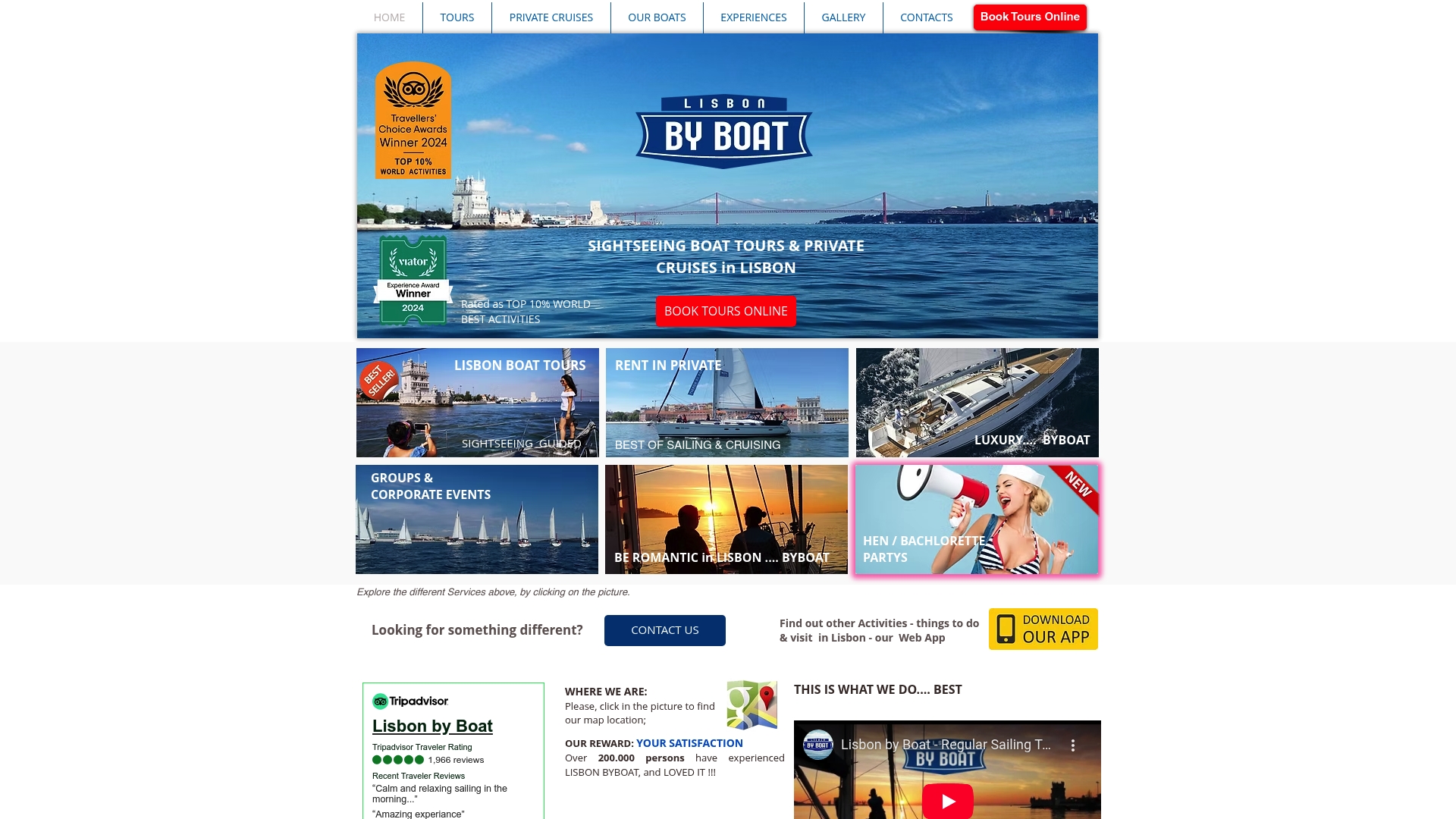
For private yachts, catamarans or a RIB, see our private sailing and cruising programs, or start from the Lisbon Boat Tour home page.
FAQ
Does maritime law apply to a short sightseeing boat tour?
Yes, in the broad sense. Maritime law covers activities on navigable waters, and sources such as Cornell’s Legal Information Institute list recreational boating among them. On a tour in Lisbon, the governing rules are mainly Portuguese and EU rules because the boat operates in Portuguese waters.
Do EU passenger rights protect me on a Lisbon boat tour?
Usually not in the way they protect ferry travelers. The EU regulation excludes excursions and tourist trips other than cruises, according to the Dutch inspectorate’s summary. Your protection comes from the operator’s booking terms, Portuguese law and the operator’s insurance.
Does the operator have to carry insurance?
In Portugal, maritime-tourism operators must hold valid civil-liability and personal-accident insurance covering their activities, under Decree-Law 108/2009. Reading the booking terms or asking the operator before your trip is a normal step.
What should I do first if I am hurt on a boat tour?
Get medical care, and call 112 for anything serious. Then report the incident to the crew so a written record exists, photograph the scene and note witnesses. Travel Guard stresses that the incident report supports insurance claims.
What are the four pillars of maritime law?
They are SOLAS, MARPOL, STCW and MLC, covering ship safety, pollution, crew training and seafarers’ working conditions, according to the German Shipowners’ Association. They are the international framework behind professional shipping.
Sources
Recommended
Comments