

Avoid Tram 28 Crowds: Lisbon's 15–20 Minute Scenic Tram Ride + 2hr Tagus

Yes, ride the trams, but ride them smart. Tram 28 is worth the wait if you time it right; otherwise, quiet, scenic Tram 12 gives you nearly the same views without the crowd. Load a Viva Viagem card before you board (buying on the vintage carriage costs more), and aim for early morning, since Carris runs these routes on a schedule that gets brutal by mid-morning.
TL;DR:
Riding Tram 12E instead of Tram 28E can provide nearly identical views with fewer crowds and less waiting, especially mid-morning or late evening.
Starting the Tram 28 route at Campo de Ourique or boarding at stops like Estrela allows for a more comfortable seat and avoids midday queues at Martim Moniz.
Using a preloaded Viva Viagem card offers significant savings compared to buying tickets on board, and validates quickly at the tram entrance.
Visiting Lisbon’s landmarks from the water after tram touring offers a broader perspective on the city’s maritime history, with boat tours typically lasting around two hours.
Avoid the full Tram 28 loop if pressed for time; instead, take a scenic 15-20 minute segment or opt for Line 12E, which delivers similar views with less hassle.
Table of Contents
Lisbon Tram Guide: Routes, Vehicles, and What Each Line Is Best For
Lisbon’s tram network today runs six main lines, and each one serves a different kind of trip. Carris, the public operator, keeps the classic yellow “Remodelado” carriages on most of the hilly tourist routes, while the newer articulated trams handle the flatter riverside stretch on Line 15E.
12E: A short loop through Alfama, quieter than 28E, similar hills and views.
15E: Modern, air conditioned, runs Praça da Figueira to Belém.
18E: Connects Alcântara neighborhoods, mostly used by residents.
24E: Links downtown to Príncipe Real and the Amoreiras area.
25E: A short residential route with a few decent city views.
28E: The famous one, Martim Moniz to Campo de Ourique.
Trams generally start running around 6:00 AM and continue into the evening, though exact frequency drops off after dark. Carris publishes live timetables. The vintage Remodelado carriages still handle most tourist routes, while modern trams take the riverside line.
Tram 28 Lisbon Route, Duration, and Where to Board for Fewer Crowds
Tram 28 runs between Martim Moniz and Campo de Ourique, cutting through some of the steepest, oldest parts of the city. The full ride, door to door, takes roughly 45 minutes, though traffic, tourist crowding, and narrow single track sections routinely push that longer. The most photogenic stretch runs from Sé Cathedral through Portas do Sol and into Chiado, a run of maybe 15 to 20 minutes packed with viewpoints, tiled buildings, and sharp turns that make the old carriages groan on the rails.
Here’s how to actually get a seat and enjoy the ride:
Start at Campo de Ourique, the opposite terminus from Martim Moniz, where lines are shorter and cars usually have open seats.
Board at a mid-route stop like Estrela or Praça Luís de Camões if you missed the early window.
Avoid Martim Moniz entirely during midday and early afternoon, when queues can stretch well past a full tram’s capacity.
Get off at Portas do Sol if you only want the scenic core, then walk down through Alfama instead of riding the full loop.
Pro Tip: If you only have twenty minutes to spare, ride just the Sé to Portas do Sol segment. You get the steepest hills, the best photo stops, and none of the hour-long standing crowd that plagues the full route.
Which Other Tram Lines Are Worth Riding in Lisbon?
Skipping 28E doesn’t mean skipping the tram experience. A few alternatives cover similar ground with a fraction of the hassle.
12E loops through much of the same Alfama scenery as 28E but draws far fewer riders, making it the better choice if crowds are your main concern.
15E is the practical option for reaching Belém, with modern, wheelchair-friendly cars and enough capacity that you’re not fighting for space.
24E climbs toward Príncipe Real and works well if you want tram views without the tourist density.
18E and 25E run through residential stretches, useful mainly if your hotel or an errand happens to sit along the line.
Transport writers who cover the city point out that Tram 28 functions as ordinary public transit, not a guided tour, and that Tram 12 delivers similar charm with noticeably fewer people. If your main goal is photos and atmosphere rather than checking a specific tram number off a list, 12E often beats fighting for a spot on 28E.
Lisbon Tram Tickets and Fares: What Actually Saves You Money
Buying a paper ticket from the driver on a vintage tram costs more per ride than using a reloadable card. Purchasing your fare on board Carris trams runs noticeably higher than a preloaded card, which adds up fast if you’re riding multiple lines in a day.
Buy or top up a Viva Viagem card at any metro station machine or authorized kiosk before you start sightseeing.
Load it with “zapping” credit for pay-as-you-go rides, or grab a 24-hour pass if you’re planning several trips.
Validate the card at the on-board reader every time you board, vintage or modern.
Riders who buy tickets on board typically pay close to double what a preloaded card costs per trip, according to TripSavvy’s fare comparison.
Carrying a preloaded transit card bought ahead of peak hours means you walk straight past the line for paper tickets and onto the tram.
How to Ride Lisbon Trams: Boarding, Validating, and Etiquette
Riding a vintage tram works differently than hopping on the modern 15E, and knowing the difference saves confusion at the door.
Board through the front door only on vintage Remodelado trams like 28E and 12E; the driver sits right there and it’s the only entry point.
Use any door on the modern 15E, since it’s built like a standard city tram with multiple entries.
Tap your Viva Viagem card on the validator immediately after boarding. On vintage cars, validate at the reader near the driver, while 15E has internal validators near each door.
Hold on tight on the hills. These trams brake and accelerate hard on Alfama’s grades.
Give up priority seats near the front for elderly or pregnant riders, standard etiquette locals expect.
Accessibility is limited on the old carriages. Narrow aisles, few seats, and steep boarding steps make vintage trams a poor fit for wheelchair users or anyone with mobility issues. Line 15E, with its low floors and wider doors, is the better choice.
Pickpocket Safety and Crowd Tactics on Crowded Trams
Tram 28E and 15E both draw dense crowds, and dense crowds draw pickpockets. Keep your bag zipped and worn on your front, not slung over one shoulder where it’s an easy target during the shuffle to board.
Keep phones and wallets in a front pocket or zipped bag, never a back pocket.
Stay alert during the crush at doors, that’s the moment pickpockets work.
Avoid flashing cash or cards while paying on board.
If something is stolen, report it to the nearest police station (PSP) and check official Portuguese tourism channels for the current emergency number.
Pro Tip: Wrap your bag strap around a pole or your wrist once you’re seated. A grab-and-run through a closing tram door happens in under two seconds, and you won’t get it back.
Best Times to Ride and How to Skip the Tram 28 Queue
Timing changes everything on this route. Riding early morning between 8 and 9 AM, or after 8 PM, cuts wait times dramatically compared to the midday crush.
Ride at opening or closing hours. The 7 to 9 AM window and the last two hours of service see a fraction of the daytime crowd.
Board going the “wrong way” first. Starting at Campo de Ourique and riding toward Martim Moniz avoids the worst queue entirely.
Pick a short scenic segment instead of the full loop. The 15 to 20 minute run through Alfama gives you the photos without an hour of standing.
Switch to Tram 12E if 28E’s line hasn’t moved in twenty minutes. It covers similar ground and rarely has a wait at all.
Where to Check Lisbon Tram Maps and Live Schedules
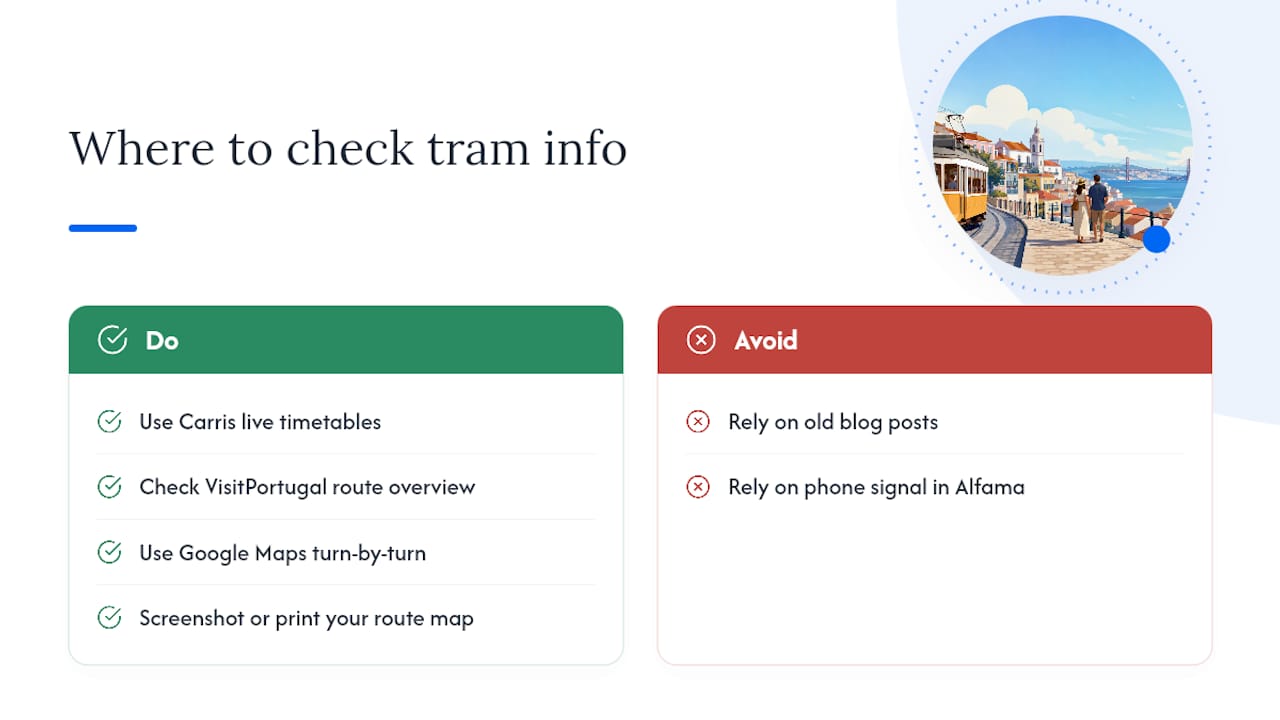
Carris publishes official timetables and live tracking, and that’s your best source for current departures, not a blog post from last year. VisitPortugal’s tram overview lays out route maps and vehicle types in plain terms, useful for a first pass before you land.
Google Maps handles turn-by-turn tram routing well in Lisbon, showing live positions and suggested transfers. Screenshot or print a route map before you go, since phone signal in the older parts of Alfama can be spotty between the tiled buildings.
Why a Boat Tour Rounds Out What You See From the Tram
A tram shows you Lisbon’s hills and tiled facades one narrow street at a time, but choosing a premium transfer over taxi for travel can enhance your sightseeing comfort. A short sailing tour along the Tagus gives you the wider picture, the same monuments and skyline that shaped the city, seen from the water that built it. Combining a tram ride with a boat tour adds a coastal perspective street level sightseeing can’t replicate.
Ride trams in the morning, then take a Tagus tour in the late afternoon to catch the light on Belém Tower and the 25 de Abril Bridge.
Sunset sailings work well after a full day of hills and steps, when sitting down sounds better than another tram queue.
What Most Tram 28 Advice Gets Wrong
Most guides treat Tram 28 like a checklist item: ride the whole loop, snap a photo at Portas do Sol, move on. That advice ignores what the research on this route actually shows. The full 45 minute ride is often the worst use of your time, packed shoulder to shoulder with tourists doing the same thing you are.

The smarter move is picking the 15 to 20 minute scenic core and skipping the rest. Boarding at Campo de Ourique instead of fighting the Martim Moniz line isn’t a hack, it’s just paying attention to how the route actually works. And when Tram 12E offers nearly identical hills and views with a fraction of the crowd, treating 28E as mandatory misses the point of visiting Alfama in the first place: seeing it, not standing in line for it.
The other gap in typical advice is stopping at the tram. Lisbon’s story is a maritime one, and a street-level ride, however charming, only tells half of it. Riding the water after riding the rails gives you the context the trams were never built to provide.
— Lisbon
See Lisbon’s Monuments From the Water After Your Tram Ride
You’ve seen the tiled facades and steep switchbacks from a tram window. A boat tour shows you landmarks such as Belém Tower, the Discoveries Monument, and the 25 de Abril Bridge from the Tagus, where Lisbon’s history actually starts. No queue to fight, no standing room only, just a comfortable seat, a guide explaining what you’re looking at, and a drink in hand.

The standard sailing tour runs two hours with live commentary, snacks, and beverages included, a solid fit after a morning spent climbing Alfama’s hills on Tram 28. If you want something more private, the luxury yacht and catamaran charters run from two hours up to a full day. Check available dates and book a ByBoat Tour for this week’s sailing schedule.
Where to Verify Lisbon Tram Schedules and Routes
Carris: official operator, best source for live timetables and route changes.
VisitPortugal’s tram guide: clear route summaries and vehicle types for trip planning.
Trams in Lisbon on Wikipedia: background on line history and network statistics.
Sources
Recommended
Comments