

Lisbon Taxi Guide: Fares, Apps, and Safety Tips
TL;DR:
Lisbon’s taxi system is regulated with three tariff bands, requiring the meter to run from trip start to prevent overcharging.
Tourists should always verify the meter operates immediately at the start, especially at the airport, to avoid scams and inflated fares.
Lisbon’s taxi system is a regulated, metered transport network where licensed drivers operate under three official tariff bands set by Portuguese law. Every tourist visiting the city needs a working Lisbon taxi guide before arrival, because the difference between a fair €15 airport ride and a €90 scam often comes down to knowing one rule: the meter must run from the moment you sit down. Ride-hailing apps like Uber and Bolt operate legally alongside traditional taxis, giving you real choices. This guide covers 2026 fare structures, airport safety steps, app comparisons, and the practical habits that separate confident travelers from easy targets.
How Lisbon taxi fares and tariff bands work
Lisbon’s three official tariff bands are the foundation of every metered fare in the city. Tarifa 1 covers standard daytime rides Monday through Friday. Tarifa 2 applies during evenings, nights, and weekends, running roughly 20% higher. Tarifa 3 kicks in for trips outside city limits, adding an extra surcharge on top of the base rate.
The flag fall for Tarifa 1 starts at €3.25, while Tarifa 2 opens at €3.90. Per-kilometer rates follow the same pattern, with Tarifa 2 costing more per km than Tarifa 1. The luggage surcharge is €1.60 flat per trip, not per bag, so a family with three suitcases pays the same single surcharge as a solo traveler with one bag.
For common routes, the airport to Baixa covers approximately 7 km and typically costs €12 to €22 depending on the tariff band and traffic. A short ride within the city center, say from Bairro Alto to Alfama, usually runs €6 to €10 under Tarifa 1. These ranges give you a mental benchmark before you ever open a taxi door.
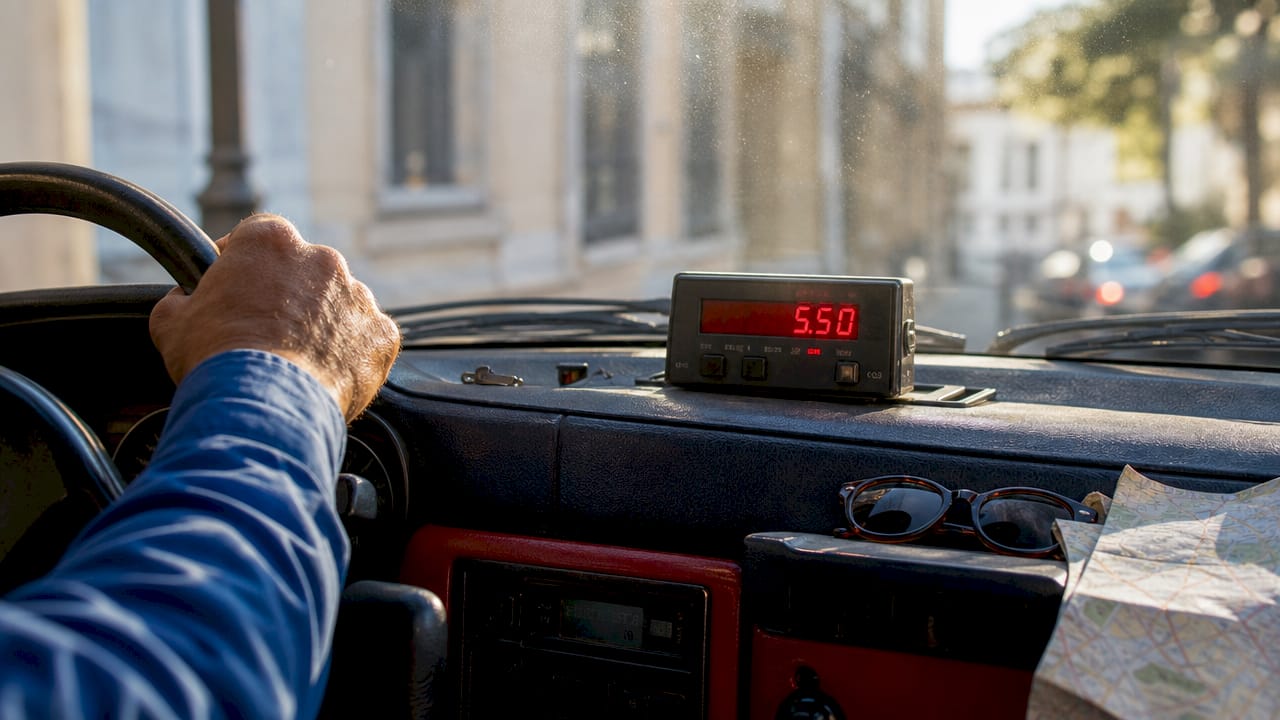
Lisbon law mandates that meter must run from trip start. If the driver does not activate the meter within the first 30 seconds, that is your signal to ask directly or exit the vehicle. Meter operation is not a courtesy. It is a legal obligation, and it is your primary protection against overcharging.
Pro Tip: Before the car moves, glance at the dashboard display to confirm the meter shows the flag fall amount. If the screen is blank or shows a suspiciously high starting number, ask the driver to reset it or find another taxi.
How to stay safe taking taxis at Lisbon Airport
The biggest financial risk for tourists in Lisbon is unlicensed drivers at the airport, who regularly quote €60 to €100 for rides that should cost around €20 with a running meter. These individuals approach travelers inside the terminal, often wearing casual clothes and speaking confident English. The fix is simple: never accept a ride offer inside the arrivals hall.
Here is the step-by-step process for a safe airport pickup:
Exit the arrivals terminal through the main doors and walk directly to the official taxi rank on the curb outside.
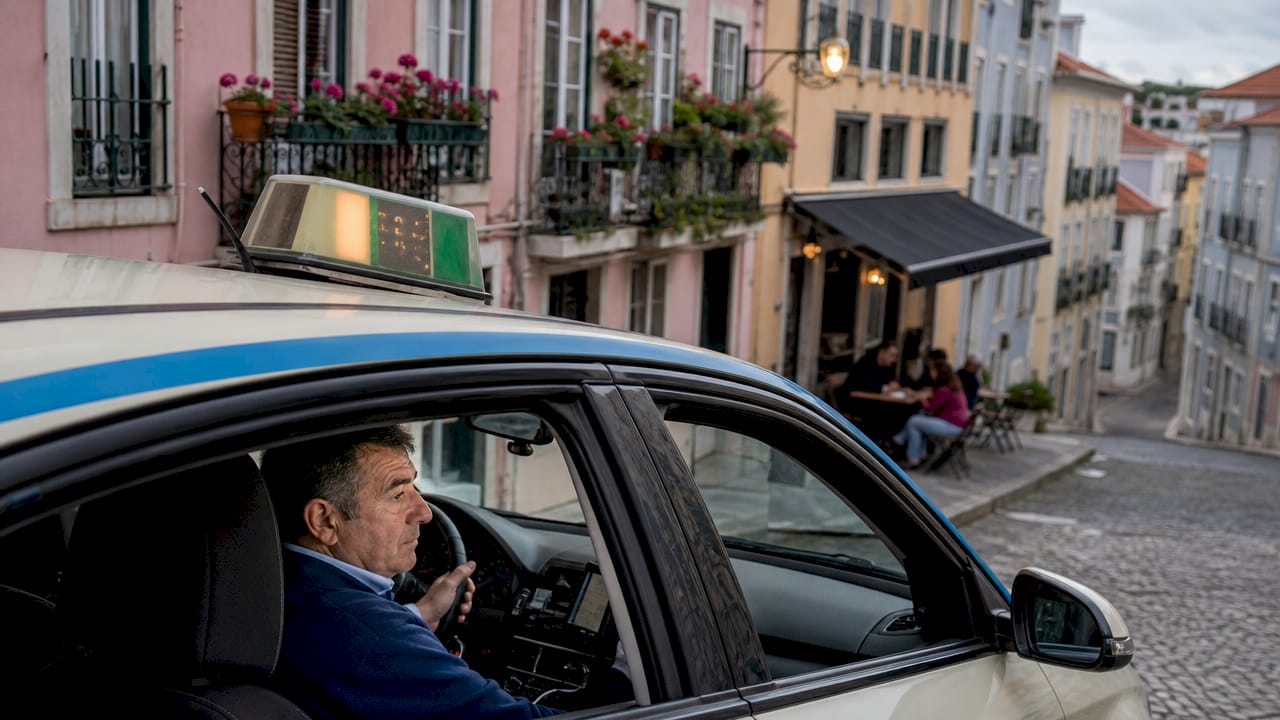
Look for cream or beige cars with a blue stripe and an illuminated rooftop sign. These are licensed Lisbon taxis and the only vehicles you should board from this queue.
Join the queue. Do not accept offers from anyone who approaches you before you reach the front.
Once inside, confirm the driver starts the meter immediately. The flag fall should appear on the display within seconds of departure.
Pay the metered fare plus the €1.60 luggage surcharge at the end. No negotiation needed.
If you want to remove fare uncertainty entirely, the Taxi Voucher is the right tool. Available at the Turismo de Lisboa desk inside the airport, it offers fixed-price transfers by city zone. The Lisboa 1ª Coroa zone costs €16 during the day and €19.20 at night, covering up to four passengers and all luggage. That price does not change regardless of traffic or time of day.
“Treat the official airport taxi queue as a verification layer. Licensed taxis cluster there for safety and legitimacy. Any driver who approaches you before you reach that rank is not part of the system.” — Nomado Travel
Uber and Bolt both operate at Lisbon Airport through designated pickup zones, separate from the taxi rank. If you already have the app installed and a local SIM or data plan active, booking through an app from the arrivals hall is a fast, traceable alternative. For a practical breakdown of all your options from the terminal, the airport to city center guide covers each route in detail.
Lisbon taxis vs. Uber and Bolt: which should you use?
Uber and Bolt are legal, traceable alternatives to traditional taxis in Lisbon, operating under Portugal’s TVDE (Transporte em Veículo Descaracterizado a partir de Plataforma Eletrónica) framework. Every legal ride-hailing vehicle must display a TVDE sticker front and rear. If you book through the app and the car lacks that sticker, cancel the ride.
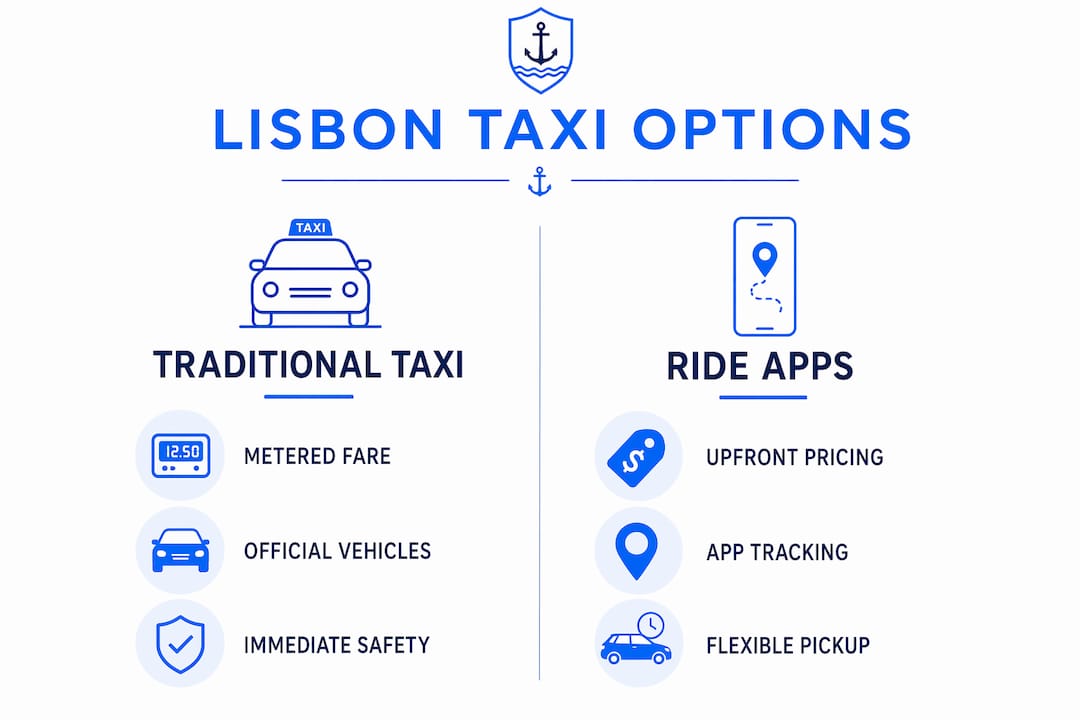
Here is how the three main options compare on the factors that matter most to tourists:
Factor | Traditional taxi | Uber | Bolt |
Pricing model | Metered (variable) | Upfront fare | Upfront fare |
Airport to city cost | €15 to €22 | €7 to €15 | Typically 10 to 15% less than Uber |
Fare transparency | Medium (meter visible) | High (shown before booking) | High (shown before booking) |
Surge pricing | No | Yes (peak hours) | Yes (peak hours) |
Payment options | Cash preferred, some cards | Card via app | Card via app |
Best for | Night rides, no data plan | Mid-range convenience | Budget-conscious travelers |
Bolt tends to be cheapest among the three options, often undercutting Uber by 10 to 15% on the same route. Traditional taxis become competitive during off-peak daytime hours under Tarifa 1, but they can cost more than apps at night under Tarifa 2 when the meter rate climbs.
The practical rule is this: use apps when you have data and want upfront pricing, use traditional taxis when you are at an official rank with no wait, and use the Taxi Voucher for your first airport arrival when you want zero surprises.
Key situations where traditional taxis win:
You have no mobile data or a dead phone battery.
You are traveling with a large group and need a bigger vehicle quickly.
You are at a taxi rank with no queue and want to leave immediately.
You prefer paying cash without setting up an app account.
For a deeper look at how Lisbon’s transport options stack up beyond taxis, the public transport overview covers metro, tram, and bus alternatives that pair well with occasional taxi use.
Practical tips for using taxis effectively in Lisbon
Knowing the rules is one thing. Using them in real situations is another. These habits will save you money and stress on every ride.
Confirm the meter starts. Ask “Can you start the meter?” if the driver hesitates. Lisbon law requires meter operation from trip start, and a polite request is all it takes in most cases.
Know your fare range. Airport to city center runs €15 to €22 by taxi. A short city hop rarely exceeds €10. If a driver quotes a flat fare well above these numbers, decline and use an app instead.
Never agree to a flat fare unless it is a Taxi Voucher. Flat fare agreements outside the official voucher system almost always favor the driver. The meter protects you.
Carry small bills. Many Lisbon taxis accept cards, but cash is still preferred by most drivers. Carrying €20 to €30 in small denominations avoids the awkward “no change” situation.
Tipping is optional but appreciated. Rounding up to the nearest euro or adding €1 to €2 on a longer ride is the local norm. For full guidance on tipping customs across Portugal, the tipping guide for visitors explains what is expected and what is generous.
Use taxi ranks in busy areas. Praça do Comércio, Rossio, and Marquês de Pombal all have official ranks with reliable queues. Hailing on a busy street works but takes longer during peak hours.
For night rides, use apps. Tarifa 2 makes metered taxis more expensive after 9 PM. Uber and Bolt show you the exact fare before you commit, which removes the guesswork entirely.
Pro Tip: If you face a language barrier, show the driver your destination on Google Maps rather than trying to pronounce Portuguese street names. Most drivers recognize the map interface immediately and it eliminates confusion.
For travelers concerned about broader safety in the city, the Lisbon safety guide for tourists covers scam patterns beyond taxis, including pickpocket hotspots and tourist-targeted fraud.
Key takeaways
Navigating Lisbon by taxi is safe and affordable when you use the official metered system, verify meter operation immediately, and choose the Taxi Voucher or a ride-hailing app for airport arrivals.
Point | Details |
Three tariff bands | Tarifa 1 (day), Tarifa 2 (night/weekends), Tarifa 3 (outside city) determine every fare. |
Meter is mandatory | Drivers must start the meter at trip start; a blank meter is a scam warning sign. |
Airport Taxi Voucher | Fixed-price transfers from €16 cover up to 4 passengers and all luggage with no surprises. |
Bolt is cheapest app | Bolt typically undercuts Uber by 10 to 15% and shows upfront fares before you book. |
Avoid terminal offers | Licensed taxis queue outside arrivals; anyone approaching you inside is not official. |
What I have learned from Lisbon’s taxi scene
After spending considerable time observing how tourists interact with Lisbon’s transport system, one pattern stands out clearly. The travelers who get overcharged are almost never victims of sophisticated fraud. They simply did not know that the meter is mandatory, so they accepted a flat fare that sounded reasonable in the moment.
The airport is where this plays out most visibly. Unlicensed drivers are confident, friendly, and speak good English. They quote €40 or €50 for a ride worth €18, and the tourist accepts because they are tired, carrying luggage, and unsure of the alternative. The official taxi rank is 60 seconds away. That is the entire gap between a fair ride and an expensive one.
My honest recommendation: use the Taxi Voucher for your first arrival, no matter what. It costs slightly more than a metered taxi under Tarifa 1, but it removes every variable from the equation when you are jet-lagged and unfamiliar with the city. Once you are settled, switch to metered taxis and apps for daily movement. Bolt works well for short city hops. Traditional taxis at official ranks are perfectly reliable once you know to check the meter.
One more thing most guides skip: avoid negotiating with any driver who approaches you proactively. The moment a driver initiates contact, the dynamic shifts in their favor. Walk to the rank, join the queue, and let the system work as designed. It takes two extra minutes and saves you €30 to €70.
— Lisbon
See Lisbon from a completely different angle
Getting around Lisbon by taxi is practical and efficient. But the city’s most striking views are not visible from a car window. Lisbonbyboat offers daily sailing tours along Lisbon’s historical coastline, with expert guides explaining the monuments and landmarks you pass. Private cruises on sailing yachts and catamarans run from 2 hours to a full day, giving you complete flexibility. Whether you are planning a group experience or a private escape on the water, the ByBoat tours page has every option. For something more exclusive, explore Lisbonbyboat’s luxury yacht charters for a premium Lisbon experience you will not find on land.
FAQ
What is the standard taxi fare from Lisbon Airport to the city center?
The standard metered fare from Lisbon Airport to Baixa runs €15 to €22 depending on the time of day and traffic, covering approximately 7 km in 15 to 25 minutes. The Taxi Voucher offers a fixed alternative starting at €16 for the Lisboa 1ª Coroa zone.
How do I recognize an official Lisbon taxi?
Licensed Lisbon taxis are cream or beige with a blue stripe and always display an illuminated rooftop sign. They operate with a registered meter that must start running at the beginning of every trip.
Is Uber or Bolt cheaper than a traditional taxi in Lisbon?
Bolt is typically the cheapest option, undercutting Uber by 10 to 15% on most routes. Both apps show upfront fares before you confirm the booking, making them more predictable than metered taxis during evening and weekend Tarifa 2 hours.
What is the Taxi Voucher and where do I get it?
The Taxi Voucher is a fixed-price airport transfer option available at the Turismo de Lisboa desk inside Lisbon Airport. It covers set city zones, includes luggage for up to four passengers, and costs €16 during the day for the central Lisboa zone.
What should I do if a Lisbon taxi driver refuses to start the meter?
Ask the driver directly to start the meter. If they refuse or insist on a flat fare, exit the vehicle and return to the official taxi rank or book through Uber or Bolt. Meter operation from trip start is a legal requirement in Lisbon, not optional.
Recommended
Great guide with practical tips for anyone visiting Lisbon for the first time. Knowing how the taxi fare system works and checking that the meter starts immediately can help travelers avoid common scams and enjoy a smoother trip. Similarly, if you're searching for Delta Executor APK, it's always a good idea to use a reliable source that provides the latest version, installation instructions, update details, and compatibility information to ensure a safe and hassle-free experience.