

Lisbon Tapas Experiences: Your 2026 Local Guide
TL;DR:
Petiscos are Portuguese shared plates that emphasize slow dining, conviviality, and local ingredients. They are the main meal, ordered in rounds over hours, not quick snacks like Spanish tapas. Visitors should understand local etiquette, choose authentic neighborhoods, and visit during early evening or Sunday lunch for the best experience.
Lisbon tapas experiences are built around petiscos, the Portuguese tradition of shared small plates eaten as a full meal rather than a pre-dinner snack. What travelers call “tapas” in Lisbon are actually petiscos, a distinct culinary practice shaped by local ingredients, neighborhood bars, and a slow, social pace that has nothing to do with Spanish tapas culture. The neighborhoods, the timing, the ordering rhythm, and even the bread basket work differently here. Get those details right, and you eat like a Lisbonite. Get them wrong, and you pay for bread you didn’t want.
1. What makes petiscos different from Spanish tapas?
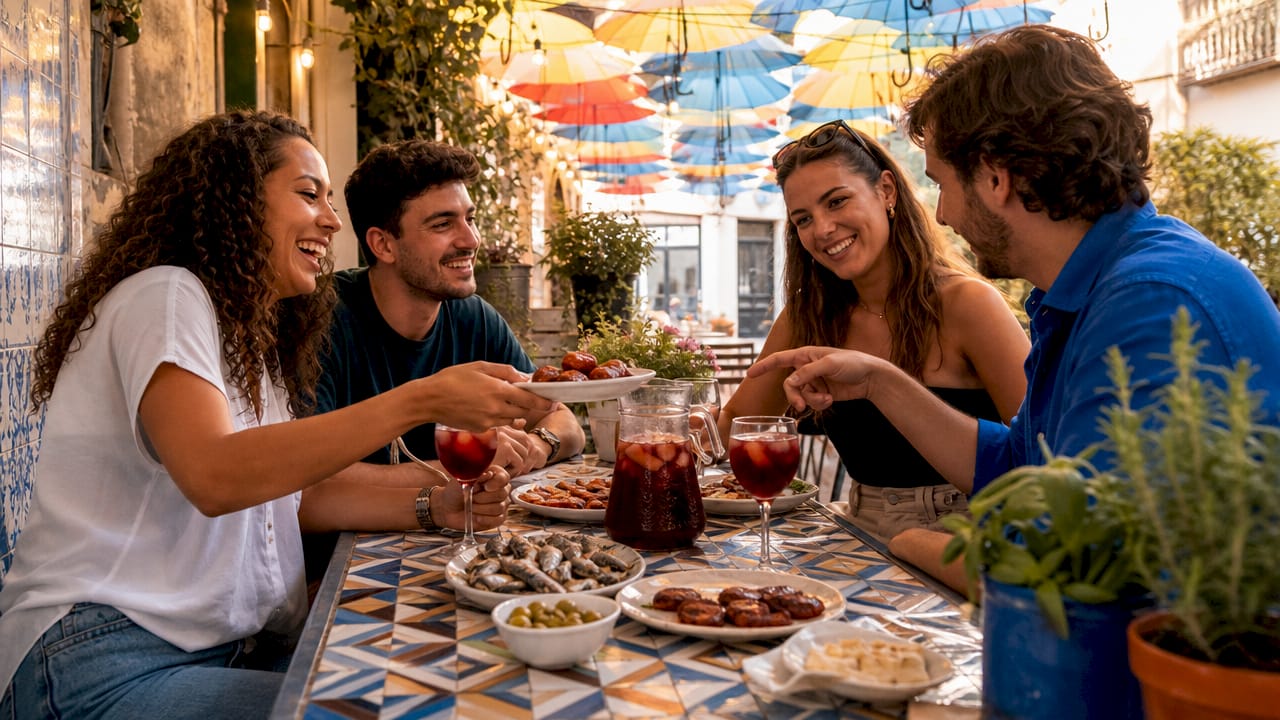
Petiscos are the main event, not an opening act. Petiscos emphasize conviviality and slow dining as the central meal, ordered in rounds over an hour or two, not served all at once before a main course arrives.
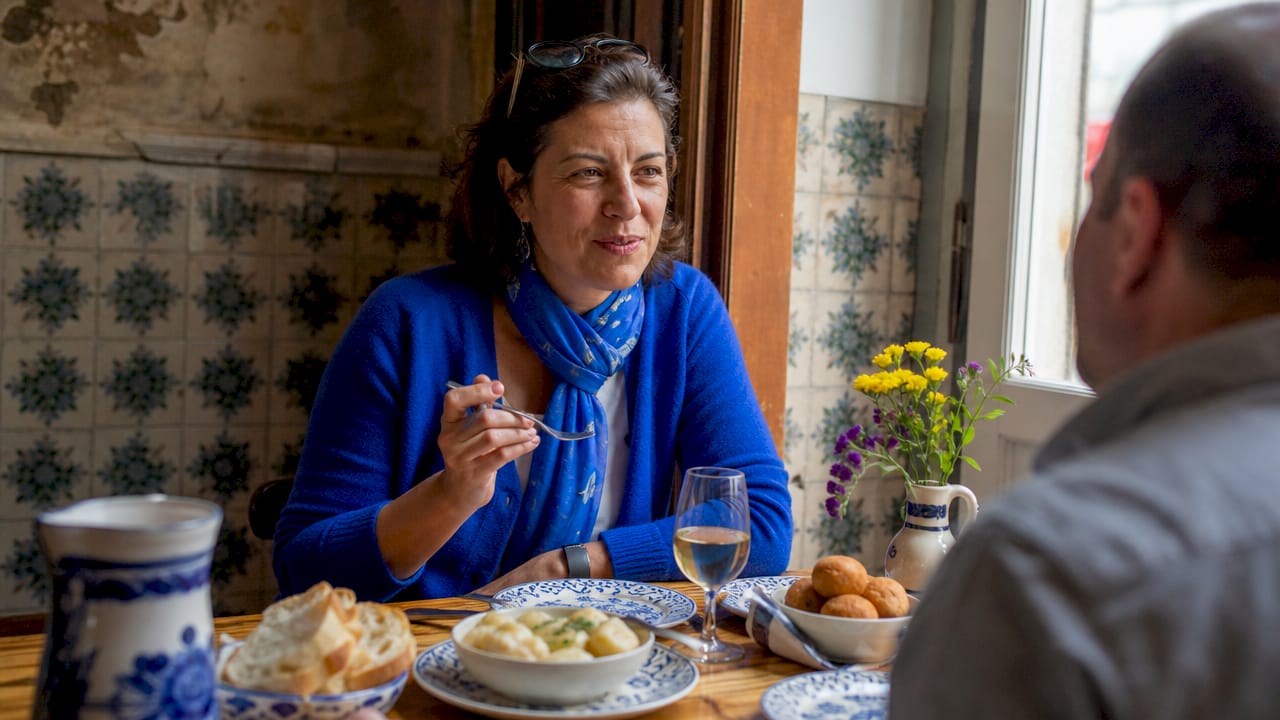
The flavor profiles are also completely different from Spanish tapas. Portuguese petiscos rely heavily on salted cod, garlic, pork, olive oil, and coriander, along with vinegar-based marinades that give dishes a sharp, savory depth. Spanish tapas lean toward jamón, manchego, and fried bites. The two traditions share a format but not a flavor identity.
The dining pace is the biggest practical difference. You order 2–3 plates to start, eat slowly, talk, and then order more. Rushing this process signals to locals that you don’t understand the ritual. Petiscos are about the table, not the food alone.
Pro Tip: Ask the server what’s fresh that day before ordering. Many tascas rotate their petiscos based on market availability, and the daily specials are almost always the best value on the menu.
2. The couvert rule every visitor gets wrong
The couvert is the bread, olives, and spreads that appear on your table before you order. It looks free. It is not. The couvert typically costs €1–€5 and gets added to your bill automatically if you eat it.
You can refuse it. Say “Não, obrigado” (No, thank you) when it arrives, and the server will take it back without any awkwardness. Ordering couvert without refusal is the single most common billing surprise for first-time visitors to Lisbon petiscos bars.
This rule applies across nearly every tasca and petisqueira in the city. Knowing it before you sit down saves money and removes a moment of confusion at the end of the meal.
3. How to order petiscos the right way
The best practice for a first round is 2–3 plates per table. Order more gradually as you finish each round. This pacing keeps the food coming at the right temperature and matches the social rhythm of the meal.
Ordering everything at once is a common mistake. It clashes with the cultural logic of petiscos, where the conversation and the food are meant to build together. Plates pile up, some go cold, and the experience loses its shape.
Pair your petiscos with vinho verde (a light, slightly sparkling Portuguese white wine) or an imperial, which is a small draft beer served cold. Both are inexpensive and widely available at every petiscos bar in the city. Check out Lisbon’s must-try dishes if you want a deeper look at what to order beyond the basics.
4. Best neighborhoods for authentic petiscos in Lisbon
The neighborhoods you choose define the quality of your experience. Graça, Campo de Ourique, Alcântara, Arroios, and Penha de França are the prime areas for authentic petiscos in 2026. These are residential districts where locals actually eat, not tourist corridors designed around foot traffic.
Graça sits on one of Lisbon’s highest hills and has a tight cluster of old-school tascas that have barely changed in decades.
Campo de Ourique attracts a younger local crowd with a market hall and surrounding bars that serve quality petiscos at fair prices.
Arroios has become one of the city’s most interesting food neighborhoods, with a mix of traditional Portuguese spots and newer venues.
Alcântara offers a riverside setting with a more relaxed pace, ideal for a long afternoon of petiscos and wine.
Penha de França is the least visited by tourists and arguably the most authentic for that reason.
Bairro Alto offers a nightlife-focused scene that peaks after 11pm, with a bar and street party atmosphere. The food quality is inconsistent and the crowds are heavy. It works for a late-night drink, not for a serious petiscos meal.
Pro Tip: Use the Lisbon neighborhood guide to map your petiscos crawl alongside other local sights. Combining a neighborhood walk with dinner stops makes the evening feel like a real local experience.
5. Tasca vs. petisqueira: which venue type suits you?
A tasca is a traditional, no-frills tavern. Wooden tables, handwritten menus, a TV on the wall, and a short list of daily dishes. The food is home-style, the portions are generous, and the prices are low. Tascas are where Lisbon’s working-class food culture lives.
A petisqueira is a more curated version of the same idea. The menu is longer, the presentation is slightly more polished, and the venue often has a wine list worth reading. Petisqueiras attract a mix of locals and food-savvy travelers. Visiting different venue types profoundly affects the meal’s pace and authenticity, and most visitors only learn this distinction after their first trip.
Choose a tasca when you want the most unfiltered version of Lisbon food culture. Choose a petisqueira when you want more variety and a slightly longer menu to work through.
6. Top petiscos bars and tascas to visit in 2026
These venues consistently deliver the best petiscos in Lisbon across different neighborhoods and price points.
O Velho Eurico (Alfama) — A tiny, cash-only tasca with a rotating daily menu. The grilled sardines and fried chouriço are the dishes to order. Arrive before 7:30pm or expect to wait outside.
Tasca do Chico (Madragoa) — Famous for its fado nights on monday and wednesday evenings. The petiscos menu is short but excellent. Reservations are strongly recommended.
Tascardoso (Mouraria) — A neighborhood favorite with generous portions and a warm, family-run atmosphere. The pork cheeks in red wine sauce are exceptional.
A Cevicheria (Príncipe Real) — A modern petisqueira with a creative menu built around seafood. The octopus petisco is one of the most talked-about dishes in the city.
Taberna da Rua das Flores (Chiado) — A refined tasca with a strong wine list and daily specials written on a chalkboard. Popular with locals who work in the area.
Solar dos Presuntos (Avenida) — A classic Lisbon institution known for its cured meats and bacalhau (salt cod) preparations. Slightly more formal than a typical tasca.
Zé da Mouraria (Mouraria) — A no-reservation spot with some of the cheapest and most authentic petiscos in the city. Get there early.
Most of these venues have staff who speak basic English, though a few words of Portuguese go a long way toward a warmer reception. For a structured approach to the city’s food scene, the best food tours in Lisbon cover several of these neighborhoods with a local guide included.
7. When to go: timing your petiscos crawl
Timing is the detail most guides skip. Peak dinner crowds arrive around 9:30pm, and the best tascas fill up fast. Arriving at 7pm gives you a relaxed seat, attentive service, and the full menu before anything sells out.
Sunday lunch from 1pm to 4pm is the most authentic petiscos experience Lisbon offers. Families fill the tascas, the pace is unhurried, and the kitchen often runs its best weekly specials. Structured tapas tours in Lisbon typically last 3–4 hours and include 9–10 petiscos dishes plus drinks across multiple stops. That format works well for first-time visitors who want a guided introduction before exploring independently.
Arrive at 7pm for dinner to secure a table without waiting.
Plan Sunday lunch between 1pm and 4pm for the most local atmosphere.
Budget 2–3 hours minimum for a proper petiscos meal.
Do a crawl across 2–3 venues rather than one long sitting at a single spot.
Pro Tip: Avoid friday and saturday nights at popular tascas unless you have a reservation. Weeknight visits, especially tuesday through thursday, offer shorter waits and a more relaxed crowd.
Key takeaways
Authentic Lisbon tapas experiences require understanding petiscos as a full shared meal, not a snack, ordered in rounds across local neighborhood tascas with the right timing and etiquette.
Point | Details |
Petiscos are the main meal | Order in rounds of 2–3 plates, not all at once, to match local dining rhythm. |
Refuse the couvert if unwanted | Say “Não, obrigado” when bread arrives to avoid unexpected charges of €1–€5. |
Choose the right neighborhood | Graça, Arroios, and Campo de Ourique offer the most authentic local petiscos scenes. |
Timing changes everything | Arrive at 7pm for dinner or visit sunday lunch for the most relaxed, local experience. |
Tasca vs. petisqueira matters | Tascas offer raw authenticity; petisqueiras offer more variety and a curated wine list. |
Why I think most visitors miss the best part of Lisbon’s food culture
Most travelers spend their first night in Bairro Alto, eat somewhere near the main square, and leave thinking they’ve experienced Lisbon’s food scene. They haven’t. The real thing is quieter, slower, and harder to find on a map.
The neighborhoods that matter, Graça, Arroios, Penha de França, don’t look like food destinations. They look like places where people live. That’s exactly the point. The best petiscos I’ve had in this city came from tascas with no English menu, no Instagram presence, and a chalkboard that changes every day based on what the cook felt like making.
Pacing is the other thing visitors underestimate. Local cuisine plays a central role in tourism precisely because it forces you to slow down and engage with a place on its own terms. Petiscos do that better than almost any other food tradition I know. You can’t rush them without ruining them.
My honest recommendation: skip the food tour on your first night and just walk into a tasca in Graça around 7pm. Sit down, refuse the couvert if you don’t want it, order three dishes, and see what happens. That single meal will teach you more about Lisbon than a week of sightseeing.
— Lisbon
See Lisbon from the water after your petiscos evening
A great meal deserves a great ending. After dinner in Graça or Alcântara, the Tagus River is minutes away, and the city looks completely different from the water.

Lisbonbyboat runs daily sailing tours on the Tagus that last two hours, with guides pointing out Lisbon’s major monuments and coastline as you sail. For something more private, Lisbonbyboat also offers luxury yacht rentals on sailing yachts and catamarans, from two-hour evening cruises to full-day charters. Watching the sun drop behind the 25 de Abril Bridge from the deck of a sailboat is the kind of moment that stays with you long after the petiscos are gone.
FAQ
What are petiscos in Lisbon?
Petiscos are Portuguese small plates shared as a full meal, not appetizers. They are the local equivalent of what travelers call tapas, with distinct flavors built around cod, pork, garlic, and coriander.
Where is the best place to eat petiscos in Lisbon?
Graça, Arroios, Campo de Ourique, and Penha de França offer the most authentic petiscos venues. These residential neighborhoods have traditional tascas where locals actually eat.
What is the couvert charge at Lisbon restaurants?
The couvert is a bread and olives starter that costs €1–€5 and is charged automatically if consumed. Refuse it by saying “Não, obrigado” when it arrives at the table.
What time should I eat petiscos in Lisbon?
Arrive at 7pm to secure a table before peak crowds at 9:30pm. Sunday lunch from 1pm to 4pm is the most authentic and relaxed time to experience petiscos culture.
How many dishes should I order at a petiscos bar?
Start with 2–3 plates per table and order more in rounds as you finish. This pacing matches local dining custom and keeps the food coming fresh throughout the meal.
Recommended
Comments