

Lisbon Portugal weather in July: sailing coast guide

Most tourists expect scorching heat across Lisbon in July, but the coastal zones reveal a different story. The Atlantic influence creates microclimates that make sailing conditions surprisingly comfortable, even during peak summer. Understanding these weather nuances transforms your visit from surviving the heat to enjoying optimal conditions for exploring Lisbon’s stunning historical coastline and maritime heritage.
Table of Contents
Key takeaways
| Point | Details | |-------|---------|| | July climate | Hot and dry with average temperatures around 28°C and minimal rainfall | | Sailing conditions | Moderate winds of 10-15 knots from the north-northwest create ideal sailing weather | | Sun safety | UV index reaches 8-10, requiring strong sun protection during coastal exploration | | Coastal variations | Western areas experience cooler temperatures and stronger breezes than the city center | | Planning tips | Peak season crowds demand advance booking for sailing tours and historical site visits |
Understanding Lisbon’s July temperature and humidity
July brings warm conditions to Lisbon, but the coastal location moderates extreme heat. The average temperature starts at 27.4°C and climbs to 28.3°C by month’s end. Nighttime lows provide relief, typically dropping to 18-20°C, allowing comfortable evenings for outdoor dining and waterfront strolls.
Humidity levels stay relatively stable with average readings around 63%. This moderate humidity, combined with sea breezes, prevents the oppressive mugginess found in inland Mediterranean cities. The Atlantic acts as a natural air conditioner, keeping coastal areas 2-3°C cooler than urban neighborhoods.
Lisbon’s mild Mediterranean climate creates distinct temperature zones across the city. The table below shows how temperatures vary by location, helping you plan your daily activities and sailing excursions.
Location | Avg High | Avg Low | Wind Effect |
Coastal zones | 26-27°C | 18-19°C | Moderate breeze |
City center | 28-29°C | 19-20°C | Light air |
Inland suburbs | 30-32°C | 20-21°C | Minimal flow |
Smart packing makes a significant difference in your comfort level. Bring lightweight, breathable fabrics in natural fibers like cotton and linen. Layer with a light cardigan or windbreaker for evening boat tours when temperatures drop and sea breezes pick up.
Pack moisture-wicking clothing for daytime exploration and sailing activities
Choose light-colored garments that reflect sunlight rather than absorbing heat
Bring a wide-brimmed hat and UV-blocking sunglasses for coastal excursions
Include comfortable walking shoes with breathable materials for historical site visits
Pro Tip: Schedule understanding Lisbon weather July intensive activities like museum visits during midday heat (1-4 PM), saving cooler morning and evening hours for sailing tours and outdoor exploration. This strategy maximizes comfort while letting you experience both indoor and outdoor attractions.
July wind patterns and sailing conditions in Lisbon
Lisbon’s July winds create excellent sailing opportunities for both beginners and experienced sailors. Prevailing winds blow from the north-northwest at 10-15 knots, providing steady propulsion without overwhelming smaller vessels. These consistent patterns allow tour operators to plan reliable schedules and routes along the historical coastline.
The Portuguese coast experiences upwelling during summer months, where deep, cold Atlantic water rises to the surface. This phenomenon affects both wind patterns and water temperature, creating stronger breezes along west-facing shores. Coastal areas west of the city, particularly near Cascais, see wind speeds increase by 5-8 knots compared to sheltered eastern bays.
July sailing conditions combine moderate winds with manageable waves, making it ideal for two-hour tours and full-day charters. Morning hours (9-11 AM) typically offer the calmest conditions, with winds building gradually throughout the afternoon. Late afternoon (4-6 PM) brings the strongest breezes, perfect for experienced sailors seeking more dynamic conditions.
Check Windfinder Lisbon forecast daily for real-time wind updates and wave height predictions
Morning departures provide smoother water for those prone to seasickness or traveling with children
Afternoon tours offer more exciting sailing with fuller sails and faster speeds
Western routes toward Cascais require more sailing experience due to stronger winds
Protected eastern waters near Parque das Nações stay calmer throughout the day
Wind direction shifts occasionally when southerly flows develop, bringing warmer air from North Africa. These episodes last 2-3 days and reduce wind speeds while raising temperatures 3-5°C above normal. During these periods, early morning or sunset cruises become even more appealing.
Pro Tip: Follow our Lisbon sailing weather guide and weather tips sailing Lisbon for detailed daily forecasts specific to different coastal zones. Local knowledge helps you choose the best departure times and routes for your skill level and comfort preferences.
Sun exposure, UV index, and safety tips for coastal exploration
July sunshine in Lisbon delivers intense ultraviolet radiation that requires serious protection strategies. UV index levels typically range from 8 to 10, classified as very high to extreme by international health standards. Peak exposure occurs between 11 AM and 4 PM when the sun reaches its highest angle.
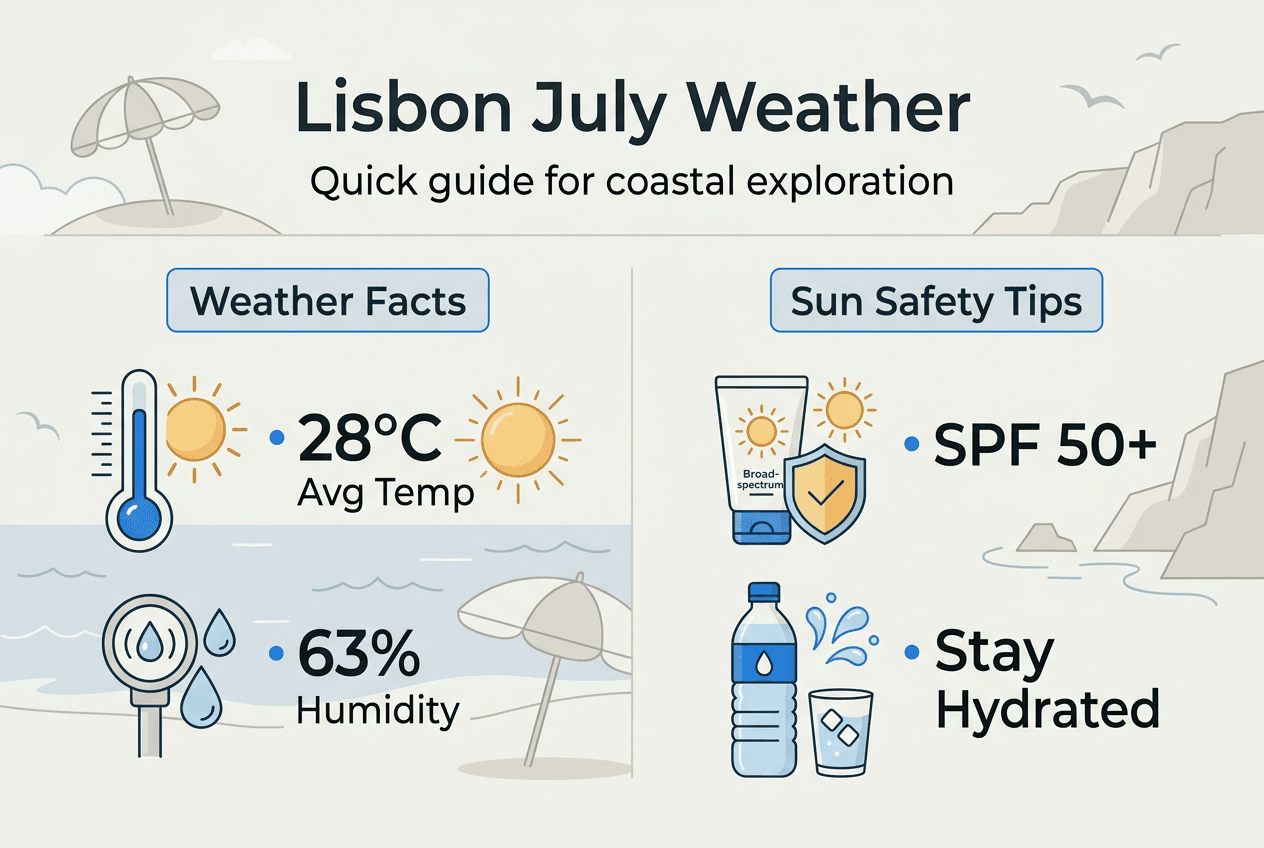
Reflection from water surfaces doubles your sun exposure during sailing tours. The combination of direct sunlight and reflected rays from the Tagus River creates particularly intense conditions. Historical coastline areas like Belém offer limited shade, leaving visitors exposed during monument exploration and waterfront walks.
Following a structured sun protection routine prevents burns, heatstroke, and long-term skin damage. These steps form your essential defense against July’s powerful sunshine:
Apply broad-spectrum SPF 50+ sunscreen 30 minutes before going outdoors
Reapply every two hours and immediately after swimming or heavy sweating
Wear UPF-rated clothing that blocks UV rays even when wet
Don a wide-brimmed hat that shades your face, ears, and neck
Use UV-blocking sunglasses to protect eyes and surrounding skin
Drink water constantly, aiming for 3-4 liters daily during outdoor activities
Recognizing heat-related illness symptoms allows quick intervention before conditions worsen. Watch for these warning signs during your coastal explorations:
Excessive sweating followed by sudden lack of perspiration
Dizziness, confusion, or difficulty maintaining balance
Rapid heartbeat and shallow, quick breathing
Nausea, vomiting, or severe headaches
Muscle cramps in legs, arms, or abdomen
The Portuguese Institute for Sea and Atmosphere warns that July heatstroke risks increase significantly during peak sunshine hours, particularly for tourists unaccustomed to intense Mediterranean sun. Seek immediate medical attention if symptoms appear.
Shade becomes your most valuable resource during midday hours. Plan monument visits like the Tower of Belém and Jerónimos Monastery for early morning when interiors stay cooler. Schedule sailing tours for times when ocean breezes provide natural cooling, making sun exposure more tolerable.
Pro Tip: Our summer in Lisbon guide tips recommends freezing water bottles overnight and carrying them in insulated bags. They stay cold for hours, providing both hydration and a cooling tool for wrists and neck. Check our what to wear sailing Lisbon guide for specific clothing recommendations that balance sun protection with comfort.
Exploring Lisbon’s historical coastline in July: combining weather with tourism
July’s warm, dry conditions create perfect circumstances for discovering Lisbon’s maritime heritage and architectural treasures. The mild Mediterranean climate ensures minimal rain disruption, with precipitation occurring on fewer than two days during the entire month. This reliability allows confident planning for both sailing tours and historical site visits.

The table below compares key coastal attractions, helping you plan routes that balance sightseeing with sun exposure management:
Site | Distance from Center | Key Highlights | Sun Exposure | Best Visit Time |
Belém Tower | 6 km west | 16th-century fortress, UNESCO site | High (limited shade) | Early morning |
Jerónimos Monastery | 6 km west | Manueline architecture, Vasco da Gama tomb | Moderate (some courtyards) | Before 10 AM |
Commerce Square | City center | Grand waterfront plaza, Triumphal Arch | Very high (open plaza) | Sunset hours |
Cristo Rei | South bank | 110m Christ statue, panoramic views | High (exposed viewpoint) | Late afternoon |
Tourist density peaks in July, affecting both historical sites and sailing tour availability. Popular monuments like the Jerónimos Monastery see 3-4 hour wait times during midday, while prime sailing departure slots fill weeks in advance. Strategic planning overcomes these challenges.
Book sailing tours and yacht charters 4-6 weeks ahead to secure preferred times
Purchase skip-the-line tickets for major monuments through official websites
Visit popular sites immediately at opening (9-10 AM) before crowds arrive
Combine morning monument tours with afternoon sailing when temperatures peak
Choose weekday visits over weekends when possible to reduce congestion
Combining weather awareness with cultural exploration creates optimal experiences. Morning visits to air-conditioned museums and indoor attractions preserve energy during the hottest hours. Afternoon and evening sailing tours leverage cooler coastal temperatures while showcasing monuments from unique waterfront perspectives.
Our guides share detailed historical context about the historical coastline attractions visible from the water, from the Age of Discovery monuments to modern architectural landmarks. This maritime approach avoids ground-level crowds while providing unmatched photo opportunities and educational value.
Pro Tip: Reference our Lisbon safety for tourists guide for navigating peak season challenges. The summer has not yet ended on Lisbon ByBoat post explains how extended sailing seasons let you experience optimal conditions even as July transitions to August.
Make the most of Lisbon’s July weather with Lisbon ByBoat
You now understand how Lisbon’s July weather patterns create exceptional sailing conditions and coastal exploration opportunities. Our tours harness these favorable conditions, scheduling departures during optimal wind and temperature windows for maximum comfort and enjoyment.
We offer experiences tailored to July’s unique climate. ByBoat tours provide two-hour guided excursions along the historical coastline, with morning and sunset departures that avoid peak heat. Our luxury yachts in Lisbon fleet accommodates those seeking premium comfort with shaded areas and refreshments.
For personalized adventures, charter yachts in Lisbon let you create custom itineraries from two hours to full-day excursions. Private charters give you control over timing, routes, and pace, perfect for families or groups with specific interests.
July availability fills rapidly as tourists recognize the ideal sailing weather. Booking 4-6 weeks ahead secures your preferred dates and vessel type. Experience Lisbon’s maritime heritage while enjoying perfect summer conditions on the water.
FAQ
Is July a good time to visit Lisbon for sailing tours?
Yes, July ranks as one of the best months for Lisbon sailing experiences. Moderate, steady winds of 10-15 knots create ideal conditions for both beginner and experienced sailors. Minimal rainfall ensures tour reliability, with cancellations extremely rare. Our Lisbon sailing weather guide details what makes this month exceptional for maritime exploration.
How should I prepare for the sun while exploring Lisbon’s coastline in July?
Strong sun protection is essential given the UV index of 8-10 throughout July. Apply SPF 50+ sunscreen every two hours, wear UPF-rated clothing and wide-brimmed hats, and maintain constant hydration with 3-4 liters of water daily. Water reflection during sailing tours doubles exposure, making reapplication after boarding critical. Review our what to wear sailing Lisbon recommendations for specific clothing choices that balance protection with comfort.
Are there any variations in weather along Lisbon’s coastline I should know about?
Yes, significant microclimates exist across Lisbon’s coastal zones. Western areas experience cooler temperatures and stronger winds than the sheltered city center, with differences of 2-3°C and 5-8 additional knots. Local wind and sea conditions vary throughout the day, affecting sailing routes and comfort levels. Check our understanding Lisbon weather July guide for zone-specific forecasts before planning daily activities.
Recommended
Comments