

12 Lisbon Sights for First Timers: Beat Crowds, Start at Tagus
Lisbon’s must-see places cluster into five zones: the Belém monuments, Alfama and its castle, the downtown squares along the river, the city’s best miradouros, and Sintra as a day trip. Start with Torre de Belém, Mosteiro dos Jerónimos, Castelo de São Jorge, Praça do Comércio, and Tram 28 for the historic core, then add Miradouro de Santa Catarina for sunset and LX Factory for a modern break. The list below breaks down timing, crowd tactics, and which sites suit which travelers.
TL;DR:
Visiting Belém early in the morning avoids crowds at Torre de Belém, Mosteiro dos Jerónimos, Padrão dos Descobrimentos, and the Coach Museum.
Combine a waterfront cruise with land visits to better understand Lisbon’s layout and see landmarks like Belém, Alfama, and the bridge from the water.
Short rides on Tram 28 through Alfama provide the historic tram experience without long lines, especially if you board for a few stops rather than the full route.
Planning visits to major sites on weekdays and reserving tickets in advance helps beat the crowds and secure timed entries during peak season.
The best sunset views are from Miradouro de Santa Catarina or Senhora do Monte, best reached about 30 minutes before golden hour, with cash-only kiosks offering drinks nearby.
Table of Contents
Lisbon Must See Attractions: The Top 12 Ranked by Priority
Ranking Lisbon’s sights isn’t about picking favorites. It’s about matching what you actually want out of a trip. A photographer chasing golden hour needs a different itinerary than a family with two kids and a stroller. Here’s the priority list, with the practical detail most guides skip.
1. Torre de Belém
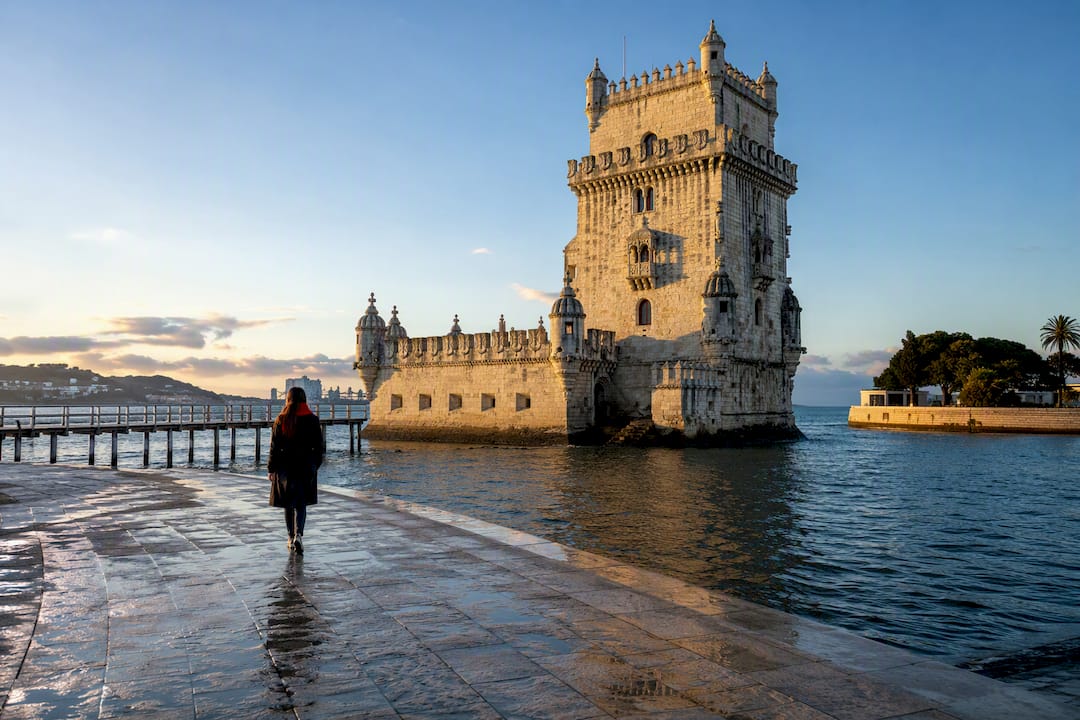
This 16th-century fortress guards the mouth of the Tagus River and remains the single most photographed structure in Lisbon. Budget 45 minutes to an hour, more if you climb the narrow spiral staircase inside. It’s part of a UNESCO World Heritage serial property shared with the nearby monastery, and both sites trace back to Portugal’s Age of Discoveries. Arrive at opening time. Tour buses start rolling in by mid-morning, and the line to enter can stretch well past the riverside promenade by 11 a.m.
2. Mosteiro dos Jerónimos
The monastery’s cloister is the kind of space that makes people stop talking mid-sentence. Carved limestone arches wrap around a garden courtyard in the Manueline style, a uniquely Portuguese architectural flourish full of maritime motifs, ropes, and coral shapes worked into stone. Give it 90 minutes minimum. History buffs and architecture fans could easily spend two hours. Visit later in the morning after the tower crowd has moved on.
3. Castelo de São Jorge
Perched above Alfama, this medieval fortress has defensive walls built around 11 towers, and a periscope installed in 1999 gives a 360-degree live view of the city below, a strange and genuinely fun touch for a site this old. Plan for 90 minutes. Families like it because there’s room to roam the ramparts, and photographers get some of the best rooftop views in the city from the walls.
4. Praça do Comércio
This is Lisbon’s grand riverside square, framed by yellow arcades on three sides and open to the Tagus on the fourth. It takes 20 to 30 minutes to walk through properly, longer if you sit at a café under the arches. It’s the natural starting or ending point for a downtown walk, and it connects directly to Rua Augusta and the riverfront path toward Cais do Sodré.
5. Alfama
Lisbon’s oldest neighborhood is a maze of steep lanes, laundry lines, and tiled facades that somehow survived the 1755 earthquake almost untouched. There’s no fixed visit length here. Two hours gets you the highlights; a full afternoon gets you genuinely lost, which is honestly the better plan. Best for wanderers and anyone chasing authentic fado in the evening.
6. Miradouro de Santa Catarina
One of the most popular sunset spots in the city, this terrace overlooks the river and the 25 de Abril Bridge. Give it 30 to 45 minutes. Show up about half an hour before golden hour, a timing tip Fodor’s recommends across Lisbon’s viewpoints generally, since locals treat this spot as a social gathering place, not just a photo stop.
7. Tram 28
The vintage yellow tram that climbs through Alfama and Graça is an attraction in its own right, though riding the full route can eat 45 minutes to an hour in a packed carriage. A short segment, rather than the whole line, is usually the smarter move. It suits first-timers who want a quick taste of old Lisbon without committing a whole morning.
8. LX Factory
A former industrial complex turned creative hub, LX Factory packs bookstores, street art, and rooftop bars into a few narrow lanes under the 25 de Abril Bridge. An hour covers the basics; two hours if you’re stopping for a meal. It’s the best counterpoint to all the medieval stone elsewhere on this list, and it suits travelers who want a modern, design-forward break.
9. Time Out Market
This food hall near Cais do Sodré gathers stalls from some of Lisbon’s best-known chefs and restaurants under one roof. Budget 45 minutes to an hour for a meal, longer if you’re grazing multiple stalls with a group. It’s ideal for indecisive eaters and anyone traveling with picky kids, since there’s enough variety that everyone finds something.
10. Parque das Nações
Built for Expo '98, this riverside district feels like a different city entirely, all glass towers, a cable car, and a long promenade. Two to three hours covers the Oceanário plus a walk along the river. Families gravitate here, and VisitPortugal flags the district as one of the city’s essential modern areas alongside Belém and Alfama.
11. Oceanário de Lisboa
One of the larger aquariums in Europe, built around a central tank that houses sharks, rays, and sunfish visible from multiple levels. Plan for 90 minutes to two hours. It’s a strong rainy-day option and one of the few Lisbon attractions genuinely built for young children.
12. Sintra Day Trip
Pena Palace and Quinta da Regaleira sit in the hills west of Lisbon, and together they justify a full day away from the city. Trains from Rossio station take about 40 minutes. Go early. Sintra’s narrow streets and palace queues get overwhelmed by midday tour groups, especially in summer.
For a shorter rundown with less detail, the 10 must-see sights in Lisbon list covers similar ground in a tighter format. If budget is a concern, several of these cost nothing to visit at all:
Alfama’s streets, Praça do Comércio, and every miradouro on this list are free to enter.
LX Factory costs nothing to walk through; you only pay for what you eat or buy.
The 7 best free things to do in Lisbon rounds up more no-cost options beyond this list.
Belém Monuments: The Right Order to See Them
Belém rewards a plan. Show up without one and you’ll spend half your morning standing in lines that a smarter route avoids entirely.
Start at Torre de Belém right when it opens. Cruise ship passengers and organized tour groups tend to arrive mid to late morning, so the first hour of the day is genuinely quiet. From there, walk east along the riverside path toward the modern MAAT museum. Its curved rooftop is free to walk on even if you skip the paid exhibits inside, and it gives you a low, wide view back toward the tower and the bridge. Save Mosteiro dos Jerónimos for later in the morning, once the earliest crowds have thinned and you can actually enjoy the cloister without shuffling through it single file. This sequencing, Belém Tower first, MAAT next, Jerónimos later, consistently beats the reverse order for crowd avoidance.
Two more stops round out the district if you have time:
Padrão dos Descobrimentos, the Discoveries Monument, has an elevator to a rooftop viewpoint looking back at the tower and the river.
National Coach Museum holds one of the most extensive collections of royal carriages anywhere, a strange but genuinely worthwhile 45 minutes for anyone even mildly curious about 18th-century transportation.
Pro Tip: Skip the takeaway line at Pastéis de Belém entirely. The queue for pastries to go can wrap around the block, but the sit-down restaurant area moves faster, and you get table service with the same warm custard tarts.
Belém alone can absorb half a day if you linger at each stop. Budget three to four hours minimum, and treat the coach museum and Discoveries Monument as optional add-ons rather than must-do stops if your schedule is tight.
Alfama and Castelo de São Jorge: Wandering, Fado, and the View From the Walls
Alfama has no logical walking route, and that’s the point. The neighborhood survived the 1755 earthquake largely intact, which means its street plan still follows medieval logic rather than any modern grid. Getting lost here for an hour is the actual experience, not a failure to plan.
A few fixed points help anchor a visit:
Sé Cathedral, Lisbon’s oldest church, marks the edge of Alfama and is worth a quick look inside even if you’re not stopping for the full visit.
Feira da Ladra, the city’s long-running flea market, runs Tuesdays and Saturdays and rewards an early arrival before the best stalls sell out.
Smaller viewpoints tucked between the alleys, easy to stumble onto and rarely crowded, offer some of the most candid views in the neighborhood.
Castelo de São Jorge sits at the top of the hill and anchors the whole district. Its defensive walls run along 11 towers, and a periscope installed in 1999 gives visitors a live 360-degree view of the city projected on a screen inside, a clever modern touch bolted onto a fortress that predates the printing press. Visit in the late morning or two to three hours before sunset. Midday sun flattens the light on the ramparts, but early evening gives the stone walls a warm cast and thins out the tour groups considerably.
Evenings belong to fado. Alfama has some of the most intimate fado houses in Lisbon, small rooms where a single guitarist and singer perform a few feet from your table. The best fado venues in Lisbon breaks down which spots lean traditional versus tourist-oriented, worth checking before you book a table. Pair the performance with dinner at one of Alfama’s small tascas, family-run restaurants that tend to serve grilled fish and simple stews rather than anything elaborate.
Best Viewpoints in Lisbon: Choosing a Miradouro for Sunset
Lisbon has more miradouros than most visitors realize, and picking the right one matters more than people expect. Some face west for sunset. Others face east and are better suited to sunrise or a quiet afternoon coffee.
Miradouro de Santa Catarina faces the river and the 25 de Abril Bridge, making it the most reliable sunset spot in the downtown area.
Miradouro da Senhora do Monte sits higher up in Graça and offers arguably the widest panoramic sweep of the entire city, castle included.
Portas do Sol in Alfama looks out over the red rooftops toward the river, a classic postcard shot that gets busy but rarely unbearable.
São Pedro de Alcântara near Bairro Alto is compact and popular with a younger crowd, often with a kiosk serving drinks right on site.
Locals treat these spots as informal social gathering points, not just photo stops, which is why arriving about 30 minutes before golden hour matters. Wait too long and the good railing spots fill up fast.
Pro Tip: Carry a few euros in coins. Most miradouro kiosks sell cold beer or wine cheaply, and cash moves faster than card at a small window with a line forming behind you.
If Santa Catarina feels too crowded, walk ten minutes further to a quieter alternative. The best views in Lisbon guide maps out a few lesser-known spots that trade a bit of postcard fame for elbow room.
Modern Lisbon: Parque das Nações, Gulbenkian, and Beyond
Not every traveler wants medieval alleys and church cloisters, and Lisbon has a genuinely different side that rewards a half day away from the historic center.
Parque das Nações, built for the 1998 World Expo, feels like walking into a different city. Glass towers replace tiled facades, and the riverfront promenade stretches wide and flat, a relief after Alfama’s hills. The Oceanário anchors the district, and a cable car runs along the river for anyone who wants an aerial view without the effort. It suits families especially well, since the flat terrain works for strollers and the aquarium keeps kids entertained for a solid hour or two.
For museum lovers, three stops round out the picture:
Calouste Gulbenkian Museum holds one of Europe’s best private art collections, spanning Egyptian antiquities to Impressionist paintings, all inside a park-like campus. Budget two hours.
National Tile Museum, housed in a former convent, traces the history of Portuguese azulejo tiles from the 15th century to today. Ninety minutes covers it well.
National Coach Museum, already mentioned in the Belém section, fits naturally into either itinerary depending on which side of the city you’re touring that day.
Pair any of these with a waterfront walk. The contrast between polished modern architecture and centuries-old tilework is part of what makes Lisbon feel layered rather than one-note.
Day Trips From Lisbon: Sintra, Cascais, and the Beaches
Choosing the right day trip depends entirely on how much time you have and what you actually want to see.
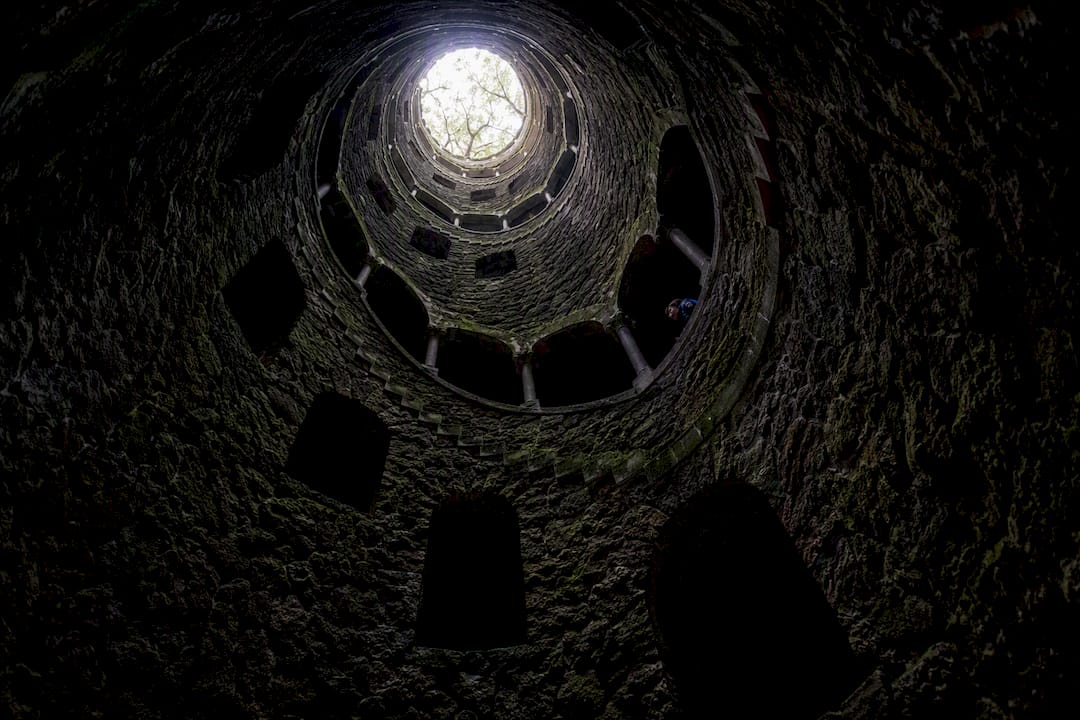
Sintra demands a full day if you want to see it properly. Pena Palace, a candy-colored 19th-century palace on a forested hilltop, and Quinta da Regaleira, with its symbolic underground tunnels and spiral well, are the two headline sights. A three-day Lisbon trip comfortably covers the city core, but Sintra needs its own dedicated day added on top. If you’re short on time, skip Monserrate Palace, beautiful but the least essential of Sintra’s three big estates, and focus your hours on Pena and Regaleira instead.
Cascais and Carcavelos offer a different pace entirely. Trains from Cais do Sodré station reach Cascais in about 40 minutes, running along the coast the whole way. Cascais itself is a polished resort town, better for strolling, seafood lunches, and browsing shops than for swimming. Carcavelos, a stop earlier on the same line, has the better beach for actually getting in the water, with more space and better waves for beginner surfers.
A few practical notes for either trip:
Trains from Cais do Sodré run frequently, so there’s rarely a need to prebook.
Guided tours make sense for Sintra if you want a driver to handle the town’s chaotic parking and traffic; Cascais works fine as a DIY trip.
Plan to catch a train back before early evening. Both lines get crowded with returning day-trippers after 6 p.m. in high season.
Practical Tips: Tickets, Transport, and Getting Around Lisbon
A little planning saves hours of standing in line, especially in summer when Lisbon’s popularity peaks.
Ride Tram 28 for a short stretch, not the full route. The complete line from Martim Moniz to Campo Ourique can take an hour with stops, and the queues at peak times run absurdly long. Boarding partway through and riding a few stops through Alfama gives you the same experience with a fraction of the wait.
Prebook timed entries for Pena Palace and Torre de Belém. Both sites cap daily visitors, and walk-up tickets in July and August sometimes sell out by early afternoon.
Visit major sites on weekdays when possible. Weekend crowds at Jerónimos and the castle run noticeably heavier than Tuesday through Thursday.
Wear real walking shoes. Lisbon’s hills are steep and its cobblestones uneven; sandals and thin soles make for a miserable afternoon.
Carry some cash. Small kiosks, market stalls, and a few older cafés still don’t take cards, or charge a minimum for card payments.
Consider GIRA bikes for flatter routes. The city-run bike share system works well along the riverfront and in Parque das Nações, though the historic hills of Alfama are better walked than pedaled.
Pro Tip: If you have mobility concerns, stick to the flatter routes: Praça do Comércio, the riverfront to Belém, and Parque das Nações. Alfama and the castle involve steep, uneven ground with limited accessible paths.
See Lisbon From the Water Before You Walk It
A short cruise on the Tagus solves a problem most first-time visitors don’t realize they have: Lisbon’s layout is confusing from ground level. Its hills block sightlines, and its neighborhoods don’t connect the way a map suggests. Seeing Belém, the downtown waterfront, and the Alfama ridge from a boat lays the whole city out at once, and that spatial context makes the walking routes afterward click into place far faster than staring at a phone map on a street corner.
A typical two-hour sightseeing cruise passes close to Torre de Belém, the Padrão dos Descobrimentos, and the 25 de Abril Bridge, with the castle and Alfama ridge visible in the distance across the water. Morning cruises tend to run quieter, better for hearing commentary clearly and getting even light for photos. Sunset departures trade some of that quiet for the kind of light that makes the tower and bridge glow orange, a genuinely different experience from the same view at noon.
Most sightseeing cruises fit into any schedule without much friction:
A single two-hour outing pairs naturally with a one-day Lisbon visit, ideally scheduled on day one to get oriented before tackling Belém or Alfama on foot.
Longer private charters work better for groups who want flexibility on timing or a specific route.
Live commentary during the ride typically points out which monuments belong to which neighborhood, cutting down on guesswork later.
Seeing the river’s historic landmarks from this angle also reveals details that are easy to miss from land, like the scale of the fortress walls at Belém or how close together Alfama’s viewpoints actually sit once you see the ridge from offshore.
Parks and Gardens: Where Lisbon Slows Down
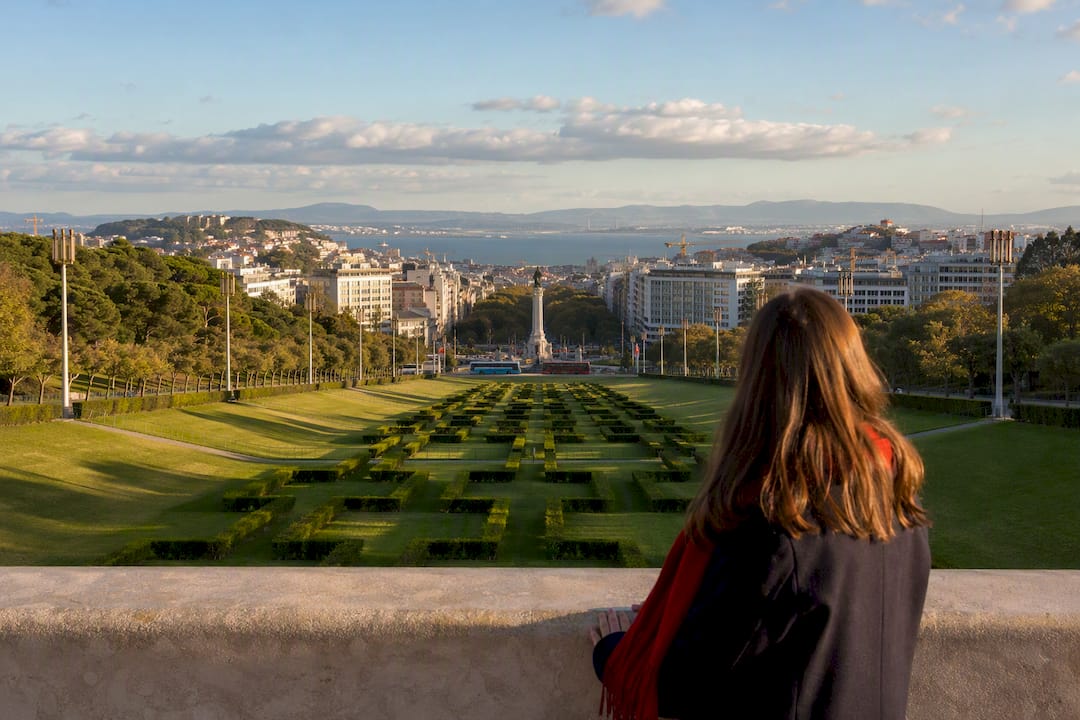
Lisbon isn’t only stone and tile. Eduardo VII Park, at the top of Avenida da Liberdade, is the city’s largest formal green space, with manicured hedges arranged in geometric patterns that look sharpest from the upper terrace. The view down the avenue toward the river from the top of the park ranks among the more underrated vantage points in the city, and it’s free.
Jardim Botânico, tucked behind the university district, feels almost tropical, with tall palms and dense plantings that create real shade on a hot afternoon, a rare commodity in a city with as much exposed stone as Lisbon has. It’s a smaller, quieter alternative to Eduardo VII and suits anyone who wants a slower hour away from crowds.
A few smaller green spaces round out the picture. Jardim da Estrela, near the Estrela Basilica, has a small lake, a bandstand, and enough shaded benches to make it a genuine local hangout rather than a tourist stop. Príncipe Real garden, in the neighborhood of the same name, draws a younger, trendier crowd and sits close to some of Lisbon’s best boutique shopping.
None of these demand more than 30 to 45 minutes, but they’re worth building into an itinerary between bigger stops. A hot July afternoon in Lisbon hits differently after two hours on cobblestones, and a shaded bench under a jacaranda tree does more for morale than another monument.
Time Your Visit Around a Festival
Lisbon’s calendar has a few dates worth planning a trip around. Santo António, the city’s patron saint festival, takes over the streets every June, with Alfama’s alleys strung in colored lights and grilled sardines sold from every corner stall. Neighborhood associations compete in street parades called marchas, and the whole city stays out late, eating and dancing in a way that feels genuinely local rather than staged for tourists.
Festas de Lisboa, which runs through most of June, extends that same energy across concerts, markets, and open-air events citywide, not just in Alfama. If early summer isn’t in the cards, Lisbon’s Peixe em Lisboa food festival in spring draws serious food enthusiasts with restaurant pop-ups built around seafood, a smaller and less chaotic event than the June street parties.
Booking accommodations early matters if a trip lands during Santo António. Hotel prices climb and Alfama’s guesthouses fill up months ahead, since the neighborhood itself becomes the main stage for the celebration. Outside festival season, Lisbon runs at a noticeably calmer pace, which some travelers actually prefer if crowds aren’t part of the appeal.
Beyond Alfama and Belém: Chiado, Bairro Alto, and the Rest of Lisbon
Alfama and Belém get most of the attention, but Lisbon has several other neighborhoods worth building into an itinerary.
Chiado sits between downtown and Bairro Alto, a polished district of 19th-century buildings, bookshops, and cafés where writers and intellectuals gathered a century ago. It’s the best neighborhood in Lisbon for shopping, with both international brands and small Portuguese boutiques lining its main streets, and it connects easily on foot to Praça do Comércio below.
Bairro Alto flips the script after dark. By day it’s quiet, narrow streets lined with small shops and graffiti-covered walls. By night it becomes one of Lisbon’s busiest nightlife districts, with tiny bars spilling drinkers out onto the sidewalks until the early hours. It’s worth walking through in daylight for the street art alone, then returning after 10 p.m. if bar hopping is part of the trip.
Príncipe Real, just north of Bairro Alto, has quietly become one of the city’s trendiest addresses, full of design shops, wine bars, and a well-known Saturday antiques market. It’s less crowded than Chiado but carries a similar upscale feel.
Together, these neighborhoods round out a Lisbon trip beyond the postcard sights, giving visitors a sense of how the city actually lives day to day rather than just how it looks in photographs.
A Guide’s Notes From the Water and the Hills
Belém rewards patience more than any other part of Lisbon. Arriving at the tower right at opening, before the tour buses have unloaded, means having that riverside view almost entirely to yourself for twenty minutes or so. That kind of quiet is rare in a city this popular, and it disappears fast once the day gets going.
Sunset at a miradouro is the other moment worth planning around deliberately, not squeezing in as an afterthought. Santa Catarina works, but Senhora do Monte rewards the extra walk with a wider view and a smaller crowd most evenings.
Two small tips worth passing along: kiosks at the quieter miradouros sell cold beer for a couple of euros, cheaper than any bar nearby, and cash moves the line faster than a card. And if a camera matters to the trip, the clearest shot of the Belém skyline doesn’t come from the tower’s own grounds. It comes from the water, looking back at the tower with the monastery and the bridge lined up behind it, a framing that’s nearly impossible to recreate standing on land.
— Lisbon
See Lisbon’s Landmarks From the Tagus Before You Walk to Them
Most visitors spend their first day in Lisbon on foot, guessing at distances and hill grades before realizing the city fits together differently than the map suggests. Two-hour sightseeing cruises on the Tagus provide live commentary pointing out Torre de Belém, the Padrão dos Descobrimentos, and the Alfama ridge as you pass them, often including drinks and snacks, so the on-land walking plan for the rest of the trip practically writes itself.

Beyond the standard sightseeing tour, Lisbonbyboat also runs private charters on sailing yachts and catamarans, from two hours up to a full day, for anyone who wants a customized route, a sunset run, or a boat to themselves for a small group. Whether it’s a first orientation cruise or a longer private outing, check available dates and book a Tagus sightseeing tour directly through Lisbonbyboat to lock in a spot before your trip.
Sources
FAQ
How Many Days Do You Need to See Lisbon’s Must-See Places?
Three days covers Belém, downtown, and Alfama at a comfortable pace, according to a Lisbon itinerary breakdown. Add a fourth day if Sintra is on the list, since the palaces there deserve their own full day rather than a rushed half day.
What Is the Single Most Important Landmark to See in Lisbon?
Torre de Belém and Mosteiro dos Jerónimos together form the city’s most historically significant site, recognized as a joint UNESCO World Heritage property. If time only allows one stop, this pairing delivers the most historical weight per hour spent.
Is Tram 28 Worth the Wait?
Riding a short stretch is worth it, but the full route rarely is. Boarding for a few stops through Alfama gives the classic yellow tram experience without the hour-plus wait that the complete line often demands in peak season.
What’s the Best Way to See Multiple Lisbon Landmarks Quickly?
A short river cruise passes close to Belém, the bridge, and the Alfama ridge in about two hours, giving a fast overview that helps prioritize which sites deserve a closer look on foot. Lisbonbyboat runs daily sightseeing tours built around exactly this kind of orientation.
When Is the Best Time of Year to Visit Lisbon’s Main Attractions?
Spring and fall bring milder weather and thinner crowds at sites like Jerónimos and Pena Palace compared to peak summer months. Early June rewards visitors with the Santo António festival, when Alfama fills with lights, music, and grilled sardines.
Recommended
Comments