

Lisbon Local Traditions: Your 2026 Cultural Guide
Updated: Sep 25
TL;DR:
Lisbon’s traditions like Fado, Marchas Populares, and Saint John festivals are rooted in its maritime neighborhoods along the Tagus River. These cultural events celebrate the city’s working-class roots through music, street parades, and waterfront rituals. Sailing tours offer a unique perspective on these traditions and the city’s coastal heritage.
Lisbon’s local traditions run deeper than any guidebook suggests. The city’s cultural identity is built on three pillars: UNESCO-recognized Fado, the Marchas Populares neighborhood processions and the June Festivals of the Popular Saints honouring Saint Anthony, Saint John, and Saint Peter. All three connect directly to the Tagus River and the Atlantic coastline that shaped Lisbon for centuries. Here is what you need to know before you arrive:
Fado music originated in the working-class coastal neighborhoods of Alfama, Mouraria, and Madragoa
Marchas Populares are choreographed neighborhood processions held on the eve of Saint Anthony’s Day, June 12
Festivals of the Popular Saints fill June with street parties, grilled sardines, and maritime rituals
Saint Peter, celebrated June 29, is the patron saint of fishermen and the maritime community
Sailing tours along the historical coastline offer a unique vantage point on the monuments and neighborhoods where these traditions were born
Table of Contents
How Fado music defines Lisbon’s coastal soul
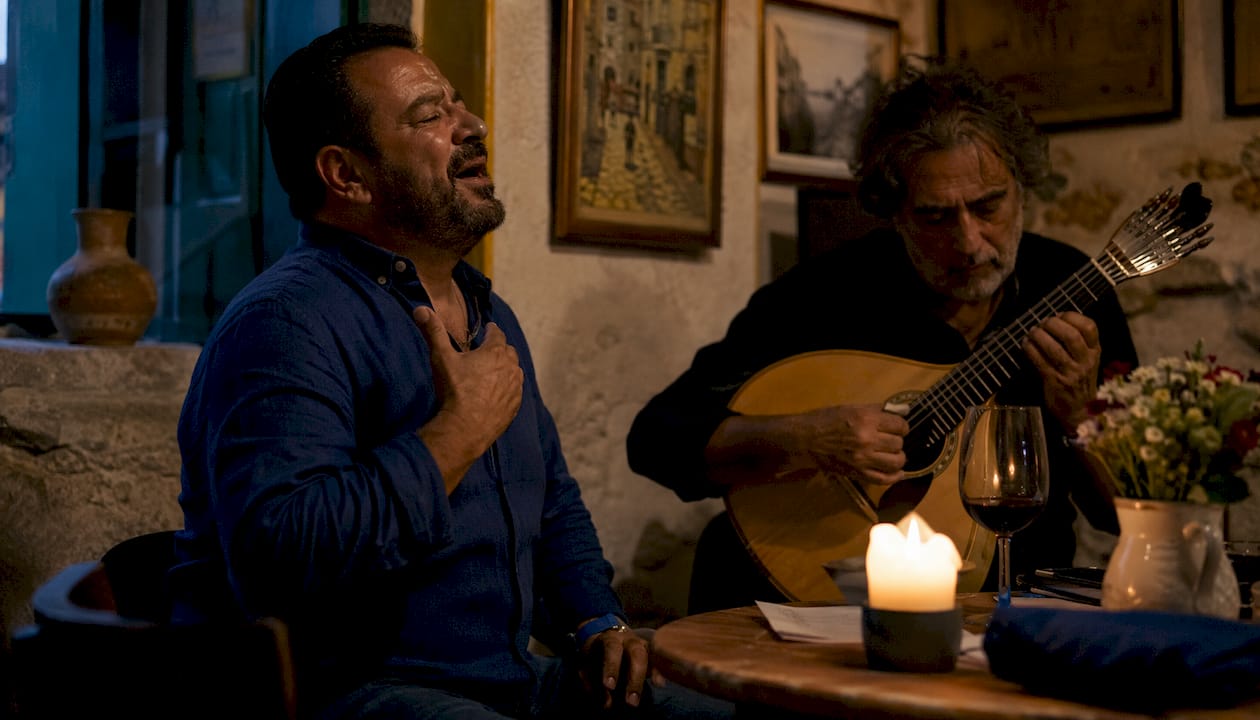
Fado is not background music. It is the emotional core of Lisbon’s cultural identity, born in the cobblestone alleys of Alfama and Mouraria in the first half of the 19th century. UNESCO inscribed Fado as Intangible Cultural Heritage of Humanity in 2011, cementing what Lisbon’s neighborhoods had always known.
The Lisbon style differs sharply from the Coimbra tradition. Lisbon Fado grew out of working-class port life, sung by both men and women, raw and emotionally direct. Coimbra Fado is tied to university academic culture, performed exclusively by men in formal academic dress, with a lower and more measured sound.
Feature | Lisbon Fado | Coimbra Fado |
Origins | Working-class coastal neighborhoods | University academic tradition |
Performers | Men and women | Men only |
Tone | Emotionally raw, urban | Formal, grave, measured |
Typical venue | Tascas, fado houses | Academic settings |
UNESCO status | Inscribed 2011 | Part of same inscription |
Where you hear it matters. In a tasca, the atmosphere is informal and the conversation flows between songs. In a formal fado house, talking during a performance is considered disrespectful and can get you removed. Venues like Tasca do Chico in Alfama and Mesa de Frades, set inside an 18th-century chapel, represent two very different ends of that spectrum.
Pro Tip: Book a fado house table for the late sitting, after the last dinner service clears. That is when scheduled performers start sharing the floor with touring musicians and the atmosphere becomes genuinely spontaneous. Explore authentic fado venues before you go so you know what to expect.
Marchas Populares: the night Lisbon’s neighborhoods go to war
Every June 12, Lisbon’s districts stop being neighbors and become rivals. The Marchas Populares are choreographed processions down Avenida da Liberdade, broadcast live on national television, with each neighborhood fielding a team in handmade costumes competing for the top podium spot. The tradition dates to 1932.
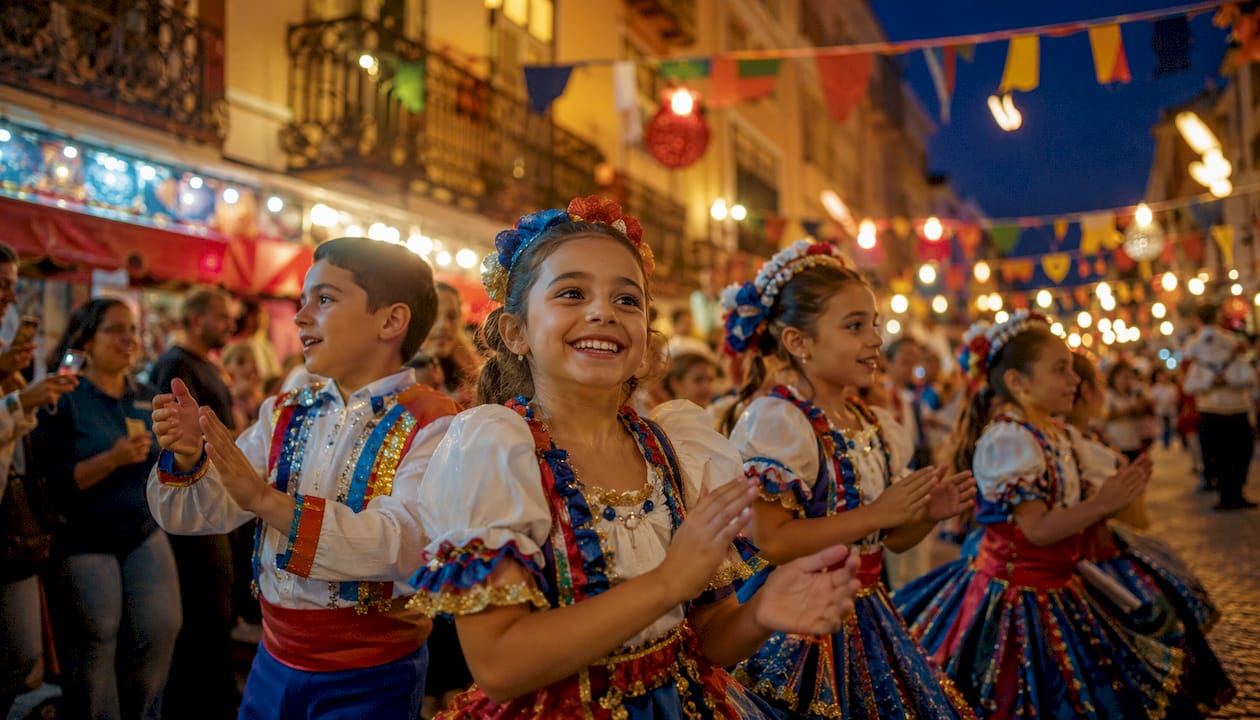
Think of it as Lisbon’s version of a carnival parade, but with less percussion and a great deal more neighborhood pride. The central costume figure is the varina, the traditional ambulant fishmonger, a direct nod to Lisbon’s maritime working-class roots. Teams spend months in rehearsal, and the rivalry is real.
Alfama has won the most titles by a wide margin, with 18 first-place finishes. Marvila, Alto do Pina, Madragoa, and Bica have also been consistent contenders. The term bairrista captures the spirit: fierce, sometimes combative neighborhood loyalty that turns a street procession into something that feels genuinely high-stakes.
Notable neighborhoods in the competition:
Alfama: the most decorated, with deep maritime and working-class roots
Mouraria: multicultural energy and one of Fado’s birthplace neighborhoods
Madragoa: historically strong, known for traditional costumes
Marvila: consistent podium finisher with a tight community identity
Bairro Alto: lively, with a younger crowd and nightlife energy
The Marchas also run alongside the Santo António Weddings on June 12, a tradition revived in 2004 by Lisbon City Council, where multiple couples marry in a shared ceremony broadcast nationally. The married couples then walk the Avenue as part of the procession itself.
What the Festivals of the Popular Saints actually feel like
The Santos Populares are three festivals compressed into one extraordinary month. Saint Anthony on June 13, Saint John on June 24, and Saint Peter on June 29 each carry distinct traditions, but in Lisbon, Saint Anthony dominates.
Saint Peter’s connection to the sea is the one tourists on sailing tours feel most directly. He is the patron saint of fishermen, and his June 29 celebration includes blessings of decorated fishing boats, processions through Alfama and the fishing quarters, and seafood feasts along the waterfront. For a city built on the Tagus, this is not ceremony for ceremony’s sake.
Key elements of the Popular Saints festivals:
Grilled sardines on bread: the defining festival food, eaten standing in the street with grease running down your fingers
Basil plants with love messages: gifted as tokens of affection, with a rule that you rub the leaf rather than smell it directly
Street parties across every neighborhood: from Alfama to Santos on the waterfront, all free to enter
Water divination game: writing names on paper slips, placing them in water, and reading which opens first as a love sign
Plastic hammers for São João: people tap each other’s heads for good luck on June 24
Fireworks over the river: Lisbon lights up from hilltop to waterfront on multiple nights
Crowds on the night of June 12 are genuinely dense. Expect sardine smoke in your hair, packed streets where a short walk takes four times as long, and no chance of a restaurant table. Go with that expectation and it becomes one of the best nights you will have anywhere in Europe.
How sailing tours let you see these traditions from the water
The monuments that anchor Lisbon’s cultural traditions are best understood from the Tagus. The Tower of Belém, the Jerónimos Monastery, the Cristo Rei statue, and the Alfama hillside all read differently when you see them from the water, the way arriving sailors and fishermen saw them for centuries.
Lisbonbyboat offers daily sailing tours along the historical coastline, with two-hour cruises as the standard option and private full-day charters on yachts and catamarans for those who want more time on the water. Local guides explain the monuments and connect them to the maritime traditions that shaped each neighborhood. The traditional boats guide covers the specific vessel types that have worked this stretch of the Tagus for generations.
What you see from the water during June:
Alfama’s hillside: the spiritual home of Fado, visible from the river with the São Jorge Castle above it
Santos waterfront: one of Lisbon’s longest-running Popular Saints street parties runs along the riverbank
Belém: the Tower and monastery mark the point where Portuguese sailors departed for the Age of Discovery
Fishing quarter landmarks: neighborhoods where Saint Peter’s Day processions still take place
Pro Tip: Book a morning sailing tour on June 13 or June 29. The city is quieter on the water after the previous night’s celebrations, and the light on the monuments is exceptional. Combine it with a fado evening in Alfama the night before for a full cultural day.
Traditional crafts and cuisine tied to the coast
Lisbon’s coastal heritage shows up in its craft traditions as clearly as in its festivals. Azulejo tilework, the hand-painted blue-and-white ceramic panels covering church facades and building interiors across the city, frequently depicts maritime scenes: ships, fishing boats, the Tagus, and the saints who protected sailors. The Museu Nacional do Azulejo holds the most complete collection, including a panoramic tile panel of pre-1755 Lisbon that shows the city’s waterfront before the earthquake destroyed it.
Wicker basketry and hand-embroidered textiles from coastal communities remain active craft traditions, sold in the markets of Alfama and Mouraria. The calçada portuguesa, the black-and-white mosaic pavement covering Lisbon’s plazas and promenades, is itself a craft form with maritime motifs woven into many of its designs.
Food follows the same logic. Bacalhau (salt cod) is the national staple, with dozens of preparation methods, but during June the sardine takes over completely. Grilled on charcoal, served on thick bread, eaten at a standing table in the street: this is the taste of the Popular Saints festivals. Pastéis de nata, the custard tarts from the Belém pastry shop Pastéis de Belém, are another coastal tradition with a direct link to the monastery monks who developed the recipe. For a broader sense of cultural experiences worth seeking out alongside these, the range in Lisbon goes well beyond the obvious.
How fishing communities shaped Lisbon’s living culture
Lisbon’s fishing communities did not just feed the city. They gave it much of its cultural vocabulary. The varinas, the fishwomen who carried baskets of fresh catch on their heads through the city’s streets, became one of the central figures of Fado imagery and the Marchas Populares costumes. Their routes through Alfama, Mouraria, and Madragoa traced the same paths where Fado was performed in taverns at night.
The Tagus fishing community’s relationship with Saint Peter runs through June 29 celebrations to this day. Boat blessings, processions through fishing quarters, and communal seafood meals along the waterfront are not reconstructed folklore. They are continuations of practices that kept working families connected to the river that sustained them.
The influence extends to language and social structure. The bairrista identity that drives the Marchas Populares rivalry has its roots in the tight-knit fishing and working-class neighborhoods where everyone knew everyone, and neighborhood loyalty was a survival mechanism as much as a cultural preference. That same intensity is why Alfama’s march team still draws participants who have been involved for over a decade, and why the tradition resists the gentrification pressure that has displaced so many of the original residents.
Key Takeaways
Lisbon’s local traditions are inseparable from its coastline: Fado, the Marchas Populares, and the Popular Saints festivals all trace directly back to the maritime working-class neighborhoods along the Tagus.
Point | Details |
Fado’s UNESCO status | Inscribed in 2011 as Intangible Cultural Heritage; Lisbon’s style differs from Coimbra’s academic tradition. |
Alfama leads the Marchas | Alfama has won the most first-place titles in the Marchas Populares, more than any other neighborhood. |
Saint Peter and the sea | Saint Peter’s June 29 festival includes boat blessings and processions rooted in Lisbon’s fishing community. |
June is the peak month | The Popular Saints festivals run across June 13, 24, and 29, with street parties free to enter citywide. |
Water gives the best view | Sailing tours along the Tagus connect the monuments, neighborhoods, and maritime traditions in a single experience. |
Ready to see Lisbon’s monuments and coastal heritage from the water? Lisbonbyboat runs daily sailing tours along the historical coastline, with expert local guides who bring the traditions to life. From two-hour cruises to full-day private charters on luxury yachts, the Tagus is the best seat in the city.
Book your sailing tour and experience Lisbon the way its sailors always have.
Recommended
Comments