

Lisbon City Museums: Your 2026 Curated Guide
What are the top Lisbon city museums you should visit?
Lisbon punches well above its size when it comes to cultural institutions. You get world-class art collections, a multi-site city history network, contemporary architecture on the waterfront, and specialty museums that cover everything from Portuguese ceramic tiles to ancient Roman ruins. Here are the standout museums to put on your list.
Calouste Gulbenkian Museum (Avenidas Novas district): Houses one of the most significant private art collections in the world, spanning thousands of years of history. Currently closed for renovation until July 2026, so check reopening dates before you go.
Museu Nacional de Arte Antiga (Santos district): Portugal’s largest public art museum, with European paintings, decorative arts, and Asian pieces collected during the Age of Discovery.
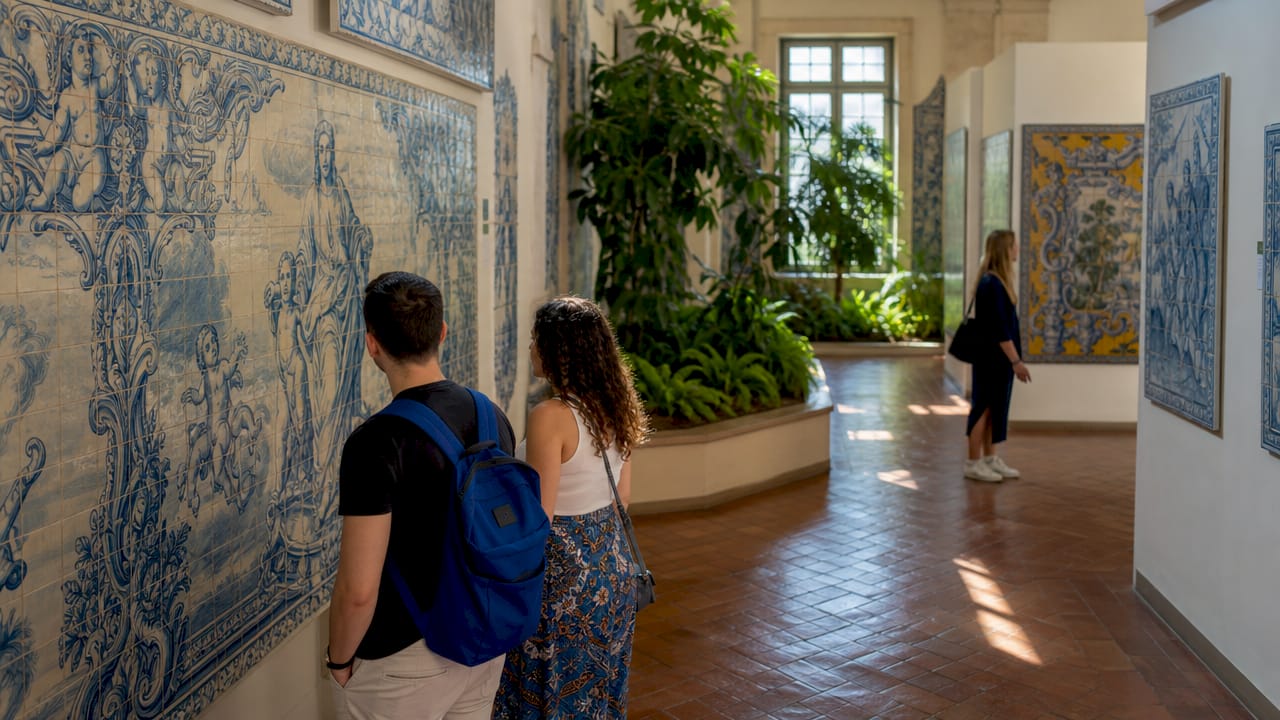
Museu Nacional do Azulejo (Xabregas district): The only museum in the world dedicated entirely to the Portuguese ceramic tile tradition, tracing centuries of tile-making from the 15th century to today.
Museu de Lisboa (multiple sites across the city): Not one building but a five-pole network covering Lisbon’s history from prehistoric times to the present, spread across Palácio Pimenta, Casa dos Bicos, Santo António, Teatro Romano, and Torreão Poente.
MAAT (Museum of Art, Architecture and Technology) (Belém): A striking riverside building that doubles as a piece of architecture worth seeing on its own, with rotating contemporary exhibitions.
MAC/CCB (Museum of Contemporary Art and Architecture) (Belém): Part of the Belém Cultural Center complex, open Tuesday through Sunday, 10:00 AM to 6:30 PM, with a strong program of Portuguese and international contemporary art.
Museu do Oriente (Alcântara district): Focuses on Portugal’s historical connections with Asia, with collections of Chinese export porcelain, Japanese screens, and objects from Goa and Macau.
Lisbon Oceanarium (Parque das Nações): One of the best aquariums worldwide, with thousands of animals representing hundreds of species. Technically not a traditional museum, but the educational depth puts it firmly in the cultural visit category.
Museu Arqueológico do Carmo (Chiado): Housed inside the roofless ruins of a 14th-century Gothic convent destroyed in the 1755 earthquake. The open sky above the nave is part of the experience.
Lisbon Puppet Museum (Alcântara): A small but genuinely surprising collection of puppets from Portugal and around the world, covering several centuries of the craft.
Geographically, Lisbon’s museums split into two main clusters. The city center and historic neighborhoods (Chiado, Alfama, Santos, Xabregas) hold the older, more traditional institutions. The Belém district, about 6 kilometers west along the Tagus, concentrates the contemporary art and architecture venues, making it worth a dedicated half-day.
Detailed profiles of Lisbon’s key museums

Museu de Lisboa: a city told in five chapters
The Museu de Lisboa is not a single building. It’s a decentralized network of five distinct sites, each focused on a different layer of the city’s past. The museum was established in 1942 as the Museu da Cidade and reorganized into its current multi-pole structure in 2015. That reorganization was deliberate: the goal was to push visitors out into different neighborhoods rather than concentrate everything in one location.
The five poles are:
Palácio Pimenta (Campo Grande): The main site, covering Lisbon’s history from prehistoric times through the 20th century, with scale models of pre-earthquake Lisbon that are genuinely hard to look away from.
Casa dos Bicos (Alfama): A 16th-century diamond-facaded palace that now houses rotating exhibitions and the remains of the old Roman city wall in its basement.
Santo António (Alfama): A small museum dedicated to Lisbon’s patron saint, built on the site where he was reportedly born.
Teatro Romano (Alfama): The excavated remains of a Roman theater from the 1st century AD, partially visible beneath the modern city.
Torreão Poente (Praça do Comércio): Located in the iconic riverside square, with exhibitions on Lisbon’s urban development and the 1755 earthquake.
Pro Tip: If you only have time for one Museu de Lisboa site, make it Palácio Pimenta for the breadth of the collection, or Teatro Romano if Roman history is your focus. The sites are spread across the city, so plan your route before you go rather than trying to hit all five in one day.
Calouste Gulbenkian Museum: world-class, temporarily closed
The Gulbenkian holds one of the most significant private art collections assembled by a single person anywhere in the world. Calouste Gulbenkian, an Armenian-British oil magnate, spent decades acquiring Egyptian antiquities, Greek coins, Islamic manuscripts, Flemish paintings, French decorative arts, and René Lalique jewelry. The collection covers 5,000 years of human creativity in a single building. The museum is closed for renovation until july 2026, with refreshed exhibits planned for the reopening. If your trip falls before then, the Gulbenkian Foundation’s gardens and the adjacent Modern Collection building remain open.
Museu Nacional de Arte Antiga: Portugal’s art history in one place
The Museu Nacional de Arte Antiga, often called the MNAA, is the closest thing Portugal has to a national gallery. The collection runs from medieval Portuguese painting through Flemish masters, Japanese Namban screens, and Chinese porcelain brought back during the Age of Discovery. The standout piece is Hieronymus Bosch’s The Temptation of Saint Anthony, one of the few Bosch triptychs outside the Netherlands. The museum sits in the Santos neighborhood, a short walk from the waterfront, and has a terrace garden with views over the Tagus.
Museu Nacional do Azulejo: tiles as a serious art form
Portuguese ceramic tiles, known as azulejos, are everywhere in Lisbon: on church facades, metro stations, restaurant walls. The Museu Nacional do Azulejo is where you understand why. Housed in a 16th-century convent in the Xabregas neighborhood, the museum traces the full history of tile-making from Moorish geometric patterns through Baroque blue-and-white panels to 20th-century modernist designs. The highlight is a 118-foot panoramic tile panel depicting Lisbon’s waterfront before the 1755 earthquake. The convent’s church, covered floor to ceiling in azulejos, is itself one of the finest rooms in the city.
MAAT and MAC/CCB: Belém’s contemporary art district
The Belém district has become Lisbon’s hub for contemporary culture, with two major institutions within walking distance of each other along the riverfront.
MAAT opened in 2016 in a building designed by British architect Amanda Levete. The undulating white facade is covered in ceramic tiles, a nod to the azulejo tradition, and the rooftop is a public walkway with panoramic views of the Tagus. Inside, the program mixes digital art, video installation, and architecture. The adjacent power station, a 1908 industrial building, hosts large-scale exhibitions.
MAC/CCB is part of the Centro Cultural de Belém complex, open Tuesday through Sunday, 10:00 AM to 6:30 PM. The collection focuses on Portuguese art from the 1960s onward, with strong holdings in conceptual and installation work.
Museu do Oriente: Portugal’s Asian connections
Portugal was the first European power to establish sustained trade routes with Asia, and the Museu do Oriente tells that story through objects rather than text. The collection covers Portuguese presence in India, China, Japan, and Southeast Asia, with particular strength in Japanese Namban art (screens and lacquerwork made for Portuguese traders) and Chinese export porcelain. The building is a converted 1940s cod-drying warehouse in Alcântara, which gives the galleries an unexpectedly industrial character. Friday evenings are free after 6:00 PM.
Lisbon Oceanarium: more than an aquarium
The Lisbon Oceanarium holds over 8,000 animals of 500 species in a building that sits on a platform over the Tagus in the Parque das Nações district. The central tank, which you can view from multiple levels, recreates an open-ocean environment with sharks, rays, and sunfish. Four surrounding habitats represent the Antarctic, Pacific, Indian, and Atlantic oceans. The educational programming is serious, and the experience holds up for adults as well as families.
Museu Arqueológico do Carmo: ruins as exhibit
The Carmo Convent was one of Lisbon’s largest Gothic churches before the 1755 earthquake brought down the roof. Rather than rebuild, the city left the nave open to the sky, and the Archaeological Association of Portugal turned it into a museum in the 19th century. The collection includes Egyptian mummies, pre-Columbian artifacts, and medieval Portuguese sculpture, but the setting is the real draw. Sitting inside a roofless Gothic nave in the middle of Chiado, surrounded by carved stone arches, is an experience that no conventional museum building can replicate.
Lisbon Puppet Museum: a small collection worth your time
The Museu da Marioneta, located in a former convent in Alcântara, holds puppets from Portugal, India, Indonesia, Burma, and China, spanning several centuries. The collection is small enough to cover in an hour, but the craftsmanship on display, particularly the 18th-century Portuguese shadow puppets and the Javanese wayang figures, rewards close attention. It’s a good pairing with the Museu do Oriente, which is nearby.
Museum | District | Specialty | Closed |
Calouste Gulbenkian Museum | Avenidas Novas | Private international art collection | Until July 2026 (renovation) |
Museu Nacional de Arte Antiga | Santos | Portuguese and European fine art | Mondays |
Museu Nacional do Azulejo | Xabregas | Portuguese ceramic tile history | Mondays |
Museu de Lisboa (5 sites) | Multiple | Lisbon city history | Mondays |
MAAT | Belém | Contemporary art and architecture | Tuesdays |
MAC/CCB | Belém | Portuguese contemporary art | Mondays |
Museu do Oriente | Alcântara | Portugal’s Asian heritage | Mondays |
Lisbon Oceanarium | Parque das Nações | Marine life and ocean ecosystems | Open daily |
Museu Arqueológico do Carmo | Chiado | Archaeology in Gothic ruins | Sundays |
Lisbon Puppet Museum | Alcântara | Puppetry from Portugal and Asia | Mondays |
Practical tips for visiting museums in Lisbon Portugal
Opening hours and closed days
Most state-run museums in Lisbon are closed on Mondays, open Tuesday through Sunday, generally 10:00 AM to 6:00 PM. MAC/CCB runs until 6:30 PM. The Lisbon Oceanarium is open daily, which makes it a useful fallback on Mondays when other institutions are shut. Always check individual museum websites before visiting, since hours shift seasonally and around public holidays.
Free entry and discounts
Several museums offer free or reduced admission at specific times:
Sunday mornings before 1:00 PM: The Museu de Lisboa offers free entry, and many other state-run museums follow the same policy.
International Museum Day (May 18): Free entry across most public museums in Portugal.
Museu do Oriente: Free on Friday evenings after 6:00 PM.
Lisboa Card: Covers free or reduced admission at a wide range of cultural institutions, including the Museu de Lisboa sites, and includes unlimited public transport. If you plan to visit three or more museums in a day, the card typically pays for itself.
Youth, student, and senior discounts: Available at most state-run museums with valid ID.
Pro Tip: The Lisboa Card is sold in 24-hour, 48-hour, and 72-hour versions. Buy it at the airport on arrival and activate it when you first use it, not when you buy it. That way you control exactly when the clock starts.
Accessibility
Most major Lisbon museums have made accessibility improvements in recent years. The Museu Nacional do Azulejo, MAAT, and the Lisbon Oceanarium have elevator access and wheelchair-friendly routes through their main galleries. The Museu Arqueológico do Carmo is the exception: the uneven stone floors and lack of ramps make it difficult for visitors with mobility limitations. The Museu de Lisboa’s Palácio Pimenta has partial accessibility, with some upper-floor galleries reachable only by stairs.
How to avoid crowds and plan your route
Lisbon’s museums are rarely as crowded as major institutions in Paris or London, but the Museu Nacional do Azulejo and the Lisbon Oceanarium draw consistent visitor numbers, especially on weekends. Arriving at opening time (10:00 AM) or in the late afternoon (after 3:00 PM) gives you the quietest experience at both. For the art museums in Lisbon, weekday mornings are reliably calm.
Grouping museums by district saves time and energy. A Belém day covers MAAT, MAC/CCB, and the nearby Jerónimos Monastery and Monument to the Discoveries. An Alcântara afternoon pairs the Museu do Oriente with the Puppet Museum. The Chiado and Santos neighborhoods put the Carmo ruins, the MNAA, and several smaller galleries within easy walking distance of each other.
On-site amenities
Most major museums have cafes or restaurants on the premises. The Gulbenkian’s garden cafe is one of the nicest outdoor spots in the city (accessible even during the renovation). MAAT has a riverside cafe with views of the 25 de Abril Bridge. The Museu Nacional de Arte Antiga has a terrace restaurant overlooking the Tagus. Museum shops at the Museu Nacional do Azulejo and the Museu do Oriente stock well-curated books and ceramics that are worth browsing even if you’re not a dedicated souvenir buyer.
See Lisbon’s cultural landmarks from the water with Lisbonbyboat
Some of Lisbon’s most important cultural sites make more sense once you’ve seen them from the river. The MAAT building’s ceramic-tiled facade, designed to be viewed from the water, reads completely differently from a boat than from the street. The Museu do Oriente occupies a converted warehouse right on the Tagus waterfront. The Oceanarium sits on a platform over the river in Parque das Nações. From land, you get the interiors. From the water, you get the full architectural and geographic picture.
Lisbonbyboat’s guided sailing tours run daily along the Tagus, with expert narration covering the monuments, bridges, and riverfront buildings you pass. The guides explain the historical context behind what you’re seeing, connecting the maritime heritage of the Age of Discovery to the contemporary cultural institutions that now line the waterfront. A two-hour tour gives you a spatial understanding of how Lisbon’s districts relate to each other and to the river, which makes subsequent museum visits easier to contextualize.

Pro Tip: Do the boat tour early in your trip, before the museum visits rather than after. Seeing the city’s layout from the water first gives you a mental map that makes navigating between districts on land much more intuitive.
For travelers who want more time on the water, Lisbonbyboat also offers private yacht charters on sailing yachts and catamarans, from two-hour trips to full-day excursions. It’s a different way to end a day that started in a museum.
Key Takeaways
Lisbon’s museums reward visitors who plan by district and interest rather than trying to cover everything in one pass.
Point | Details |
Museu de Lisboa spans five sites | Each pole covers a different period of city history; plan visits by neighborhood, not as a single stop. |
Gulbenkian closed until July 2026 | The renovation reopening brings refreshed exhibits; confirm dates before building your itinerary around it. |
Free entry options exist | Sunday mornings before 1:00 PM and International Museum Day (May 18) offer free access at most state-run museums. |
Most museums close on Mondays | The Lisbon Oceanarium is the main exception; use Mondays for outdoor sites or the Carmo ruins. |
Belém is a dedicated half-day | MAAT and MAC/CCB sit within walking distance of each other and Lisbon’s major historic monuments. |
Recommended
Comments