

Lisbon boat tours: master the weather for a great trip
TL;DR:
Lisbon’s maritime microclimate makes weather unpredictable on the water, requiring careful planning and real-time forecasting.
Most boat tours proceed in light rain and calm conditions but are canceled when winds exceed safe thresholds or storms develop.
Preparing with layered clothing, flexible booking options, and knowledge of local weather patterns ensures a safe, memorable sailing experience.
Lisbon earns its reputation as one of Europe’s sunniest cities, but that reputation can lull travelers into a false sense of security when booking a boat tour. The Tagus River and the broader Atlantic influence create a microclimate full of surprises, from sudden afternoon gusts that whip across the water to rare winter storms that flood the waterfront. Whether you’re booking a two-hour sailing tour or planning a full-day private cruise for a corporate event, understanding how weather behaves on the water here is the difference between a smooth, memorable experience and an afternoon of soggy regret.
Table of Contents
Key Takeaways
Point | Details |
Check local microclimates | Lisbon’s river weather can shift quickly, so always review local forecasts before booking or heading to your boat tour. |
Understand cancellation policies | Operators may cancel for high winds or storms, but most tours continue in light rain—ask about refund or reschedule options. |
Layer for comfort | Dress in adaptable layers rather than a single heavy coat to stay comfortable in changing temperatures. |
Use morning sailings for calm | Book earlier in the day to maximize calm conditions and reduce weather surprises. |
Flexible planning wins | Have contingency plans when booking group or event boat outings to handle potential last-minute weather shifts smoothly. |
Understanding Lisbon’s maritime weather
Now that you know unpredictable weather is a genuine consideration, let’s break down what makes Lisbon’s maritime conditions unique.
Lisbon sits at the mouth of the Tagus River, just a short distance from the Atlantic Ocean, and that geography shapes everything about how weather behaves on the water. The city enjoys a Mediterranean-influenced climate, which means warm, dry summers and mild winters, but the Atlantic adds a wild card that most tourists don’t expect. Wind is the most important weather variable for any Tagus sailing experience, and it follows patterns that are as reliable as they are surprising.
During summer, safe sailing winds on the Tagus typically average 5 to 10 knots in the morning, which is ideal for a relaxed cruise. By mid-afternoon, the famous Nortada, a strong northerly sea breeze, kicks in and can push winds significantly higher. This diurnal shift is predictable but powerful. Even on a 35°C summer day, the wind chill on the water can make you reach for an extra layer faster than you’d expect.
Winters are generally mild by European standards, but
is noticeably calmer than the broader Atlantic coast. That said, winter storms are real. When Atlantic low-pressure systems push inland, waves can surge along the waterfront promenade at Belém, and conditions shift from pleasant to dangerous within hours. These events are rare but worth understanding before you schedule a boat event in January or February.
“The Tagus feels like a sheltered river until the afternoon sea breeze arrives. Then it feels like the open ocean.”
Check your forecast using dedicated maritime forecast apps such as Windy or PredictWind before any tour. These tools provide Tagus-specific wind data and wave height readings that standard weather apps simply do not offer. For a complete breakdown of how weather affects events specifically, the Lisbon event weather guide is a strong starting point.
Season | Avg. wind speed | Typical conditions | Best time for touring |
Spring (Mar–May) | 8–14 knots | Variable, some showers | Morning hours |
Summer (Jun–Sep) | 5–20 knots | Hot, strong afternoon Nortada | Early morning |
Autumn (Oct–Nov) | 10–18 knots | Changeable, cooler | Mid-morning |
Winter (Dec–Feb) | 10–25+ knots | Mild to stormy | Calm spells only |
When weather cancels or alters boat tours
Once you understand Lisbon’s weather, the next question is when conditions cross the line from scenic to unsafe.
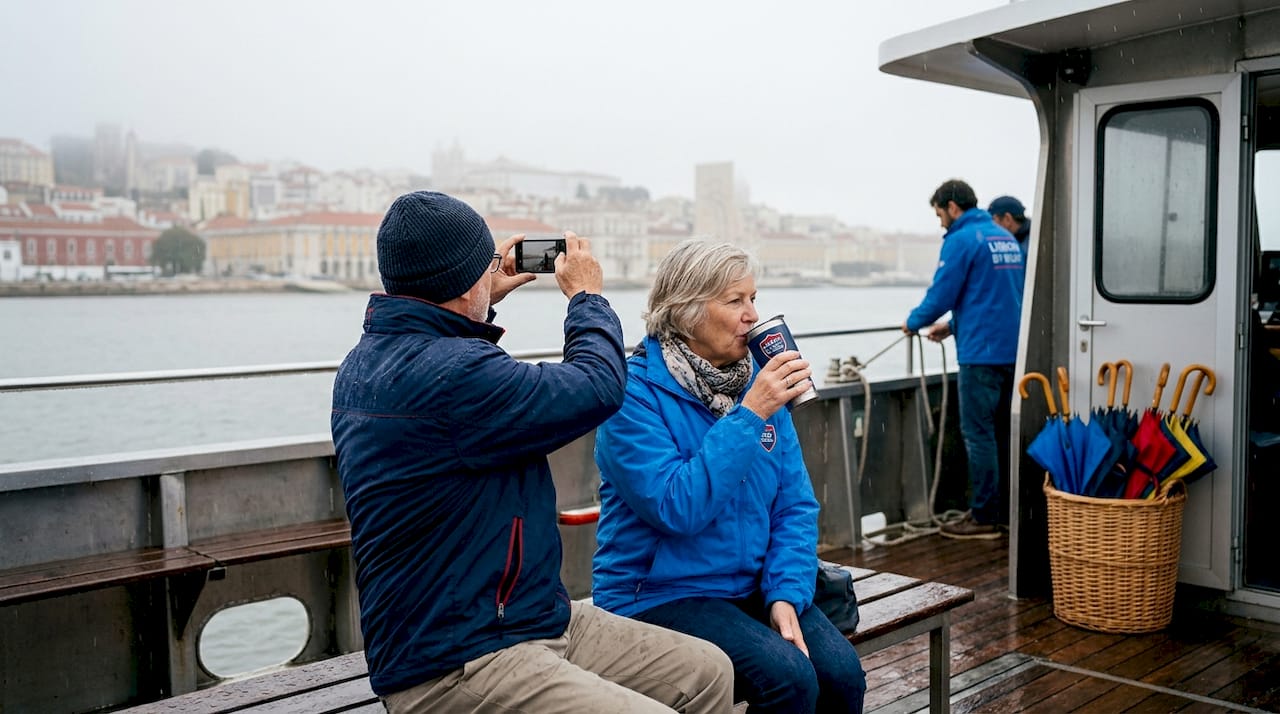
Not every gray sky means a canceled tour. Experienced operators sail in light rain routinely, and a gentle drizzle over the Belém Tower actually creates a dramatic, moody atmosphere that no sunny postcard can replicate. The real triggers for cancellations involve a specific set of conditions that go beyond surface-level discomfort.
High winds above 20 to 25 knots, active lightning within the area, heavy rain that reduces visibility to unsafe levels, and active small craft advisories from maritime authorities all typically trigger cancellations or significant schedule changes. These benchmarks are widely used across responsible tour operators worldwide, and Lisbon’s operators follow the same logic.
Here is what you can realistically expect from different weather scenarios:
Light rain, no wind: Tours almost always proceed as scheduled. Bring a light waterproof jacket.
Overcast skies with winds under 15 knots: Tours proceed. Light layers are recommended.
Winds 15 to 20 knots with gusts: Captains assess in real time. Smaller vessels may adjust route or delay departure.
Winds above 20 to 25 knots or lightning present: Tours are typically canceled or rescheduled for guest safety.
Severe storm or small craft advisory: Full cancellation. No negotiation on this one.
The decision to sail or not is made by the captain, not a call center. Tours operate on a rain or shine basis, but the captain holds final authority based on real-time radar and local maritime data. This is actually reassuring rather than frustrating once you understand it, because you know a professional with direct knowledge of local conditions is making the call.
It helps to review safety on Lisbon boats in advance so you understand what safety protocols are already in place regardless of weather. You can also find practical planning advice in our safe tour tips.
Pro Tip: During shoulder season (October through March), always confirm your tour the evening before. Operators receive updated maritime forecasts overnight, and a quick message can save you a wasted trip to the dock.
How to dress and prepare for varying conditions
Practical preparation is key. Here’s what you need to stay comfortable no matter what Lisbon’s skies bring.
Packing for a Tagus boat tour is not complicated, but first-time visitors routinely get it wrong. The most common mistake is dressing for the air temperature on land rather than the conditions on the water. A day that feels warm in the Alfama neighborhood at 10 a.m. can feel significantly cooler once you’re moving across the water with a 10-knot headwind. Layering solves this problem better than any single heavy garment.
Here is a proven checklist for every Tagus sailing experience:
Light base layer (breathable, moisture-wicking fabric)
Mid-layer fleece or long-sleeve shirt for warmth without bulk
Windproof, water-resistant jacket (not a heavy winter coat)
Non-slip, closed-toe shoes (sandals are a liability on a moving deck)
Wide-brim hat or cap (sun is intense on the water, even through clouds)
Sunscreen SPF 30 or higher (UV reflects off the water surface)
Polarized sunglasses (reduce water glare significantly)
Small backpack or dry bag for personal items and a spare layer
Summer sailing winds of 5 to 10 knots may sound mild on paper, but sustained wind exposure over two hours creates real cooling effects on exposed skin. This is why a windproof layer is worth packing even in July when temperatures inland reach the mid-30s.
Heavy winter coats are actually counterproductive for sailing. They restrict movement, are difficult to remove quickly if you warm up, and absorb water rather than repelling it. Layering over heavy coats for variable temperatures is the approach professionals use for a reason. Three lighter layers give you far more flexibility than one thick jacket.
For a deep look at the full clothing breakdown, our guide on what to wear for comfort covers every season. You can also find specific seasonal outfit recommendations in the Lisbon sailing attire guide.
Pro Tip: Even on a blue-sky summer day, pack a scarf and a light fleece jacket in your bag. The afternoon Nortada arrives faster than the forecast often suggests, and being five minutes ahead of a wind shift makes the whole difference.
Planning boat tours: forecast tools and flexible strategies
Knowing how to prepare, let’s make sure you have the right tools and strategies to adapt, not just react, to changing conditions.
Technology has completely changed how travelers and event planners can approach weather on the water. Gone are the days of squinting at a general city forecast and hoping for the best. Today, you can check the exact wind speed, direction, and wave conditions at the Tagus’s Belém dock hours before your tour departs.
Sea breezes create predictable daily wind shifts on the Tagus, making mornings the safest and smoothest window for sailing before afternoon conditions strengthen. Windy and PredictWind are both excellent tools for Tagus-specific forecasts. Set your location to Belém, not just “Lisbon,” because the microclimate near the water differs from readings taken inland. For the most accurate data, use a real-time Tagus forecast on the morning of your tour.
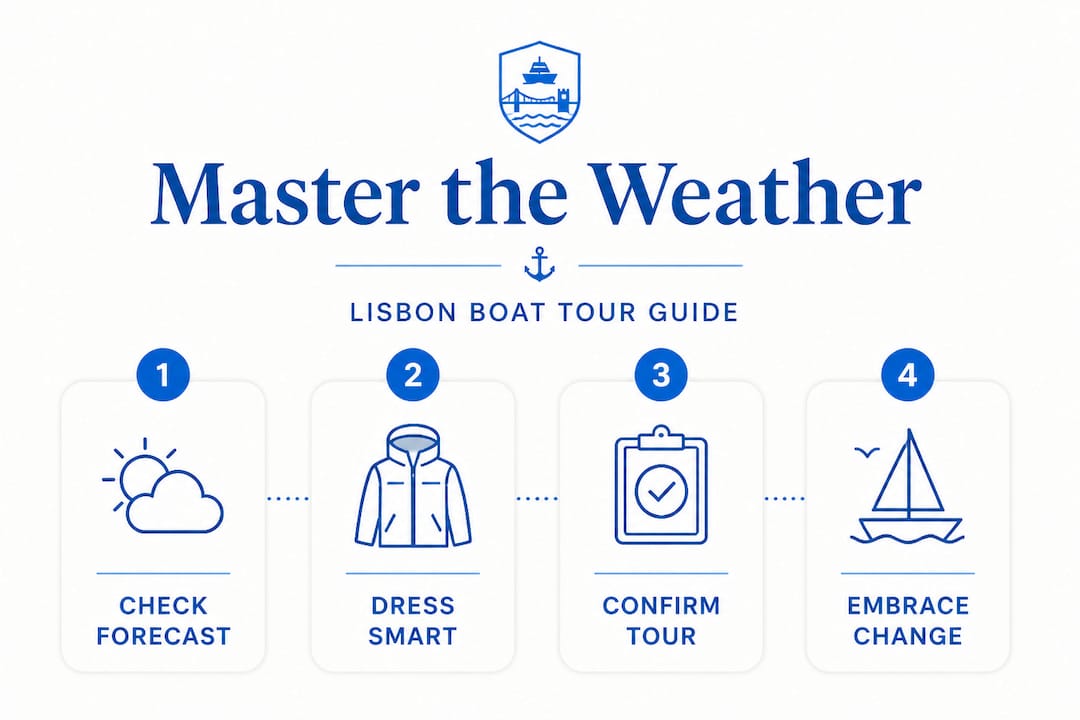
For event planners booking private cruises for corporate groups, weddings, or milestone celebrations, weather flexibility is not optional. Here are four strategies that experienced planners use consistently:
Book with a refundable or reschedulable option. Most reputable Lisbon operators offer this. Confirm the policy in writing before paying.
Choose morning slots over afternoon slots for high-stakes events. Conditions are statistically calmer between 9 a.m. and noon, before the Nortada builds.
Build in a 48-hour buffer before major events. For corporate group outings, securing a backup date in the same week gives you real flexibility without stress.
Ask operators about their internal forecast protocols. The best ones monitor conditions 72 hours in advance and contact clients proactively. This matters more than any app you can use yourself.
For individual travelers, the strategy is simpler but no less effective. Book early-morning tours when possible, check the safe boat tour strategies guide before your trip, and always save the operator’s contact number on your phone. A five-minute check the evening before your tour is enough to catch any significant forecast shift.
Pro Tip: For celebrations or group events, always ask operators to secure a backup slot or alternative day if possible. The Tagus is beautiful on a hundred different days of the year, and having options removes the pressure from any single date.
Why savvy travelers see weather as part of the adventure
With all the practicalities mastered, it’s time to reframe how you see Lisbon’s unpredictable skies.
Most guests arrive with a postcard image in their heads: glittering blue water, perfect sunshine, the Ponte 25 de Abril bridge glowing in golden light. That image is real and it happens often. But the assumption that only those conditions create a great boat tour is one we’d gently push back on, based on years of sailing the Tagus.
Some of the most striking photographs our guests have ever taken came on overcast mornings when the light was soft and dramatic, when the Torre de Belém seemed to rise out of silver-gray mist instead of blue sky. Light clouds diffuse harsh midday sun and create depth in images that flat bright days often lack. Veteran photographers know this instinctively. First-time boat guests often discover it by happy accident.
There’s something equally genuine about sailing in a light swell, feeling the boat respond to a freshening breeze, and watching the Lisbon skyline shift as you move upriver. A perfectly calm, flat day is comfortable. A day with some movement and changing skies is memorable. The Tagus in any weather tells you something about this city that no land-based tour can replicate.
The practical safety insights matter, and we take them seriously. But safety and adventure are not opposites. They’re the foundation on which genuine adventure is built. When you prepare well, variable weather stops being a threat and starts being part of the story you’ll tell when you get home. Veteran sailors don’t wish for perfect conditions every day. They learn to read the sky, adjust, and find the value in whatever the Tagus brings.
Set sail with confidence: explore Lisbon’s best boat tour options
To complete your weather-ready experience, choose a tour group that puts safety, flexibility, and local knowledge first.
We’ve spent years learning every mood the Tagus can throw at a boat, and that experience is built into every departure we manage. From two-hour guided sailing tours along the historical coastline to full-day private cruises on yachts and catamarans, each option is run by captains who monitor real-time conditions from the moment they wake up. For groups and events, we build weather flexibility into booking structures so your celebration doesn’t hang on a single forecast.
Whether you’re a solo traveler who wants to see Lisbon’s monuments from the water, or an event planner coordinating a private experience for fifty guests, the right operator changes everything. Browse our Luxury Yachts in Lisbon options for premium private experiences, explore the full range of group-friendly options at ByBoat Tours, or start planning your ideal day on the water at Lisbon by Boat. We’re here to make sure weather informs your planning, not ruins your trip.
Frequently asked questions
What happens if the weather turns bad during my Lisbon boat tour?
Captains monitor real-time radar and safety alerts; tours are paused, rerouted, or returned to dock if unsafe conditions develop while you’re on the water.
Are boat tours canceled for light rain in Lisbon?
Most tours continue in light rain and only cancel for severe conditions such as winds above 20 to 25 knots, lightning, or visibility-reducing downpours.
What’s the best time of day for calm weather on the Tagus?
Morning hours are calmest before afternoon sea breezes build, making early departures the safest bet for smooth water and relaxed sailing.
How should I dress for a summer boat tour in Lisbon?
Dress in light layers with a windbreaker, since summer winds of 5 to 10 knots create real cooling effects even on the hottest days of the year.
Recommended
Comments