

Fit a Tagus Sail into 5/7/10 Day Lisbon and Porto Itineraries
For most travelers, the smartest split is seven days total: four in Lisbon (including a full day in Sintra) and three in Porto. That balance covers the essential sights without rushing, and it respects the one fixed constraint of the whole trip: the Alfa Pendular train between the cities runs 2 hours 45 minutes to 3 hours 15 minutes, so you want to ride it once, not three times.
TL;DR:
Traveling seven days, with four in Lisbon and three in Porto, offers a balanced experience, including a full day in Sintra and avoids multiple train rides.
A five-day trip mainly covers highlights like Belém, Alfama, and Porto’s Ribeira, but omits the Douro Valley and some key sights, making it a quick overview.
The ten-day itinerary allows for relaxed exploration, including a Douro Valley day trip or overnight stay and additional seaside or Sintra visits, ideal for a leisurely pace.
Booking train tickets one to two weeks in advance is essential for lower fares and seat availability, especially on weekends or peak season.
Staying near train stations in Lisbon and Porto minimizes walking uphill and simplifies luggage transfers, with neighborhoods like Baixa, Chiado, and Ribeira being most practical.
Table of Contents
Lisbon Porto Itinerary Options for 5, 7, and 10 Days
The right length depends less on how much vacation time you have and more on whether you want to see the Douro Valley, how many museums you can tolerate before your feet revolt, and whether Sintra’s palaces are a priority or a nice-to-have. Here’s how the three most common trip windows break down.
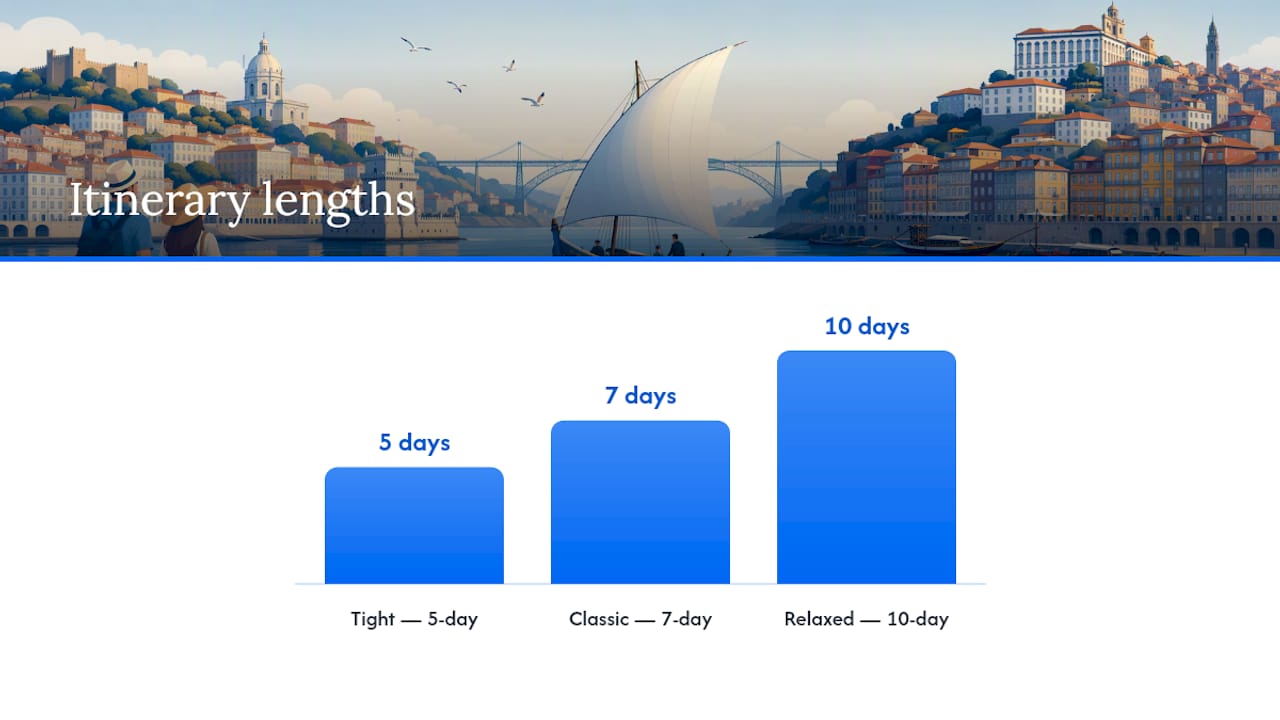
Tight 5-day Lisbon Porto trip. Two full days in Lisbon, one day in Sintra, and two days in Porto, with a single Alfa Pendular ride connecting them. This works for first-timers who want the highlight reel: Belém, Alfama, Pena Palace, Ribeira, and Porto’s wine cellars. You’ll skip the Douro Valley entirely and probably one of Lisbon’s three big miradouros. It’s the itinerary for people who’d rather see two cities properly than cram in a third.
Classic 7-day Lisbon Porto itinerary. Four days in Lisbon with Sintra folded in as a day trip, three days in Porto. This is the version most travel guides converge on, and for good reason: a first-timer’s guide to Lisbon, Porto, and Sintra notes that Lisbon alone benefits from three to four days, Sintra needs a full day rather than a rushed half-day, and Porto is compact enough to cover well in two to three. Seven days gives you breathing room for a proper lunch instead of a grabbed pastry, and it still leaves the Douro Valley as a viable add-on if you swap a Lisbon day for it.
Relaxed 10-day Lisbon Porto travel itinerary. This is the version for people who actually want a vacation, not a scavenger hunt. It keeps the same Lisbon and Porto core but adds a Douro Valley day trip (or overnight) from Porto, plus a Cascais beach day near Lisbon. Portugal’s classic seven-day framework explicitly points to ten days as the sweet spot for adding the Douro or the Algarve without feeling rushed elsewhere. This length suits wine-focused travelers, families who want a slower pace, and anyone who hates the feeling of checking sights off a list.
The trade-offs are straightforward. Five days means paying full train fare and hotel costs for a trip that will feel like a highlight reel, not an experience. Seven days is the value sweet spot: enough time to actually enjoy meals and evenings without ballooning your budget. Ten days costs more in hotel nights and requires more upfront planning (especially for Douro Valley logistics), but it’s the only option that doesn’t force you to choose between Sintra’s palaces and a proper Porto dinner.
One more structural decision worth making early: some travelers do better starting in Porto and ending in Lisbon, easing into the trip in a smaller city before Lisbon’s bigger crowds and traffic. A Portugal itinerary guide covering both cities backs this reversed-route approach as a reasonable option, particularly for travelers who find big-city arrivals stressful.
Day-by-Day Plans for Your Lisbon and Porto Trip
Here’s where the itinerary gets specific. Each version below assumes you fly into Lisbon (the more common gateway), though you can flip the order if you’d rather start smaller in Porto.
The 5-day Lisbon and Porto itinerary
Day 1: Arrival and Alfama. Land in the morning, check into your hotel, and spend the afternoon wandering Alfama’s steep lanes. Climb to Miradouro das Portas do Sol for sunset views over the Tagus. Dinner in Alfama: this neighborhood still has some of the city’s most traditional tascas, the small family-run restaurants that predate the tourist boom.
Day 2: Belém and central Lisbon. Morning at the Jerónimos Monastery and the Belém Tower, then a pastel de nata stop at the original bakery nearby (yes, the line is long, yes, it’s worth ten minutes). Afternoon in Baixa and Chiado for shopping and the Santa Justa Lift. Evening: a Fado show if you can book one; these fill up fast in peak months.
Day 3: Sintra, full day. Catch an early train from Rossio station, ideally before 8:30 AM to beat the crowds and tour buses. Sintra’s palaces are spread across hilly terrain, and trying to squeeze in all three main sites in a half-day is a mistake most first-timers make — plan a full day and pick two of the three (Pena Palace and Quinta da Regaleira are the usual favorites) rather than rushing through all of them. Return to Lisbon by early evening.
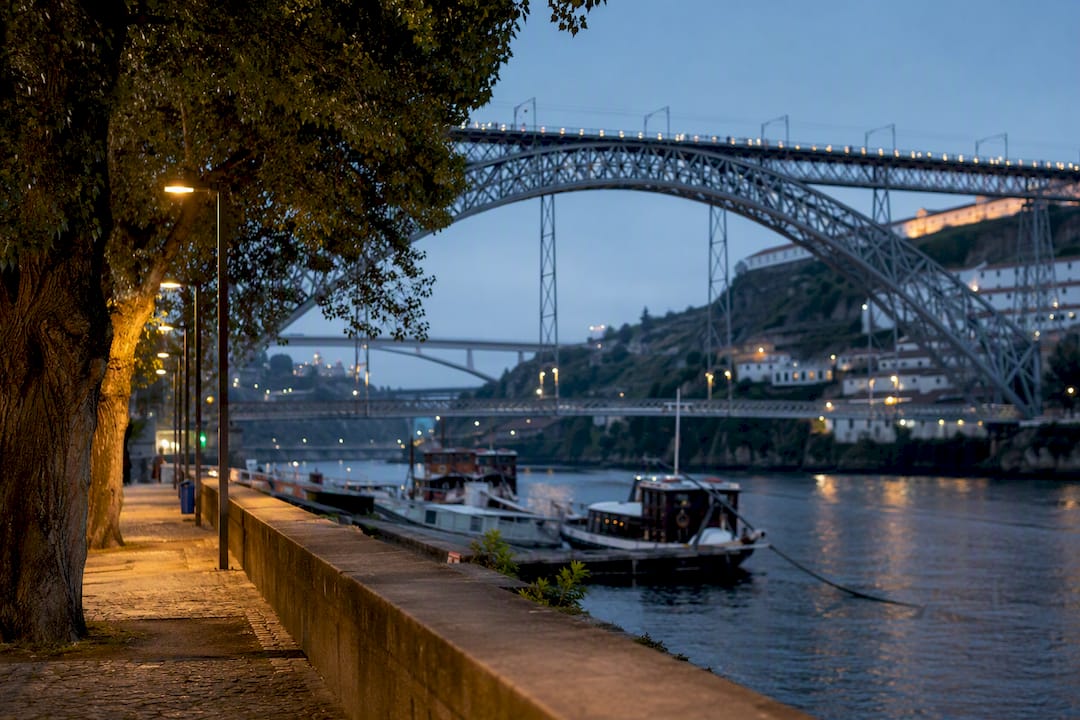
Day 4: Travel day to Porto, Ribeira exploration. Take a mid-morning Alfa Pendular to Porto Campanhã (2h45 to 3h15). A morning departure gets you into Porto before noon, leaving a full afternoon in Ribeira, the riverside district with the best views of the Dom Luís I Bridge. Dinner along the river, watching the bridge light up.
Day 5: Porto highlights and departure. Morning at Livraria Lello (the famous bookstore that inspired Harry Potter rumors, whether or not J.K. Rowling ever actually confirmed it) and the Clérigos Tower. Afternoon: a port wine cellar tour across the river in Vila Nova de Gaia before heading to the airport.
The 7-day classic Lisbon Porto itinerary
Day 1: Arrival, Alfama, and a sunset cruise. Same arrival routine as above, but consider swapping the sunset miradouro climb for a short river cruise instead. Seeing Belém Tower, the 25 de Abril Bridge, and Alfama’s waterfront from the water gives you a geographic sense of the city that’s hard to get on foot, and it’s a lower-effort way to spend your first jet-lagged evening.
Day 2: Belém and central Lisbon. Jerónimos Monastery in the morning, lunch near Belém, then the National Coach Museum if you have time (it’s more interesting than it sounds). Afternoon in Chiado and Bairro Alto. Evening: Bairro Alto’s bars are where locals actually go, not the more tourist-heavy strips near the river.
Day 3: Sintra, full day. Same approach as the five-day version: early train, timed palace entry, two sites instead of three. Sintra ticketing for Pena Palace and Quinta da Regaleira uses timed slots, and aligning your Rossio departure with the first available entry window cuts your wait time substantially and gives you better morning light for photos.
Day 4: LX Factory and Cascais half-day, or a slower Lisbon day. If you want a beach fix, take the train to Cascais (about 40 minutes from Lisbon) for a half-day of coastal walking and seafood. Otherwise, use this as a buffer day for museums you missed, like the Gulbenkian or the Tile Museum.
Day 5: Train to Porto, afternoon in Ribeira. Book your Alfa Pendular seat one to two weeks ahead; fares commonly run €25 to €45 when reserved early, and a morning departure gets you settled in Porto with a full afternoon left. Explore Ribeira’s colorful waterfront and cross the upper deck of the Dom Luís I Bridge for the view back toward the old town.
Day 6: Port wine and Foz do Douro. Morning cellar tour in Vila Nova de Gaia (Graham’s and Taylor’s are the classic stops, though smaller producers often give more personal tours). Afternoon tram ride out to Foz do Douro, where the river meets the Atlantic, for a walk along the coastal promenade.
Day 7: Clérigos, Lello, and departure or Douro add-on. Morning at Livraria Lello and the Clérigos Tower, lunch in the Bolhão Market area, then head to the airport, or extend into the Douro Valley if your schedule allows a short detour before flying out.
The 10-day relaxed Lisbon Porto trip
Follow the seven-day structure above for Lisbon and the first two Porto days, then insert three additional days:
Douro Valley day trip or overnight after your Porto arrival. A day cruise from Porto (roughly 8 to 10 hours round trip including a river cruise segment and a winery lunch) gives you a taste of the terraced vineyards without repacking your bag. An overnight in a quinta (wine estate) is the better choice if you want to actually taste your way through several producers rather than one quick lunch stop, since the day-trip window doesn’t leave much time for lingering.
A second Cascais or Sintra-area day, useful if you skipped the beach earlier or want to see Sintra’s third palace (Monserrate is the quieter, less-visited option).
A flex day in either city for whatever you didn’t get to: a cooking class, a longer museum visit, or simply a day with no train to catch and no palace ticket to worry about.
Dining slots worth planning around: lunch reservations matter less in Portugal than dinner ones, since most restaurants run a relaxed 12:30 to 3:00 PM lunch window with plenty of walk-in space. Dinner, especially at well-reviewed Fado houses or popular Porto seafood spots, fills up by 7:30 PM in peak season. If you’re pressed for time on a Sintra or Douro day, a bakery lunch (a bifana sandwich, a slice of quiche, a pastel de nata) is a completely normal substitute, not a compromise.
Pro Tip: Book your Sintra palace entry time before you leave home, not the morning of. Pena Palace and Quinta da Regaleira both sell out peak-season morning slots days in advance, and showing up without a reservation often means a same-day entry three or four hours later than you planned.
How Do You Get Between Lisbon and Porto?
The Alfa Pendular high-speed train is the default choice, and for good reason. It runs Lisbon’s Santa Apolónia and Oriente stations to Porto’s Campanhã station in 2 hours 45 minutes to 3 hours 15 minutes, with fares commonly landing within a moderate price range when you book ahead. Booking one to two weeks in advance tends to secure both the lower fares and a better seat selection, especially in July and August when tourist volume peaks.
Driving is the other option, and it has a real case if you want to break up the trip with stops. The A1 motorway covers Lisbon to Porto in roughly 3 to 3.5 hours, similar to the train once you add station transfers, but it opens the door to detours through Óbidos’s walled old town, the pilgrimage town of Fátima, the surfing beach at Nazaré, or Coimbra’s university district. The downside: city parking in both Lisbon and Porto is tight and often expensive, and neither city’s historic core is fun to drive through.
For daily movement inside each city, plan around geography rather than fight it:
Lisbon’s hills are real. The historic trams (Tram 28 being the famous one) and public elevators like the Santa Justa Lift exist specifically because walking those grades with luggage is miserable.
Porto’s Ribeira district sits at river level, while most of the old town climbs steeply above it; the funicular connecting the two saves your knees on a hot afternoon.
Luggage transfers between hotels and train stations are simplest if you book a hotel within a 10 to 15 minute taxi ride of Santa Apolónia or Oriente in Lisbon, and Campanhã or São Bento in Porto.
A car is genuinely unnecessary for a city-focused Lisbon Porto itinerary. Renting one only pays off if you’re adding the Algarve, Douro Valley wineries off the main rail line, or smaller towns that trains don’t reach directly.
Pro Tip: If you’re taking the Alfa Pendular, reserve a specific seat rather than a general ticket when the option is offered. Trains fill up on Friday and Sunday departures especially, and standing in the vestibule for three hours with a suitcase is not how you want to start your Porto leg.
Where to Stay in Lisbon and Porto
Your hotel neighborhood matters more in these two cities than in most European destinations, mostly because Lisbon’s topography turns a “10-minute walk” on a map into a real cardio workout.
In Lisbon, four areas cover most travelers’ needs. Alfama is the historic choice: cobblestone lanes, Fado houses, and views, but it’s steep and often means dragging luggage uphill. Baixa and Chiado sit centrally and flat, walkable to the main squares and a short ride from Santa Apolónia or Oriente stations, making them the practical pick if you’re train-focused. Bairro Alto and Príncipe Real suit travelers who want nightlife and boutique shops within stumbling distance of dinner. If you’re adding a beach day, Cascais makes sense as a base only if you’re not also trying to see central Lisbon efficiently; it’s a 40-minute train ride each way.
In Porto, the choice is simpler. Ribeira gives you riverside views and immediate access to the Dom Luís I Bridge, though it gets busy with tour groups by midmorning. Baixa (Porto’s own downtown) puts you closer to São Bento station and the main shopping streets, with fewer stairs than Ribeira’s steepest lanes. Cedofeita offers a quieter, more local scene with good cafés and a younger crowd, better suited to travelers who’ve already done the postcard sights on a previous trip.
A few practical notes on lodging:
Book hotels within a short walk or taxi ride of the train stations that matter for your itinerary, since dragging bags across cobblestones gets old fast.
Nightly rates swing meaningfully by season: shoulder-season stays (spring and fall) typically run noticeably lower than the July to August peak, when both cities fill with cruise-ship crowds and festival-goers.
Pairing your neighborhood choice with nearby dining options makes evenings easier; guidance on matching lodging with dining is worth a look if you want to avoid the tourist-trap restaurants that cluster around major hotels.
If mobility is a concern, Baixa/Chiado in Lisbon and Porto’s Baixa are the flattest, most elevator-friendly options in each city.
Planning Your Trip: Timing, Booking, and Packing
Nail down two things before you book anything else: your travel window and your Sintra tickets. Everything else follows from those.
Best months to visit. Shoulder seasons, April to June and September to October, give you the best balance of manageable crowds and pleasant weather for walking-heavy city days. Temperatures during these windows typically sit between 20°C and 26°C, comfortable for the amount of hill-climbing both cities demand. Summer works if you don’t mind heat and crowds; winter is quieter but wetter, especially heading north.
Weather note: Porto and the north run greener and wetter outside summer, while Lisbon and the south stay milder and drier year-round. Pack accordingly if your trip spans both.
What to book in advance:
Sintra palace entry times, at least a few days ahead in shoulder season and a week or more in summer.
Alfa Pendular train tickets, ideally one to two weeks out for the best fares and seat availability.
Fado shows in Lisbon, particularly well-reviewed venues in Alfama and Bairro Alto.
Popular restaurants in both cities during July and August, when walk-in waits can stretch past an hour.
What to pack: comfortable walking shoes are non-negotiable given the hills and cobblestones in both cities. A light rain layer matters more for Porto and the north than for Lisbon. A small daypack is worth carrying on your Sintra day, since you’ll be walking between palace grounds and up hillside paths for hours.
Budget note: trains and Sintra entries are your two predictable fixed costs. Everything else (meals, wine tastings, museum entry) flexes depending on how many splurge dinners you plan.
Where to Go at Night in Lisbon and Porto
Lisbon’s nightlife splits cleanly by neighborhood and mood. Bairro Alto is where you go for bar-hopping: narrow streets packed with small bars that spill people onto the sidewalks by 10:00 PM. Cais do Sodré, particularly Pink Street, leans younger and louder, with clubs running until sunrise on weekends. For something calmer, a Fado performance in Alfama gives you Portugal’s melancholic musical tradition in an intimate, often centuries-old setting; go for a house that serves dinner alongside the show rather than a tourist-only venue with a cover charge and no food.
Porto’s evening scene is smaller but has its own character. The Galerias de Paris and Cândido dos Reis streets hold most of the city’s late-night bars, many in converted historic buildings. For a quieter evening, walking Ribeira’s riverfront after dark, with the Dom Luís I Bridge lit up and reflected in the Douro, costs nothing and rivals any paid activity on the trip. Port wine bars in Vila Nova de Gaia often stay open into the evening too, letting you pair a sunset view with a tasting rather than doing both separately during the day.
If you’re traveling with kids, both cities have gentler evening options: Lisbon’s riverside esplanades near Belém and Porto’s Ribeira square both stay lively with street performers and gelato stands well past dinner, without requiring a bar scene.
Thematic Routes: Food, Wine, and History
If you’d rather organize your days around a theme than a checklist of sights, both cities support it well.
A food and wine route through Lisbon means starting at the Time Out Market in Cais do Sodré for a sampler of the city’s best kitchens under one roof, then working through Alfama’s tascas for grilled sardines and bacalhau. In Porto, the equivalent is a port wine cellar crawl through Vila Nova de Gaia, paired with a francesinha (Porto’s absurdly rich sandwich, drowning in sauce and melted cheese) at a no-frills local spot rather than a tourist-menu version.
A cultural heritage walk in Lisbon links the Alfama district’s Moorish-era street layout to the Manueline architecture at Jerónimos Monastery and Belém Tower, both built with wealth from the Age of Discovery. In Porto, the equivalent route runs from the Baroque interior of São Francisco Church to the tiled façade of São Bento station and up to the Clérigos Tower, tracing several centuries of the city’s architectural layers in a single afternoon.
For travelers extending into the Douro Valley, the theme shifts entirely to wine: a day cruise or overnight quinta stay turns the trip into a producer-by-producer tasting route through terraced vineyards that have been cultivated for wine since Roman times.
What to Eat in Lisbon and Porto
Lisbon’s food identity centers on the sea and on pastry. Grilled sardines, simple and smoky, show up on menus across Alfama, especially during June’s Santo António festival when they’re practically a civic duty. Bacalhau (salt cod) appears in more preparations than any single traveler can reasonably try, though bacalhau à brás, shredded with eggs and potatoes, is the easiest entry point. And the pastel de nata, the custard tart that’s become shorthand for Portuguese pastry worldwide, is genuinely better fresh and warm from a real Lisbon bakery than anywhere else you’ll find it.
Porto’s food culture is heartier, built for a colder, wetter climate. The francesinha, a meat-stacked sandwich smothered in a beer-and-tomato sauce, is Porto’s signature dish and not for the faint of appetite. Tripas à moda do Porto, a tripe stew, gave locals their nickname (tripeiros, “tripe eaters”) and remains a point of civic pride even among visitors who order something else. And no Porto trip is complete without a port wine tasting across the river in Vila Nova de Gaia, where cellars from producers large and small offer tastings ranging from casual to genuinely educational.
Where a Sailing Tour Fits Into Your Days
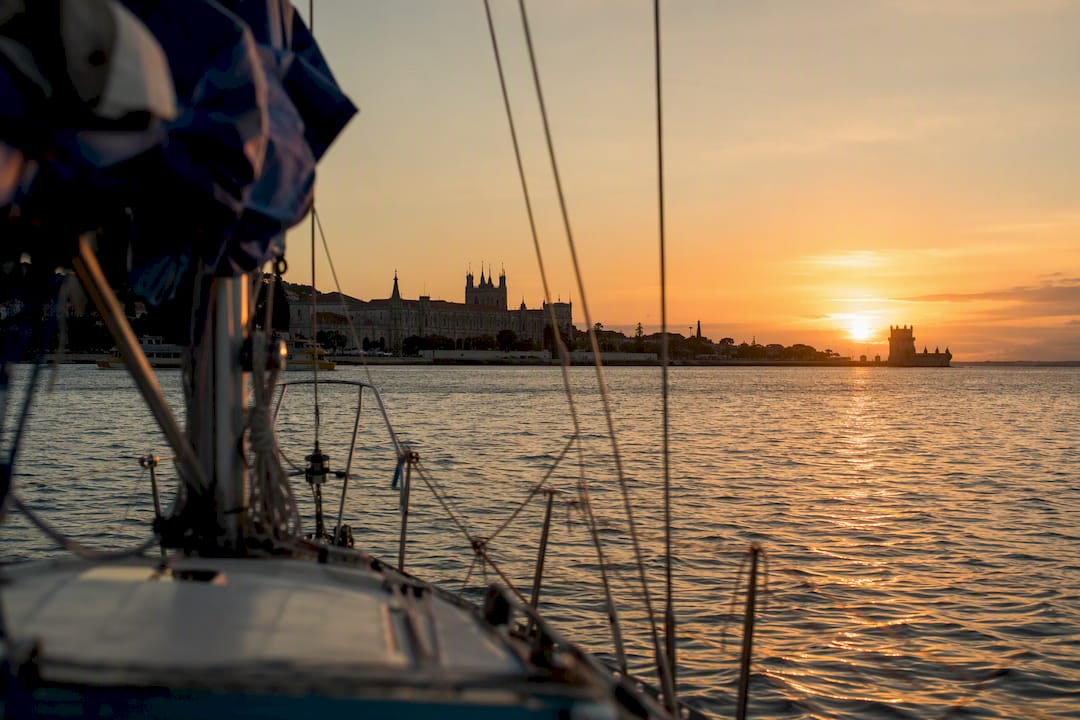
If you’re building out a Lisbon Porto itinerary and wondering where a boat ride actually belongs, here’s my take: put it on your arrival afternoon or your last Lisbon evening, not squeezed between Belém and dinner on your busiest day. A two-hour window on the water works best either in late morning, before the afternoon glare flattens the light on the monuments, or in late afternoon heading into sunset, when the Tagus turns gold behind the 25 de Abril Bridge.
A short cruise gives you the wide-angle version of a city that’s easy to see only in fragments from the street. You get Belém Tower, the Monument to the Discoveries, and Alfama’s waterfront from a single vantage point, which makes the ground-level version of those same stops the next day feel more like a deep-dive than a first look. Lisbonbyboat runs daily two-hour sightseeing sails plus private charters, from two-hour outings to full-day trips, so slotting one into a seven-day itinerary’s day one or day two doesn’t require reshuffling anything else.
— Lisbon
Book Your Sailing Tour Alongside Your Lisbon Days
Lisbonbyboat is the way to see the city’s waterfront monuments without spending a half-day walking between them in the heat. A two-hour guided sail covers Belém Tower, the Monument to the Discoveries, and Alfama’s coastline in one sitting, with a guide explaining what you’re looking at instead of you squinting at a phone map.
For couples or small groups wanting something more private, the fleet includes sailing yachts, catamarans, and speedboats available for charters from two hours up to a full day, with drinks and snacks included and the route built around what your group actually wants to see. This slots naturally into day one or two of the seven-day itinerary above, right when you want an easy, low-effort introduction to the city before the walking-heavy Sintra and Belém days. In shoulder and peak seasons, afternoon and sunset slots book up fastest, so reserve your date once your flights are confirmed. Check availability and book your private yacht charter in Lisbon directly, and mention your group size for a customized private route.
Sources
Recommended
Comments