

See Lisbon's Historic Sites From the Tagus in Two Hours
São Jorge Castle, Jerónimos Monastery, Belém Tower, Praça do Comércio and the Rua Augusta Arch, Lisbon Cathedral, Carmo Convent, the Monument to the Discoveries, the Santa Justa Elevator, Alfama, and a day trip to Pena Palace in Sintra form the core of Lisbon’s story. Together they trace a line from medieval fortress walls through the Age of Discovery to the ruins left by the 1755 earthquake. This guide breaks down what to see at each site, how to plan your time, and why the view from the Tagus River adds a perspective walking alone never quite delivers.
TL;DR:
Visiting São Jorge Castle offers panoramic city views, a camera obscura experience, and archaeological remains from Iron Age and Moorish periods.
Jerónimos Monastery’s cloister is the main attraction, with advance online tickets recommended to avoid long lines, especially mid-morning.
Belém Tower features a narrow spiral staircase, with short visit times around 45 minutes, and has notable features like a rhinoceros gargoyle and rooftop balcony.
The Praça do Comércio and Rua Augusta Arch supply quick views of Lisbon’s riverside square, with the arch climb adding about twenty minutes to the visit.
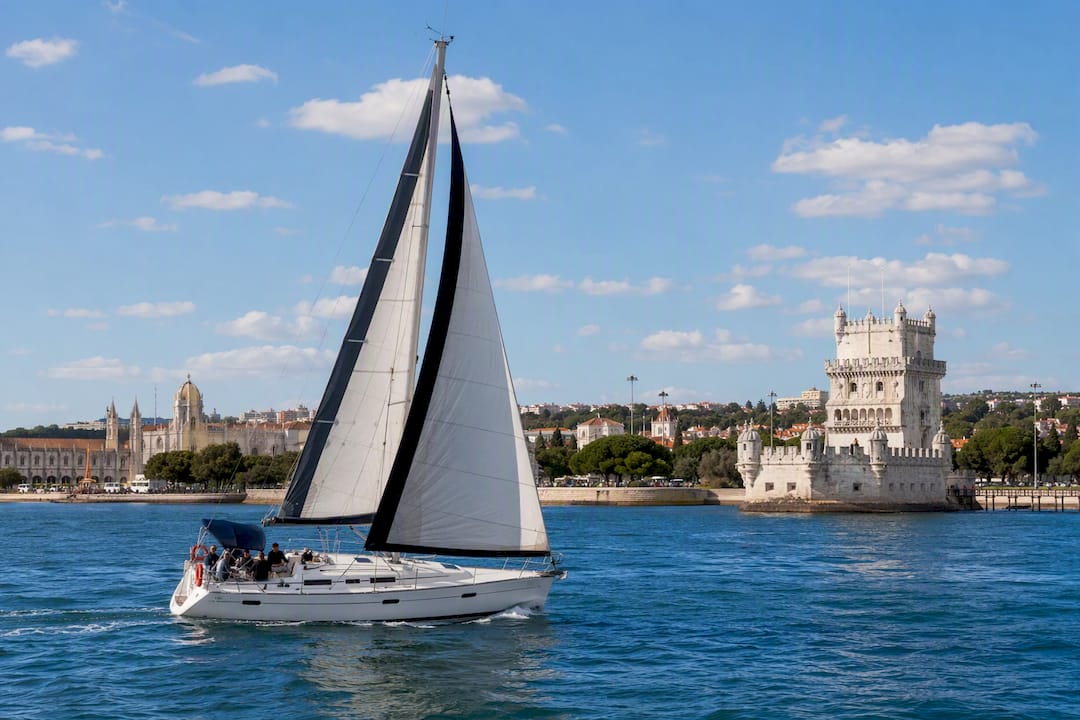
A boat trip along the Tagus River highlights Belém’s monuments with less crowding and better angles, especially during sunrise or sunset for glowing photos.
Table of Contents
Historical Sites in Lisbon Portugal You Shouldn’t Skip
Lisbon rewards visitors who treat it like an open-air museum rather than a checklist. Each site below earns its place for a different reason: some for what still stands, some for what’s missing, and one for a camera trick built into a 12th-century tower.
1. São Jorge Castle (Castelo de São Jorge)
Perched on Lisbon’s highest hill, this fortress carries layers from Phoenician, Roman, Moorish, and medieval Christian occupation, making it less a single building than a stack of centuries. The current site shows fortification phases that stretch back well before Portugal existed as a kingdom.
Walk the battlements for panoramic views over Alfama and the river.
Visit the Torre de Ulisses, where a camera obscura projects a live 360 degree image of the city onto a darkened wall.
Explore the archaeological site showing Iron Age and Moorish-era remains uncovered during excavations.
Pro Tip: Most visitors head straight for the wall walk and skip the camera obscura entirely. Go in the late morning when the light is strongest. It’s a five-minute demonstration that shows the whole city moving in real time, and there’s rarely a line.
Budget 90 minutes to two hours. Arrive right at opening to beat tour groups.
2. Jerónimos Monastery (Mosteiro dos Jerónimos)
King Manuel I commissioned this monastery in 1502 as a place for monks to pray for the safe return of sailors, and its Manueline stonework became a monument to the voyages it commemorated. It’s part of a UNESCO World Heritage serial property alongside Belém Tower, both tied directly to Portugal’s maritime expansion.
The cloister, carved with maritime motifs, ropes, and coral patterns worked into stone.
The tomb of Vasco da Gama, resting inside the church near the entrance.
The refectory and chapter house, quieter corners most visitors rush past.
Pro Tip: The cloister is the real reason to visit, not the church nave. Buy tickets online in advance since the line for walk-up tickets can run past an hour by mid-morning.
Plan for 60 to 90 minutes inside.
3. Belém Tower (Torre de Belém)
Built in the early 1500s as a defensive outpost and a symbol of King Manuel I’s reign, Belém Tower sits right on the Tagus waterfront, its Manueline turrets and stone rope carvings visible from the water long before you reach the entrance.
The rhinoceros gargoyle, one of the first depictions of the animal in European sculpture.
The narrow spiral staircase leading to rooftop terrace views over the river.
The vaulted lower chambers once used as a customs post and prison.
Visit lengths run short, around 45 minutes, but the staircase is narrow and can back up during peak hours.
4. Praça do Comércio and Rua Augusta Arch
This grand riverside square replaced the royal palace destroyed in the 1755 earthquake, and it remains Lisbon’s ceremonial front door to the Tagus. Climb the Rua Augusta Arch for elevated views down the pedestrian street and across the square’s yellow arcades.
The equestrian statue of King José I at the square’s center.
The arch’s rooftop viewing platform, reached by elevator and stairs.
The surrounding arcades, now filled with cafés and shops but built to a uniform post-earthquake design.
Fifteen to thirty minutes covers the square; add another twenty for the arch climb.
5. Lisbon Cathedral (Sé de Lisboa)
Construction began after 1147, making the Lisbon Cathedral the city’s oldest standing landmark, though earthquakes and rebuilds over the centuries left it a patchwork of Romanesque, Gothic, and Baroque styles.
The fortress-like Romanesque facade with twin bell towers.
The Gothic cloister, partly excavated to reveal Roman and Moorish layers beneath.
The treasury museum housing relics and ecclesiastical artifacts.
Thirty to forty-five minutes is plenty unless you pay extra to tour the cloister excavations.
6. Carmo Convent (Convento do Carmo)
Founded in 1389, the Carmo Church lost its roof when the 1755 earthquake brought the nave crashing down, and it was deliberately left open to the sky as a memorial. The ribs of stone arches now frame nothing but air.
The roofless nave itself, one of Lisbon’s most photographed ruins.
The Carmo Archaeological Museum tucked into the surviving chancel.
A small collection that includes South American mummies and medieval tombs.
Pro Tip: Go right after sunrise or an hour before closing. The open nave with soft light hitting bare stone is a different experience than the midday crowd shuffling through.
Twenty minutes covers the ruins; add twenty more for the museum.
7. Monument to the Discoveries (Padrão dos Descobrimentos)
This 1960 monument on the Belém waterfront depicts Henry the Navigator at the bow of a stone ship, flanked by explorers, cartographers, and monarchs who shaped Portugal’s maritime era.
The compass rose pavement map at the monument’s base, a gift from South Africa.
The elevator ride to the top for river views alongside Belém Tower.
Twenty to thirty minutes, more if you climb to the observation deck.
8. Santa Justa Elevator (Elevador de Santa Justa)
This wrought iron elevator, built in 1902, lifts pedestrians from the Baixa district up toward the Carmo ruins, and its viewing platform gives one of the better rooftop panoramas in the historic center.
The neo-Gothic ironwork itself, engineered in a style influenced by Gustave Eiffel’s workshop.
The rooftop terrace overlooking Baixa’s grid streets toward the castle.
Lines can run long; walking up the connecting stairway from Largo do Carmo gets you the same view for free.
9. Alfama and Bairro Alto
Alfama’s tangle of medieval lanes survived the 1755 earthquake largely intact, which is why its street plan still feels Moorish rather than gridded like the rebuilt Baixa below it. Bairro Alto, by contrast, built its reputation on nightlife layered over 16th-century streets.
Wandering Alfama’s stairways past laundry lines and fado bars.
Miradouro viewpoints scattered through both neighborhoods.
Give Alfama at least an hour of unstructured walking; it rewards getting lost.
10. Pena Palace and Sintra Day Trip
Pena Palace sits in the hills above Sintra, a short train ride from Lisbon’s Rossio station, and its candy-colored towers make it one of the most photographed palaces in Europe. Most visitors pair it with the nearby Moorish Castle ruins for a full day away from the capital.
Budget a full day if you’re making the trip: roughly 40 minutes each way by train plus several hours on-site.
Planning Your Visit: Tickets, Hours, and Getting Around
Most major sites sell timed-entry tickets online, and buying ahead for Jerónimos Monastery and São Jorge Castle saves real time during peak season. Opening hours generally run 9 or 10 AM to 5 or 6 PM, with many museums closed on Mondays.
Check for free or discounted entry on the first Sunday of the month at several state-run museums.
Tram 28 covers a rough loop through Alfama, Baixa, and Graça, though it’s often standing-room only by mid-morning.
Walking between Baixa, Alfama, and the castle is doable but hilly; wear real shoes.
A short river crossing or coastal sail can slot neatly between a morning at Belém and an afternoon in the historic center.
Quick fact: the Belém complex’s UNESCO listing ties the monastery and tower directly to the 15th and 16th century maritime power that put Lisbon on the map, which is exactly why most short-trip itineraries put Belém first.
Combo passes covering multiple museums exist and can trim costs if you’re hitting four or more paid sites. Arrive early morning or late afternoon to dodge cruise-ship crowds at Belém, and budget 45 minutes to an hour per major site so you’re not rushing the ones that matter most to you.
Why These Sites Cluster Around Three Historical Moments
Nearly every landmark on this list traces back to one of three periods. Medieval and Moorish layers show up hardest in Alfama’s street plan and the fortification phases inside São Jorge Castle. The Age of Discovery gave Lisbon its Manueline architecture, the carved ropes and coral motifs at Jerónimos Monastery, and the UNESCO recognition tied to that maritime expansion.
Then came November 1, 1755, when an earthquake and the fires and tsunami that followed leveled much of the city. That catastrophe is why the Carmo nave has no roof: the ceiling collapsed and city planners chose to leave it exposed rather than rebuild, turning a ruin into a memorial. It’s also why Baixa’s streets run in a strict grid; the district was rebuilt from scratch under royal orders after the disaster.
Medieval and Moorish: São Jorge Castle, Alfama’s street layout.
Age of Discovery: Jerónimos Monastery, Belém Tower, the Monument to the Discoveries.
1755 earthquake aftermath: Carmo Convent’s roofless nave, Baixa’s rebuilt grid, Praça do Comércio.
The Tagus River threads through all three eras. It’s the reason ships left from Belém for India and Brazil, the reason the earthquake’s tsunami hit the waterfront hardest, and the reason Praça do Comércio still faces the water instead of the hills.
What the Tagus Reveals That Walking Doesn’t
Lisbon’s skyline was built to be seen from the water first. Ships arriving from centuries of trade routes saw Belém Tower and Jerónimos Monastery rising from the riverbank before they saw a single street, and that vantage point hasn’t lost its punch.
Belém Tower’s turrets and Manueline stonework catch full sun from the river in a way street-level angles rarely allow.
Jerónimos Monastery’s full length becomes visible only once you’re offshore; onshore, buildings and trees crowd the view.
Praça do Comércio’s waterfront arcades and the Rua Augusta Arch line up as a single continuous facade.
The Monument to the Discoveries reads as it was designed to: a ship’s bow pointed toward the open Atlantic.
A standard two-hour sailing tour typically covers this stretch of coastline with a guide narrating the history behind each monument as it passes, timed around good light for photos.
Pro Tip: Slot a river trip in either right after breakfast or an hour before sunset. Both windows give you soft light on the monastery’s stone facade and fewer other boats crowding your photos.
Sample Itineraries for One or Two Days
Half-day loop (4 hours): Start at São Jorge Castle, walk down through Alfama, stop at Lisbon Cathedral, finish at Praça do Comércio. All walkable, no transit needed.
Full day (7 to 8 hours): Morning in Belém covering Jerónimos Monastery, Belém Tower, and the Monument to the Discoveries, then a short river sail before lunch, followed by an afternoon in Baixa and Carmo Convent.
Sintra day trip: Take the train from Rossio station (roughly 40 minutes each way) and budget three to four hours at Pena Palace and the adjacent Moorish Castle.
Mix and match: Pair one guided element, like a sailing tour or a castle tour, with self-guided neighborhood walking to control your own pace.
Mausoleum of the National Pantheon (Panteão Nacional)
The domed church of Santa Engrácia took nearly 300 years to complete, a construction saga so drawn out it became a Portuguese idiom for any never-ending project. Converted into the National Pantheon in the 20th century, it now holds the tombs and memorials of writers, presidents, and cultural figures including fado singer Amália Rodrigues.
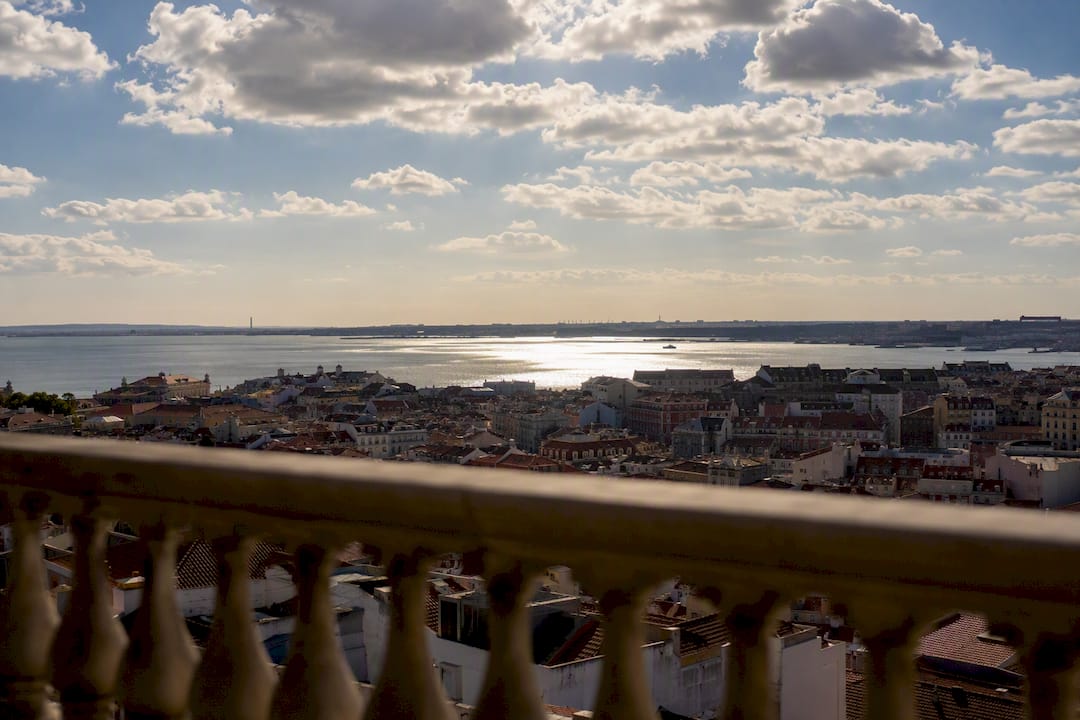
The building sits above Alfama on a rise that gives its rooftop terrace one of the better river panoramas in the city, rivaling the castle’s wall walk without the crowds. Inside, the marble floor and soaring dome create an echo chamber effect that visitors often notice before they notice the tombs themselves.
Unlike the earthquake-scarred ruins nearby, the Pantheon survived largely intact and represents a different kind of Lisbon history: civic memory rather than medieval or colonial-era architecture. It’s a quieter stop, usually skipped by visitors sticking to Alfama’s main lanes, which makes the terrace views feel almost private compared to the castle above it.
Budget 30 to 45 minutes, including the rooftop climb. Combine it with an Alfama walk since it sits just a short uphill detour from the neighborhood’s main lanes, making it an easy add rather than a special trip.
The Tile Museum (Museu Nacional do Azulejo)
Housed in a former convent, the Museu Nacional do Azulejo traces the azulejo, Portugal’s decorative ceramic tile, from Moorish-influenced geometric patterns through Baroque religious scenes to modern abstract work. It’s a bit outside the central tourist loop, tucked into the eastern Xabregas district, which keeps crowds thin even in high season.
The standout piece is a sweeping 18th-century tile panorama of Lisbon, painted before the 1755 earthquake, showing a cityscape that no longer exists in the same form. It’s one of the few visual records of pre-earthquake Lisbon, making it valuable to historians beyond its decorative charm.
The museum’s own chapel, gilded and covered floor to ceiling in gold leaf and tilework, often surprises first-time visitors who expect a straightforward gallery layout. Courtyard cloisters connect the exhibition halls, giving the whole building a slower, contemplative rhythm compared to the crowded interiors at Belém.
Plan for an hour, more if you’re interested in ceramics history. It’s reachable by bus or a short taxi ride from the center, and pairing it with a Alfama or Belém stop on the same day makes for an efficient loop given its distance from other central sites.
Ancient Roman Theatre and Cryptoporticus
Beneath the streets of Alfama sits physical proof that Lisbon’s history predates the Moors and the medieval kingdom by centuries. The Roman Theatre, discovered in the 18th century and excavated more thoroughly since, dates to the 1st century CE and once seated several thousand spectators.
The adjoining cryptoporticus, a vaulted underground gallery that likely supported the theater’s structure, runs beneath what’s now a residential block, and visitors can walk through sections of it as part of the small on-site museum. It’s an unusual thing to find wedged between apartment buildings: a genuine Roman substructure open to the public, mostly overlooked by travelers focused on the castle just uphill.
The site connects directly to Lisbon’s identity as Olisipo, a Roman municipality with trading links across the empire, predating the maritime fame that came over a thousand years later. Seeing it helps frame the castle above and the cathedral nearby as later chapters in a much longer story rather than the city’s starting point.
Visits run short, typically 30 to 40 minutes, and it pairs naturally with a Sé or Alfama walk since it’s just a few minutes from the cathedral on foot.
The National Museum of Ancient Art (Museu Nacional de Arte Antiga)
Portugal’s premier fine art museum holds works spanning the 12th through 19th centuries, including Hieronymus Bosch’s The Temptation of St. Anthony, a piece considered one of the artist’s masterworks and a significant draw on its own. The collection also includes Portuguese religious art, Asian ceramics brought back through maritime trade routes, and European painting.
Set in a 17th-century palace overlooking the river in the Lapa district, the building itself tells part of the story: gardens and terraces give glimpses of the Tagus between gallery visits, tying the collection back to the same maritime history that fills Belém’s monuments a short distance downstream.
The museum is a reasonable stop for travelers who want a break from monument-hopping and prefer a slower, indoor pace. It draws far fewer crowds than Jerónimos Monastery, which makes it a good early-afternoon rest stop between busier landmark visits. Budget 90 minutes if you want to see the highlights, longer for a full walkthrough of every gallery. It’s roughly a 15-minute walk or a short tram ride from central Belém sites, making it easy to fold into a Belém-focused day without much extra transit time.
Riding History: The Tram 28 Route
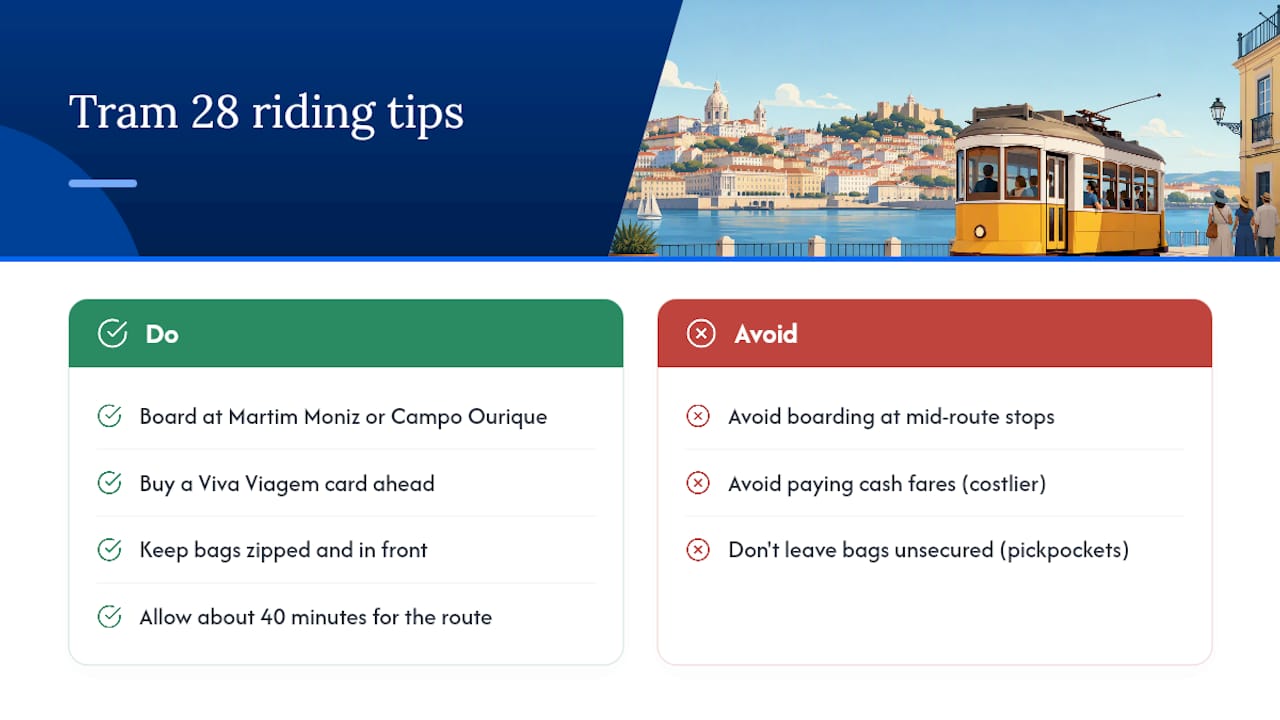
Tram 28’s wooden carriages, some dating to the 1930s, climb and rattle through Alfama, Graça, and parts of Bairro Alto on a route that was never designed for tourists but happens to pass nearly every historic neighborhood worth seeing. The tram itself is a moving artifact, its narrow-gauge tracks and manual controls barely changed since they were installed.
Riding the full route takes about 40 minutes if traffic and crowds cooperate, though during peak hours it rarely moves at more than a crawl. That’s arguably the point: it forces a slower pace through streets too narrow and steep for most other transit, giving riders a rolling view of laundry-draped balconies, tiled facades, and sudden glimpses of the river between buildings.
Locals still use Tram 28 for actual commuting, which means it can get uncomfortably packed by mid-morning. Boarding at either terminus, Martim Moniz or Campo Ourique, rather than a mid-route stop improves your odds of finding a seat.
Pro Tip: Buy a ticket on board or a reloadable Viva Viagem card ahead of time. Cash fares cost noticeably more than a pre-loaded card, and pickpocketing is common enough on this specific route that keeping bags zipped and in front of you is worth the minor hassle.
A Local’s View from the Deck
Guiding small groups past Belém Tower for a couple of hours, you notice what sticks with people. It’s rarely the tower itself. It’s the moment the monastery’s full length comes into view from the water, something no street angle in Lisbon quite matches. Guests photograph Jerónimos more from the boat than from the plaza in front of it.
Certified skippers and guides who know this coastline can point out details easy to miss on land: which stones on Belém Tower are original versus restored, why the monument to the discoveries faces the way it does. A short sail doesn’t replace walking Alfama’s lanes or standing inside Jerónimos’s cloister. It adds the one angle those walks can’t give you.
— Lisbon
See Lisbon’s Landmarks the Way Sailors First Did
Walking tours get you inside the monuments. Only the water gets you the view those monuments were actually built to project. Lisbonbyboat runs daily two-hour sailing tours along this exact stretch of coastline, with guides who narrate the history of Belém Tower, Jerónimos Monastery, and the Monument to the Discoveries as they pass, timed for good light and easy photos.

For travelers who want more privacy or flexibility, private charters on sailing yachts and catamarans run from two hours up to a full day, better suited to families, small groups, or anyone who’d rather set their own pace than follow a fixed schedule. Every trip runs under experienced skippers who know this coastline well enough to point out details most walking guides never mention.
If your itinerary already includes Belém and the historic center, book a daily sailing tour to slot between your morning and afternoon plans, or check availability for a private yacht charter if you want the whole day on the water.
Sources
Recommended
Comments