

Your guide to healthcare access in Portugal as a tourist
TL;DR:
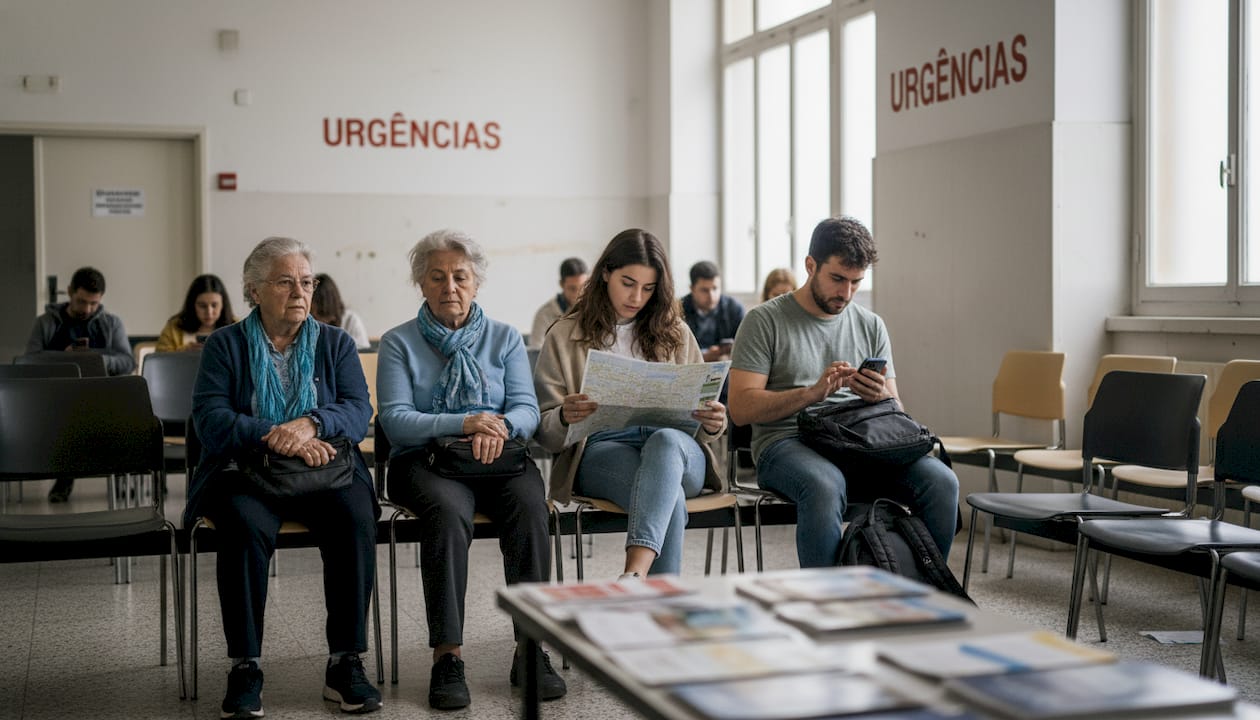
Portugal has both public and private healthcare options, with tourists mainly relying on private care.
EHIC or GHIC cards provide limited public healthcare access and do not cover private services or emergencies.
Travel insurance with sufficient coverage is essential for comprehensive protection, especially for sailing activities.
Many tourists assume that because Portugal is part of the European Union, healthcare is simply free for everyone who visits. That assumption can get you into serious trouble. Picture this: you’re an hour into a beautiful sailing tour on the Tagus River, the sun is setting over the Alfama district, and a fellow passenger suddenly needs urgent medical attention. What do you do? Who do you call? And more importantly, are you covered? This guide cuts through the confusion so you can enjoy your Lisbon sailing trip knowing exactly how to access care, what it costs, and what you need to have ready before you ever step on board.
Table of Contents
Key Takeaways
Point | Details |
EHIC isn’t enough | Tourists need travel insurance because EHIC only covers basic public healthcare, not private care or evacuation. |
Private clinics are faster | Private healthcare in Lisbon offers quick access and English-speaking doctors for €50-150 per visit. |
Emergency number is 112 | For urgent help, dial 112—this works for medical, police, fire, or sea rescue. |
Pharmacies are everywhere | Pharmacies are marked by a green cross; 24/7 on-call pharmacies can be found via infarmed.pt. |
Sailing requires extra coverage | If you’re on a sailing trip, get insurance that covers evacuation and sea-specific emergencies. |
Understanding the Portuguese healthcare system for tourists
Portugal runs a two-track healthcare system. On one side, you have the SNS (Serviço Nacional de Saúde), which is the public national health service. On the other, you have a robust private sector with modern clinics and hospitals. For tourists, these two tracks offer very different experiences, and knowing which one applies to you can save you hours of frustration and hundreds of euros.
For EU, EEA, and UK citizens, the European Health Insurance Card (EHIC) or its UK equivalent (GHIC) grants access to the SNS for medically necessary and urgent care at the same rates locals pay. That sounds great until you realize what it actually means in practice. As healthcare guidelines for visitors clarify, EU/EEA/UK tourists access public care via EHIC/GHIC for necessary or urgent treatment, while non-EU tourists pay full costs or rely on travel insurance or private care. So even with an EHIC, you may still face co-pays, long waits, and language barriers at public facilities.
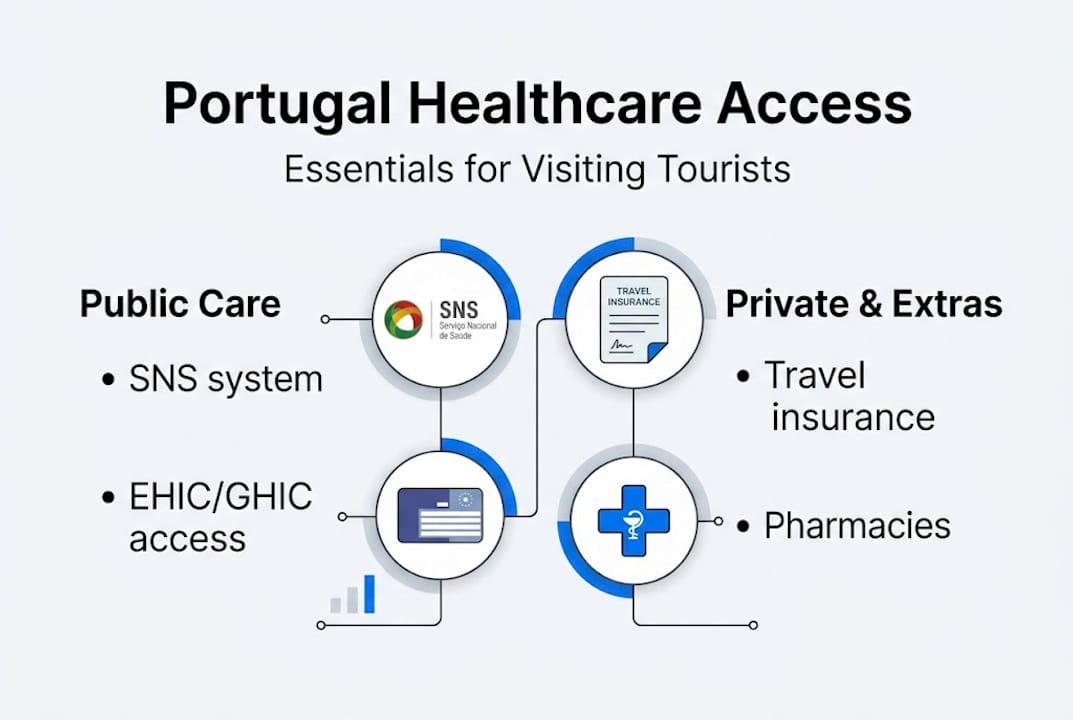
For non-EU travelers (Americans, Canadians, Australians, and others), the situation is more direct: you pay full price unless you have travel insurance in Portugal or choose private care out of pocket. The U.S. Medicare program, for example, is not valid outside the United States.
Here’s a quick comparison to make this concrete:
Traveler type | Public SNS access | Cost | Private access |
EU/EEA/UK with EHIC/GHIC | Yes, urgent/necessary care | Local co-pay rates | Optional, out of pocket |
Non-EU without insurance | Emergency only | Full price | Optional, out of pocket |
Any tourist with travel insurance | Yes | Reimbursed per policy | Covered per policy |
So why do many tourists still prefer private care even when they have an EHIC? A few reasons stand out:
Shorter wait times: Public emergency rooms in Lisbon can have waits of 4 to 8 hours for non-critical cases.
English-speaking staff: Private hospitals routinely employ English-speaking doctors and nurses.
Modern facilities: Private clinics often offer faster diagnostics, including same-day imaging.
Clearer billing: You get itemized invoices that are easier to submit to your insurer.
The EHIC details confirm that the card covers state-provided care only and is not a substitute for comprehensive travel insurance. Think of it as a safety net with significant holes, not a full coverage plan.
Getting healthcare in Lisbon: Public, private, and emergency options
With those basics out of the way, let’s get practical. If you actually need care in Lisbon, here’s what to do and where to go.
The city has several major public hospitals, including Hospital de Santa Maria and Hospital São José. These handle emergencies around the clock, but non-residents should expect paperwork, possible language gaps, and billing at the end of their visit. For tourists, especially those on tight schedules, private hospitals are almost always the better choice.
The top private options in Lisbon include Hospital da Luz, CUF, and Lusíadas, all of which offer faster service, English-speaking doctors, and consultation fees typically ranging from €50 to €150. These hospitals also have dedicated international patient desks that can coordinate with your insurance provider directly.
For emergencies, the process is simple:
Call 112. This is the EU-wide emergency number for ambulance, police, and fire services. It works from any phone, including foreign SIM cards, and operators speak multiple languages.
Describe your location clearly. In Lisbon, landmarks like Praça do Comércio or Belém Tower help dispatchers locate you faster.
Stay on the line until help arrives or you’re given further instructions.
Do not refuse treatment due to payment concerns. Portuguese law requires emergency treatment regardless of a patient’s ability to pay upfront, though billing will follow.
Now, here’s something most travel guides completely skip: accidents at sea. If you’re on a sailing tour and someone needs urgent medical help on the water, the protocol is different. Sea rescue in Portugal is coordinated through INEM (Instituto Nacional de Emergência Médica) and the M155 maritime rescue line. Reputable tour operators are trained in these protocols and carry first aid equipment on board.
Pro Tip: Before boarding any sailing tour, ask your operator whether the vessel carries a first aid kit, whether guides are first-aid certified, and what their emergency contact procedure is. A professional company will answer all three questions without hesitation.
For Lisbon safety for tourists and boating and coastal safety, knowing these emergency steps in advance is the difference between a manageable situation and a crisis. You can also find a broader list of English-speaking doctors in Lisbon for non-emergency consultations during your trip.
Navigating pharmacies and getting medication
Beyond hospitals and clinics, you’ll likely need medication or health essentials at some point during your trip. Lisbon’s pharmacy network is excellent, and knowing how it works will save you time and stress.
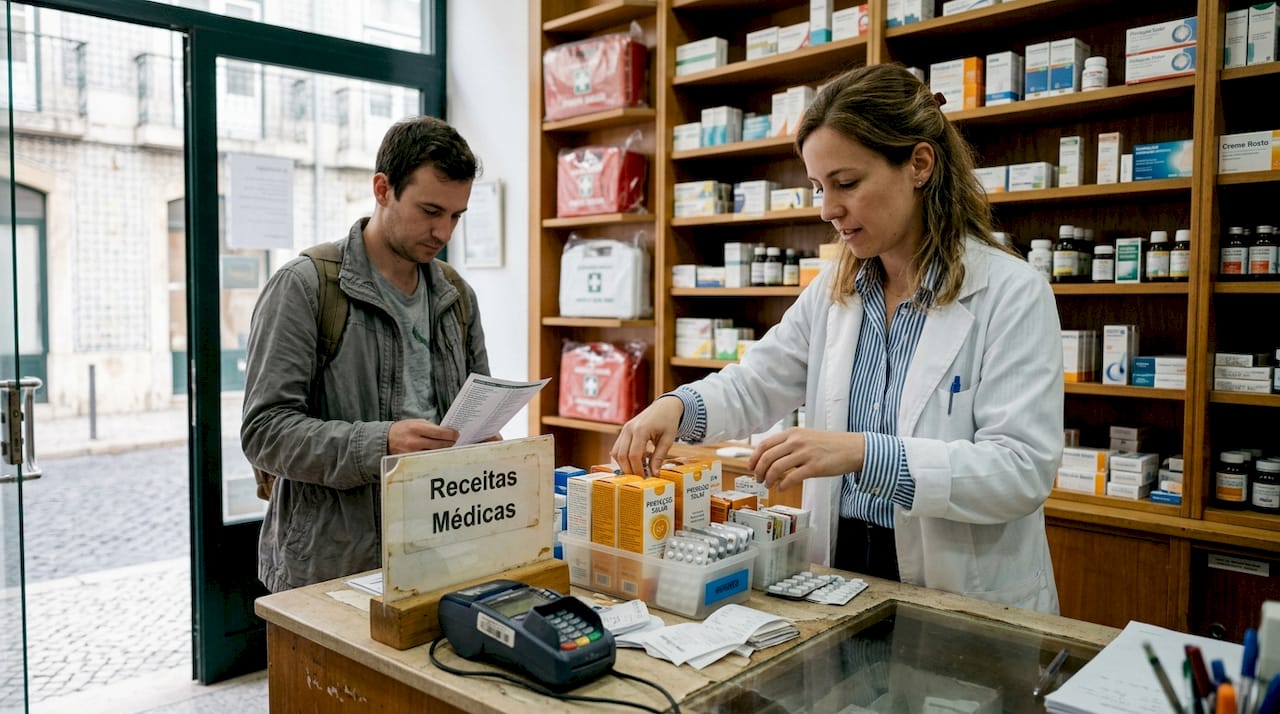
Portuguese pharmacies are called Farmácias, and they’re easy to spot by their bright green cross signs, usually lit up even at night. They’re everywhere in central Lisbon, including near the waterfront areas where most sailing tours depart. Pharmacists are generally well-trained and many speak basic English, especially in tourist-heavy neighborhoods.
Here’s what you need to know about medications:
Over-the-counter (OTC) drugs are widely available without a prescription. Think pain relievers, antihistamines, antacids, and basic cold remedies.
Antibiotics and stronger medications require a Portuguese prescription. You cannot simply hand over a prescription from your home country and expect it to be filled in most cases.
EU electronic prescriptions may be accepted at some pharmacies under cross-border healthcare rules, but this is not guaranteed everywhere.
After-hours pharmacies operate on a rotating duty system called Farmácia de Serviço. As pharmacy access guidelines confirm, you can find the current 24/7 duty pharmacy via infarmed.pt, Portugal’s national medicines authority website.
Pro Tip: Pack a small travel health kit before leaving home. Include your regular prescription medications (with enough supply for your entire trip plus a few extra days), a basic pain reliever, antihistamines, motion sickness tablets (especially important for sailing), and any specialist medication you rely on. Trying to source a specific brand or dosage abroad is stressful and sometimes impossible.
For those browsing buying essentials in Lisbon, pharmacies also stock sunscreen, insect repellent, and basic first aid supplies, all of which are useful for a day on the water. You can also find useful pharmacy and medical supply locations near the main tourist areas.
Why travel insurance is a must for healthcare in Portugal
Medical access in Portugal hinges on one thing few tourists properly prepare: having the right insurance. This is not optional advice. It is the single most important step you can take before your trip.
Here’s the core problem with relying on EHIC or GHIC alone. These cards cover state-provided care only. They do not cover:
Treatment at private hospitals or clinics
Medical evacuation or repatriation to your home country
Trip cancellation due to illness
Rescue operations at sea
Lost or stolen medications
For American travelers, the situation is even more stark. As expatriate health guidance notes, travel insurance is essential because it covers private care and evacuation, and U.S. Medicare is not valid abroad, meaning you pay upfront and claim later.
“Medical evacuation alone can cost tens of thousands of dollars. A single helicopter rescue at sea can exceed €15,000. No EHIC covers that.”
When choosing the right travel insurance, look for these features specifically:
Minimum €30,000 in medical coverage (higher is better for sailing or adventure activities)
Emergency evacuation and repatriation included, not as an add-on
Water sports and sailing coverage explicitly listed in the policy
24/7 emergency assistance line with English-speaking operators
Direct billing to hospitals so you don’t pay out of pocket and wait for reimbursement
The U.S. State Department advice for Portugal echoes this: travelers should carry adequate insurance and understand what their policy covers before departure. Sailing adds a layer of risk that standard tourist policies sometimes exclude, so read the fine print carefully.
What most guides miss about healthcare for tourists in Portugal
Here’s the honest truth that most travel articles skip over. Public healthcare in Portugal is genuinely good for residents. For tourists, especially those in Lisbon for a short sailing holiday, it is often a poor fit. The waiting times at public emergency rooms are real. Four to six hours for a non-critical issue is not unusual, and during peak summer months, it can be longer. If you’re trying to catch a sailing tour the next morning, that wait is not just inconvenient, it can ruin your trip.
Language is another barrier people underestimate. While many younger Portuguese healthcare workers speak English, it is not guaranteed in public settings, especially outside central Lisbon. Miscommunication about symptoms, allergies, or medication dosages is a genuine risk.
The biggest mistake we see tourists make is carrying an EHIC and assuming they’re fully covered. They’re not. The card is a starting point, not a solution. For anyone planning a sailing trip, the stakes are higher. The water adds variables: seasickness that becomes dehydration, sun exposure, minor falls on deck, or a more serious incident that requires sea rescue. Our Lisbon boat safety tips cover the on-water precautions in detail, but the healthcare preparation starts before you ever leave home.
Telemedicine is also a game changer that most tourists don’t consider. Several services now offer video consultations with English-speaking doctors within hours, which is perfect for minor issues that don’t require an in-person visit. It saves time, avoids waiting rooms, and gets you a prescription or referral fast.
Explore Lisbon safely—set sail with confidence
Knowing how healthcare works in Portugal is one part of a safe and enjoyable Lisbon sailing experience. Choosing the right operator is the other.
At Lisbon by Boat, every sailing tour and private cruise is run by experienced guides who know the local waters, emergency protocols, and how to keep you safe from the moment you step on board. Whether you’re joining one of our Lisbon sailing tours for a two-hour coastal adventure or booking a full-day private cruise on one of our luxury yacht experiences, you’re in capable hands. We want you to focus on the views, the history, and the experience. We’ll handle the rest.
Frequently asked questions
Can tourists see a doctor in Portugal without insurance?
Yes, but without insurance you’ll pay the full cost of private care. EU/EEA/UK tourists with an EHIC can access basic public care at local rates, but non-EU visitors pay full price at public facilities too.
What emergency number should I call while sailing in Lisbon?
Dial 112 from any phone for ambulance, police, fire, or medical sea rescue. For maritime emergencies specifically, sea rescue via INEM/M155 is coordinated through Portugal’s national emergency system.
Are prescriptions from my home country valid at Portuguese pharmacies?
Most pharmacies require a Portuguese prescription to dispense controlled or prescription-only medications. EU electronic prescriptions may be accepted in some locations, but OTC medications are widely available without any prescription at all.
Does EHIC cover all healthcare needs for tourists in Portugal?
No. The EHIC covers medically necessary care at public SNS facilities only. It does not cover private clinics, medical evacuation, or repatriation, which is why it is not a substitute for insurance when traveling abroad.
How do I find a 24/7 pharmacy in Lisbon?
Look for a pharmacy displaying the green cross with a duty notice posted in the window, or check infarmed.pt online to find the current rotating duty pharmacy nearest to your location.
Recommended
Comments