

Complete Guide to Famous Voyages From Lisbon
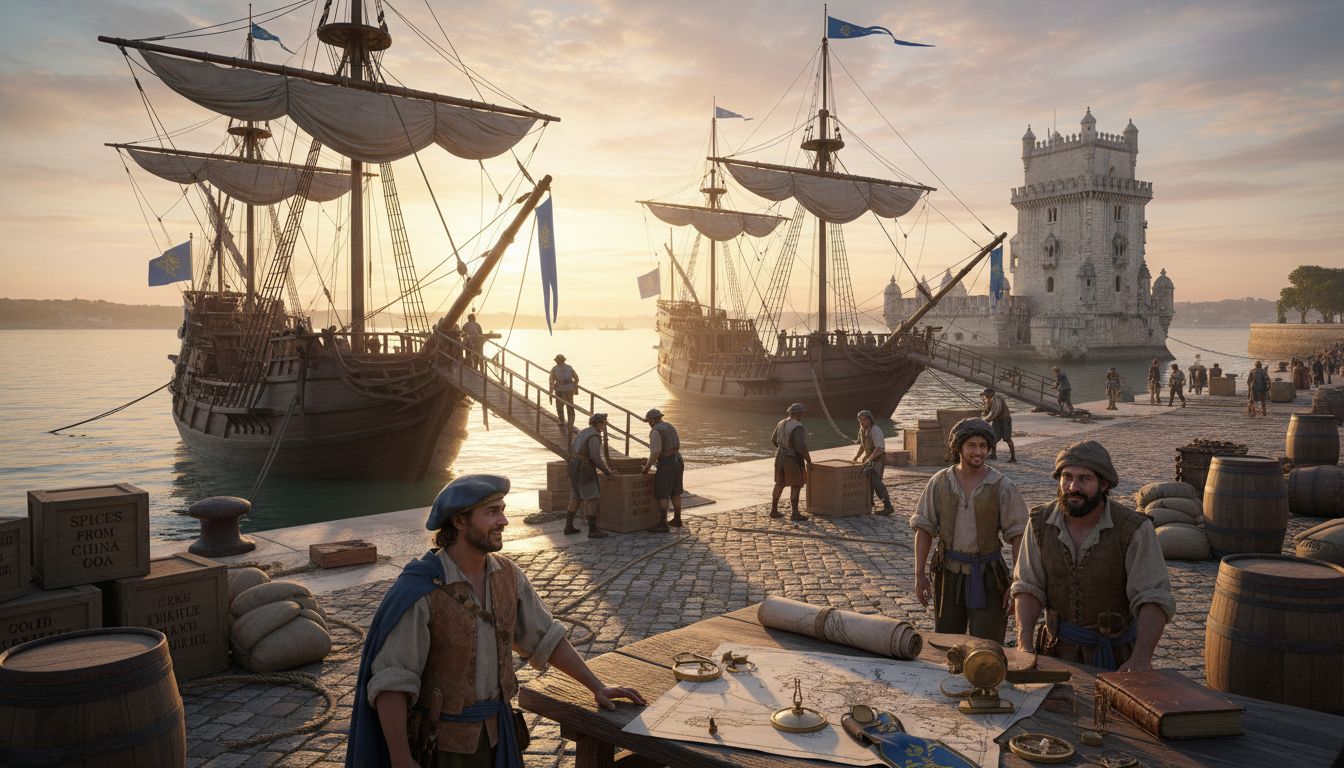
Few cities can claim a maritime legacy as influential as Lisbon, where over 80 percent of the most ambitious ocean voyages of the early modern era set sail. For any american fascinated by how exploration shaped global connections, Lisbon’s waterfront stands at the crossroads of history and innovation. This article uncovers how famous expeditions from the city didn’t just chart new lands, but forever changed the course of trade, science, and cultural exchange.
Table of Contents
Key Takeaways
Point | Details |
Maritime Legacy of Lisbon | Lisbon played a central role in the Age of Discoveries, launching significant expeditions that reshaped global trade and cultural exchanges. |
Influential Navigators | Explorers like Vasco da Gama and Ferdinand Magellan exemplified Portugal’s maritime prowess, establishing crucial international routes. |
Impact on Global Exploration | The voyages initiated complex global networks, advancing scientific understanding and international relations that continue to influence today. |
Experiencing Maritime History | Modern visitors can engage with Lisbon’s seafaring heritage through interactive museum exhibits and guided tours tracing historic maritime routes. |
Defining Famous Voyages From Lisbon
Lisbon’s maritime history stands as a testament to human exploration, with its harbor serving as the launchpad for some of the most significant sea voyages in world history. During the Age of Discoveries, Portuguese navigators transformed this coastal city into a global epicenter of maritime exploration, embarking on journeys that would reshape our understanding of the world. Particularly in the early 16th century, these voyages were meticulously documented in works like the Esmeraldo de Situ Orbis, which captured the geographical knowledge and maritime expeditions of the time.
The Portuguese maritime expeditions were not merely about geographical discovery, but represented a complex interplay of economic ambition, scientific curiosity, and imperial expansion. Navigators like Vasco da Gama, Ferdinand Magellan, and Pedro Álvares Cabral launched from Lisbon’s strategic port, charting routes to India, Brazil, and circumnavigating the globe. These voyages were carefully recorded in historical manuscripts such as the Valentim Fernandes manuscript, which provides critical early accounts of Portuguese sea navigation and the initial explorations that marked the beginning of the Age of Discoveries.
What made Lisbon’s voyages extraordinary was not just their geographical reach, but their transformative impact on global trade, cultural exchange, and scientific understanding. These expeditions introduced Europeans to new continents, trade routes, and civilizations, fundamentally altering global perspectives. The Portuguese sailors who set sail from Lisbon were more than explorers - they were pioneers who bridged continents, established complex trading networks, and laid the groundwork for the first truly global economic system. Their voyages represented a remarkable fusion of nautical skill, cartographic precision, and unprecedented human courage, turning Lisbon into a symbol of maritime innovation and adventure.
Key characteristics of these famous voyages included:
Sophisticated naval technology for their time
Detailed navigational charts and astronomical navigation techniques
Diplomatic missions establishing first contact with distant civilizations
Extensive trading networks spanning multiple continents
Scientific documentation of new geographical and cultural discoveries
Landmark Expeditions and Navigators
The Portuguese maritime tradition was defined by extraordinary navigators who transformed global exploration from Lisbon’s strategic harbor. Perhaps the most iconic of these explorers was Vasco da Gama, whose groundbreaking voyage to India between 1497 and 1499 established the first direct maritime route between Europe and Asia, fundamentally revolutionizing international trade and geographical understanding. This expedition wasn’t just a journey - it was a pivotal moment that connected continents and opened unprecedented economic opportunities.
Beyond da Gama, other legendary navigators like Ferdinand Magellan and Pedro Álvares Cabral launched momentous expeditions that would reshape world history. Magellan’s circumnavigation of the globe and Cabral’s discovery of Brazil demonstrated the incredible nautical prowess of Portuguese explorers. These voyages were characterized by remarkable navigational skills, advanced maritime technologies, and an unparalleled spirit of discovery that pushed the boundaries of human knowledge. The Lisbon–Macau Raid of 1924 later symbolized this enduring Portuguese tradition of exploration, with pilots Sarmento de Beires and António Jacinto da Silva de Brito Pais undertaking a daring air expedition that echoed the adventurous spirit of their maritime predecessors.
The impact of these landmark expeditions extended far beyond geographical discoveries. They initiated complex networks of cultural exchange, diplomatic relationships, and global trade systems that would shape international relations for centuries. Portuguese navigators were not merely travelers, but sophisticated diplomats, traders, and early anthropologists who documented and engaged with diverse civilizations across multiple continents. Their meticulous records, navigational charts, and scientific observations provided Europeans with unprecedented insights into global geography, marine navigation, and diverse human cultures.
Key characteristics of these landmark expeditions included:
Unprecedented maritime navigation techniques
Advanced cartographic and astronomical skills
Diplomatic and trading mission objectives
Comprehensive scientific documentation
Cross-cultural engagement and knowledge exchange
These voyages from Lisbon represented more than exploration - they were transformative journeys that connected the world in ways never before imagined, establishing Portugal as a pioneering force in global maritime history.
Major Sights Along Historic Routes
Portuguese maritime routes were defined by challenging and mesmerizing landscapes that tested the resilience and navigation skills of explorers. These historic routes were fraught with both natural wonders and potential dangers, meticulously documented in works like the História trágico-marítima, which chronicled the maritime challenges and significant landmarks encountered during these epic voyages. The routes stretched across treacherous ocean expanses, connecting distant continents and revealing breathtaking geographical diversity.
Navigation along these routes involved traversing multiple remarkable geographical zones, from the rocky coastlines of West Africa to the tropical archipelagos of the Indian Ocean. Explorers encountered diverse maritime environments, including the unpredictable waters around the Cape of Good Hope, the coral-laden seascapes of the Arabian Peninsula, and the complex archipelagic territories of Southeast Asia. Each region presented unique navigational challenges that required extraordinary maritime expertise, advanced cartographic knowledge, and adaptive strategies for survival.
The maritime routes were not just geographical pathways but complex cultural corridors that facilitated unprecedented global interactions. Navigators like Vasco da Gama and Pedro Álvares Cabral documented remarkable encounters with coastal settlements, trading ports, and indigenous civilizations. These routes connected distant societies, creating intricate networks of trade, cultural exchange, and diplomatic relationships. Interestingly, even later travelers like Henry Fielding in his Journal of a Voyage to Lisbon continued to capture the nuanced experiences of maritime travel, providing rich narratives that went beyond mere geographical descriptions.
Key significant sights along these historic routes included:
The rugged coastlines of West Africa
The strategic trading ports of the Indian Ocean
The challenging maritime passages around the Cape of Good Hope
Tropical archipelagos of Southeast Asia
Culturally rich coastal settlements across multiple continents
These routes represented more than mere geographical pathways - they were living, breathing narratives of human exploration, resilience, and the remarkable capacity to connect distant worlds through maritime adventure.
Legacy and Influence on World Exploration
The Portuguese maritime expeditions from Lisbon fundamentally transformed global understanding, establishing unprecedented networks of trade, cultural exchange, and geopolitical influence. Vasco da Gama’s successful navigation to India not only opened a critical sea route to Asia but triggered a revolutionary era of European global expansion. This single voyage represented more than a geographical achievement - it was a watershed moment that would reshape international economic and political landscapes for centuries to come.
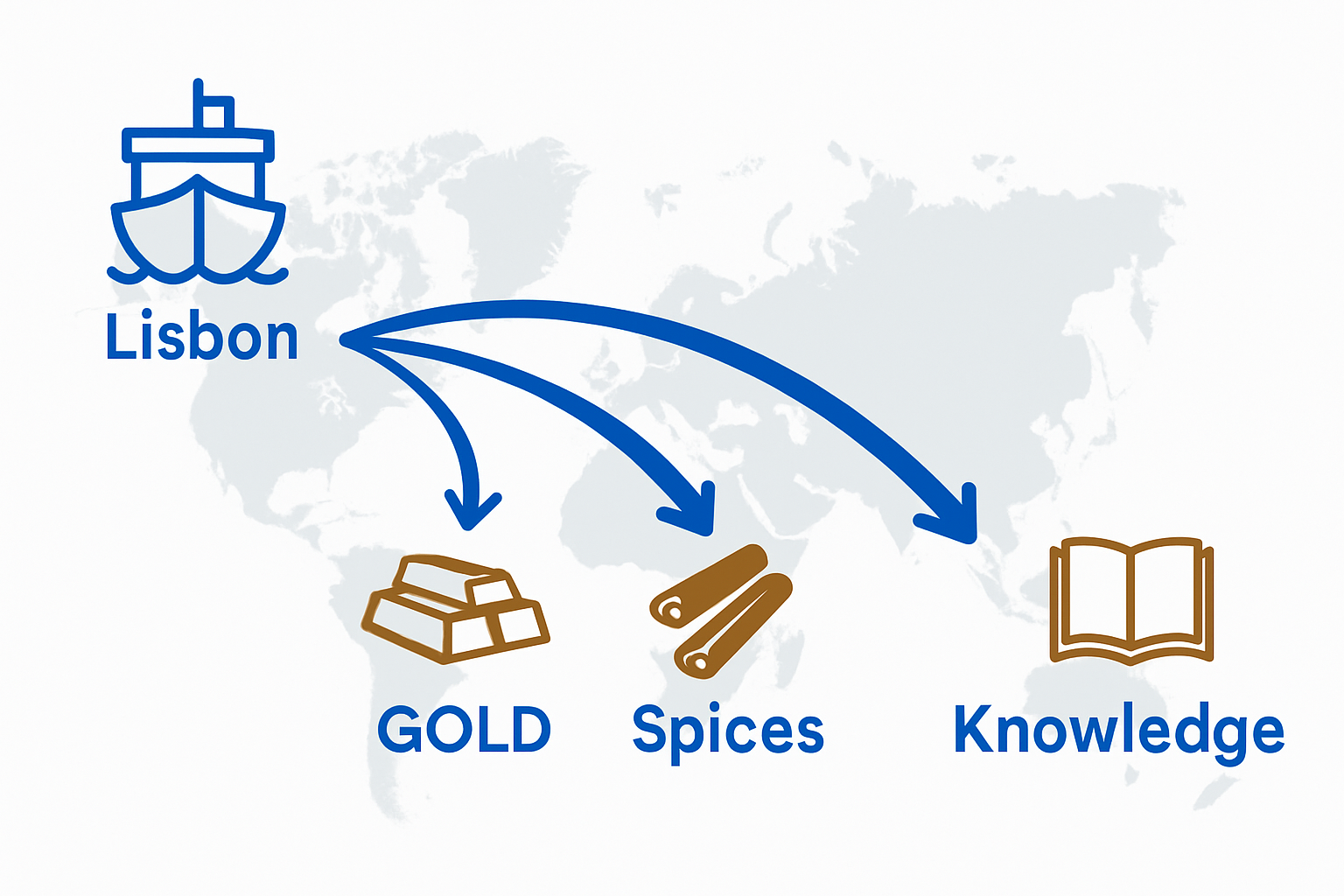
The intellectual and scientific contributions of these voyages were equally profound. Navigational knowledge documented in works like the Esmeraldo de Situ Orbis dramatically expanded European cartographic understanding, providing unprecedented insights into world geography, maritime routes, and diverse cultures. Portuguese explorers were not merely travelers, but sophisticated researchers who meticulously documented astronomical observations, marine navigation techniques, and detailed geographical information that would become foundational to future scientific understanding.
Beyond geographical discoveries, these expeditions initiated complex global dynamics that would define international relations for generations. The maritime routes established by Portuguese navigators created intricate trading networks that connected Europe, Africa, Asia, and eventually the Americas. These connections facilitated not just economic exchanges, but unprecedented cultural dialogues, technological transfers, and diplomatic relationships that would fundamentally alter human civilization’s interconnectedness. The explorers from Lisbon essentially became the first true global ambassadors, bridging worlds that had previously existed in complete isolation.
Key lasting impacts of these maritime explorations included:
Establishment of global maritime trade networks
Technological innovations in navigation and shipbuilding
Cross-cultural knowledge exchange
Expansion of European scientific and geographical understanding
Initiation of complex international diplomatic relationships
The legacy of these voyages from Lisbon represents humanity’s extraordinary capacity for exploration, understanding, and connection - transforming isolated worlds into a truly interconnected global community.
Experiencing Lisbon’s Maritime Heritage Today
Lisbon offers immersive experiences that bring its rich maritime history to life, allowing visitors to explore cultural experiences onboard modern vessels while connecting with the city’s legendary nautical past. Technology has transformed how travelers engage with maritime heritage, with innovative digital resources like an educational app that provides a comprehensive digital itinerary through monuments, museums, and historical sites associated with Portugal’s maritime discoveries.
Modern interactive technologies have revolutionized maritime heritage exploration. Urban archaeological projects like Project Lx Conventos use advanced 3D modeling and interactive maps to reconstruct Lisbon’s historical urban landscape, offering visitors unprecedented insights into the city’s maritime transformations. These digital experiences allow travelers to virtually navigate through centuries of nautical history, understanding how maritime exploration shaped Lisbon’s architectural and cultural development.
Contemporary maritime experiences in Lisbon range from museum exhibitions to sailing tours that trace historic routes. Visitors can explore maritime museums displaying original navigational instruments, ship models, and artifacts from legendary voyages. Sailing tours provide a dynamic, immersive experience, allowing participants to traverse the same waters where historic explorers like Vasco da Gama once navigated, creating a tangible connection between past and present maritime traditions.
Key ways to experience Lisbon’s maritime heritage include:
Visiting maritime museums and historical exhibitions
Taking guided sailing tours along historic routes
Exploring digital reconstructions of maritime history
Participating in interactive historical walking tours
Attending maritime-themed cultural events and festivals
These experiences transform maritime history from distant historical narratives into living, breathable encounters that connect visitors directly with Lisbon’s extraordinary seafaring legacy.
Discover Lisbon’s Historic Voyages From a Unique Perspective
The article highlights the incredible voyages launched from Lisbon that reshaped global exploration yet reading about these legendary journeys leaves many longing to experience the magic firsthand. If you want to truly connect with the maritime legacy of navigators like Vasco da Gama and Pedro Álvares Cabral the challenge lies in bridging centuries of history with the stunning coastlines and landmarks you can see today. You may feel the need to move beyond text and immerse yourself in the very waters where these transformative explorations began.
Experience the thrill of Lisbon’s seafaring past through our personalized sailing tours and private cruises. Our skilled guides bring history to life by explaining major monuments and sights along Lisbon’s breathtaking coastline. Feel the wind and waves that once carried great explorers on their landmark expeditions. Take advantage of a unique opportunity to breathe the same air and view Lisbon as it was centuries ago.
Don’t just read about history. Sail through it. Book your unforgettable journey now at Lisbon By Boat. Discover details on our daily sailing tours and choose a private cruise to match your schedule. Your opportunity to step aboard a living chapter of maritime adventure awaits. Act today and turn pages of history into lasting memories.
Frequently Asked Questions
What were the major voyages launched from Lisbon during the Age of Discoveries?
Major voyages included Vasco da Gama’s groundbreaking journey to India, Ferdinand Magellan’s circumnavigation of the globe, and Pedro Álvares Cabral’s discovery of Brazil.
How did Lisbon’s maritime expeditions impact global trade?
The expeditions established critical sea routes, enabling the exchange of goods, cultures, and ideas between distant continents, fundamentally altering global trade dynamics.
What technologies did Portuguese explorers use for navigation during their voyages?
Explorers utilized sophisticated naval technology, detailed navigational charts, and astronomical navigation techniques that were advanced for their time.
How can visitors experience Lisbon’s maritime heritage today?
Visitors can explore maritime museums, take guided sailing tours along historic routes, and engage with digital reconstructions that highlight Lisbon’s rich maritime history.
Recommended
Comments