

Corporate Wellness Programs: Boosting Team Health in Lisbon
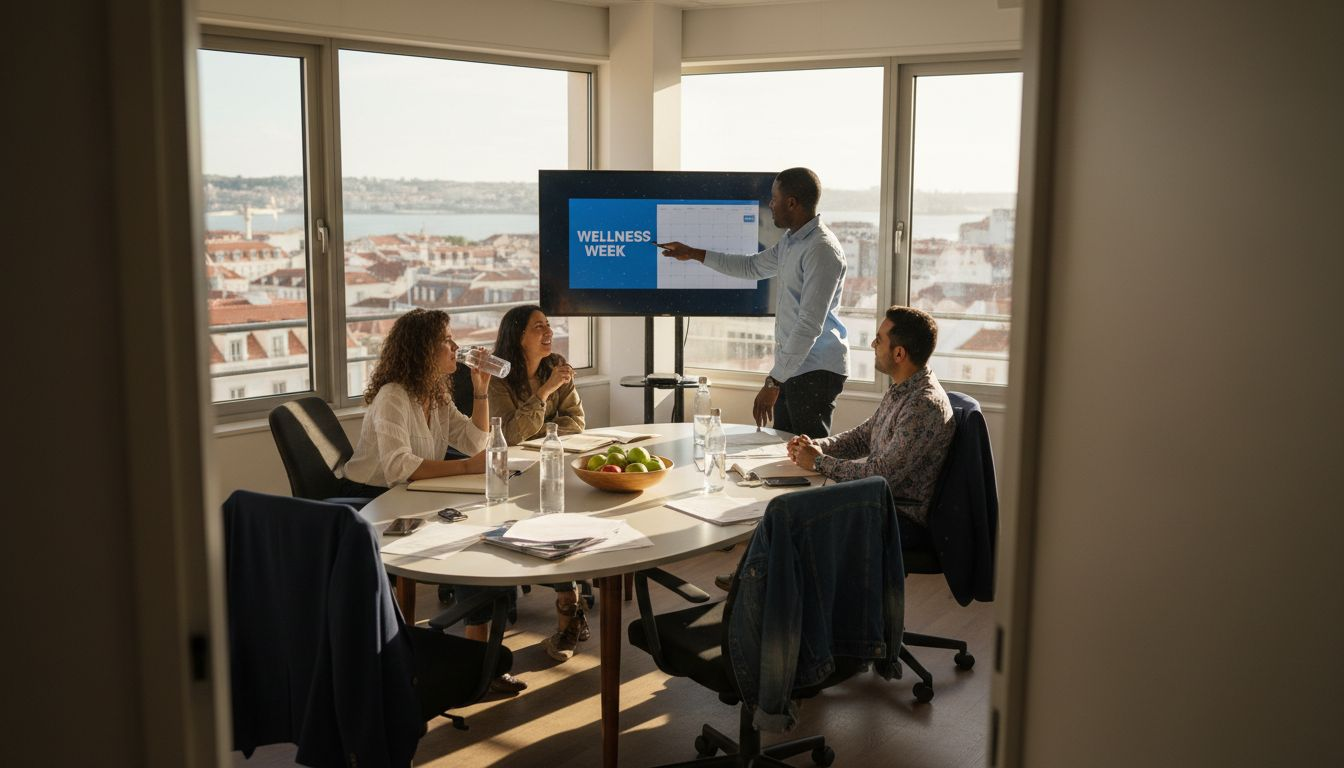
Finding team-building experiences that actually support employee wellness can be tough for even the most creative event planners. Companies everywhere want more than shallow icebreakers—they want activities that leave employees healthier, more connected, and truly recharged. In Lisbon, sailing experiences offer a unique intersection of movement, relaxation, and meaningful social connection. If your team needs real stress relief paired with authentic collaboration, these organized employer-sponsored initiatives can transform both morale and well-being.
Table of Contents
Key Takeaways
Point | Details |
Comprehensive Programs are Essential | Corporate wellness programs should address physical, mental, and social well-being for effective health outcomes and productivity improvements. |
Tailored Strategies Yield Better Results | Designing wellness initiatives based on workforce demographics and health priorities leads to genuine participation and measurable improvements. |
Environmental Changes Complement Activities | Structural support, like healthy food options and conducive workspaces, reinforces wellness program goals and ensures effectiveness. |
Investing in Wellness Pays Off | Organizations see tangible benefits, such as reduced absenteeism and lower healthcare costs, when they prioritize employee health through effective wellness programs. |
Corporate Wellness Programs Defined and Debunked
A corporate wellness program is far more than a gym membership or a one-time health screening. These are organized employer-sponsored initiatives designed to support employees in adopting behaviors that reduce health risks, improve quality of life, and enhance productivity. More specifically, corporate wellness programs address physical, mental, and social well-being through a combination of prevention-focused health education, incentives for healthy behaviors, and supportive workplace environments. The goal isn’t just to make employees feel better. The goal is to create measurable improvements in health outcomes while boosting your organization’s bottom line through increased retention and productivity.
What separates effective wellness programs from the ones that collect dust is their scope. Many companies assume wellness means fitness classes or nutritional seminars. That’s only part of the picture. Comprehensive programs incorporate trainings, educational workshops, wellness activities, and partnerships with qualified health providers. They tackle specific health-related challenges your workforce actually faces, whether that’s stress management, sedentary work habits, or mental health support. When structured properly, these programs create healthier, more engaged employees who experience less burnout. This translates directly into lower absenteeism, reduced healthcare costs, and employees who stay with your organization longer.
Here’s where the myth breaks down: many organizations believe wellness programs work because they exist. They don’t. Success requires intentional design that considers your specific workforce demographics, actual health priorities, and sustainable implementation. A generic program designed for a tech startup won’t work for a manufacturing company. A mandatory fitness challenge that ignores mental health needs misses half the opportunity. The most effective programs are built on honest assessment of what your employees need, clear measurement of results, and continuous refinement based on participation and outcomes.
Consider how your team currently experiences work. Are they stressed from constant meetings? Do they struggle with work-life balance? Are they isolated from meaningful social connection? The best corporate wellness investments address the actual pain points in your workplace. For companies seeking fresh approaches to team engagement, water-based activities that combine movement, relaxation, and social bonding offer a powerful alternative to traditional office wellness initiatives.
Pro tip: Start by surveying your employees about their wellness priorities rather than assuming what they need, then design your program around those specific concerns to ensure genuine participation and measurable health improvements.
Types of Corporate Wellness Initiatives
Corporate wellness isn’t one-size-fits-all. The programs that work best combine multiple approaches tailored to your workforce’s actual needs. Think of wellness initiatives as building blocks you stack together to create a comprehensive health culture. Common wellness initiatives span physical activity programs, nutrition and healthy eating support, stress management workshops, mindfulness practices, and social engagement activities. The strongest programs integrate several of these elements rather than relying on a single approach.
Physical activity forms the foundation for many wellness programs. This goes beyond offering gym memberships, which employees often ignore. Instead, successful companies create weekly wellness days, organize health challenges, or establish walking groups that build movement into the workday itself. Nutrition programs work alongside physical initiatives by making healthy food options available on-site and providing education about sustainable eating habits. Meanwhile, stress management and mindfulness practices address the mental health side that fitness alone cannot touch. These might include guided meditation sessions, breathing workshops, or designated decompression spaces where employees can reset during their day. Social and emotional wellness activities build team cohesion while supporting mental health, creating the human connection that remote work often eliminates.
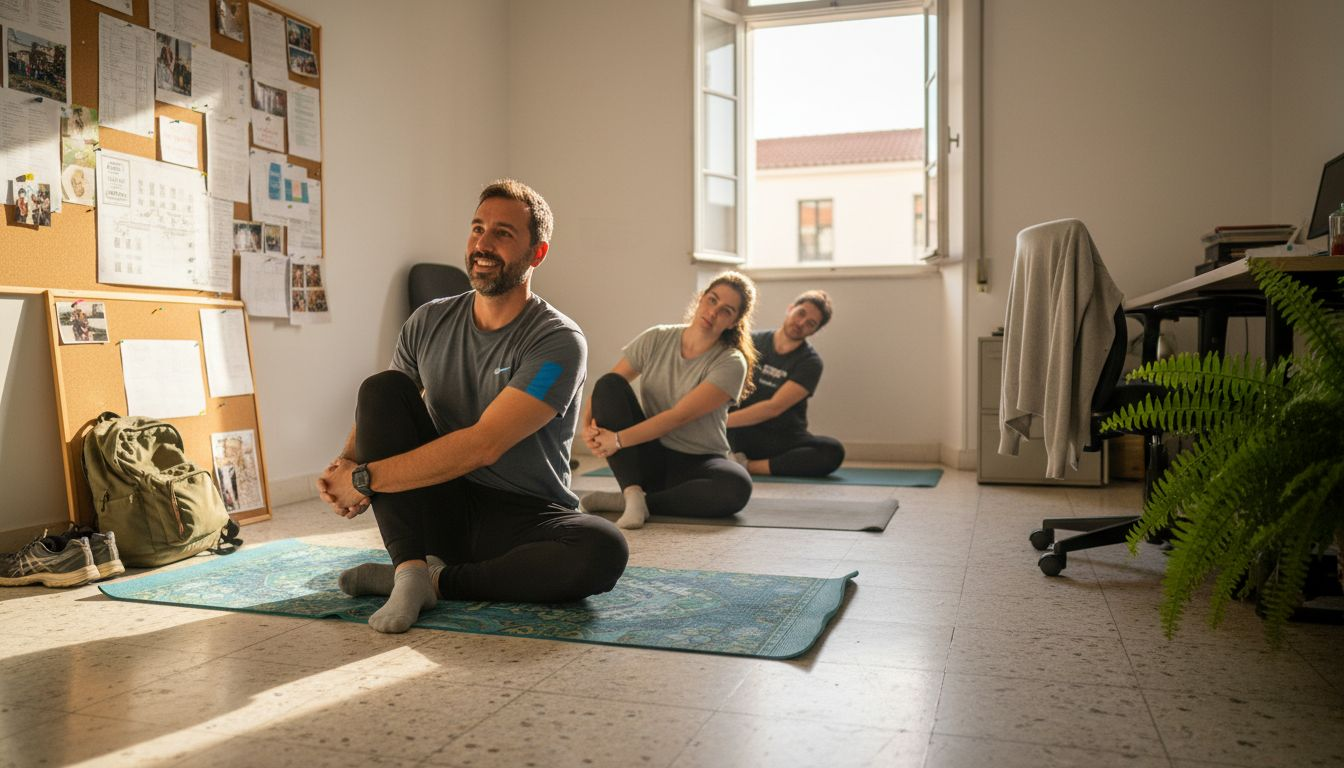
The environmental changes matter just as much as scheduled activities. If you’re promoting healthy eating but the office kitchen stocks only processed snacks, your message contradicts your actions. Real wellness initiatives require structural support, such as standing desk options, natural lighting, quiet zones for mental breaks, and accessible stairs instead of hidden stairwells. Employee Assistance Programs and health services form the backbone of comprehensive wellness, providing mental health support, health education, and disease prevention resources that employees can access when they need them most.
For corporate event planners considering wellness activities, the most effective programs combine structured initiatives with experiential opportunities. Consider how a team-building sailing experience on Lisbon’s coastline addresses multiple wellness dimensions simultaneously: physical activity through sailing, stress reduction from the ocean environment, social bonding with colleagues, and mental health benefits from being away from the office setting.
Pro tip: Audit your current initiatives against the six wellness dimensions (physical, mental, emotional, social, environmental, and financial health) to identify gaps, then fill them strategically rather than adding random activities that don’t connect to your overall wellness strategy.
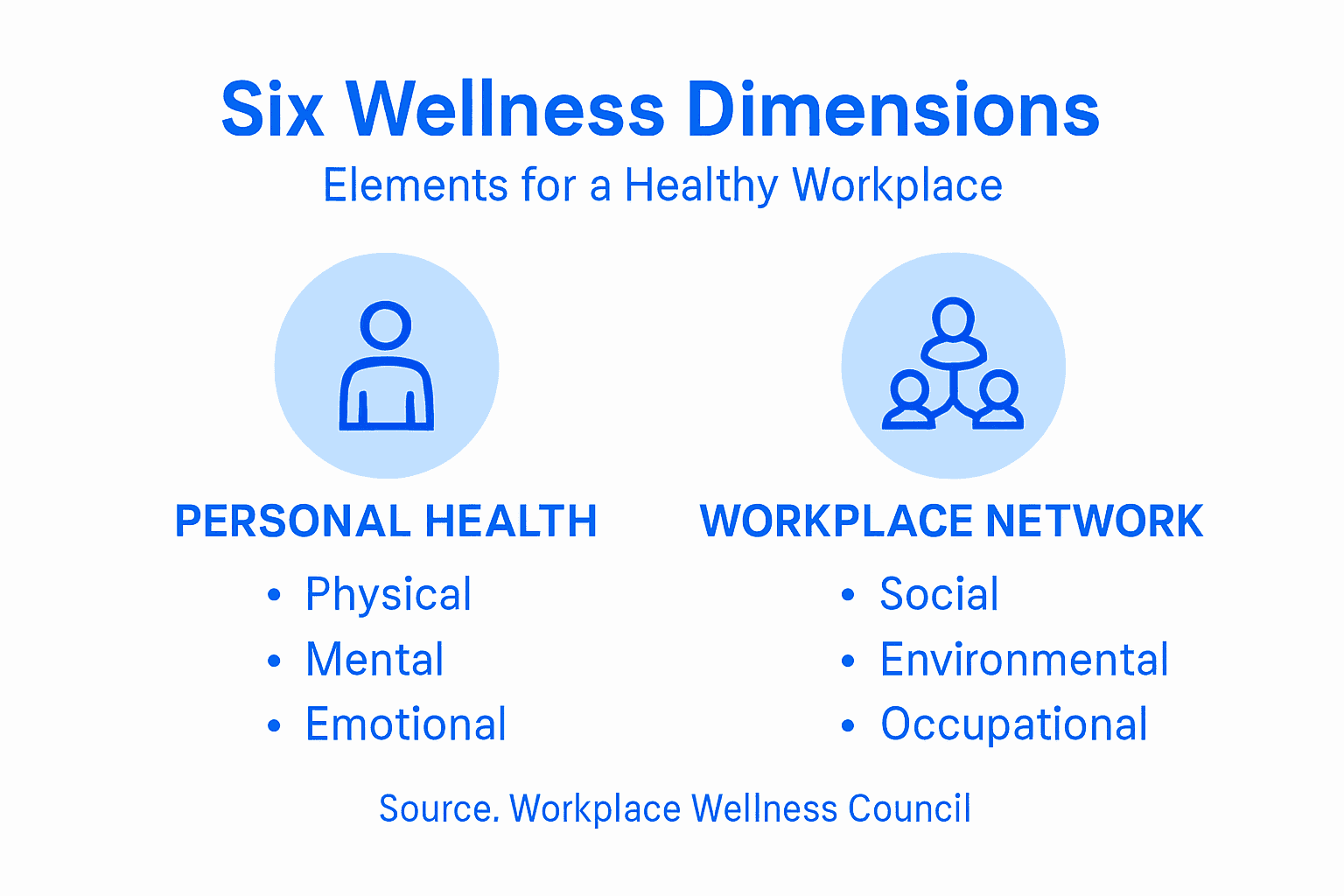
Here’s a summary of how different wellness program approaches address key employee needs:
Approach | Main Focus | Typical Benefits | Considerations |
Physical Activities | Movement and fitness | Lower health risks, higher energy | Needs broader scope to engage all |
Nutrition Support | Healthy eating habits | Improved diet, better performance | Requires workplace food changes |
Stress Management | Reducing employee stress | Lower anxiety, improved focus | Must be ongoing and accessible |
Social Engagement | Team connection | Greater morale, better teamwork | Should include remote workers |
Mindfulness Practices | Mental and emotional health | Enhanced resilience, calm | Works best when integrated daily |
Environmental Changes | Workspace improvements | Reduced fatigue, better well-being | Must align with wellness goals |
How Wellness Programs Benefit Companies
The business case for wellness programs isn’t theoretical. Companies that invest in employee health see measurable returns across multiple metrics. Well-designed wellness programs reduce health risks among your workforce while simultaneously enhancing productivity and boosting retention rates. When employees feel healthier and supported, they stay longer. This matters because replacing a single mid-level employee costs between 50 percent and 200 percent of their annual salary when you factor in recruiting, training, and lost productivity. A wellness program that keeps even one talented person from jumping to a competitor pays for itself instantly.
Absenteeism drops noticeably when companies prioritize employee health. Healthy employees miss fewer days of work. They’re also more engaged while present, which translates to better output quality and faster project completion. Beyond the productivity gains, companies experience direct cost savings through reduced medical expenses. Employees who participate in wellness programs typically have lower healthcare claims because preventive care catches problems early, before they become expensive chronic conditions requiring intensive treatment. Supporting employee wellness creates environments where people can perform at their best, which strengthens your organization’s overall ability to achieve its mission and compete effectively.
The cultural shift may be the most underrated benefit. Companies with genuine wellness programs develop reputations as places where people want to work. This attracts stronger candidates during hiring and builds loyalty among current staff. Employees experience decreased stress and improved mental health, which ripples outward into better team dynamics, improved communication, and reduced workplace conflict. When your workforce feels better physically and mentally, your company culture transforms. People show up with more energy, creativity, and commitment. They support their colleagues instead of just tolerating them.
For organizations considering wellness initiatives, the return extends beyond finances. Team-building experiences like sailing adventures in Lisbon combine multiple benefits simultaneously: stress reduction from the natural environment, physical activity, social bonding, and mental health improvements from stepping away from routine office pressures. These experiential wellness activities create lasting memories while addressing real health outcomes.
Pro tip: Measure your current absenteeism rates and healthcare costs before launching your wellness program, then track these metrics quarterly to demonstrate concrete ROI to leadership and justify continued investment in employee health initiatives.
Compare the return on investment (ROI) of wellness initiatives for organizations:
Benefit Area | Short-Term Impact | Long-Term Impact | Example Metric |
Employee Retention | Fewer resignations, less turnover | Loyalty, lower hiring costs | Turnover rate |
Absenteeism | Fewer sick days, higher presence | Sustainable productivity gains | Average missed days/year |
Healthcare Costs | Reduced minor claims | Lower chronic illness expenses | Medical claim totals |
Company Culture | Improved morale, teamwork | Competitive employer brand | Staff satisfaction survey |
Sailing Tours as Team-Building Wellness
Traditional team-building activities often feel forced. Trust falls in conference rooms. Awkward icebreakers in hotel ballrooms. Mandatory karaoke nights. These don’t address the real wellness needs your team faces. Sailing tours offer something fundamentally different. When your team steps onto a boat in Lisbon’s harbor, they leave behind email notifications, fluorescent lighting, and the pressure to perform within organizational hierarchies. On the water, everyone becomes a novice facing the same challenge. A captain explains the rigging. The wind doesn’t care about job titles. Your CEO and junior staff member both need to understand how to work together safely, creating genuine collaboration rather than performative teamwork.
The wellness benefits stack up quickly. Physical activity happens naturally as team members help manage sails, adjust lines, and navigate the vessel. This isn’t forced exercise disguised as fun. Nobody’s grinding through a fitness class they secretly resent. Instead, movement emerges from purposeful engagement with the environment. Stress reduction comes from multiple sources simultaneously. Group activities in natural settings reduce anxiety while building social connections that matter. The rhythm of the sea, the focus required to sail safely, and the disconnection from work devices combine to create a mental reset that no meditation app can replicate. Your team returns to the office genuinely refreshed rather than just checking a wellness box.
Mental health improvements extend beyond the tour itself. Shared experiences create lasting bonds. Your finance director and marketing manager don’t just work together afterward. They’ve survived tacking into the wind together. They’ve celebrated rounding a point with genuine excitement. They’ve managed minor challenges as a unit. These memories become inside jokes that strengthen workplace relationships. The social connection established on Lisbon’s water translates into better collaboration back at the office, improved communication across departments, and employees who actually want to show up because they work with people they genuinely like. Guided tours that encourage collaboration outside traditional work environments provide stress reduction and shared experiences that support lasting wellness culture.
What sets sailing apart from other team activities is the balance of structure and flexibility. Your team isn’t confined to a predetermined course of exercises or activities. The water shapes each experience differently. Wind conditions, crew dynamics, and individual energy levels create unique moments on every sail. This mirrors real work life more honestly than scripted team games, helping your people practice authentic teamwork while enjoying genuine wellness benefits.
Pro tip: Schedule your sailing team-building experience early in a wellness initiative rather than as an afterthought, then use it as a reference point for discussing team dynamics and communication patterns back in the office.
Legal Standards and Health Risks for Events
When you organize a team wellness event, you’re not just planning an activity. You’re assuming responsibility for people’s safety and well-being. This isn’t bureaucratic overreach. It’s recognizing that events carry real risks requiring careful management. Health and safety management in events demands comprehensive planning to address potential hazards such as environmental exposures, emergency situations, and participant health complications. For sailing events specifically, the water itself presents inherent risks that demand thorough protocols. Your event planners need to understand these legal obligations before booking any activity.
Legal standards exist because accidents happen. Someone might have an undisclosed heart condition triggered by physical exertion. A participant could have a severe allergic reaction. Weather could deteriorate unexpectedly. Overcrowding on a vessel creates safety concerns. These aren’t rare edge cases. They’re foreseeable risks that responsible event organizers address proactively. Effective wellness programs incorporate compliance standards and best practices that minimize these dangers. This means obtaining proper insurance, verifying that vendors meet safety regulations, ensuring adequate supervision, and establishing clear emergency protocols. For sailing tours, this includes confirming Coast Guard compliance, verifying captain certifications, reviewing life jacket requirements, and understanding passenger liability limits. Your company bears responsibility for identifying and mitigating these risks before employees board any vessel.
Risk assessment must happen continuously, not just before launch. A thorough risk assessment identifies hazards specific to your event, evaluates the likelihood and severity of each potential incident, and establishes controls to prevent or minimize harm. For maritime activities, this includes weather monitoring, passenger health screening, emergency communication systems, and rescue procedures. Documentation matters legally and practically. Your planning process should create records demonstrating that you identified risks and took reasonable precautions. If something does go wrong, these records show you acted responsibly rather than negligently. This protects your company legally while proving to employees that their safety matters.
Responsible event planning also means understanding liability distinctions. Different jurisdictions have different rules about employer liability for employee injuries during company-sponsored events. Some places hold employers strictly liable for employee injuries. Others use comparative negligence standards. Portuguese maritime law has specific requirements for commercial sailing operations. You need legal guidance specific to your jurisdiction and situation rather than assumptions based on what you’ve seen elsewhere. Partnering with established sailing tour operators who carry appropriate insurance and maintain required certifications transfers risk appropriately while ensuring compliance.
Pro tip: Require all event vendors to provide proof of liability insurance and safety certifications before booking, then have your legal team review these documents to ensure they meet your company’s risk management standards and jurisdiction-specific requirements.
Elevate Your Corporate Wellness with Sailing Tours in Lisbon
Physical activity and stress management are critical components of successful corporate wellness programs. The article highlights how authentic engagement and natural environments reduce employee burnout and build stronger social connections. At Lisbon By Boat, we understand these goals because our sailing tours combine purposeful movement, mental refreshment, and team bonding on Lisbon’s stunning coastline. Our private daily cruises offer an experiential wellness activity that addresses multiple pain points mentioned like stress reduction, social engagement, and physical wellness.
Discover a unique way to boost your team’s well-being beyond traditional office initiatives. Book a private sailing experience today and watch your employees return rejuvenated and more connected. Start transforming your corporate wellness strategy now at Lisbon By Boat. Explore how a day on the water can become your most effective wellness investment. Visit private daily cruises to learn more.
Frequently Asked Questions
What is a corporate wellness program?
A corporate wellness program is an organized employer-sponsored initiative designed to support employees in adopting healthier behaviors, improving their quality of life, and enhancing productivity. It encompasses a range of activities focused on physical, mental, and social well-being.
How do corporate wellness programs benefit companies?
These programs lead to measurable returns by reducing health risks, improving employee retention, decreasing absenteeism, and lowering healthcare costs, ultimately boosting overall productivity and enhancing company culture.
What types of initiatives can be included in a corporate wellness program?
Common initiatives include physical activity programs, nutrition support, stress management workshops, mindfulness practices, and social engagement activities, all tailored to meet the specific needs of the workforce.
How can I measure the success of a corporate wellness program?
Success can be measured by tracking metrics such as absenteeism rates, healthcare costs, employee retention rates, and overall employee satisfaction. Regular assessments and adjustments based on participation and outcomes are also vital.
Recommended
Comments