

Five Sites, One River View: Visit the City Museum of Lisbon
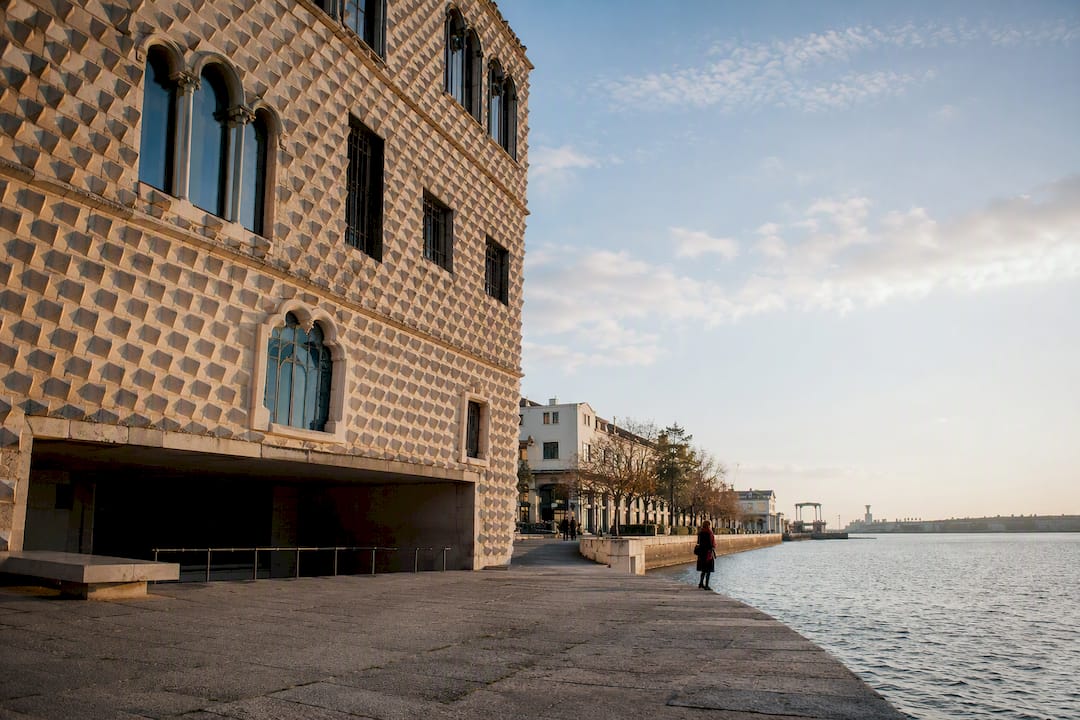
The city museum of Lisbon is the Museu de Lisboa, a network of five separate sites rather than one building. Start at Pimenta Palace for the historical overview, then add one or two satellite sites that match what you actually care about, whether that’s Roman ruins, azulejo tiles, or a diamond-cut Renaissance façade. Just check the official schedule first, since most poles close on Mondays.
TL;DR:
Visiting Pimenta Palace offers the most comprehensive experience with a city model and exhibits, requiring 60 to 90 minutes for a full view.
The Roman Theatre and Casa dos Bicos are the quickest, lowest-cost sites, each with about 30 to 45 minutes needed and often free or very affordable entry.
It is essential to account for travel time between sites, as they are spread out, with some requiring up to 20 minutes of walking or transit.
A full-day itinerary can comfortably include the main sites, ending with a river cruise to connect Lisbon’s history with its waterfront perspective.
Confirm hours, tickets, and exhibitions directly on the official website to avoid closures or misaligned schedules, especially during peak seasons or restorations.
Table of Contents
What Is the Museum of Lisbon, Exactly?
Most visitors expect a single grand building with a ticket booth and a gift shop. The Museu de Lisboa doesn’t work that way, and once you understand why, the planning gets a lot easier.
The museum began in 1942 as the Museu da Cidade, a conventional single-site city museum. In 2015, the institution rebranded as Museu de Lisboa and reorganized itself into a network of five distinct locations scattered across the city. Instead of one building holding everything from Roman coins to 18th-century paintings, each site now tells a piece of Lisbon’s story in the place where that story actually happened.
That’s the core idea behind what the museum itself calls “one museum, five places.” A Roman theater gets its own dedicated site because that’s where the Roman theater is. Saint Anthony’s story gets told steps from the church where he’s said to have been born. The approach is deliberately place-based, and cultural experts argue it produces more engaging, situated storytelling than trying to cram every era into one linear timeline.
Here are the five poles that make up the network.
Pimenta Palace — the flagship site and the best starting point, with the museum’s collection of paintings, ceramics, and its famous large-scale city model.
Roman Theatre — excavated ruins of a first-century amphitheater with an on-site museum of inscriptions and statues.
Santo António — a small museum tracing the life and legend of Lisbon’s patron saint, next to the church marking his traditional birthplace.
Torreão Poente — the West Tower at Praça do Comércio, used for rotating temporary exhibitions.
Casa dos Bicos — a 16th-century house with a striking diamond-patterned façade, home to archaeological finds and the José Saramago Foundation.
None of these sites duplicates another. That’s useful, because it means you’re not choosing between five versions of the same museum. You’re choosing which slice of Lisbon’s history you want to see up close, and where.
Which Museu De Lisboa Site Should You Visit First?
Not every pole deserves equal time. Some reward a full hour of wandering. Others are worth a focused 20-minute stop. Here’s what each one actually offers, and how long to budget.
Pimenta Palace: the one to see if you only see one
If you visit a single site, make it this one. Housed in an 18th-century Baroque palace, Pimenta Palace holds the museum’s most important artifact: a large-scale model of Lisbon as it looked before the catastrophic 1755 earthquake. Standing over that model, you get a physical sense of the city that no longer exists, streets and squares that vanished in minutes and were never rebuilt the same way.
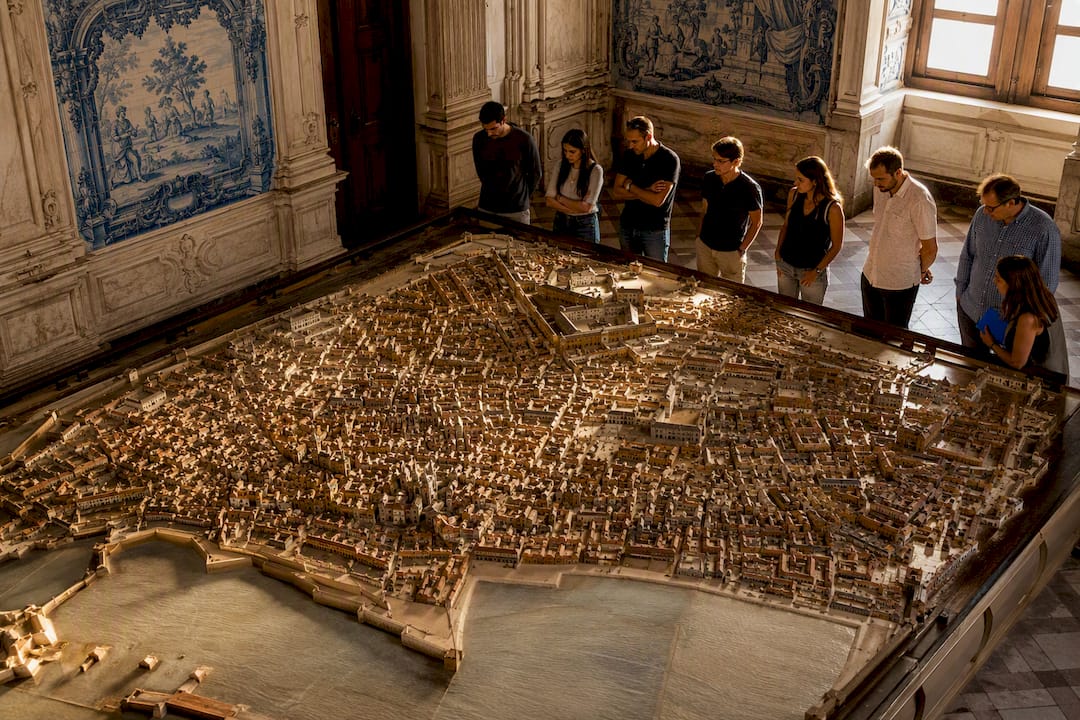
Beyond the model, the palace holds azulejo tile panels, period furniture, maps, and rooms arranged to walk you through Lisbon’s urban evolution chronologically. There’s also a garden worth a slow lap if the weather cooperates.
Time to budget: 60 to 90 minutes. This is the anchor visit of the network, not a quick stop.
Roman Theatre: ruins with a story to tell
Tucked into the Alfama district, this site pairs an excavated ancient amphitheater with a small museum built around it. The exhibits include carved columns, dedicatory inscriptions, a statue of Silenus, and an inscription referencing the emperor Nero, plus multimedia displays that help make sense of what you’re looking at. Entrance is often free, which makes it an easy add if you’re already exploring Alfama’s steep streets.
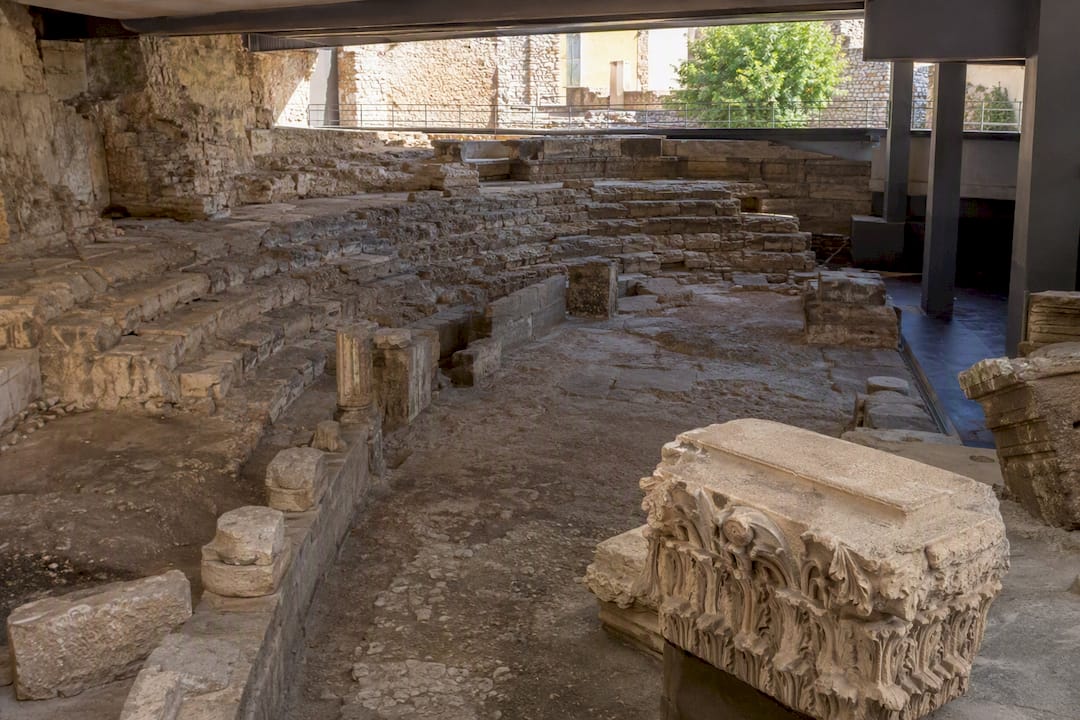
Time to budget: 30 to 45 minutes. Archaeology fans could linger longer, but the site itself is compact.
Santo António: saint, church, and civic tradition
This site sits beside the church built on the spot where Saint Anthony is traditionally said to have been born, and it focuses on his life and Lisbon’s civic traditions surrounding his feast day every June. If you’ve ever wondered why Lisbon fills with paper lanterns and grilled sardines every summer, this is where that tradition gets context. It’s a smaller, quieter museum, useful for understanding the religious and cultural fabric of the city rather than its politics or architecture.
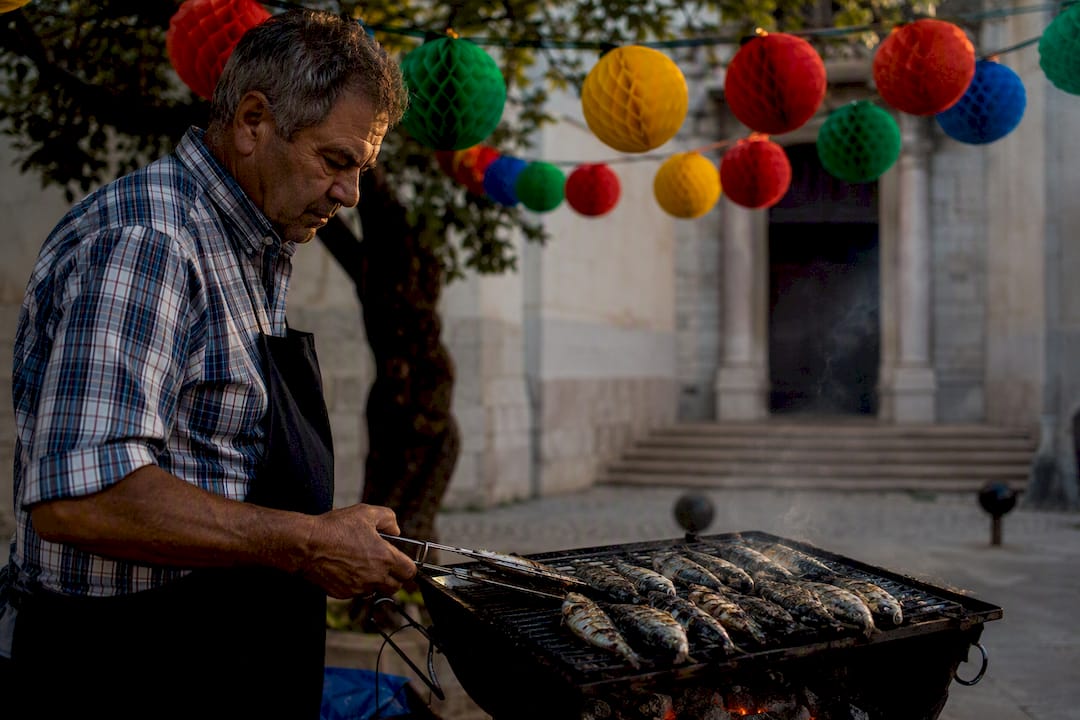
Time to budget: 30 to 40 minutes.
Torreão Poente: exhibitions at the water’s edge
The West Tower at Praça do Comércio hosts temporary exhibitions rather than a fixed permanent collection, so what you’ll see changes depending on when you visit. The site has gone through restoration and accessibility upgrades since 2020, and it’s worth checking ahead since access has occasionally been limited during work on the building. Its location right on Praça do Comércio, facing the Tagus, makes it a natural stop if you’re already near the waterfront.
Time to budget: 20 to 40 minutes, depending on the current exhibition.
Casa dos Bicos: the house with the diamond face
You’ll recognize this one from photos before you ever visit. Its façade, studded with pyramid-shaped stones in a pattern borrowed from Italian Renaissance design, makes it one of the most photographed buildings in the Baixa. Inside, the ground floor holds an archaeological center with genuinely old material: late Roman-era walls and fragments from an ancient fish-salting factory that once operated on this stretch of riverfront, according to background on the site’s 2014 reopening. Upstairs, the building houses the José Saramago Foundation, dedicated to Portugal’s Nobel laureate in literature.
Time to budget: 30 to 45 minutes, longer if you also explore the Saramago Foundation floor.
Quick comparison, if you’re short on time: the Roman Theatre and Casa dos Bicos are the two fastest, cheapest wins in the network. Both offer free or very low-cost entry and are compact enough to slot into a walk through Alfama or the Baixa without derailing your day.
A practical way to sequence a visit: start at Pimenta Palace for the chronological overview and the city model, then pick a second site based on your actual interest, archaeology at the Roman Theatre, or riverside history at Casa dos Bicos. Trying to see all five in one day is possible but exhausting, and it flattens what makes the decentralized format work in the first place.
Hours, Tickets, and Getting Between Sites
Planning around five separate locations means logistics matter more here than at a typical single-building museum. Get the basics wrong and you’ll show up to a locked door.
Pimenta Palace typically opens Tuesday through Sunday, 10:00 AM to 6:00 PM, with last admission at 5:30 PM. Most poles in the network follow a similar pattern and close on Mondays, so building your itinerary around a Monday city-museum day is a mistake worth avoiding. Hours and temporary exhibition schedules shift, so confirm dates on the official site before you go, especially for Torreão Poente given its history of restoration-related closures.
On cost: Pimenta Palace charges a modest general admission, with a reduced concession rate for students and seniors. The Lisboa Card covers free or discounted access to many cultural sites across the city, and it’s worth checking whether it applies to the specific pole you’re visiting since coverage can vary by site. The Roman Theatre and Casa dos Bicos, as noted above, often charge little to nothing at all.
Transit between poles takes longer than most visitors expect. The museum’s own visitor guidance flags this as a common planning mistake: people assume the sites are clustered together the way a single museum’s wings would be, then get caught off guard by a 20-minute walk or a tram transfer between locations.
Site | Nearest access point | Typical visit length |
Pimenta Palace | Bus/tram near Campo Grande area | 60 to 90 minutes |
Roman Theatre | Walk through Alfama, near the Sé Cathedral | 30 to 45 minutes |
Santo António | Adjacent to Sé Cathedral, Alfama | 30 to 40 minutes |
Torreão Poente | Praça do Comércio, riverfront | 20 to 40 minutes |
Casa dos Bicos | Baixa, near Campo das Cebolas | 30 to 45 minutes |
Roman Theatre and Santo António sit close enough to pair on foot in under 15 minutes. Casa dos Bicos and Torreão Poente are also walkable from each other along the riverfront. Pimenta Palace stands apart geographically, which is exactly why it works best as its own dedicated outing rather than a stop bolted onto the others.
A few caveats worth flagging: the Roman Theatre site involves uneven excavated ground, so accessibility is partial rather than full. Summer months and festival periods, particularly around the Santo António feast in June, bring heavier crowds and occasional schedule changes near the saint’s museum.
Building an Itinerary Around the Five Sites
You don’t need three days to make sense of the Museu de Lisboa. Most visitors can get a satisfying experience in a single afternoon, and a full day covers the network comfortably with room to breathe.
If you have half a day:
Start at Pimenta Palace and spend 60 to 90 minutes with the city model and period rooms.
If energy allows, add the Roman Theatre or Casa dos Bicos as a shorter second stop, depending on which side of the city you end up on.
Skip trying to force in a third site. Two well-chosen locations beat four rushed ones.
If you have a full day:
Morning: Pimenta Palace for the overview and the pre-earthquake city model.
Midday: cross toward Alfama for the Roman Theatre and Santo António, which sit close enough to combine easily.
Afternoon: head to the Baixa for Casa dos Bicos, then finish at Torreão Poente on Praça do Comércio if it’s open.
Late afternoon: this is where a short river cruise earns its place. Travel writers consistently recommend pairing indoor museum time with an outdoor river view, since seeing the Tagus waterfront from the water gives context that no gallery wall can replicate, especially right after visiting Torreão Poente or Casa dos Bicos, both of which face that same stretch of river.
Families with younger kids often do best sticking to the Roman Theatre and Pimenta Palace’s gardens, both of which give kids something physical to look at rather than long wall text. If a temporary exhibition at Torreão Poente interests you, check whether it requires a timed ticket. Rotating shows sometimes do, and showing up without one wastes a stop.
Pro Tip: Book any river cruise for late afternoon rather than midday. The light hits Praça do Comércio and the Baixa waterfront differently as the sun lowers, and you’ll avoid the midday heat that makes walking between museum poles genuinely uncomfortable in summer.
Making the Most of Each Visit
A little preparation goes further here than at most museums, mostly because the sites are small and specific rather than sprawling.
Give yourself the time budgets above and don’t cut it close on last admission, particularly at Pimenta Palace, where entry stops well before closing. Most poles offer information in both Portuguese and English, and several use multimedia kiosks at the Roman Theatre to help make sense of ruins that would otherwise just look like scattered stones.
Facilities vary a lot by site. Pimenta Palace has a café and proper visitor amenities. The archaeological sites, the Roman Theatre especially, offer far less, so plan bathroom stops accordingly. Photography is generally fine in the museum spaces, but Santo António sits next to an active church, so dress and behave with the same consideration you’d bring to any religious site, and expect restrictions on flash photography inside the sanctuary itself.
Wear real walking shoes. The Roman Theatre’s ground is uneven, and Alfama’s cobblestones punish anyone in sandals.
Bring a light layer even in summer. Torreão Poente sits right on the exposed riverfront.
Check bag policies at Casa dos Bicos, since the archaeological center occasionally restricts larger bags near display cases.
Pro Tip: If you’re combining an outdoor viewpoint with a museum stop, do the outdoor portion first while your energy’s high, then treat the museum as your indoor cooldown. Doing it backward means you’ll rush the walk to beat closing time.
Why the View From the Water Changes How You See These Museums
There’s a reason we keep circling back to the river when people ask us about museum planning. From the deck of a boat, Lisbon’s riverfront architecture reads completely differently than it does from the street. Torreão Poente and Praça do Comércio, seen head-on from the Tagus, reveal the deliberate symmetry of the square’s rebuilding after 1755, a detail that’s easy to miss when you’re standing in the plaza itself.
There are daily two-hour sightseeing tours with live commentary, and the sweet spot for pairing one with a museum day tends to be late morning, before the afternoon heat sets in, or the last cruise of the afternoon, when the light on the Baixa façades turns gold.
The city walls, the old fortifications, the scale of Praça do Comércio: these things click into place once you’ve seen them from where sailors and merchants actually saw them for centuries. A museum tells you what happened here. The water shows you why it happened here.
Private charters on sailing yachts and catamarans are also available for groups who want more flexibility than a fixed two-hour slot allows.
What the Guidebooks Get Backwards About This Museum
Most travel advice treats the Museu de Lisboa like a checklist: hit all five sites, tick the box, move on. That’s backwards, and it’s the single biggest planning mistake we see.
The decentralized format isn’t a logistical inconvenience to power through. It’s the point. Trying to rush all five poles in one day is exactly what flattens the experience the museum was designed to create. A visitor who spends 90 unhurried minutes with the city model at Pimenta Palace and then genuinely absorbs the Roman Theatre walks away with more than someone who sprints through all five sites glancing at labels.
The other overrated piece of advice: treating this as a purely indoor activity. Lisbon’s history is inseparable from its river, and skipping any outdoor or waterfront context leaves half the story untold. Prioritize depth over completeness. Pick sites that match your actual curiosity, give them real time, and let the river fill in what the walls of a building never quite can.
— Lisbon
Turn Your Museum Day Into a Full Day on the Water
Museums tell you Lisbon’s history. Seeing the Tagus from a boat deck shows you why that history unfolded exactly where it did. One operator offers daily two-hour sightseeing tours with live commentary on the coastline and monuments you just read about, no lecture hall required.

If two hours isn’t enough, private charters on sailing yachts and catamarans can stretch from a few hours to a full day, often with beverages and snacks included and the route customized around what a group wants to see. Pair either option with a museum morning and you’ve turned a good day into a complete one. Check available dates and book a spot on daily sightseeing tours, or look into private yacht charters if planning something for a group.
Where to Verify Hours, Tickets, and Exhibitions
Schedules shift, exhibitions rotate, and museum websites are always the final word over any travel blog, including this one.
The official Museu de Lisboa site is the authoritative source for current hours, ticket prices, and which temporary exhibitions are running at Torreão Poente right now.
Visit Lisboa’s museum pages offer solid background on individual sites and their collections, useful for deciding which pole fits your interests before you commit to a route.
The Museum of Lisbon Wikipedia entry gives a broader historical rundown of how the network formed and what each site holds.
For transit planning, the museum’s own arrival guidance covers how to reach each pole and how much buffer time to leave between them.
If you’re combining a museum visit with a walk through the city or a stop at other attractions, our guide on walking routes through Lisbon covers how the poles connect on foot. Always confirm exhibition dates directly on the official site before building a trip around a specific temporary show.
Sources
Recommended
Comments