

4 Walking Routes to See Lisbon: One Day Plan and Survival Tips
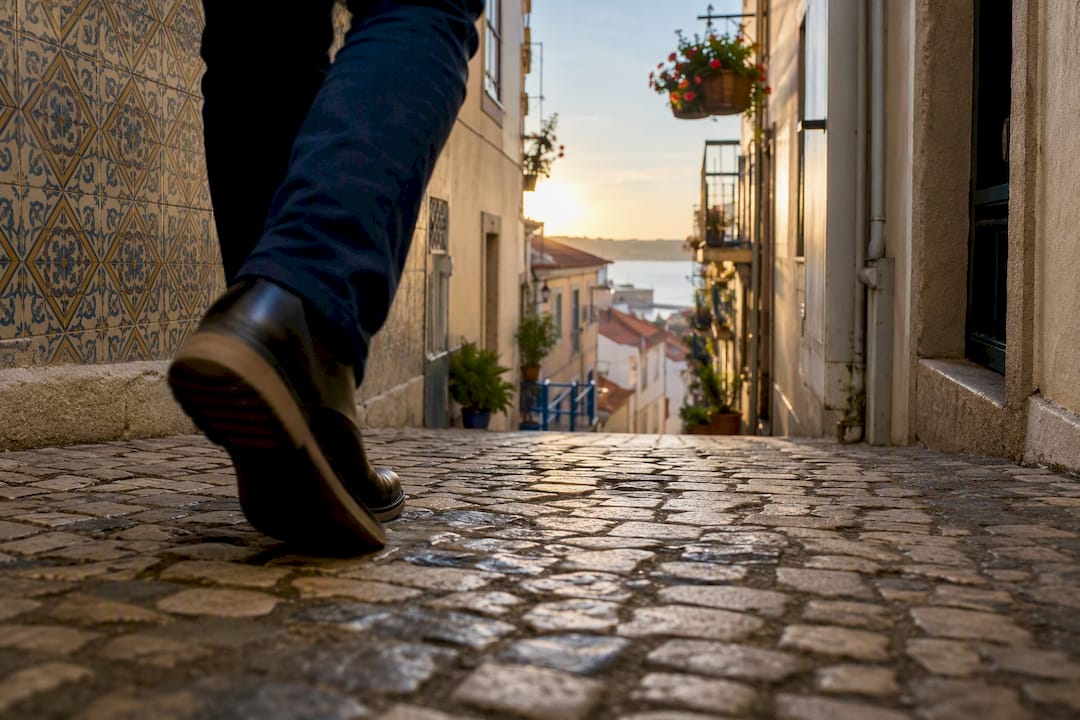
Yes, walking is the best way to see Lisbon, and four routes cover nearly everything worth seeing: the Baixa–Chiado–Bairro Alto loop, the Alfama and São Jorge Castle climb, the flat Belém riverside walk, and a mobility-friendly Baixa stroll. Pick based on your legs and your schedule. Alfama has real hills and slippery cobblestones, so bring grippy shoes, not sandals or smooth-soled sneakers.
TL;DR:
The Alfama and São Jorge Castle route is the most physically demanding, covering about 5 km with steep, uneven, and often slippery paths, requiring extra caution and rest stops.
The Belém riverside walk is the flattest and most accessible, spanning up to 7 km with key monuments like Jerónimos Monastery, Belém Tower, and Padrão dos Descobrimentos, taking up to 4 hours.
The Baixa flat walk is the easiest for mobility-limited visitors, covering approximately 3 km on wide, flat streets, and takes around 2 hours, with public lifts available for partial elevation changes.
Combining walking routes with Lisbonbyboat’s two-hour sightseeing cruise offers a low-effort alternative to see Belém’s historic coastline, especially for those with sore feet or limited mobility.
Proper footwear with grip, hydration, and navigation tools are essential for safe walking, as Lisbon’s cobblestones become slippery when wet, and full-day plans should incorporate breaks and flexibility.
Table of Contents
Best walking routes in Lisbon at a glance
Before picking a route, match it to your energy level and the time you’ve got. Here’s how the main options stack up:
Baixa–Chiado–Bairro Alto loop: about 2 to 3 km, 2 to 3 hours, moderate difficulty (some stairs, one steep hill up to Bairro Alto). Start by 9:30 to enjoy Chiado’s cafés before lunch crowds.
Alfama + São Jorge Castle: roughly 5 km, 3 to 4 hours, hard difficulty with cumulative elevation gain of 100 to 200 meters. Start before 9:00 to beat cruise-ship groups.
Belém riverside walk: 2 to 7 km depending on how far you go, up to 4 hours, easy and flat. Good any time, though mornings avoid the worst sun.
Baixa flat walk: about 3 km, 1.5 to 2 hours, easy and mobility-friendly. Works well as a low-effort half-day option.
If you’re short on time or traveling with someone who can’t manage hills, the Baixa flat walk and Belém riverside route deliver the most reward for the least strain.
Baixa to Chiado to Bairro Alto: how to walk the classic loop
Start at Praça do Comércio, the grand riverside square where Lisbon’s royal palace once stood before the 1755 earthquake. Head north up Rua Augusta, Lisbon’s pedestrian shopping street lined with tiled buildings, until you hit Rossio Square. From there, detour to the Santa Justa Elevator or the ruins of Carmo Convent, then climb into Chiado, home to century-old cafés and bookshops.
The final push is up to Miradouro São Pedro de Alcântara, a garden viewpoint overlooking the castle and river, before dropping into Bairro Alto, Lisbon’s nightlife district that turns quiet and charming by day.
Budget 2 to 3 hours of walking, plus another 30 to 60 minutes if you stop for coffee or duck into a museum.
Distance: roughly 2 to 3 km
Elevation: one sustained climb from Chiado to Bairro Alto
Shortener: skip Bairro Alto and end at Chiado if you’re tired; catch a tram or taxi back to Baixa
Pro Tip: Skip the Santa Justa Elevator line entirely by walking the back stairs from Largo do Carmo instead. Locals do this daily, and it’s faster than waiting for the elevator’s paid ride.
Alfama and São Jorge Castle: the toughest climb in Lisbon
This is Lisbon’s hardest route, and it’s worth every uphill step. Start at Sé de Lisboa, the city’s fortress-like cathedral, then wind up through narrow lanes to Miradouro de Santa Luzia, a tiled terrace with river views that rivals any postcard. Continue to Portas do Sol before the final ascent to São Jorge Castle, the Moorish fortress that overlooks the entire city.
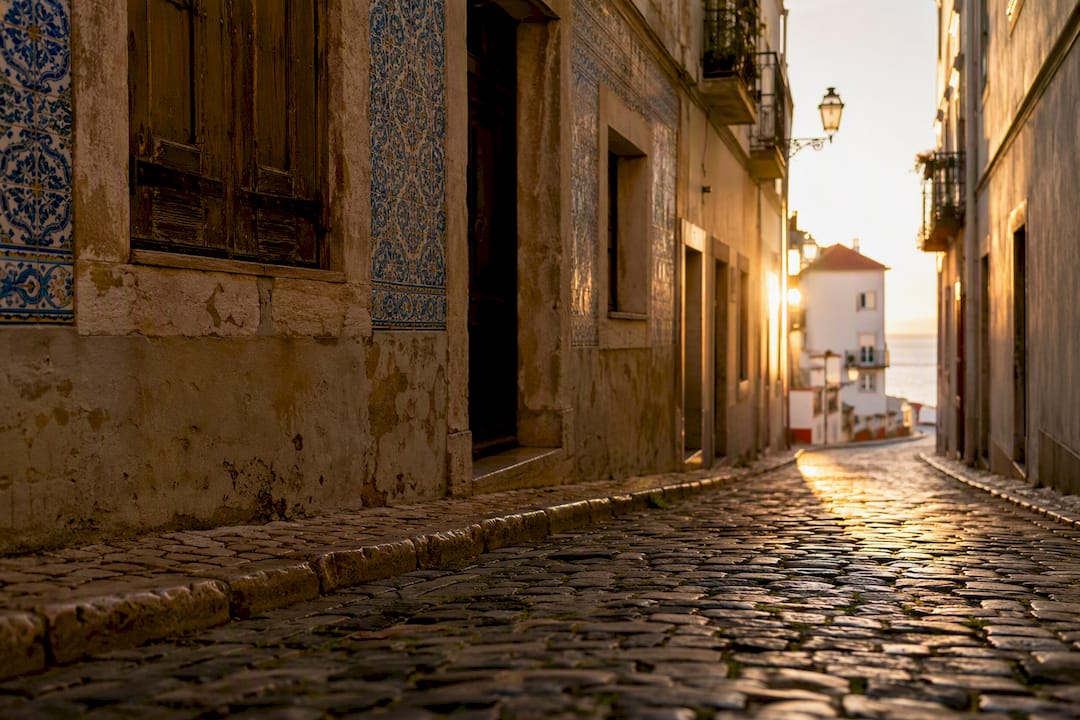
Expect 3 to 4 hours total, covering about 5 km with a cumulative elevation gain between 100 and 200 meters — steep enough that people with knee issues should plan extra rest stops. Alfama’s stairs are narrow, uneven, and often wet from laundry lines dripping overhead, so watch your footing.
Route: Sé de Lisboa → Santa Luzia → Portas do Sol → São Jorge Castle
Best start time: before 9:00 to avoid cruise-ship groups that flood the alleys by mid-morning
Ticket tip: buy castle entry online to skip the ticket line, which grows fast after 10:00
Descent caution: wet calçada is more hazardous going downhill than up, so slow down on the way back
The free Elevador do Castelo public lift can shave a chunk of the climb if your legs are done before you reach the top. It typically runs from 8:00 to 21:00, though hours occasionally shift, so check on arrival.
For photography without the crowds, the stretch from Graça to Mouraria offers better light and fewer tourists than the packed viewpoints at Portas do Sol or Santa Luzia, especially near sunrise.
Belém riverside walk: monasteries, towers, and pastries
This is the flattest, most monument-dense route in Lisbon, and it’s a relief after Alfama’s stairs. Walk or ride the tram from Cais do Sodré or Praça da Figueira out to Belém, where three sights anchor the route: Jerónimos Monastery, a UNESCO World Heritage site built to celebrate Portugal’s Age of Discovery, the riverside Belém Tower, and the soaring Padrão dos Descobrimentos monument.
Total distance runs 2 to 7 km depending on how much ground you cover, with monument visits stretching the outing to 3 or 4 hours.
Start: Cais do Sodré or Praça da Figueira
Core stops: Jerónimos Monastery, Belém Tower, Padrão dos Descobrimentos
Getting back: tram 15E runs directly along the riverfront, or grab a taxi if you’re pastry-drunk and done walking
Accessibility: flat and stroller-friendly, though sidewalks narrow near the tower
Don’t skip the custard tart stop at the bakery near the monastery. It’s the most photographed pastry shop in the city, and for good reason.
The easiest way to walk Lisbon with limited mobility
If steep hills aren’t an option, the Baixa flat walk covers the historic core without a single serious climb. The route runs about 3 km and takes 1.5 to 2 hours, starting at Praça do Comércio, heading up Rua Augusta, and ending at Rossio Square.
Distance: about 3 km
Time: 1.5 to 2 hours
Terrain: flat, wide pedestrian streets, minimal stairs
Best for: travelers with mobility limitations, short layovers, or anyone recovering from a long flight
Baixa is the only genuinely flat district in central Lisbon, which is exactly why official tourism guidance flags it as the mobility-friendly option. If curiosity pulls you toward the hills later, use the free public lifts to get partway up without the stair-climbing. Just know the calçada cobblestones here get slick when wet, and afternoon sun offers little shade along Rua Augusta, so carry water even on the “easy” route. For a downloadable version of this stretch, Lisbonbyboat’s self-guided walking tour map lays out the exact turns.
A one-day walking itinerary that actually works
Stringing routes together without wasting time means starting early and building in slack for coffee, lines, and tired feet. Here’s a sequence that flows logically across the city:
9:00: Start at Praça do Comércio, walk Rua Augusta to Rossio (about 30 minutes).
9:30 to 11:00: Climb through Chiado to Bairro Alto, pausing at Miradouro São Pedro de Alcântara.
11:15 to 13:00: Head into Alfama, hitting Sé de Lisboa, Santa Luzia, and Portas do Sol before the castle fills up.
13:00 to 13:45: Lunch break in Alfama, ideally somewhere with a terrace view.
13:45 to 15:00: Tour São Jorge Castle, or skip the interior and head straight downhill if you’re running late.
15:30 onward: Take tram 15E or a taxi to Belém for monastery visits and a pastry break before sunset.
This plan runs roughly 4 to 5 hours of actual walking, plus 2 to 3 hours split across meals, museum entries, and photo stops. If your feet give out by early afternoon, drop Belém and save it for another day. Starting around 9:00 keeps you ahead of the cruise-ship crowds that pack Alfama’s alleys by mid-morning.
How to survive walking in Lisbon: footwear, sun, and safety
Lisbon’s calçada portuguesa, the small limestone and basalt cobblestones covering nearly every sidewalk, look beautiful in photos and turn into a hazard the moment it rains. Wet calçada is noticeably more slippery than dry, and going downhill on it is riskier than climbing up. Skip smooth-soled shoes, sandals, and anything with a heel. Grippy rubber soles are non-negotiable here, not a suggestion.
Summer sun is intense and shade is scarce on streets like Rua Augusta and along the Belém waterfront, so carry water and reapply sunscreen if you’re out past midday. Spring and fall offer the best walking weather, with cooler temperatures and fewer tour groups clogging the viewpoints.
Footwear: grippy rubber soles, broken in before your trip
Hydration: refill at public fountains scattered through Baixa and Alfama
Navigation: download offline maps before entering Alfama, where narrow alleys kill phone signal
Bailouts: the free Elevador da Baixa and Elevador do Castelo public lifts run roughly 8:00 to 21:00, and tram 28 or tram 15E can rescue tired legs at almost any point along these routes
Awareness: pickpocketing happens most on crowded trams and in packed viewpoints, so keep bags zipped and in front
Pro Tip: Pack a light scarf or hat even in summer. Miradouros catch wind off the river, and the temperature drop at sunset viewpoints surprises a lot of visitors.
When a short cruise beats another day of walking
A two-hour coastal cruise past Belém’s monuments shows you the same UNESCO-listed sites from the water, a perspective no sidewalk gives you. It’s not a replacement for wandering Alfama’s alleys or ducking into a Chiado café, but it works well for travelers with sore feet, mobility limits, or just one afternoon left in the city.
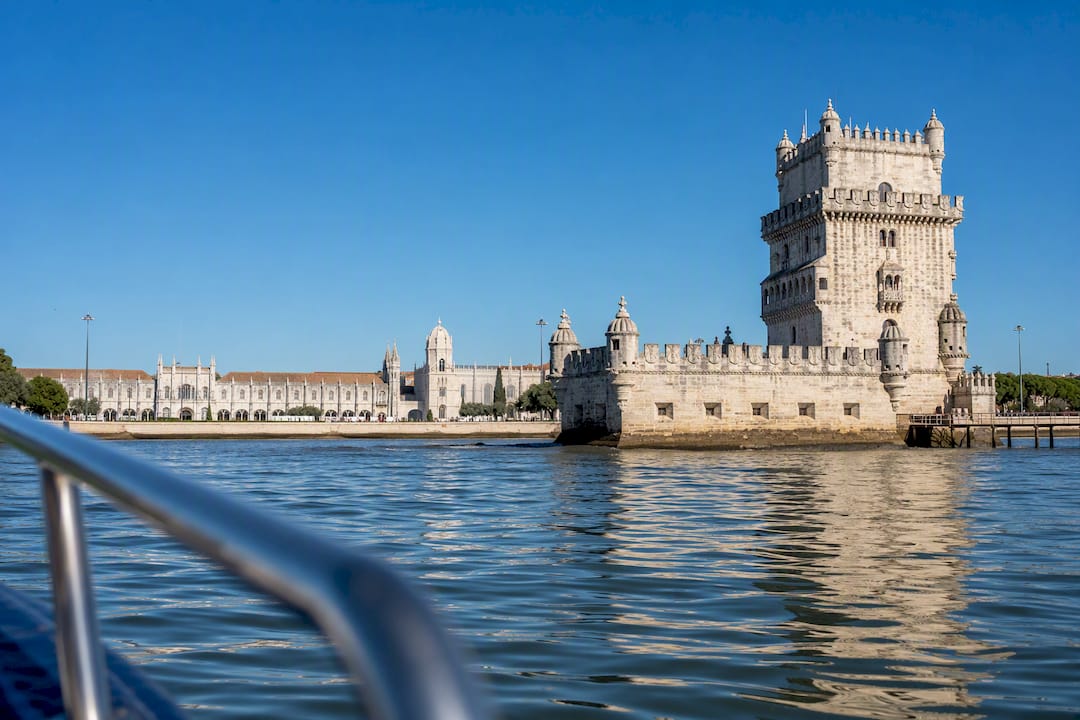
Photographers especially benefit from the water-level angle on Belém Tower and the monastery skyline. Pair it with a morning of walking and an afternoon on the water, using Lisbonbyboat’s walking route planner to map out the land half of your day.
Why walking still wins, even with sore feet
Walking Lisbon reveals something a map can’t: the exact seam where Baixa’s grid streets give way to Alfama’s tangled medieval lanes. You feel that shift underfoot, not just see it on a screen.
Most guides treat routes as fixed paths to follow start to finish, and that’s a mistake. The real skill is knowing when to bail, when a free lift saves your knees, and when a wrong turn into a quiet Alfama alley beats the crowded viewpoint you were heading toward. A route map gets you oriented. Your legs and your judgment get you the rest of the way.
I’d rather see a visitor cut Belém short and enjoy Alfama properly than rush through both and remember neither. That’s the trade every walker in this city eventually makes.
— Lisbon
Pair your walk with a Lisbon sightseeing cruise
Sore feet by 3 p.m. don’t have to end your day early. Lisbonbyboat’s two-hour sightseeing cruises cover the same Belém coastline you just walked, minus the incline, minus the sun beating down on cobblestones, and with a guide narrating the monuments as they slide past your seat.

It pairs naturally with a walking morning: cover Baixa and Alfama on foot before lunch, then let the boat handle the Belém stretch while you sit down for once. Groups, couples, and anyone with tired legs by midafternoon get the same monastery and tower views from the water, no stairs involved. Check available departure times and book your Lisbon sightseeing cruise directly, or look into a private charter on the luxury yacht and catamaran fleet if you’d rather have the boat to yourselves.
Useful links for planning your walk
Official Lisbon walking routes guide: distances, difficulty ratings, and mobility notes for every district.
UNESCO World Heritage listing: background on the heritage status behind Belém’s monuments.
Lisbon City Walking Tour guide: local pacing tips and neighborhood highlights.
7 Best Free Things to Do in Lisbon: low-cost stops to fold into any route above.
Sources
Recommended
Comments