

Nautical Etiquette for Groups: A Guide for Boat Outings

Good nautical etiquette for a group comes down to five habits: arrive together and on time, treat the captain’s word as final, respect the boat and its equipment, keep your voices and movements considerate, and tell the crew early when something is wrong. Follow them and a crowd of friends, relatives or colleagues becomes an easy group to host. On the Tagus in Lisbon, where our crews run 2-hour sailing tours and private charters every day, that is what keeps the afternoon relaxed for everyone aboard.
This guide is for tourists traveling in a party and for companies planning a team-building outing. It covers what to do before boarding, how to behave underway, what the horn signals mean, and how a group leader can keep 8 people or 80 pulling in the same direction.
TL;DR
Pick one group leader, share the meeting point and time in advance, and arrive together instead of in a trickle.
The captain’s decisions on weather, route and safety are final, and the safety briefing is for everyone, including people who have sailed before.
Wear flat, soft-soled shoes, bring soft bags, and ask before putting coolers, glass or electronics anywhere on board.
Report problems such as a blocked toilet or a spill to the crew right away, and keep music and voices at a level that lets people hear instructions.
If you hear five short blasts from a vessel, it signals danger or doubt about another vessel’s intentions, so stay calm and follow the crew.
Table of Contents
Why groups need etiquette more than couples do
A boat is a small, shared space where one person’s habit affects everyone. A single guest who wanders to the bow during a maneuver is a nuisance. Twenty guests doing it can change how the boat sits and how fast the crew can react. Most of what sailors call etiquette is really practical crowd management, which is why the same rules show up in guides for yacht charters, sailing clubs and school programs.
The good news is that none of it is complicated. The rules below are the ones that experienced crews and boating writers repeat again and again, and they apply equally to a bachelorette party on a catamaran and a sales team on a sailing yacht.
Before you board: organize the group
Choose a leader and hold a short briefing
AARP’s group travel guide says most group trips work best with an overall leader who sorts out details and monitors bookings, with other members taking focused roles. It also suggests a group meeting to run through the rough itinerary and remind everyone of the must-haves. For a boat outing this can be a five-minute message the day before: where to meet, what time, what to wear, who is bringing what.
Give the leader a few specific jobs:
Count heads at the meeting point and again before leaving the dock.
Be the single point of contact with the crew, so the captain is not answering fifteen questions at once.
Pass on the crew’s instructions to people who did not hear them.
Make sure latecomers know exactly where to find the group.
Arrive together and on time
A boat leaves on a schedule set by tides, traffic on the river and the next departure. Latecomers are the most common source of friction for groups. If someone cannot make it, say so early. The Mountaineers’ boating etiquette guide notes that calling the skipper in advance is far better than a last-minute no-show, because the empty spot probably will not be filled.
If your group arrives early, do not climb aboard ahead of time. Cruising World’s advice for crewed charters is to let the crew know where you will wait and to ask permission before stepping on board. The crew may still be preparing the boat, and stepping aboard uninvited is the boating equivalent of walking into someone’s kitchen while dinner is cooking.
What to wear and bring
Choose comfortable clothing that lets you move freely, layers for the wind on the river, a hat that can be secured, sunglasses and sunscreen. Flat shoes with soft, non-marking soles are the standard on sailing boats, because heels and hard soles damage decks and slip when wet. Leave suitcases at the hotel and bring a small soft bag, since storage on a boat is limited.
Two extra points for groups:
Glass: ask before bringing any, as broken glass on a moving deck is a hazard for bare feet and paws alike.
Coolers and bags: keep them on the floor or where the crew indicates, not on seats and not in walkways.
The captain and the crew
The captain’s word is final
The single most repeated rule in boating etiquette is that the skipper is in charge. Cruising World puts it plainly: guests should not argue with the captain when weather or safety rules out a planned stop. Boat International tells the story of a charterer who wanted to sail based on a glance at the sky while the captain’s detailed forecast showed a storm-force mistral approaching, and concludes that the captain’s word has to be final on safety.
For a group, that has a practical meaning. If the route changes because of wind, swell or traffic on the Tagus, the group leader should relay the change calmly. Nobody needs to lobby the captain on behalf of the group.
When the tone suddenly changes
It can be startling when a relaxed skipper suddenly becomes formal and firm. The Mountaineers’ guide explains that things at sea can happen quickly, so in that moment the right response is to stop talking and follow directions, and to never take the tone personally. Brief the group on this beforehand. A group that already knows what a firm tone means will go quiet in a second.
Treat the crew as hosts
Cruising World describes the crew as friendly hosts and guides rather than servants. Thank them, listen when they explain a landmark, and ask questions in a gap rather than during a maneuver. If you want to know more about who does what on deck, our guide to the roles of crew on sailing tours explains it, and the page on the guest role during sailing events covers what guests do and do not do.
Moving around and sharing the space
Keep weight and movement under control
With a group, the most useful habit is to move one at a time and keep one hand for yourself. Do not all gather on one side for a photo of the Belém Tower or the 25 de Abril Bridge without checking with the crew first, because a crowd on one side changes how the boat leans. Take turns at the best photo spots and stay out of the areas the crew uses for lines and sails.
Use onboard resources lightly
Cruising World lists a few small courtesies that matter on longer charters: follow the crew’s instructions for the toilet (the “head”), use fresh water sparingly, turn off lights when you leave a cabin, and ask before plugging in a phone or speaker, because some outlets only work on shore power or with the generator running. On a two-hour tour you will barely notice these, but on a full-day private charter they add up across a big group.
Report problems immediately
Boat International’s etiquette guide makes a point worth repeating for groups: if something goes wrong with the toilet, tell a crew member at once. Staying quiet out of embarrassment can cause real problems for the crew and may damage the boat. The same applies to spills, broken items or a guest feeling unwell.
Talking to the skipper and to each other
Boating has a few communication habits that are easy to learn:
Face the skipper when you speak to them, so they know you are addressing them and not chatting with a neighbor.
Point out hazards with clock positions. The Mountaineers’ guide gives the example of asking whether the skipper sees a crab pot at 2 o’clock, where 12 o’clock is straight ahead. A guest who shouts “over there!” gives the skipper nothing to act on.
Do not correct or talk over the skipper unless the boat is in danger.
On a guided tour, the commentary is part of the experience. Keep conversations low while the guide is explaining a monument, and save the loud toast for the moments between landmarks.
The safety briefing and what the horn signals mean
Listen even if you have sailed before
Cruising World says the pre-departure safety briefing should be taken seriously, and its rules respected. According to the Mountaineers’ guide, a good briefing covers where to find lifejackets, the fire extinguishers, the VHF radio, flares, a flashlight, first aid kits and the emergency card. Group leaders should make sure phones are away and side conversations stop while the crew speaks. If anyone in your group is a child or a nervous swimmer, mention it to the crew so they can fit a proper lifejacket.
Writer Heather Francis points out that overloading beginners with information on arrival is overwhelming, so the more worrying topics such as man-overboard procedures work better when introduced gently and in a light tone. If your group is spending a full day aboard, expect the crew to space information out.
For more on safety in Lisbon specifically, see our complete guide to safety on Lisbon boats and our boat safety tips for Lisbon tours.
Five short blasts
A question people often search for is what five short blasts mean. Under the international collision rules, as set out in the US Coast Guard’s Rule 34, a vessel that does not understand another vessel’s intentions, or doubts that enough is being done to avoid a collision, sounds at least five short, rapid blasts on the whistle. It may add five rapid flashes of light. It is a danger or doubt signal, so passengers who hear it should stay calm, stay seated or where the crew tells them, and keep quiet so the captain can hear.
Other signals are simpler. According to the New Jersey State Police Boating Safety Manual, one short blast means “I intend to leave you on my port side,” two mean starboard, and three mean the vessel is operating astern propulsion. A short blast lasts about a second. Passengers do not need to memorize these, but it helps to know that a horn on the river is usually the captain communicating, not a reason to be alarmed.

Courtesy toward other boats, wildlife and the river
The Tagus is busy, with ferries, cargo traffic, other tour boats and small craft. Guests contribute to good manners by:
keeping music at a volume that does not carry across the water or drown out the crew,
not throwing anything overboard, including cigarette ends, food and bottle caps,
keeping hands and objects inside the boat when passing close to other vessels or quay walls,
staying quiet and still when the crew slows down for wildlife on a dolphin-watching trip, so the animals are not disturbed.
On alcohol, enjoy it moderately and follow the crew’s guidance. A group that drinks steadily and eats alongside the drinks keeps its energy for the whole sail. Intoxicated guests near an open deck edge are the single greatest worry for any crew, and the group leader is best placed to look out for friends.
For corporate groups and team-building outings
A company outing adds a few etiquette questions that tourists in small parties rarely face.
Hierarchy ashore does not apply afloat. Managers follow the same instructions as everyone else. Say so in the invitation.
Plan a short program. If a speech or toast is planned, agree with the crew when it fits, ideally at anchor or on a calm stretch, not during a maneuver.
Brief for inclusion. Some colleagues will be nervous about water or prone to seasickness. Tell everyone what to expect, and let people choose their level of involvement.
Keep the headcount exact. Share the final list with the organizer ahead of time, since the number of guests determines which vessel suits the group.
Our guide on planning a corporate party aboard a boat in Lisbon walks through the practical side, and the article on sailing tour group dynamics covers what planners should expect from a group at sea.
A quick checklist for the group leader
When | What to do |
A few days before | Confirm headcount, meeting point and start time with the organizer. Share what to wear and bring. |
The day before | Send a short reminder: soft shoes, soft bags, no glass unless approved, captain’s word is final. |
At the pier | Count heads, wait for the crew’s invitation to board, and keep the group together. |
During the briefing | Phones away, everyone listens, and special needs (children, mobility, nervous swimmers) are mentioned. |
Underway | Move one at a time, keep walkways clear, report problems early, keep noise sensible. |
Disembarking | Wait for the crew’s signal, collect belongings, and thank the crew. |
Our perspective
We run these tours every day, and the groups that enjoy them most are the ones who treat the crew as hosts and the boat as a shared living room. That is not a stiff rulebook. It is a handful of habits, and they make the sail more fun for everyone. This is why we believe a guided, crewed outing is the best way to see Lisbon from the water. On our sailing tours the guides explain the major monuments and sights as the coastline passes, so your group can listen, laugh and take photos while an experienced crew takes care of the sailing. Our private cruises on sailing yachts and catamarans give a group a boat to itself, with flexible durations from 2 hours to a full day, and our fleet scales from yachts up to larger vessels for big corporate groups. The etiquette in this article is simply how a group makes the most of that. Arrive together, listen to the captain, keep the boat tidy, and let the river do the rest. Lisbon
Choose the right boat for your group
Etiquette is easier when the boat fits the group. For small parties, our Lisbon sailing tour lasts 120 minutes and costs €45 per person, with live commentary, beverages and snacks included. The sunset version of the 120-minute tour starts from €60 per person. If you want the boat to yourselves, a private tour starts from €400 per yacht, and our private sailing and cruising programs include sailing yachts, catamarans and a luxury RIB.
Company outings and larger parties can look at our group activities: speedboats for groups of up to 120, a sailing yachts regatta for up to 130, tall ships for up to 200 and a motor ship for up to 340 guests.
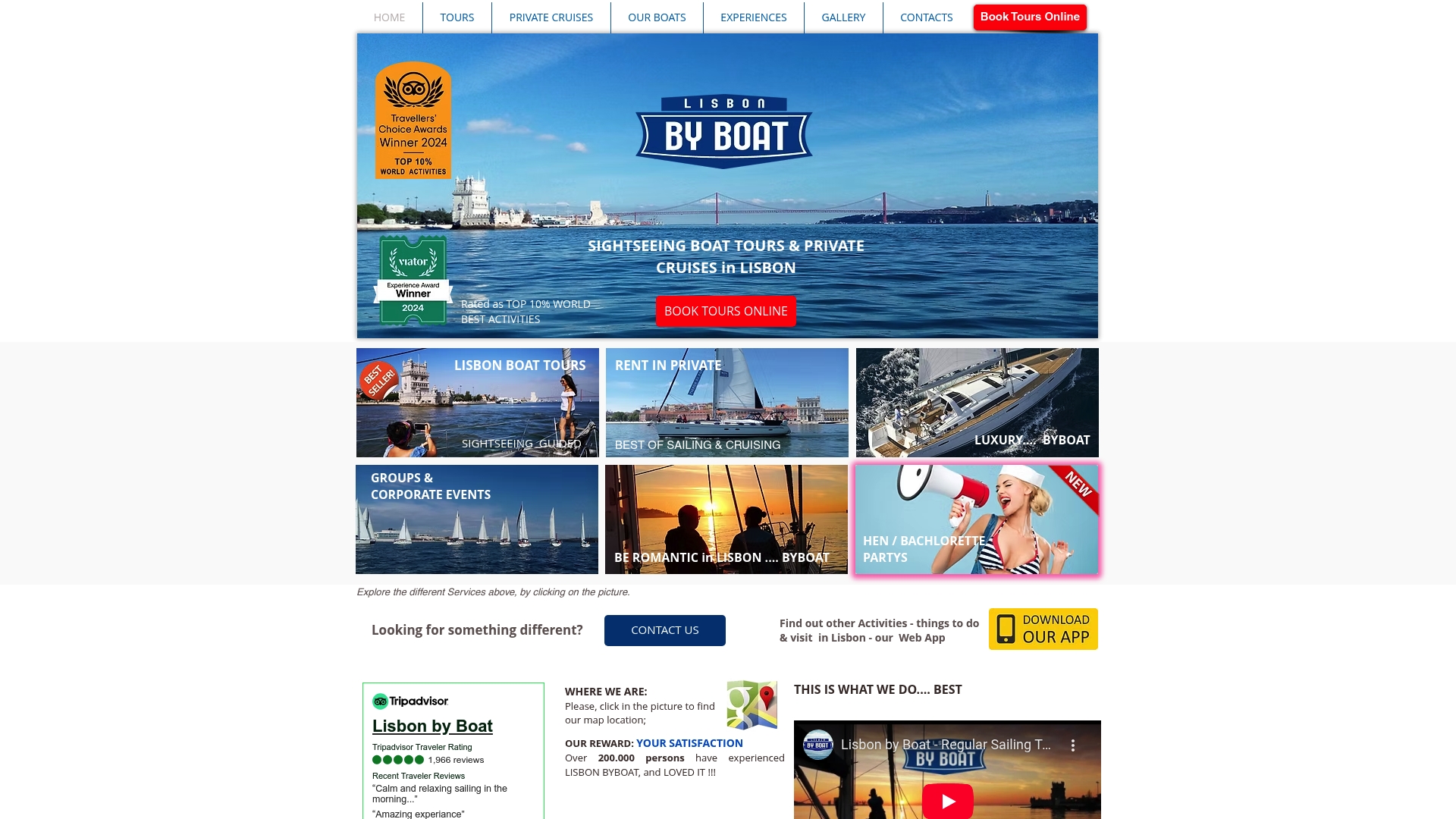
If you tell us your headcount and the kind of day you have in mind, we will point you to the vessel that suits it. Start on our Lisbon by Boat home page or go straight to the group page to plan your outing.
FAQ
What should I wear on a sailing tour?
Wear comfortable clothes you can move in, layers for the wind on the water, and flat shoes with soft soles. Add sunscreen, sunglasses and a hat that can be secured. Bring only a soft, small bag, because space on board is limited.
Do I have to follow the captain’s instructions?
Yes. The captain is responsible for the boat and everyone on it, and decisions about weather, route and safety are final. If the captain turns suddenly firm, stop talking and follow directions, as sailing guides advise. The tone is about safety, not about you.
What do five short blasts from a boat mean?
It is the danger or doubt signal: a vessel that is unsure of another’s intentions, or thinks enough is not being done to avoid a collision, sounds at least five short, rapid blasts. As a passenger, stay calm, keep quiet and follow the crew’s instructions.
Can a group bring its own drinks and food on board?
Always ask first. Glass in particular can be a hazard on a moving boat, and coolers need a proper place on the floor. Our tours include beverages and snacks, so the group leader can confirm with us what else is welcome when booking.
How early should a group arrive?
Arrive together at the agreed meeting point a little before departure, and wait for the crew to invite you aboard. If you are early, tell the crew where you will be waiting. If someone in the group cannot come, let the crew know as early as possible.
Sources
Recommended
Comments