

Raining in Lisbon: Neighborhood Playbook with Prebook and Shoe Tips
If it’s raining in Lisbon, head straight for the city’s best indoor draws: the Oceanário, the Calouste Gulbenkian, the Museu Nacional do Azulejo, and a covered food hall like Time Out Market, with a Fado dinner to close the night. Prebook tickets for the Oceanário and Jerónimos, and skip the steep cobbled shortcuts in favor of the metro. On a light drizzle day, a short sheltered boat tour from Lisbon ByBoat can still work as a backup plan.
TL;DR:
Booking tickets in advance for the Oceanário and Jerónimos is essential as both sites fill quickly during rainy days, especially after lunch hours.
The Oceanário hosts over 8,000 marine creatures, requiring around two hours to explore, with quieter times before 11 a.m. and after 4 p.m.
Museums like Gulbenkian and Azulejo are calm, uncrowded options that require 60 to 90 minutes to visit, ideal for taking your time without stress.
Indoor family activities such as the science museum and Oceanário should be split into 90-minute blocks to keep children engaged and avoid fatigue.
Light drizzle on calm water can still justify a boat tour, but heavy rain or choppy seas make indoor attractions or covered transport the safer choice.
Table of Contents
Top Indoor Highlights for a Rainy Day in Lisbon
Lisbon’s Atlantic climate brings its wettest stretch between November and March, but the city is still one of Europe’s sunniest capitals overall, so a rainy afternoon is the exception, not the rule. When it does happen, these are the stops worth rerouting your day around.
Oceanário de Lisboa: the city’s marine showpiece, best for families and anyone who wants two hours of guaranteed wonder regardless of weather.
Calouste Gulbenkian: a quiet, uncrowded art and antiquities collection, ideal for couples or slow travelers.
Museu Nacional do Azulejo: a former convent turned tile museum, a favorite for photographers and design fans.
National Museum of Ancient Art (Museu Nacional de Arte Antiga): Portugal’s top fine-art collection, rarely crowded even on busy weekends.
Mosteiro dos Jerónimos: covered cloisters and a monumental nave, best combined with a Belém museum stop.
Pavilhão do Conhecimento: hands-on science exhibits built for kids and curious adults alike.
Time Out Market: a covered food hall with dozens of stalls, good for indecisive eaters and big groups.
Fado houses: intimate, indoor evening music, best booked ahead in Alfama or Bairro Alto.
LxFactory: converted industrial buildings with shops, galleries, and cafés under one sprawling roof.
Families should prioritize the Oceanário and Pavilhão do Conhecimento, which sit close enough together to combine into one outing. Couples and culture-first travelers get more out of the Gulbenkian and Museu Nacional de Arte Antiga, both calm enough to enjoy without crowd stress. Foodies should build their afternoon around Time Out Market, then save Fado for the evening. Prebook the Oceanário and Jerónimos whenever rain is forecast; both tend to fill fast once the first heavy shower hits, and mid-afternoon after the lunch rush is consistently the calmer window.
Museums and Monuments to Prioritize on Rainy Days
Not every indoor attraction deserves the same slice of your day. Some reward two unhurried hours; others are worth a quick, focused visit before you move on.
Oceanário de Lisboa is the anchor stop for most rainy itineraries, and for good reason. The aquarium houses more than 8,000 marine creatures from roughly 500 species, spread across four ocean habitats that circle a central tank. Budget around two hours, more if you’re traveling with kids who want to linger at the otter and puffin exhibits. On rain days, arrivals spike hard between 11 a.m. and 2 p.m., so an opening-hour visit or a late-afternoon slot after 4 p.m. avoids the worst of the crush. The official Oceanário site lists current hours and ticket options, and prebooking online is the single best way to skip a wet, slow-moving line at the door.
Calouste Gulbenkian offers the opposite pace: a genuinely calm museum where you rarely have to jostle for a sightline. The Gulbenkian’s own visitor information covers its two collections (founder Calouste Gulbenkian’s personal holdings and the modern art wing), and an hour and a half is enough for most visitors to see both without rushing.
Museu Nacional do Azulejo rewards a slower look. It’s housed in the former Madre de Deus convent, and the tilework alone, spanning five centuries of Portuguese ceramic art, makes it one of the best indoor photo stops in the city. The National Museum of Ancient Art nearby holds Portugal’s premier fine-art collection and almost never sees the crowds that hit Belém’s bigger names.
Mosteiro dos Jerónimos is trickier in the rain. The main church is free and covered, but the ornate cloisters, the part most visitors come for, require a ticket, and the monastery does close on Mondays and major holidays. Check hours before you walk over, since a wasted trip to a locked door is worse in a downpour than in sunshine.
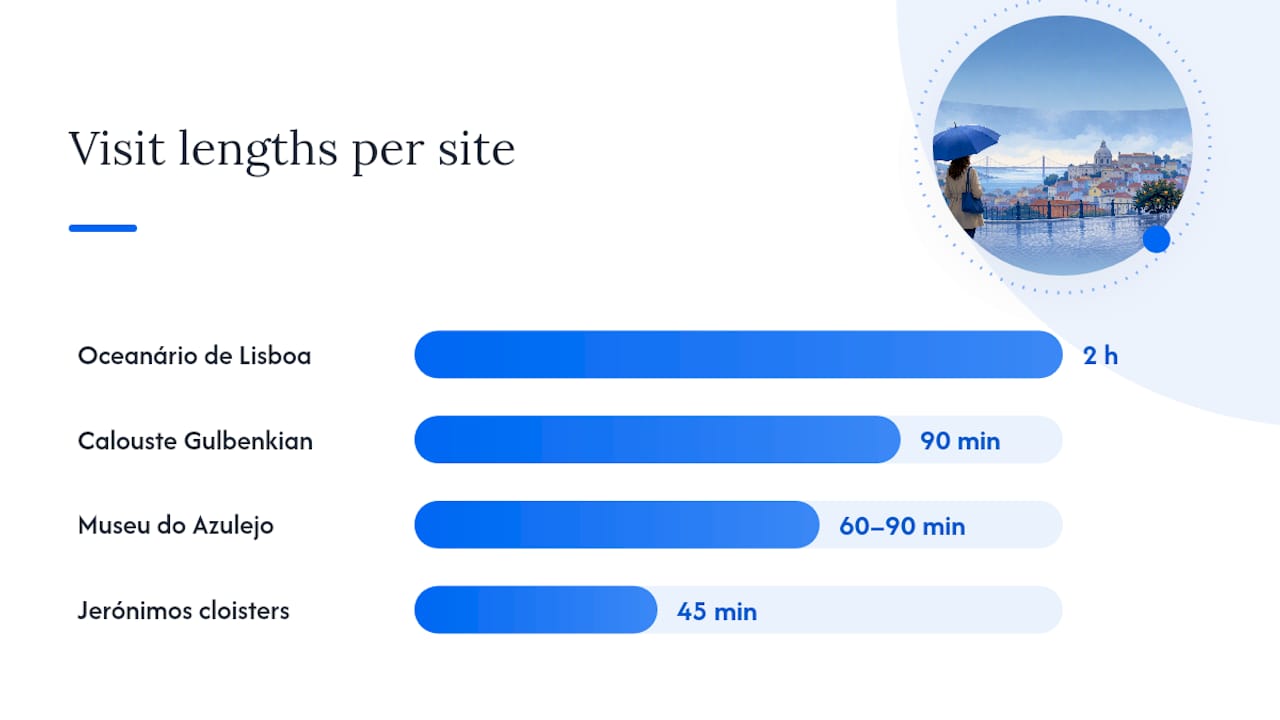
Oceanário: 2 hours, prebook, avoid 11 a.m. to 2 p.m. on rain days
Gulbenkian: 90 minutes, rarely crowded, no prebooking pressure
Azulejo Museum: 60 to 90 minutes, best for photography
Jerónimos cloisters: 45 minutes, closed Mondays, ticket required
For a quieter alternative near Belém, Palácio Nacional da Ajuda is a covered royal palace that draws a fraction of the foot traffic Jerónimos does, and it pairs naturally with a Belém museum loop.
Family-Friendly Indoor Attractions and How to Plan Them
Kids lose patience with long museum halls fast, so the trick on a rainy day is picking venues built for hands-on engagement, not passive viewing.
Pavilhão do Conhecimento is Lisbon’s interactive science museum, and it’s built exactly for restless energy. Exhibits let kids launch mini rockets, experiment with sound waves, and run through a giant soap-bubble station, so the museum earns its reputation as the rainy-day rescue for families with children under 12. Pair it with the Oceanário, since both sit in the Parque das Nações district and are a ten-minute walk apart under a mostly covered riverside promenade.
Budget 90 minutes at Pavilhão do Conhecimento, more if your kids gravitate to one exhibit.
Follow with two hours at the Oceanário, ideally after a midday snack break.
Warm up between stops at one of the covered cafés inside the Vasco da Gama shopping center, a five-minute walk from both.
Book Oceanário tickets online in advance; family groups without prebooked tickets often wait the longest on wet weekends.
Pro Tip: Split a full family day into two 90 minute to two hour blocks rather than one long outing. Kids hit a wall faster in cold, wet weather, and a shorter, sheltered stretch between activities keeps the whole group in a better mood.
If your children are older and more interested in movement than exhibits, an escape room or indoor karting venue (covered later) can substitute for a second museum stop without losing the momentum of the day.
Where to Eat and Learn Something New Indoors
Rain turns a food stop from a quick bite into the best part of the day, if you pick the right spot.
Time Out Market, inside the historic Mercado da Ribeira building near Cais do Sodré, is the obvious first choice. Dozens of stalls from well-known Lisbon chefs sit under one covered roof, so it works for groups who can’t agree on a single restaurant. Arrive before noon or after 2:30 p.m. to avoid the tightest lunch crush; weekends bring the heaviest crowds regardless of weather.
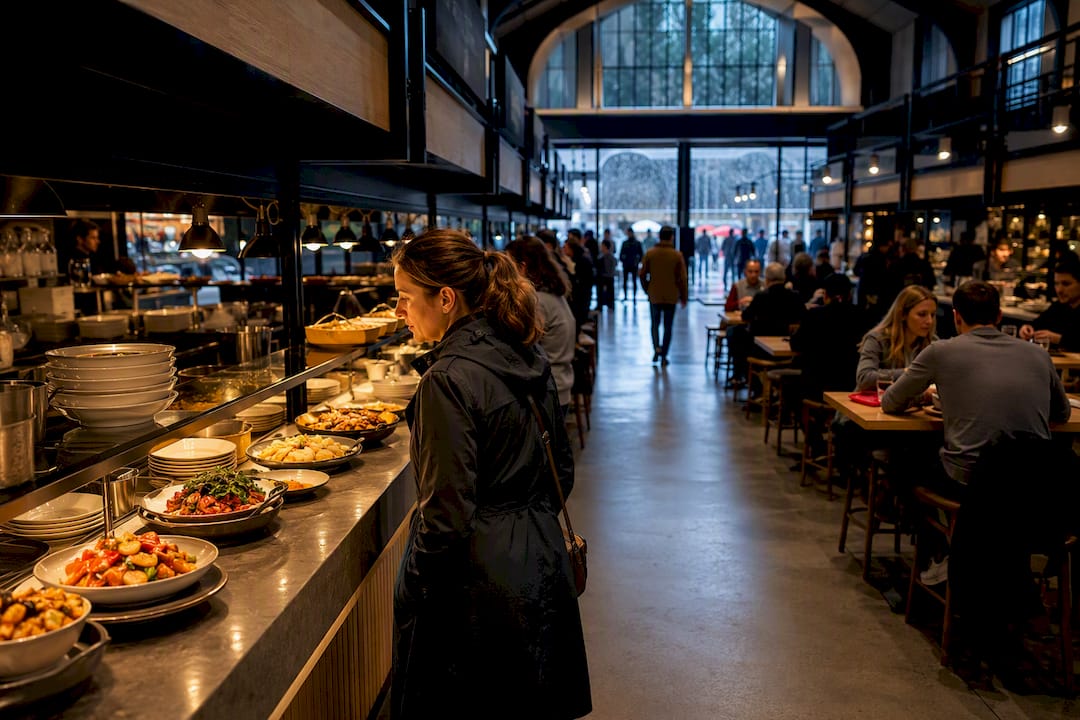
Mercado de Campo de Ourique is the quieter, more local alternative, favored by residents over tourists and a good pick if Time Out Market feels too packed.
Beyond eating, a pastel de nata workshop turns an hour of shelter into a genuine souvenir. Several bakeries near the Pastéis de Belém original location run small hands-on classes where you learn the custard-tart recipe and take a batch home, a far better rain plan than standing in the famous bakery’s outdoor queue. For an evening version of the same idea, an indoor wine or Port tasting room in Chiado or Alfama gives you a warm, low-key couple of hours that doubles as an introduction to Portuguese wine regions.
Time Out Market: best before noon or after 2:30 p.m.
Mercado de Campo de Ourique: quieter, more local
Pastel de nata workshop: 1 to 2 hours, hands-on, near Belém
Port or wine tasting: evening plan, Chiado or Alfama
Food markets and workshops do more than shelter you from rain; they turn a lost afternoon into a multi-hour social outing. For more on savoring a food stop instead of rushing it, this guide to local food experiences applies just as well to a rainy Lisbon market as it does anywhere else.
Fado, Small Theaters, and Cozy Evening Plans
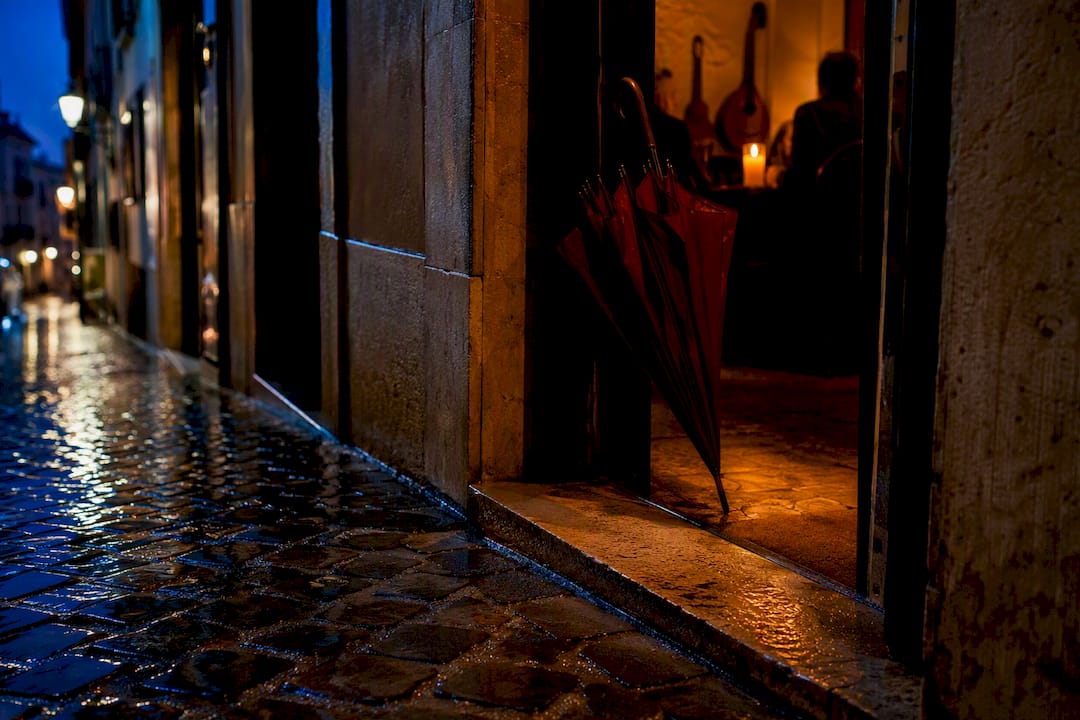
A rainy evening is, honestly, the best time to hear Fado. The music’s melancholy suits the sound of rain on old cobblestone streets outside.
Most Fado houses in Alfama and Bairro Alto offer two formats: a full dinner with a set list of songs between courses, or a listening-only ticket for those who’ve already eaten. Dinner shows run longer, often two to three hours, and reservations matter most on weekends, book at least a day ahead if you have a specific venue in mind. Alfama tends to feel more traditional and neighborhood-rooted; Bairro Alto’s venues lean slightly more tourist-oriented but are easier to walk to from downtown hotels.
If Fado isn’t your speed, small jazz bars and wine bars scattered through Chiado and Príncipe Real make an equally good, lower-commitment rainy night.
Fado dinner: 2 to 3 hours, book ahead on weekends
Listening-only Fado: shorter, cheaper, good if you’ve already eaten
Jazz or wine bar: no reservation usually needed, casual dress fine
Keep your voice down during the songs themselves. Fado houses treat quiet, attentive listening as a matter of respect, not just atmosphere, and locals notice when tourists chat through a set.
Covered Transport Options When the Streets Are Wet
Tram 28 is charming, but it’s also one of Lisbon’s most crowded rides, and rain makes the metal steps genuinely slippery. Board at a starting point, either Martim Moniz or Campo de Ourique, rather than mid-route, so you actually get a seat instead of standing in a wet, packed carriage.
For a fully sheltered alternative, several metro stations double as art galleries: stops like Olaias and Parque feature large-scale tile and sculpture installations that make the ride itself a cultural stop rather than a commute.
Board Tram 28 at a line start, not mid-route.
Use the metro or a taxi for steep hills once rain gets heavy.
Buy a Viva Viagem card or day pass in advance to skip the ticket-machine line at the station.
Creative Hubs, Malls, and Indoor Neighborhoods
LxFactory, a former industrial complex under the 25 de Abril Bridge, packs galleries, bookshops, design stores, and restaurants into a cluster of converted warehouses. Much of it is covered, though moving between some buildings means a short dash across an open courtyard, worth knowing before you commit to sandals.
For a fully enclosed option with longer hours, Colombo, one of Lisbon’s largest shopping centers, works well when rain settles in for the whole day. It pairs naturally with a morning museum visit since it sits close to public transit lines running toward the city center.
LxFactory: galleries, shops, food, some open-air courtyard crossings
Colombo mall: fully covered, long hours, good backup for an all-day downpour
Combine either with a nearby museum to avoid a long outdoor transfer
Active Indoor Options for Groups and Families
When walking tours are off the table, Lisbon has a decent stash of indoor activity venues built for energy rather than quiet browsing.
Escape rooms scattered through downtown and Saldanha run 60 to 90 minutes and typically take groups of two to six. Indoor karting venues on the city’s outskirts are a bigger commitment, worth a taxi ride if you have half a day free and want speed instead of sightseeing. Mini-golf and board game cafés fill a shorter gap, usually an hour or less, and suit mixed-age groups better than a museum would.
Escape rooms: 60 to 90 minutes, 2 to 6 people, book ahead on weekends
Indoor karting: half-day trip, best for groups of friends
Mini-golf and board game cafés: under an hour, good filler activity
Stadium tours at Estádio da Luz or Estádio José Alvalade also run rain or shine, with museum sections fully indoors
These options exist for exactly the days a rainy forecast wrecks your walking plans, and a group that’s tired of museums by hour three usually perks back up at an escape room.
Staying Safe and Dry: Footwear, Timing, and Getting Around
Lisbon’s calçada portuguesa, the smooth limestone paving on nearly every sidewalk, turns dangerously slick within minutes of rain starting. Add the city’s steep hills, and a wrong shoe choice can end your day early.
Wear rubber-soled shoes with real tread. Leather soles and worn sneakers slide on wet limestone almost immediately.
Switch to the metro or a taxi on hills steeper than a gentle slope. Alfama and Bairro Alto’s steepest streets are the worst offenders.
Prebook skip-the-line tickets for the Oceanário and Jerónimos whenever rain is forecast; queues spike within the first hour of heavy showers.
Plan museum visits for opening time or after the lunch rush, both consistently calmer windows.
Carry a compact umbrella, a light waterproof layer, and a card for contactless ticket payment, since several attractions charge a small fee for cash handling or don’t accept cash at all.
Pro Tip: Check a Lisbon-specific weather forecast the night before, not a generic Portugal-wide app. Lisbon’s microclimates mean it can be pouring in Alfama while Belém stays dry, and a route built around that difference saves real time.
Ready-Made Rainy-Day Itineraries
Pick the itinerary that matches your group, and keep a backup site in mind in case your first choice is closed or overwhelmed.
Half-day family plan: Pavilhão do Conhecimento (late morning) → lunch at a covered café nearby → Oceanário (early afternoon). Both sit in Parque das Nações, so no long transfer between them.
Full-day culture plan: Gulbenkian (morning) → lunch near Chiado → Museu Nacional do Azulejo (mid-afternoon) → Fado dinner in Alfama (evening).
Food-focused plan: Time Out Market (late morning, before the lunch rush) → pastel de nata workshop near Belém (early afternoon) → wine tasting in Chiado (evening).
Romantic plan: Gulbenkian or Museu Nacional de Arte Antiga (morning) → LxFactory for lunch and browsing (afternoon) → Fado dinner (evening).
If a site turns out closed or the line looks unreasonable, swap in Palácio Nacional da Ajuda for a monument stop, or LxFactory for a market that’s too crowded.
When a Boat Tour Still Makes Sense in Light Rain
Rain doesn’t automatically cancel a boat tour, but it does change what makes one worth booking. A light drizzle with calm water is a genuinely different experience from a downpour with choppy river conditions, and the difference matters more than the fact that it’s raining at all.
Light drizzle, calm seas: a 2-hour sheltered tour can still deliver good visibility of the coastline and monuments, especially with covered seating and a hot drink on board.
Heavy rain or rough water: this is when the indoor options above become the better plan, and a reputable operator will say so.
Flexible scheduling matters most here. Lisbon ByBoat’s own weather guidance recommends checking conditions the morning of, not just the day before booking.
The right call depends on the operator’s actual weather policy, not a blanket rule about rain. A tour with real covered space and the flexibility to reschedule is a fair alternative on a borderline day; a fully open boat in a downpour is not.
Why Rainy Lisbon Deserves Its Own Itinerary
Rain empties out the lines at the Gulbenkian and thins the crowd at the Azulejo Museum in a way sunny Lisbon never does. There’s something to be said for standing in front of five centuries of tilework without a tour group shuffling past every ninety seconds, or getting a corner table at a Fado house without booking three weeks out.
The mistake most visitors make is treating rain as a problem to wait out instead of a different version of the same city. Keep one backup indoor option in your pocket for whatever you’d planned outdoors, and the day rarely feels lost. A quieter museum and a warm coffee shop are not a downgrade from a sunny walk through Alfama. They’re just a different, and occasionally better, way to spend the afternoon.
— Lisbon
See Lisbon From the Water, Even on a Cloudy Day
Museums and markets are the safest bet once the rain sets in, but they’re not the only way to see the city, and Lisbon ByBoat gives you a option none of the indoor stops can: the coastline itself, from the water, with the Torre de Belém and the 25 de Abril Bridge sliding past under covered seating and a warm drink in hand.

The daily 2-hour scenic tours include live commentary on Lisbon’s monuments plus beverages and snacks on board, and private charters on sailing yachts or catamarans run from two hours up to a full day for groups who want the boat to themselves. On a light drizzle day with calm water, the covered sections and flexible scheduling make it a reasonable pick over another museum queue. For advice on what to pack, this guide on dressing for comfort on the water covers the layers worth bringing. Check current availability and book a spot on the ByBoat Tours page before the weather forecast changes your plans for you.
Sources
Weather and opening hours both shift without much warning, so confirm details directly with each site before you head out.
Recommended
Your perspective on this topic is both unique and enlightening. I appreciate the depth of research and clarity in your writing. wheelie life
foodle looks like the kind of game you could play while eating breakfast with one hand and scrolling your phone with the other. Then the game starts, and suddenly your brain decides to take an unpaid vacation. What seemed like a quick guessing game can become a surprisingly tricky battle of memory, logic, and food knowledge.