

120 Minute Tagus Cruises That Count as Indoor Things to Do in Lisbon
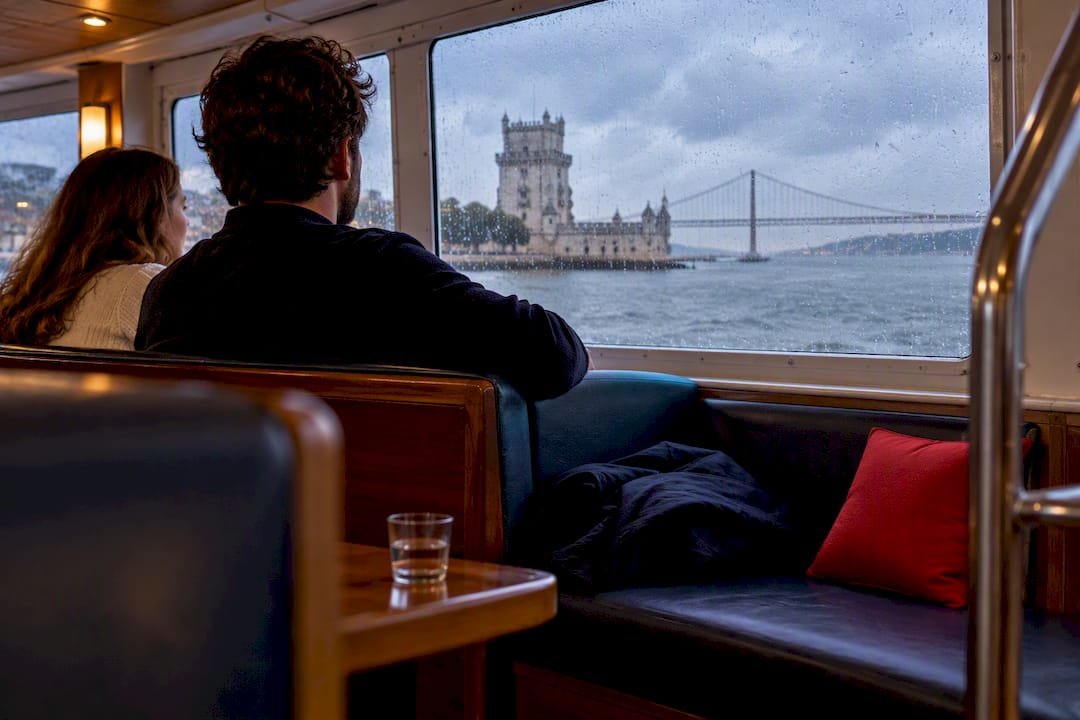
For visitors seeking indoor-style sightseeing in Lisbon, the most reliable option is booking a Tagus River boat experience. Sunset sails, sightseeing cruises, private charters, dolphin trips, and party boats all give you covered or cabin seating, so weather rarely interferes with your plans. If you’re ready to book, jump to the sailing tours and sunset cruises further down. If not, here’s how to pick the right one.
TL;DR:
Most boat experiences on the Tagus include covered or enclosed seating, making them suitable indoor activities even in rainy weather.
Sightseeing cruises and sunset sails range from 1 hour 40 minutes to 2 hours, with prices between €30 and €60 per person depending on inclusions.
Private charters are flexible and can last from 2 hours to a full day, costing around €350 to €400 for small groups, ideal for celebrations.
Booking in advance and confirming the exact pier are crucial, especially during peak season from June to August, to avoid missing your departure.
Choosing the right experience depends on group size, desired atmosphere, budget, and flexibility for weather conditions, with indoor seating as a key factor.
Table of Contents
Indoor Things to Do in Lisbon: Why a Tagus Cruise Fits the Bill
When Lisbon’s forecast turns gray, most travel lists point you toward museums and shopping arcades. This guide takes a different approach and treats “indoor things to do in Lisbon” as boat experiences on the Tagus River, since nearly every operator running sunset sails, sightseeing loops, and private charters builds in cabin seating, covered decks, or fully enclosed lounges. You get the same skyline views and monument commentary as an open-deck tour, minus the soaked shoes.
The Tagus has carried Lisbon’s traffic since before the city had bridges, and seeing the Belém Tower or the 25 de Abril Bridge from the water gives you an angle no rooftop bar or walking tour matches. Most sailing yachts and catamarans running these routes include an interior cabin or salon, so a passing shower just means moving a few feet, not canceling the afternoon.
What “indoor” actually means on a boat
Sailing yachts typically have a below-deck cabin with bench seating. Larger sightseeing catamarans often run a fully glassed saloon. Even smaller RIBs and speedboats usually offer a covered bow or stern section. None of this is marketed as “indoor,” but functionally, it does the same job as ducking into a gallery.
Types of Tagus Boat Experiences and Who They’re Best For
Lisbon’s river tours split into five broad categories, and picking the wrong one is the most common regret travelers report after booking.
Sunset sailing runs about 2 hours and typically includes a welcome drink or glass of wine while you watch the sky turn orange behind the 25 de Abril Bridge. Most depart from Praça do Comércio or Ribeira das Naus roughly 90 minutes before sunset. Representative 2026 pricing for common sunset options runs €34 to €45 per person, and these trips work best for couples and anyone chasing photos rather than a party atmosphere.
Sightseeing river cruises run 1 hour 40 minutes to 2 hours on larger vessels with indoor saloon seating and recorded or live commentary covering landmarks like Belém Tower and the Monument to the Discoveries. These suit families and budget-conscious travelers, and full-loop tours from Praça do Comércio or Belém are the most common format.
Party cruises bring a DJ, open bar, and a younger crowd, usually on a 2-hour catamaran run departing from Docas de Santo Amaro. These sell out fast on summer weekends, so book two to three days ahead.
Private charters flex from 2 hours to a full day, with customizable catering, music, and route. Local guides note that small-group sailboats seating around ten passengers deliver a more intimate, photogenic experience than a 100-person catamaran, and longer charters can add a swim stop.
Dolphin and ocean trips run longer than river loops, use RIBs built for open water, and focus on wildlife rather than monuments.
Sunset sail: 2 hours, couples and photographers, €34 to €45
Sightseeing cruise: 1h40 to 2h, families and first-timers, €30 to €60
Party cruise: 2 hours, social groups, budget-friendly
Private charter: 2h to full day, celebrations and small groups
Dolphin watching: half-day typical, wildlife focus
How Do You Pick the Right Boat Experience?
Start with your group’s actual priorities, not the prettiest photo on a booking site. A quiet sail for two needs a different boat than a 12-person birthday celebration.
Count your group and check accessibility. Small sailboats seat 8 to 12; large catamarans handle 100 or more. Confirm step height and mobility access if anyone in your party needs it.
Decide on atmosphere first, view second. Every route passes similar landmarks, so choose based on onboard vibe, whether that’s a quiet sail with wine or a DJ set with an open bar.
Set your budget band. Value sightseeing loops start around €30; small private charters run €350 to €400 for a couple hours, according to local operator pricing.
Match your available time. A 90 minute window fits a sightseeing loop or sunset sail; celebrations need the flexibility of a private charter.
Plan for weather. Ask specifically whether the boat has covered or cabin seating, since that’s what keeps a rainy afternoon from becoming a wasted booking.
Before paying, ask the operator these questions directly: which pier you’re boarding from, what time boarding actually opens, whether there’s indoor or covered seating, what’s included (drinks, snacks, commentary language), and what the cancellation policy looks like if weather turns severe.
Pro Tip: Ask specifically for the boarding pier name, not just “city center” or “Lisbon waterfront.” Praça do Comércio and Belém are miles apart, and showing up at the wrong dock 15 minutes before departure means missing the boat entirely.
Walk away from any listing that won’t confirm a specific pier, has no written cancellation policy, or gives vague answers about maximum passenger counts. Those are the three complaints that show up most often in traveler reviews of river tours gone wrong.
Departure Points, Timing, and What to Pack
Two hubs handle most Tagus departures: Praça do Comércio / Terreiro do Paço in the city center, and the Belém docks near the monastery and tower. Some operators also use Docas de Santo Amaro for party cruises or Cais do Sodré for smaller charters, so always confirm your exact pier when booking rather than assuming.
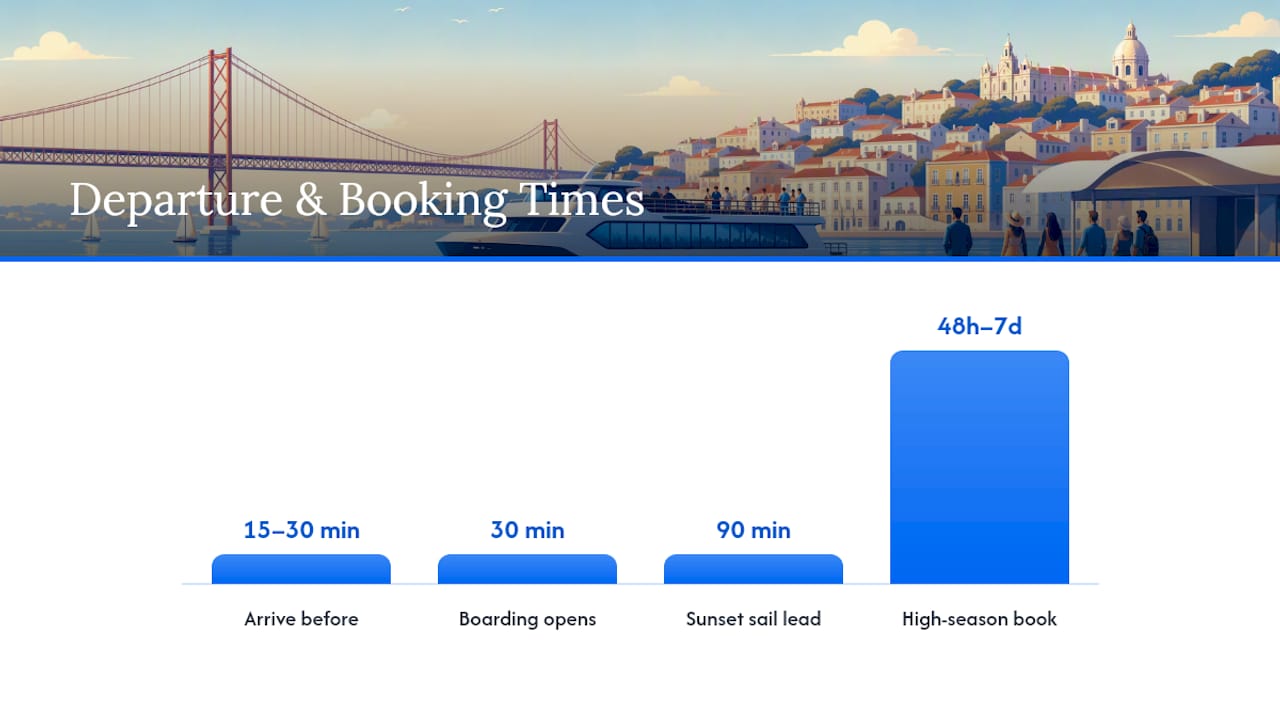
Arrive 15 to 30 minutes before departure. Boarding for most sunset and sightseeing cruises opens about 30 minutes ahead of sailing to handle check-in and a quick safety briefing, and sunset sails typically leave around 90 minutes before sundown. During June through August, book 48 hours to a week ahead since popular sunset slots fill fast; spring and early autumn need less lead time and bring lighter crowds.
Booking direct with the operator usually gets you clearer answers on language options, child pricing, and refund terms than a third-party aggregator does. Whichever route you choose, confirm cancellation terms before you pay.
Pack for temperature swings on the water:
A light layer or windbreaker, since river breeze runs cooler than the streets
Comfortable, flat shoes with grip for stepping aboard
Motion-sickness tablets if you’re sensitive, taken before boarding
Your ticket QR code and ID, ideally saved offline
A camera or phone with the flash off for evening shots
Sample Half-Day and Evening Plans With a Cruise Built In
A boat slots into almost any Lisbon itinerary without eating your whole day.
Belém morning, midday cruise back. Visit Jerónimos Monastery, grab pastéis de nata nearby, then board a cruise back to Terreiro do Paço around 12:30 for the boat leg of the day.
City center day, sunset sail evening. Spend the day wandering Baixa, Chiado, and Alfama, then head to Praça do Comércio for a 7:00 PM sunset sail as the light turns gold.
Family day: midday cruise plus a museum. A short indoor-friendly sightseeing loop in the late morning pairs well with an afternoon at a museum, splitting the day between water and walls.
Private charter celebration. Board in the afternoon, request a photo stop near Belém Tower, and if your charter runs longer, ask about a swim stop offshore.
If you’re stacking a boat into a tighter multi-day trip, a short 45-minute sail fits easily into a two-day Lisbon visit without derailing your schedule.
Popular Indoor Attractions to Pair With Your Cruise
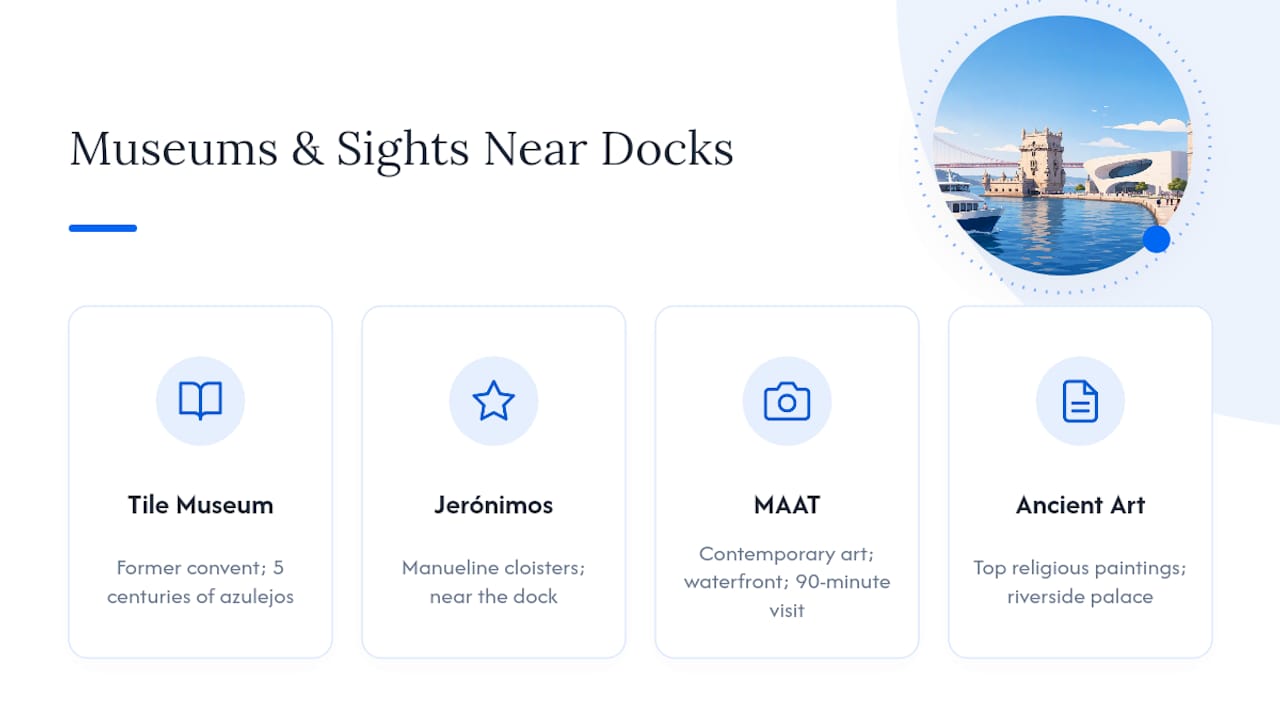
Lisbon’s museum scene rewards a full afternoon, and several sit close enough to a river dock that you can combine both in one trip. The National Tile Museum, housed in a former convent, walks you through five centuries of azulejo craftsmanship in room after room of covered galleries. The Gulbenkian Museum splits into ancient and modern wings and rarely feels crowded even in peak season.
Jerónimos Monastery in Belém deserves its reputation. The Manueline stone carving inside the cloisters is the kind of detail that photos never quite capture, and pairing a morning visit there with an afternoon cruise from the nearby dock makes efficient use of a single day. The National Museum of Ancient Art holds Portugal’s best collection of religious painting and decorative arts, spread across a former palace overlooking the river.
For something less traditional, the MAAT (Museum of Art, Architecture and Technology) sits right on the waterfront in Belém, its curved concrete roof doubling as a public walkway. It’s worth 90 minutes even if contemporary art isn’t usually your thing. All of these sit within a short taxi or tram ride of either major boat dock, so working one into a boat day rarely costs you more than an hour of travel time.
Cultural Experiences Beyond the Standard Museum Visit
Fado, Lisbon’s mournful traditional song style, is best experienced in a small, dimly lit restaurant in Alfama or Bairro Alto rather than a staged tourist venue. Look for a house that seats fewer than 50 people. That intimacy is where the genre actually works, with a single guitarist and vocalist close enough that you can watch their hands.
Cooking classes have become one of Lisbon’s more memorable indoor bookings, usually running 3 to 4 hours and covering dishes like bacalhau à brás or a proper Portuguese custard tart from scratch. Most include a market visit beforehand, so you’re shopping for ingredients before you cook them, which teaches you more about local produce than any guidebook. A handful of hosts run these in restored townhouses in Alfama, turning the class into as much a look at the building as a lesson in the food.
Tile-painting workshops are a quieter alternative if a full cooking class runs too long for your schedule. Most last under two hours and send you home with a hand-painted azulejo tile, a nice contrast to a packaged souvenir.
Where to Find Indoor Entertainment in the Evening
Lisbon’s evening entertainment options hold up well against any European capital’s. The Teatro Nacional de São Carlos hosts opera and classical performances in a gilded 18th-century hall that’s worth seeing even if the program isn’t your usual taste. For film, several independent cinemas around Príncipe Real and Chiado screen original-language films with Portuguese subtitles, a detail that matters if you’re not fluent in Portuguese.
Escape rooms have multiplied across the city over the past few years, with clusters in Baixa and Anjos offering everything from historical mystery themes to horror concepts. Most run 60 minutes and fit 2 to 6 players, making them a solid group activity when a sudden downpour scraps outdoor plans. Bowling alleys and arcade bars near Saldanha round out the options for a lower-key group night that doesn’t require advance planning.
Indoor Shopping: Markets and Craft Malls Worth a Visit
Mercado da Ribeira, better known as Time Out Market, combines a working produce market with dozens of food stalls under one roof, and it’s as much an activity as a meal. LX Factory, a converted industrial complex in Alcântara, houses independent bookshops, design studios, and craft stalls inside old factory buildings, giving it a different texture than a standard shopping mall.
For structured retail, Colombo and Amoreiras malls both carry international brands alongside sections dedicated to Portuguese design and ceramics. Feira da Ladra, Lisbon’s flea market, technically runs outdoors on Tuesdays and Saturdays, but several permanent antique shops nearby stay open all week for browsing regardless of weather.
Indoor Dining: What to Eat and Where
Bacalhau, salt cod prepared in reportedly over 365 recipe variations, is the dish most associated with Lisbon dining, and a proper sit-down restaurant is the right place to try at least two or three preparations. Pastéis de nata deserve a stop at Pastéis de Belém, the original bakery, though half a dozen newer spots across the city now compete on quality.
Time Out Market covers a wide range of local specialties in one indoor space if you’re short on time. For a slower meal, tucked-away tascas in Alfama and Mouraria serve grilled fish and hearty stews in small, family-run dining rooms that rarely appear in guidebooks. If you’re building food into a broader itinerary, pairing local dining experiences with your sightseeing ahead of or after a cruise makes efficient use of a day that already includes a lot of walking.
Coffee culture runs deep here too. A traditional café like A Brasileira in Chiado gives you a slice of early 20th-century Lisbon along with your espresso, and it’s shielded from whatever the sky is doing outside.
Seasonal Indoor Events Worth Planning Around
December brings a noticeably different Lisbon. Christmas markets pop up around Rossio and Parque Eduardo VII, and while the stalls themselves sit outdoors, many wrap around covered pavilions and heated tents that function as indoor space when the weather turns. If you’re wondering about things to do in Lisbon in December specifically, indoor concerts and holiday performances at venues like the Centro Cultural de Belém fill the gap between daytime sightseeing and evening plans.
Carnival season in February brings indoor masquerade balls and themed events in some of the city’s older ballrooms. The Lisbon Fado Museum runs rotating exhibitions throughout the year that pair well with an evening fado performance nearby. Film festivals, including IndieLisboa in the spring, take over several of the city’s independent cinemas for a few weeks and are worth checking against your travel dates.
What Running Daily Tours on the Tagus Teaches You About This City
Guiding people along the Tagus day after day changes how you see Lisbon. The city was built to be approached from the water, not the hills, and that’s obvious the moment Belém Tower comes into view from a deck instead of a tour bus window. Guests ask the same handful of questions before every departure: where exactly to stand, whether there’s a bathroom onboard, and what happens if it starts raining. The honest answer to that last one is usually nothing, since most sailing yachts and catamarans running these routes have covered seating built in.
The best piece of operator-side advice worth passing along is arrival timing. Guests who show up right at departure time miss the calm minutes before boarding when the crew explains the safety basics and you get first pick of seating. Those extra fifteen minutes make the whole experience smoother. A river cruise done right tends to shift how people talk about Lisbon afterward, less about the streets and more about that stretch of water carrying the whole city on its back.
— Lisbon
Book Now: Sailing Tours and Sunset Sails With Lisbonbyboat
Lisbonbyboat offers Tagus experiences where sailing yachts and catamarans provide covered seating as standard.
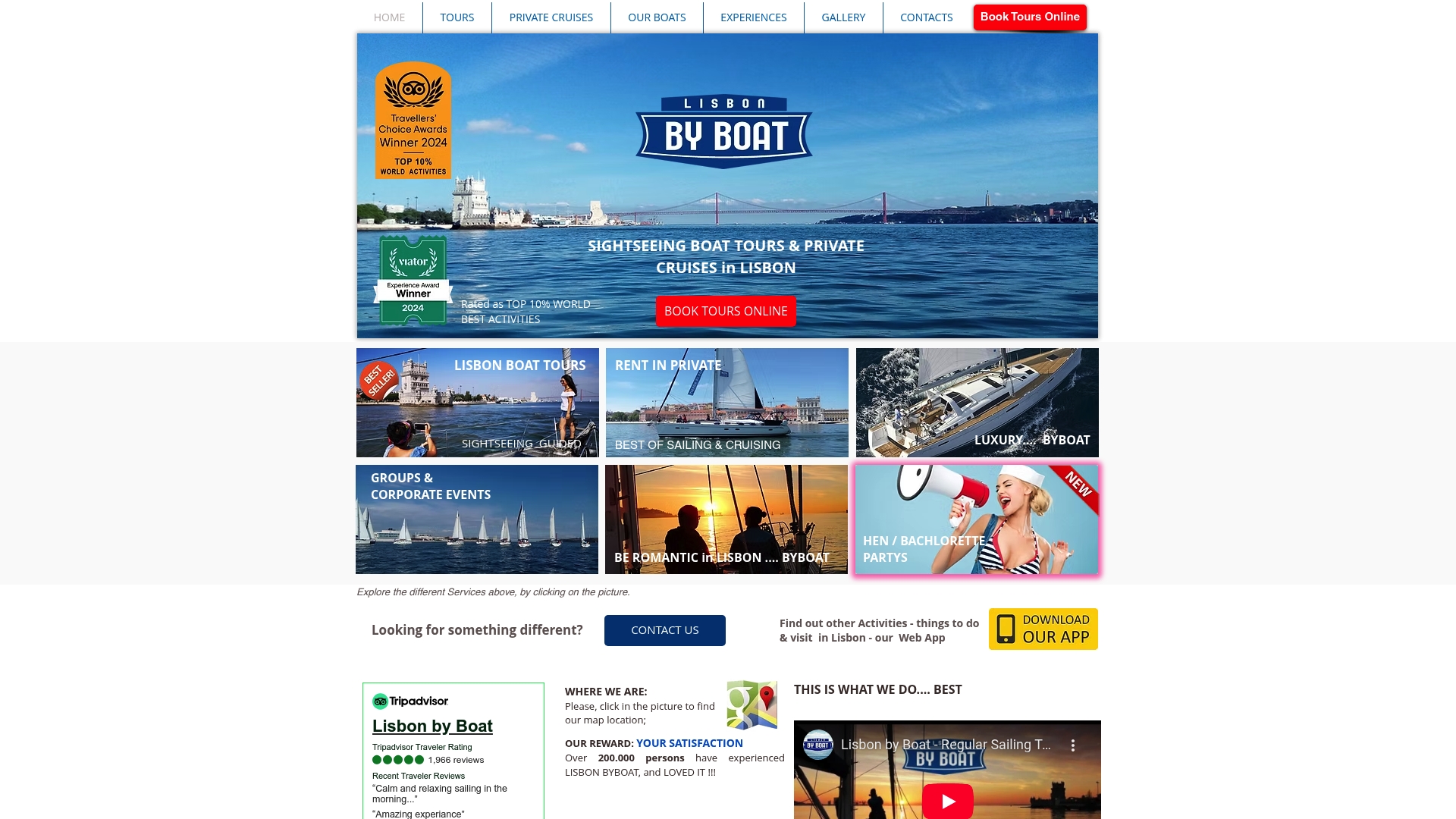
The daily LISBON SAILING TOUR runs 120 minutes and works well if you want the classic monument commentary along the Belém coastline without committing to a full afternoon. Couples chasing that golden-hour photo should look at our Romantic Sunset Sailing, priced at 390 € per yacht rather than per person, which keeps the boat private for just your group. If you’re planning a celebration, a corporate outing, or want full control over route and timing, the Private Sailing & Cruising Programs cover everything from sailing yachts to a 250 hp rigid inflatable boat.
Whichever tour you pick, arrive 15 to 30 minutes before boarding and confirm your group’s passenger count ahead of time so the crew can plan seating. Reserve your spot directly on Lisbonbyboat and skip the guesswork on departure piers and cancellation policies.
Sources
For dock references and Belém planning, Visit Lisboa covers the official side. For current price and duration examples, TheBetterVacation and Nomado Travel stay reasonably current. For firsthand color on private charters, Olá Daniela’s guide is worth a read.
FAQ
What Counts as an Indoor Activity on a Boat Tour?
Most sailing yachts and catamarans include a below-deck cabin or covered saloon area, which functions like an indoor space during rain or wind. Larger sightseeing boats often have a fully glassed interior lounge, so weather rarely cancels the experience outright.
How Much Does a Sunset Sail in Lisbon Cost?
Representative 2026 pricing for common sunset cruise options runs €34 to €45 per person depending on inclusions like wine or live music. Lisbonbyboat’s SUNSET SAILING TOUR starts from 60 € per person for a 120 minute sail.
Where Do Most Tagus River Cruises Depart From?
The two main hubs are Praça do Comércio (Terreiro do Paço) in the city center and the Belém docks near the monastery and tower. Some party cruises use Docas de Santo Amaro instead, so always confirm your exact pier when you book.
How Early Should I Arrive Before a Cruise?
Arrive 15 to 30 minutes before departure, since boarding typically opens about 30 minutes ahead to handle check-in and a safety briefing. During summer, book your cruise 48 hours to a week in advance since popular slots fill quickly.
Is a Private Charter Worth It Over a Group Cruise?
A private charter makes sense for celebrations, couples, or small groups who want control over timing, music, and route rather than sharing a boat with strangers. Lisbonbyboat’s Private Tour starts from 400 € per yacht, which often works out reasonably for a group splitting the cost.
Recommended
Comments