

Belém Tower History: Shaping Lisbon’s Maritime Identity
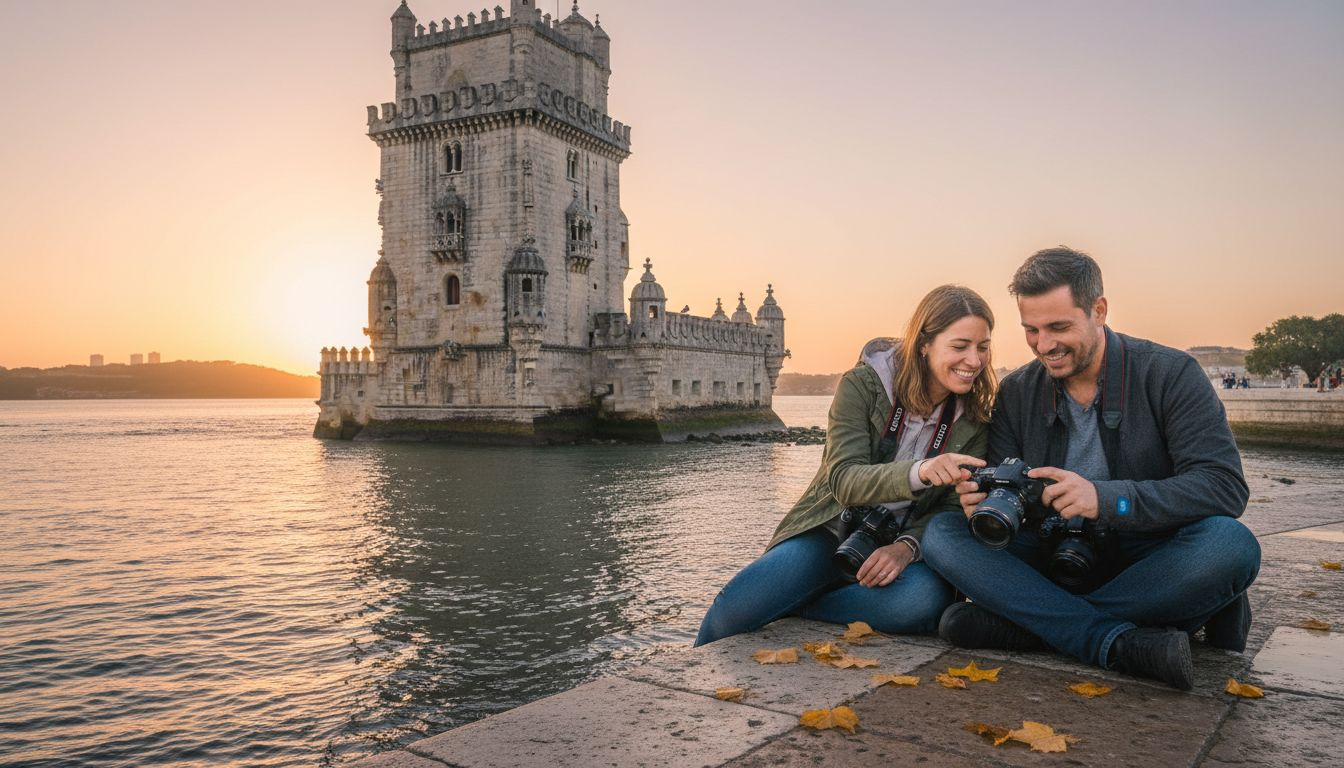
More than two million tourists are drawn to Lisbon every year, with many American visitors eager to discover the city’s iconic maritime treasures. Lisbon’s waterfront unveils a rich blend of cultural landmarks, from centuries-old towers to world-changing trade routes. If you crave history with a sense of adventure, exploring Belém Tower by sailing tour promises sweeping views, fascinating stories, and a true connection to Portugal’s seafaring spirit.
Table of Contents
Key Takeaways
Point | Details |
Historical Significance | Belém Tower symbolizes Portugal’s maritime prowess during the Age of Discoveries and stands as a UNESCO World Heritage Site representing global maritime expansion. |
Architectural Features | The tower showcases Manueline architecture, blending Gothic and Moorish influences, with intricate carvings that narrate Portugal’s exploration history. |
Defensive Role | Originally a military stronghold, the tower played a vital role in safeguarding Lisbon’s harbor and served as a symbol of national power and security. |
Modern Usage | Today, Belém Tower attracts thousands of visitors, serving as a cultural monument that celebrates Portugal’s rich maritime legacy. |
What Is Belém Tower’s Historical Significance?
Belém Tower represents far more than a mere architectural marvel - it embodies the heart of Portugal’s maritime prowess during the Age of Discoveries. Symbolizing global maritime expansion, this remarkable structure stands as a testament to Portugal’s ambitious exploration era, strategically positioned where the Tagus River converges with the Atlantic Ocean.
Constructed in the early 16th century under King Manuel I, the tower served dual purposes: a critical defensive fortification and a powerful symbol of national prestige. Its sophisticated design combines multiple architectural styles that reflect Portugal’s complex maritime heritage, showcasing intricate stone carvings and defensive capabilities that protected Lisbon’s crucial harbor entrance. The tower’s strategic location made it an essential guardian of maritime trade routes and a gateway to Portugal’s emerging global empire.
The historical significance of Belém Tower extends beyond its physical structure. Commemorating Vasco da Gama’s groundbreaking maritime route to India, it represents a pivotal moment in world exploration. This UNESCO World Heritage Site captures the spirit of an era when Portuguese navigators transformed global understanding, connecting distant continents and initiating unprecedented cultural exchanges. The tower stands not just as a monument, but as a living narrative of courage, ambition, and Portugal’s profound impact on global maritime history.
Pro tip: When visiting Belém Tower, arrive early in the morning to capture the best photographs and avoid peak tourist crowds, allowing you to fully appreciate the intricate architectural details and historical significance of this remarkable landmark.
Manueline Architecture and Unique Features
Manueline architecture represents a distinctive architectural style uniquely crafted in Portugal during the early 16th century, and Belém Tower stands as its most exquisite embodiment. Blending Gothic and Moorish influences, this architectural marvel captures the spirit of Portugal’s maritime exploration through intricate stone carvings and complex design elements that tell stories of global discovery.
The tower’s exterior is a breathtaking canvas of symbolic maritime motifs, featuring elaborate decorative elements that reflect Portugal’s naval prowess. Intricate stone ropes, knots, armillary spheres, and exotic sculptures adorn its walls, including remarkable details like rhinoceros carvings and the Cross of the Order of Christ. These ornamental features are not mere decorations but powerful narratives of Portugal’s expanding world view during the Age of Discovery. Unique architectural elements such as ribbed cupolas, intricate balconies, and arched windows demonstrate the remarkable craftsmanship of Portuguese artisans who transformed architectural design into a form of national storytelling.
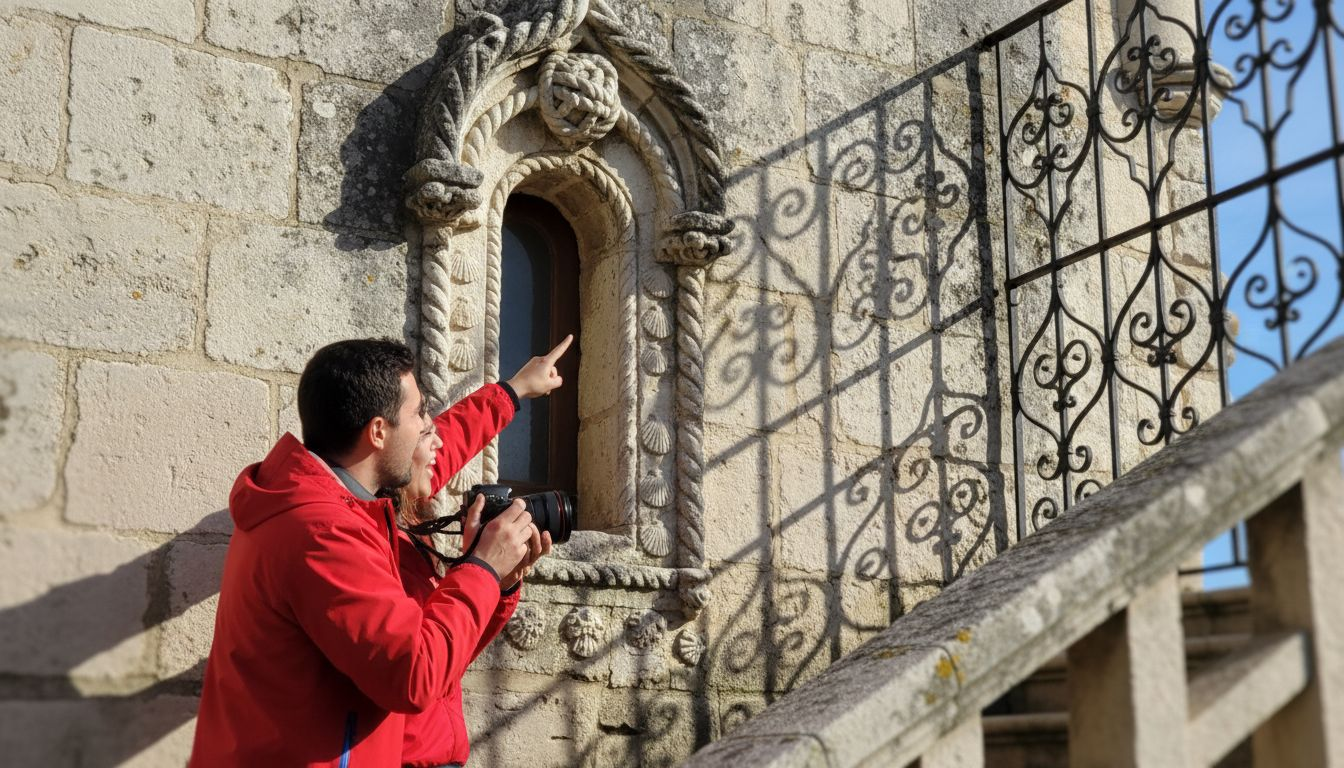
Beyond its aesthetic beauty, Belém Tower’s Manueline style represents a profound cultural moment. The architecture captures the convergence of European, Moorish, and newly discovered global influences, symbolizing Portugal’s role as a bridge between different worlds. Each carved detail - from maritime equipment to exotic animal representations - tells a story of exploration, courage, and the expansive human spirit that defined the early 16th century. The tower stands not just as a building, but as a three-dimensional historical document recording Portugal’s transformative era of global navigation.
This table compares key Manueline architectural features seen on Belém Tower:
Feature | Description | Cultural Influence |
Armillary spheres | Stone orbs symbolizing navigation | Portuguese discoveries |
Cross of Christ | Military-religious motif | Order of Christ, crusades |
Nautical ropes/knots | Carved rope details adorn the exterior | Maritime heritage |
Exotic animal carvings | Rhinoceros and others in stone reliefs | Encounters abroad |
Pro tip: When exploring Belém Tower, bring a pair of binoculars or use a smartphone zoom to appreciate the intricate architectural details that might be missed from ground level, allowing you to fully absorb the fascinating maritime symbolism carved into its stone surfaces.
The Tower’s Role in Maritime Defense
Protecting Lisbon’s strategic harbor entrance was the primary mission of Belém Tower, transforming it from a mere architectural marvel into a critical defensive stronghold. Positioned precisely where the Tagus River meets the Atlantic Ocean, the tower represented Portugal’s sophisticated maritime defense strategy during the Age of Exploration. Its location was no accident - it provided an unobstructed view of approaching vessels, allowing defenders to identify potential threats long before they could enter the harbor.
The tower’s defensive capabilities were impressively advanced for its time. Equipped with powerful cannons and strategically designed artillery positions, Belém Tower could effectively repel potential invaders and privateers seeking to disrupt Portugal’s maritime trade routes. Defensive systems protected Lisbon’s harbor for two centuries, serving not just as a military installation but as a powerful symbol of national security. The thick stone walls, carefully positioned embrasures, and sophisticated architectural design allowed defenders to control and challenge any approaching maritime threats with remarkable precision.
Beyond its physical defensive capabilities, Belém Tower embodied Portugal’s broader geopolitical strategy during an era of global exploration. The tower was more than a fortification - it was a statement of national power, signaling to both potential enemies and trading partners that Portugal possessed the technological sophistication and military might to protect its maritime interests. Its presence communicated a clear message about Portugal’s naval dominance, acting as both a practical defensive structure and a psychological deterrent against potential aggressors seeking to challenge the nation’s expanding global influence.
Pro tip: When visiting Belém Tower, pay close attention to the cannon positions and architectural defensive features, as these subtle details reveal fascinating insights into 16th-century maritime military strategies.
Evolution, Restoration, and Modern Uses
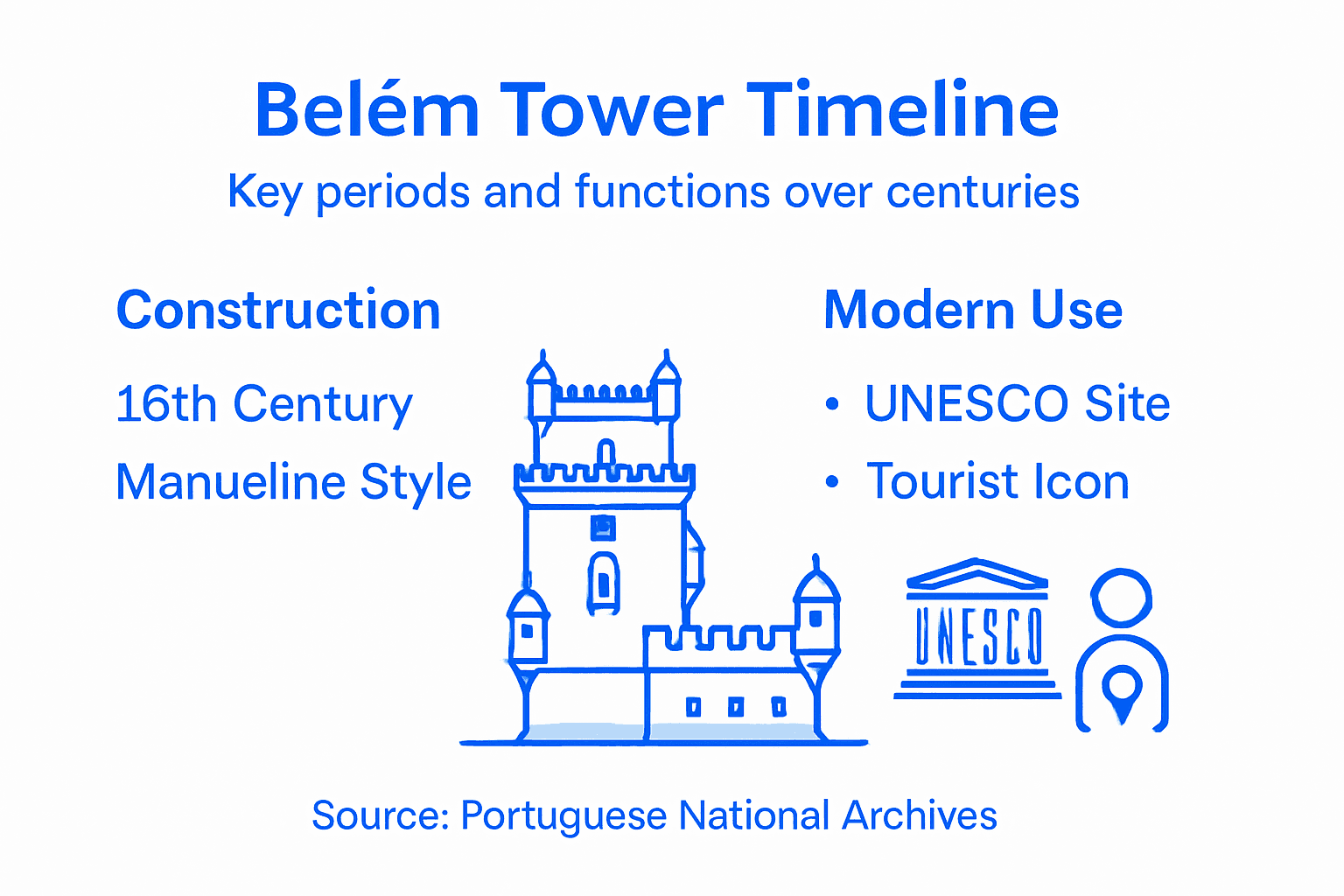
Transforming through historical periods, Belém Tower has experienced a remarkable journey from a strategic defensive fortress to a celebrated cultural landmark. Originally constructed as a maritime defense point in the 16th century, the tower has served multiple functional roles throughout its history, including a prison, lighthouse, and customs post. Each transformation reflects the dynamic historical context of Lisbon and Portugal’s changing maritime landscape.
The tower has undergone extensive restoration efforts to preserve its architectural integrity, particularly after significant challenges like the devastating 1755 earthquake. Advanced conservation techniques now protect the structure, involving specialized scaffolding designed to address the tower’s unique architectural complexity and riverine environment. Modern restoration approaches focus on managing stone erosion, maintaining structural stability, and protecting the delicate Manueline architectural details that make the tower a global architectural treasure.
Today, Belém Tower stands as a UNESCO World Heritage Site and a powerful symbol of Portugal’s maritime legacy. Its modern purpose transcends its original defensive function, serving as a critical cultural monument that attracts thousands of international visitors annually. The tower now represents more than historical architecture - it is a living testament to Portugal’s exploration history, a bridge connecting contemporary audiences with the nation’s rich maritime heritage. Its preservation reflects Portugal’s commitment to maintaining and celebrating its cultural narratives for future generations to understand and appreciate.
Here is a summary of Belém Tower’s historical roles and their impacts:
Period/Use | Main Function | Impact on Lisbon | Lasting Legacy |
16th Century | Harbor defense | Secured trade and entry | Maritime symbol of power |
Later centuries | Prison facility | Housed political prisoners | Testament to regime shifts |
19th Century | Lighthouse, customs | Guided ships, collected dues | Enhanced economic control |
Modern day | Cultural landmark | Attracts global tourists | UNESCO World Heritage status |
Pro tip: When visiting Belém Tower, consider purchasing tickets online in advance to avoid long lines and ensure entry during peak tourist seasons.
Visiting Belém Tower by Water Today
Exploring Belém Tower from the water offers an unparalleled perspective that connects visitors directly with Lisbon’s maritime heritage. Discovering Lisbon by boat provides an immersive experience that transforms how travelers understand the tower’s historical significance. The unique waterside approach allows visitors to appreciate the tower’s strategic location at the mouth of the Tagus River, exactly where 16th-century Portuguese explorers would have first encountered this remarkable structure.
Boat tours around Belém Tower typically offer multiple vantage points that highlight its architectural magnificence. Visitors can observe the intricate Manueline stonework, defensive positioning, and architectural details that are difficult to fully appreciate from land. Many sailing tours provide historical context, explaining how the tower served as a critical maritime gateway during Portugal’s Age of Exploration. Professional guides often share fascinating stories about the tower’s role in global navigation, bringing its rich history to life against the backdrop of Lisbon’s stunning riverine landscape.
For travelers seeking the most memorable experience, selecting the right boat tour is crucial. Some tours focus specifically on architectural history, while others provide broader perspectives of Lisbon’s coastline. Sunset tours offer particularly photogenic moments, with the tower’s silhouette dramatically outlined against the evening sky. Smaller sailing vessels and catamarans can often navigate closer to the tower, providing more intimate and detailed views that larger tourist boats cannot achieve. These specialized tours transform a simple sightseeing trip into an immersive historical journey that connects visitors directly with Portugal’s maritime legacy.
Pro tip: Book an early morning or late afternoon boat tour to capture the best lighting for photography and avoid the most crowded midday tourist hours.
Experience the Majesty of Belém Tower from the Water
Unlock the full story of Belém Tower’s pivotal role in shaping Lisbon’s maritime identity by exploring it as it was meant to be seen from the Tagus River. The article highlights the tower’s strategic location, intricate Manueline architecture, and its function as a powerful maritime defense. Yet, many visitors miss the unique perspective that a boat tour offers to truly appreciate these features. If you want to dive deeper into Portugal’s Age of Discoveries and witness the tower’s grandeur up close, taking a sailing tour is the perfect solution.
Discover why the best way to connect with Lisbon’s rich maritime history is by joining our daily sailing tours at Lisbon By Boat. Our expert guides bring to life the stories behind the iconic monuments including Belém Tower as you glide along Lisbon’s beautiful historical coastline. Whether you choose a private yacht or a catamaran, the immersive waterside views and detailed commentary make every moment unforgettable. Book your adventure today and experience the courage, ambition, and exploration spirit of the 16th century from the water. Explore our featured tours now at daily sailing tours and start your journey through time this very moment.
Frequently Asked Questions
What is the historical significance of Belém Tower?
Belém Tower serves as a symbol of Portugal’s maritime power during the Age of Discoveries, showcasing the nation’s role in global exploration and trade.
What architectural style is Belém Tower known for?
Belém Tower is famous for its Manueline architecture, which blends Gothic and Moorish influences, featuring intricate stone carvings that reflect Portugal’s maritime heritage.
How did Belém Tower contribute to maritime defense?
The tower was strategically positioned to protect Lisbon’s harbor, equipped with advanced cannons and designed to alert defenders to incoming threats, thereby safeguarding maritime trade routes.
What modern roles does Belém Tower serve today?
Today, Belém Tower is a UNESCO World Heritage Site and a cultural landmark, attracting thousands of visitors each year and representing Portugal’s rich maritime history.
Recommended
Comments